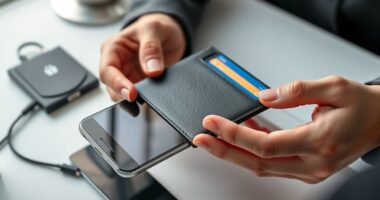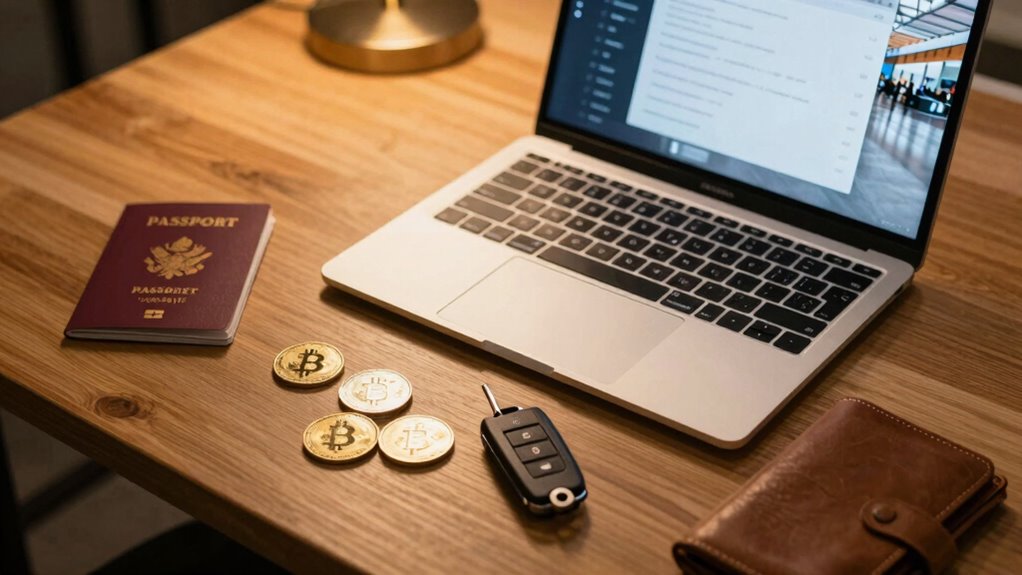

The most overlooked travel security rule for crypto holders is safeguarding your private keys. Never carry unencrypted or plain text keys, and always store them offline in hardware wallets or encrypted devices. Keep backups in secure, separate locations. Be mindful of airport security checks and avoid exposing private keys when on the move. Physical security is essential because private keys can’t be revoked if lost or stolen. Continue exploring to uncover smart strategies to protect your assets completely.
Key Takeaways
- Never carry private keys in plain text or unencrypted formats; use hardware wallets or encrypted offline storage.
- Keep private keys in discreet, secure locations separate from passports and travel documents.
- Be cautious of airport security procedures; avoid exposing crypto devices unnecessarily during scans.
- Use encrypted devices with biometric authentication to safeguard access during travel.
- Limit physical access to private keys and storage to prevent theft, damage, or accidental exposure.
The Hidden Dangers of Traveling With Crypto Assets
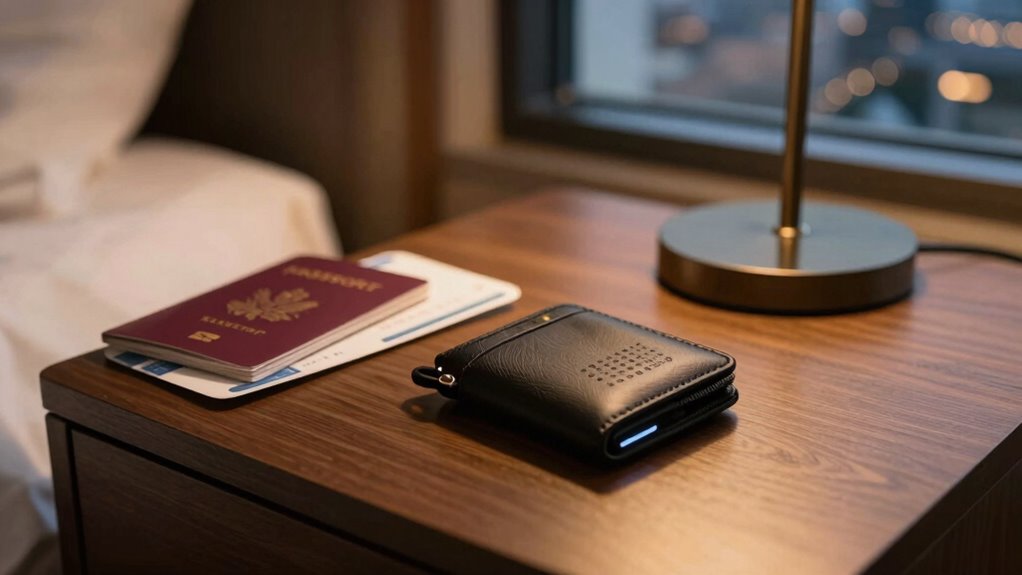
Traveling with crypto assets might seem straightforward, but it comes with hidden dangers that many overlook. Airport security, for example, can be a risk if you carry hardware wallets or devices containing private keys. These items might be confiscated or inspected, putting your assets at risk if not properly protected. Additionally, you may not realize the importance of travel insurance that covers digital assets. Standard policies often exclude crypto-related losses, leaving you vulnerable if your device is lost, stolen, or damaged during transit. Without proper precautions, a simple security checkpoint could expose your private information. To stay safe, always back up your keys securely, consider specialized insurance, and be mindful of airport security protocols to protect your crypto assets throughout your journey. Understanding the role of encryption in securing digital assets can further enhance your safety measures during travel. Being aware of cryptographic security methods can help you implement additional safeguards when handling sensitive information on the go. Moreover, familiarizing yourself with security protocols and encryption techniques used in crypto storage can significantly reduce potential exposure during transit, especially when considering hardware wallet security features that are designed to protect your private keys from unauthorized access. Additionally, staying informed about regional regulations regarding crypto can help prevent legal complications during international travel.
The One Travel Security Rule Every Crypto Holder Must Follow
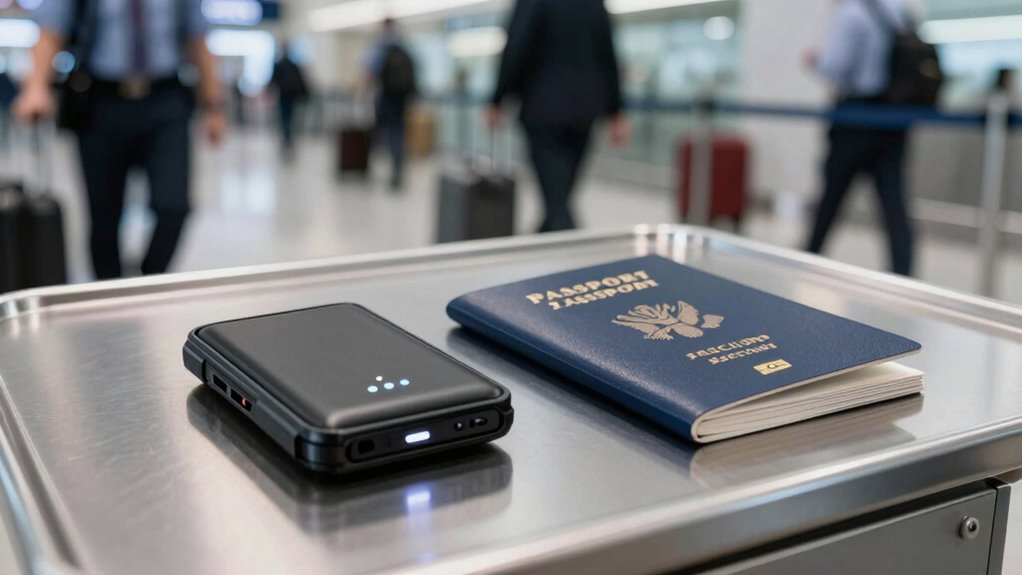
The most important travel security rule for crypto holders is to protect your private keys at all costs. You should enable two-factor authentication and always use encrypted devices to keep your assets safe. Following these steps helps prevent unauthorized access and keeps your crypto secure during travel. Additionally, consider storing your private keys in a secure storage solution to further safeguard your digital assets. Incorporating user privacy policies into your security practices can also help you understand and control how your data is handled while managing your assets on the go. Ensuring your storage methods are well-drained can also help prevent physical damage and loss of your keys. Being aware of the comogenic ratings of your storage devices can help you choose the safest options for long-term protection.
Secure Your Private Keys
Have you ever wondered what the most critical rule is for keeping your cryptocurrencies safe while on the move? It all comes down to securing your private keys. Proper private key management is essential because anyone who accesses your private keys controls your funds. Never carry your private keys in plain text or unencrypted formats. Instead, use secure travel protocols, such as hardware wallets or encrypted offline storage, to safeguard these keys from theft or loss. Avoid storing private keys on internet-connected devices or cloud services during travel. Keep backups in multiple secure locations and never share your private keys with anyone. Additionally, be cautious of crypto pumps that can create sudden market volatility, which might tempt you to make hurried decisions. By following strict private key management and secure travel protocols, you guarantee your assets stay safe, even when you’re on the go. Remember, just like in automotive performance where choosing the right upgrades makes a difference, employing the right security measures ensures your assets are protected from unforeseen threats. It’s also crucial to stay informed about private key vulnerabilities that can compromise your security if neglected, especially considering the evolving nature of cryptocurrency security threats. Regularly updating your security practices and staying aware of potential cybersecurity threats can help prevent accidental exposure or theft.
Enable Two-Factor Authentication
Enabling two-factor authentication (2FA) is one of the most effective ways to protect your crypto accounts when you’re on the move. It adds an extra layer of security, making it harder for hackers to access your funds even if your password is compromised. Think of it as passport security for your digital assets—without it, your accounts are vulnerable. Just as travel insurance safeguards you from unexpected costs, 2FA shields your crypto holdings from unauthorized access. When traveling, guarantee your 2FA method is reliable, such as an authenticator app rather than SMS, which can be intercepted. Protecting your accounts with 2FA complements other security measures and keeps your crypto safe, no matter where your travels take you. Exploring content formats and digital security concepts helps you stay ahead in safeguarding your assets. Additionally, ensuring you use a secure authentication method is crucial, as some methods are more resilient during travel than others.
Use Encrypted Devices
When you’re traveling with crypto assets, using encrypted devices is essential to prevent unauthorized access. Quantum encryption offers advanced security, making it nearly impossible for hackers to intercept your data. Ensure your devices, like smartphones and laptops, are equipped with this technology or utilize strong encryption protocols. Biometric authentication adds an extra layer of protection, requiring your fingerprint or facial recognition to unlock your device. This makes it more difficult for anyone else to access sensitive information if your device is lost or stolen. Never leave your devices unencrypted or without biometric safeguards. Regularly updating your security settings and understanding essential DIY tools and safety tips can also help you stay prepared for any security challenges. Staying informed about digital security best practices can further strengthen your defenses. Incorporating cybersecurity tactics like monitoring for side-channel attacks and dark web surveillance can help you detect threats early. Being aware of encryption technology advancements ensures you’re utilizing the most secure options available. Stay vigilant, and always prioritize encrypted devices for secure travel.
Why Physical Security of Your Private Keys Is Critical
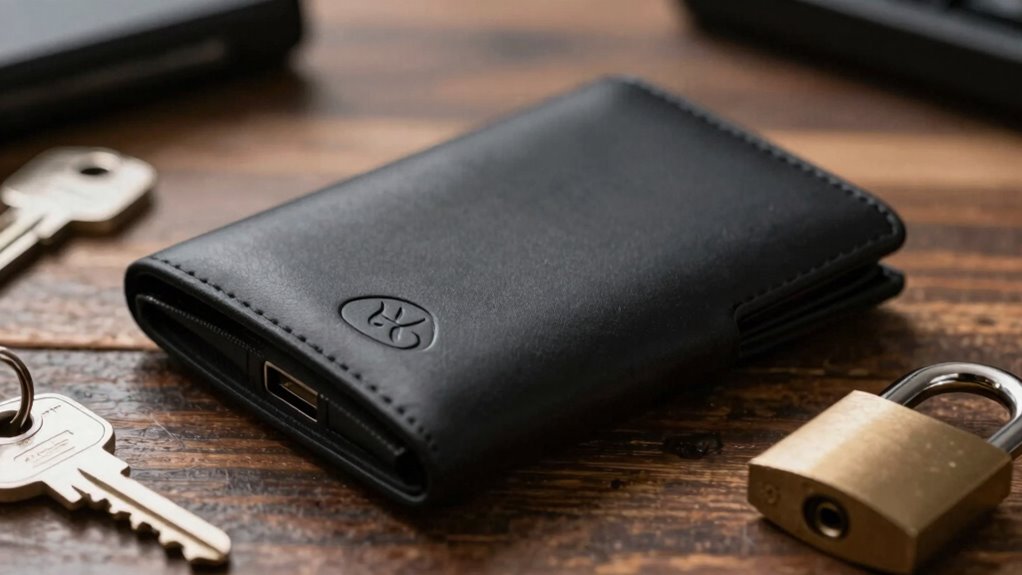
Physical security of your private keys is essential because, unlike digital safeguards, they can’t be revoked or changed if lost or stolen. If someone gains access, your crypto assets are gone forever. Protecting your keys with cryptographic backups ensures you have secure copies stored separately, reducing the risk of total loss. Implementing biometric authentication adds an extra layer of protection, making it harder for unauthorized persons to access your private keys. Without physical security, even the strongest digital defenses won’t help if your keys fall into the wrong hands. Keep your private keys locked away in a secure location, away from prying eyes and potential theft. Additionally, understanding the horsepower of electric dirt bikes can help you appreciate the importance of robust security measures for high-value assets. Recognizing the trustworthiness of local services can also guide you toward safer storage options. Remember, physical security is a critical component of your overall crypto safety strategy, especially when considering landscaping and outdoor security to prevent physical breaches. Ensuring that your storage methods align with best practices helps mitigate risks associated with physical vulnerabilities, which are often overlooked by digital security measures.
Smart Ways to Store Your Hardware Wallet During Travel
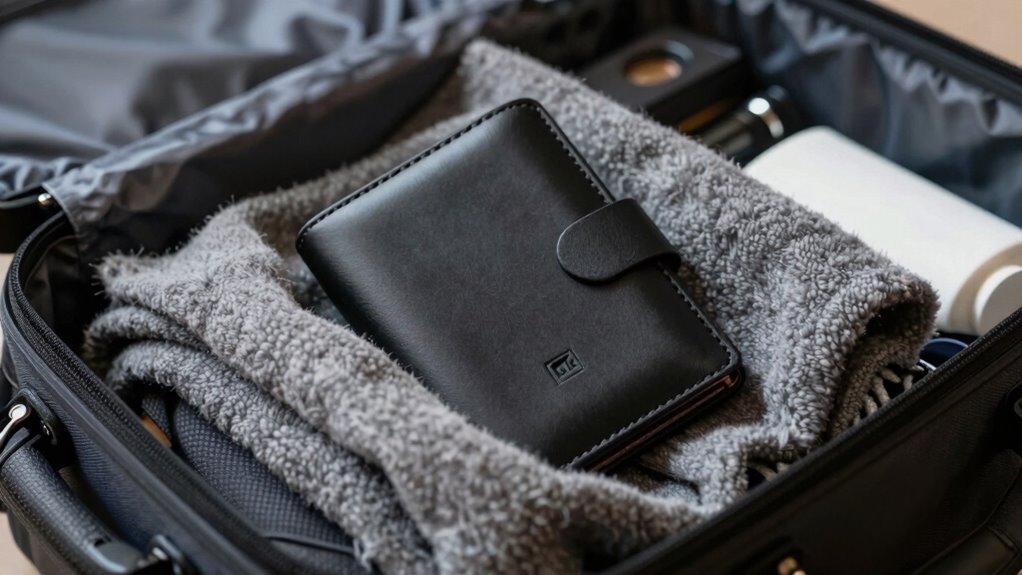
Traveling with a hardware wallet requires careful planning to keep it safe from theft, loss, or damage. To do this effectively, consider these smart storage tips:
- Use a discreet, secure pouch that blends with your belongings, minimizing theft risk.
- Keep it on your person during currency exchange or transit, avoiding airport lockers or bags left unattended.
- Insure your hardware wallet with travel insurance to protect against loss or damage.
- Limit exposure by only carrying what’s necessary, reducing vulnerability if theft occurs.
How to Carry Private Keys Safely When You’re on the Move
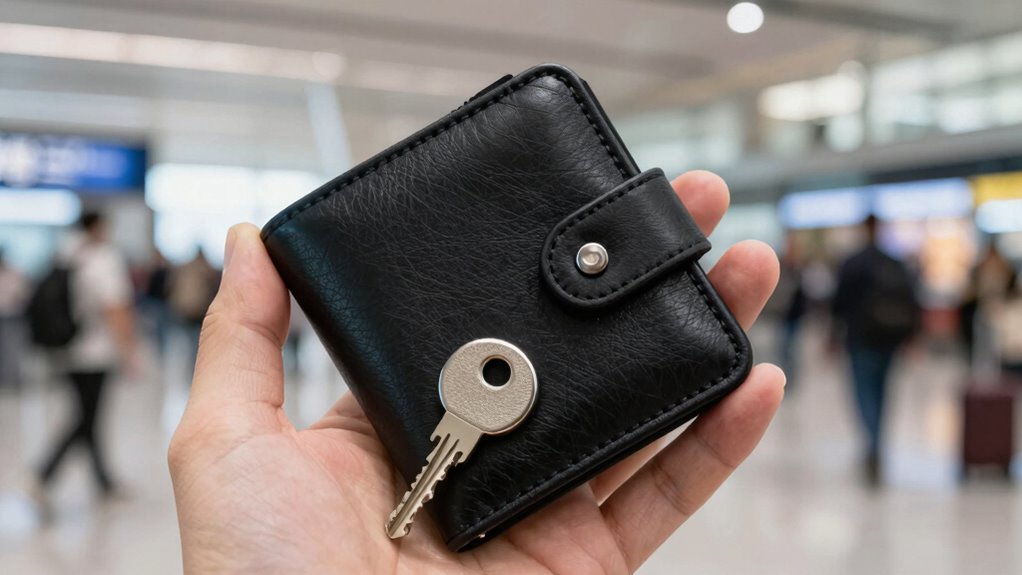
Ever wonder how to keep your private keys secure while on the move? The key is to combine careful storage with smart planning. Use a hardware wallet or encrypted USB device, and never carry your private keys in plain text. Consider storing your keys separately from your passport for added security—like in a secure, hidden compartment. Travel insurance can help recover lost or stolen private keys, providing peace of mind. Keep your passport security tight, avoiding unnecessary exposure. Always back up your private keys offline in multiple locations, and avoid sharing them with anyone. When traveling, limit access to your private keys, and be discreet about their storage. Staying vigilant and prepared guarantees your digital assets stay safe, no matter where your journey takes you.
Common Mistakes That Put Your Crypto at Risk While Traveling

Many travelers unknowingly jeopardize their crypto security by making simple but critical mistakes. One common error is neglecting to update or double-check their travel insurance, which might not cover crypto theft or loss. Second, relying solely on local currency exchange without securing your crypto wallet increases the risk of exposure. Third, carrying large amounts of cash or valuables makes you a target for theft, especially if you’re distracted or in unfamiliar areas. In conclusion, using insecure Wi-Fi networks to access your crypto accounts can lead to hacking. Stay vigilant by ensuring your travel insurance covers digital assets, avoiding risky currency exchanges, and always using secure connections. These mistakes can turn a fun trip into a crypto nightmare.
Essential Travel Security Gear for Crypto Holders
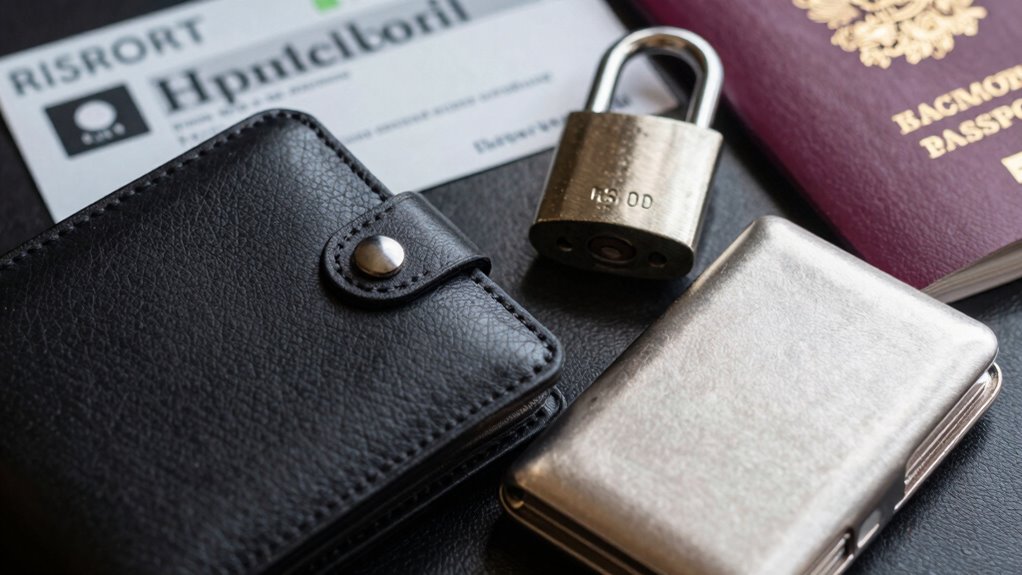
When traveling with crypto, your first priority should be securing your assets with a hardware wallet that keeps your private keys offline. Encrypted mobile devices add an extra layer of protection, ensuring your communication and data stay safe from prying eyes. Having the right gear can make all the difference in keeping your crypto secure on the go.
Secure Hardware Wallets
A secure hardware wallet is an essential piece of travel security gear for crypto holders because it provides a physical barrier that keeps your private keys safe from online threats. It guarantees your assets are protected even amidst changing cryptocurrency regulations and fluctuating market conditions. When choosing a hardware wallet, consider wallet compatibility with your preferred cryptocurrencies to avoid restrictions.
Here are four reasons why it’s crucial:
- Protection Against Hackers — Keeps private keys offline, preventing remote access.
- Travel Convenience — Compact and easy to carry, fitting seamlessly into your bag.
- Regulation Compliance — Ensures your crypto holdings stay within legal boundaries.
- Peace of Mind — Confidence that your assets remain secure wherever you go.
Investing in a hardware wallet is a smart move for any crypto traveler.
Encrypted Mobile Devices
Encrypted mobile devices are a vital security tool for crypto holders on the go, ensuring your private keys and sensitive information stay protected from prying eyes. With device encryption, your data remains secure even if your phone is lost or stolen, safeguarding your digital privacy. Using encrypted devices minimizes the risk of unauthorized access to your crypto wallets and personal information. It’s essential to choose phones with built-in encryption features and avoid using unsecured apps or networks. Regularly updating your device’s security settings enhances protection. By prioritizing encrypted mobile devices, you considerably reduce vulnerabilities, allowing you to travel confidently knowing your crypto assets and private data are shielded from hacking attempts and surveillance.
What to Do If Your Crypto Wallet Gets Lost or Stolen Abroad
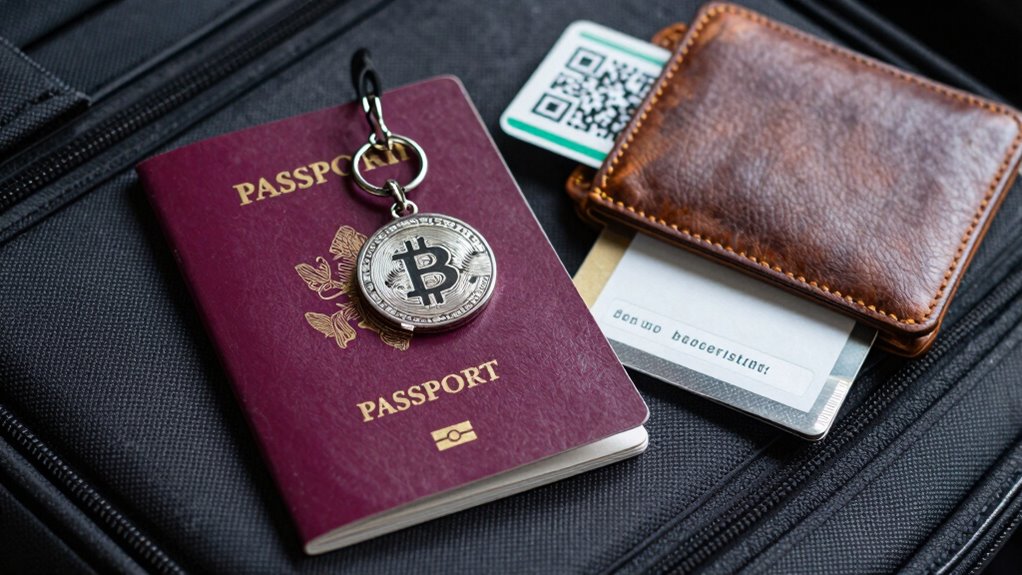
Losing your crypto wallet abroad can be stressful, but acting quickly can minimize the damage. First, report the loss to local authorities and your travel insurance provider—document everything. Next, check the latest cryptocurrency regulations in the country to understand your options and restrictions. Then, immediately access your backup recovery phrase or private keys to secure your funds from a safe location. Finally, notify your wallet provider or exchange to freeze or monitor your account. Remember, having travel insurance that covers crypto losses can be a lifesaver. Staying calm and swift ensures you protect your assets and navigate the situation efficiently, even abroad.
Frequently Asked Questions
How Can I Verify the Security of My Travel Accessories?
To verify your travel accessories’ security, start by checking their durability and build quality. Make sure they are made from sturdy materials that can withstand rough handling. Look for reviews or testimonials on travel safety, confirming they have reliable zippers, locks, or RFID-blocking features. Test the accessories yourself, like opening zippers or locks, and inspect for any weaknesses. This way, you guarantee your accessories are secure and durable for safe travel.
What Legal Considerations Exist When Carrying Crypto Internationally?
When carrying crypto internationally, you need to prioritize legal compliance to avoid issues. Different countries have varying regulations, which can pose regulatory challenges if you don’t understand local laws. Always research the legal status of cryptocurrencies in your destination, carry proper documentation, and consider consulting legal experts. Staying informed about international crypto laws helps you navigate compliance issues confidently and prevents potential legal complications during your travels.
Are There Specific Insurance Options for Crypto Assets During Travel?
Sure, there are crypto-specific travel insurance options that cover your digital treasure chest. Think of it as crypto storage with a backup plan—if your wallet gets lost or hacked en route, these policies can step in. While traditional travel insurance rarely covers crypto theft, specialized policies now offer peace of mind, making your digital assets safer during travel. Just don’t forget to read the fine print or risk your coins turning into digital ghosts.
How Do I Recover Access if I Forget My Private Keys Abroad?
If you forget your private keys abroad, focus on key recovery options and access methods. First, check if you have a backup of your seed phrase or recovery phrase, which can restore access to your wallet. If not, consider using a hardware wallet with a passphrase or biometric access. Always keep recovery information secure and accessible offline to prevent losing access during travel.
What Are the Signs of Potential Theft or Hacking During Travel?
Spot suspicious activity swiftly to spot signs of theft or hacking during travel. Look for unusual login locations, unfamiliar transactions, or sudden account access issues. Maintain vigilant vigilance with your digital precautions, like securing devices and using strong, unique passwords. Stay alert for odd emails or messages asking for sensitive info. Prioritize travel safety by regularly monitoring your accounts and enabling two-factor authentication to thwart potential threats and protect your crypto assets.
Conclusion
Remember, your crypto security hinges on your vigilance—think of your private keys as the crown jewels. Traveling may blur your focus, but don’t let your guard down. Follow the key rule, safeguard your hardware, and stay prepared. Because in the world of crypto, a moment’s mistake can turn your treasure into trash. Stay smart, stay secure, and keep your digital wealth truly yours—your future self will thank you for it.