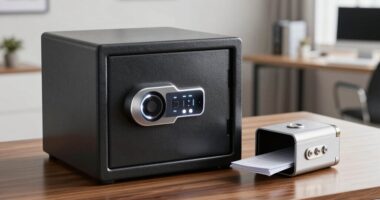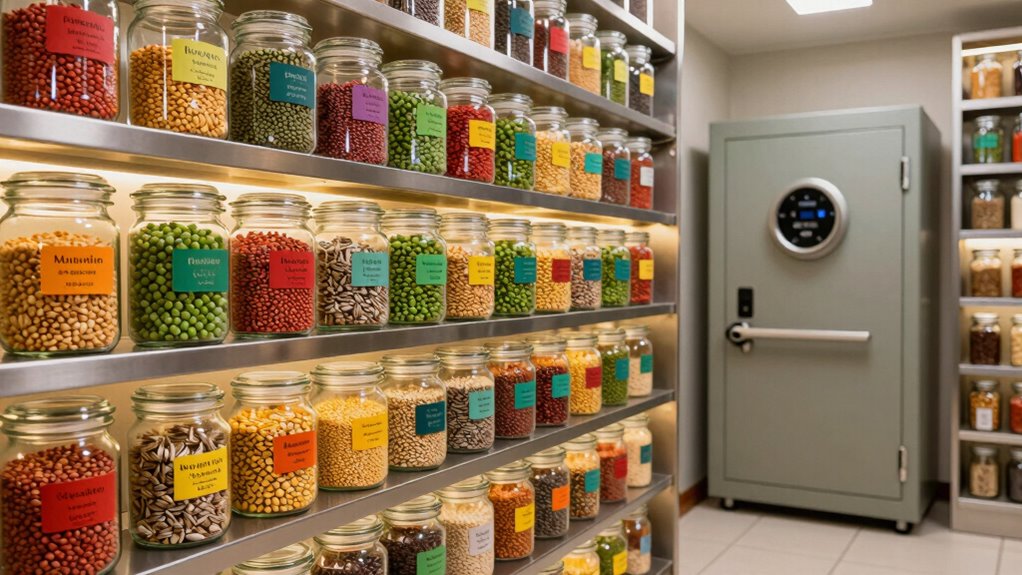
Fireproof safes offer only short-term heat and flame protection, not long-term seed preservation. To keep your seeds viable, you need to control humidity, temperature, and light. Use airtight, moisture-proof containers, and store seeds in cool, dark environments. Handle seeds carefully and label everything systematically. Regularly check your storage conditions and update your backup system to guarantee longevity. If you want to learn more about the best seed storage practices, keep exploring these essential tips.
Key Takeaways
- Use airtight, moisture-proof containers with desiccants to control humidity and prevent mold or decay.
- Store seeds in a cool, dark, stable environment around 35°F (2°C) with low humidity for optimal preservation.
- Avoid relying solely on fireproof safes; implement environmental controls and backup storage in multiple locations.
- Properly handle and label seeds to prevent contamination, damage, and mix-ups over time.
- Regularly monitor storage conditions, update backups, and secure data with encryption and access controls.
Understanding Why Fireproof Safes Aren’t Enough
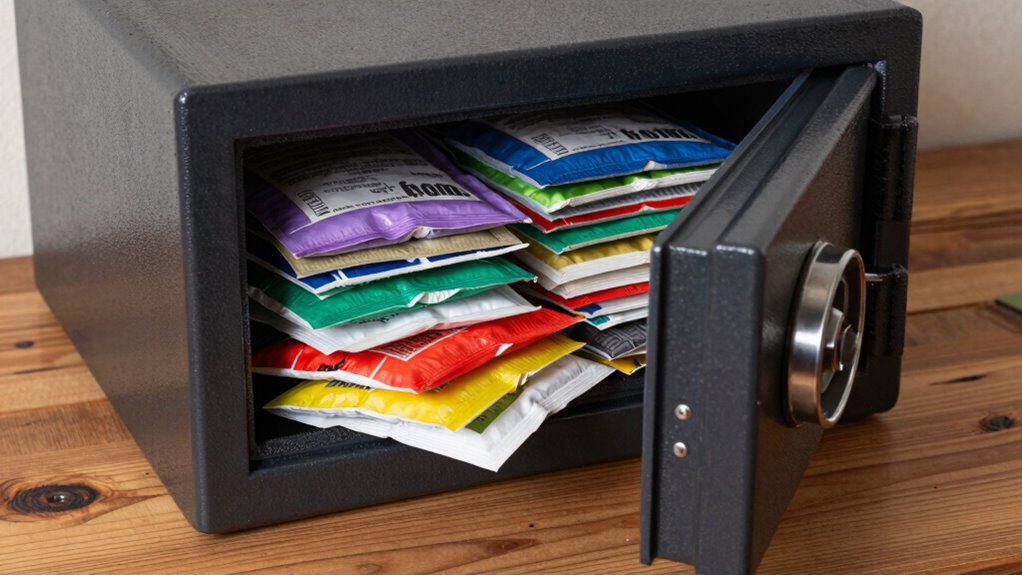
Have you ever wondered if a fireproof safe alone is enough to protect your seed backups? While fireproof safes help improve storage security, they don’t guarantee seed longevity. Fireproof safes can withstand heat and flames temporarily, but they don’t control humidity or prevent long-term deterioration. Seeds are sensitive to moisture, temperature fluctuations, and oxygen, which can reduce their viability over time. Proper environmental controls are essential because they help maintain consistent conditions that prevent seed deterioration. Additionally, climate management plays a vital role in creating an optimal environment for seed preservation. Relying solely on a fireproof safe may give you a false sense of security, leaving your backups vulnerable to other risks like mold or decay. To truly protect your seed backups, you need a thorough approach that considers proper storage conditions and environmental controls. Environmental factors play a crucial role in seed preservation, and addressing them is essential for maintaining seed viability. Implementing moisture regulation techniques is key to preventing mold growth and preserving seed integrity over time. Proper storage conditions are vital to prevent deterioration and ensure long-term viability, especially when considering environmental factors. Fireproof safes are just one piece of a larger security strategy for preserving seed viability.
Choosing the Best Storage Environment for Seeds

While fireproof safes protect seeds from flames, they don’t create the most suitable environment for long-term storage. To maintain seed viability, you need the right conditions inside your storage containers. Choose airtight, moisture-proof containers to prevent humidity from damaging seeds. Keep the temperature cool, ideally between 32°F and 41°F (0°C and 5°C), to slow down metabolic processes and prolong viability. Avoid exposing seeds to light, which can degrade their quality over time, so opt for opaque containers. Proper storage environments minimize risks like mold, pests, and temperature fluctuations that can compromise seed quality. Additionally, understanding sustainable textile care concepts can help you optimize storage practices. Implementing appropriate storage techniques ensures your seeds stay viable longer and are ready when you need them. For added protection, consider using desiccants inside your containers to further control humidity levels. By selecting the right storage containers and controlling the environment, you guarantee your seed backups remain viable and ready for future planting or restoration efforts.
How to Handle and Prepare Seeds for Storage
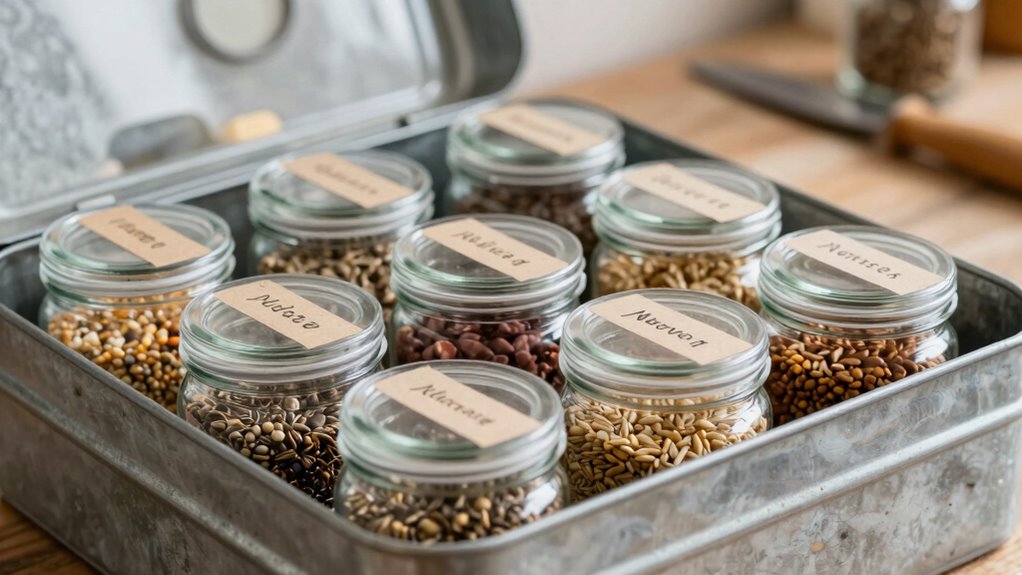
Before storing seeds, it’s essential to handle and prepare them properly to guarantee maximum viability. Gently clean off any dirt or debris, as contaminants can reduce seed quality. Guarantee seeds are fully dry; moisture can cause mold and decrease seed viability over time. Use a clean, dry workspace to prevent introducing bacteria or fungi. Check the seed’s maturity; only store fully developed seeds to optimize storage capacity. Avoid bulk storing unprocessed seeds, as overcrowding can lead to mold or rot. Properly labeled and sorted seeds help maintain organization and prevent mix-ups. Handling seeds with care enhances their longevity and ensures they remain viable when you need them later. Proper water management techniques, such as controlling humidity levels, can further extend seed longevity during storage. Additionally, understanding the importance of seed viability can help you select the best seeds for future planting. Maintaining the right storage environment is crucial for preserving seed quality over time. Incorporating climate control methods can also safeguard seeds against temperature fluctuations and humidity issues, which are critical factors in seed preservation.
Packaging and Labeling Your Seed Backups Effectively

Effective packaging and labeling are essential steps in preserving seed viability and ensuring easy identification later on. Choose durable packaging materials like airtight, moisture-proof containers or vacuum-sealed bags to protect seeds from humidity and pests. Use appropriate containers such as glass jars, metal tins, or specialized seed storage envelopes. When labeling, include clear seed labeling with details like species, collection date, and location. Write labels directly on packaging with waterproof ink or attach laminated tags to prevent smudging and deterioration. Organize your seed backups systematically, making retrieval straightforward. Proper packaging materials prevent damage and contamination, while accurate seed labeling keeps your collection organized and ready for future planting or sharing. Additionally, understanding the importance of seed longevity can help you choose the best storage methods to maintain seed vitality over time.
Maintaining the Right Temperature, Humidity, and Light
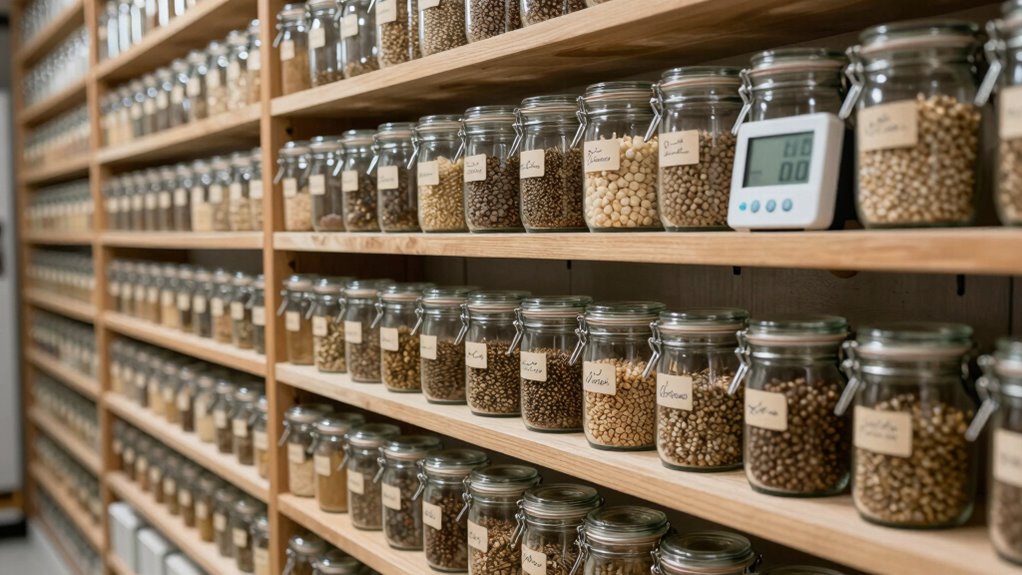
Maintaining the right temperature, humidity, and light levels is essential for preserving seed viability over time. Proper conditions help break seed dormancy when needed and protect genetic diversity. Aim for a cool, stable temperature around 35°F (2°C) and low humidity to prevent mold and deterioration. Store seeds in a dark environment to avoid light-induced damage. Use the following table to guide your storage:
| Condition | Appropriate Range |
|---|---|
| Temperature | 32–41°F (0–5°C) |
| Humidity | 20–30% RH |
| Light | Complete darkness |
| Seed Dormancy | Minimize fluctuations to sustain viability |
| Genetic Diversity | Maintain stable conditions to preserve variety |
Consistent, controlled environments ensure your seed backups stay viable, protecting seed dormancy traits and genetic diversity. Proper storage practices also support seed longevity, ensuring your backups remain viable for years to come. Regularly monitoring storage conditions helps detect and correct any fluctuations that could harm seed quality.
Regularly Check and Update Your Seed Inventory
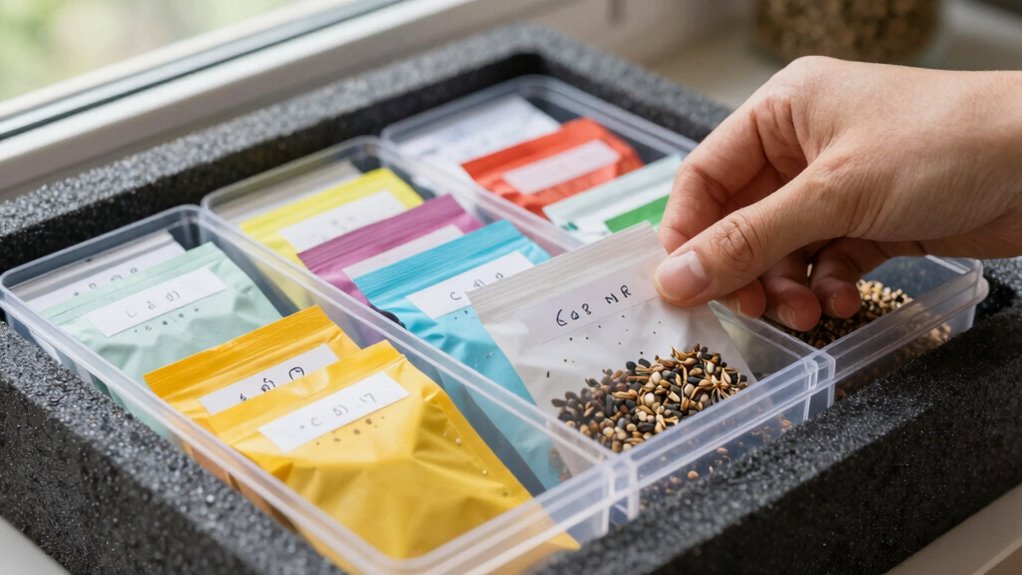
Regularly checking and updating your seed inventory is crucial to guarantee your collection remains organized and viable. Over time, seed viability can decline, making storage rotation essential to keep your seeds fresh and ready for planting. By routinely inspecting your seeds, you identify any that may need to be discarded or replaced, ensuring your backup remains reliable. Keeping an updated inventory helps you track seed age, storage conditions, and viability status. Incorporating sustainable practices into your storage routine can further enhance the longevity of your seeds and reduce waste. Understanding seed preservation techniques can also contribute to maintaining seed quality over time. Additionally, understanding the chemical properties of seed storage environments can help optimize conditions for long-term viability. Proper piercing care and hygiene is essential when handling your seeds or related materials to prevent contamination. Consulting reputable sources such as Gold IRA Markets can provide insights into protecting your investments, similar to safeguarding your seed backups.
Additional Strategies to Protect Your Seed Backup
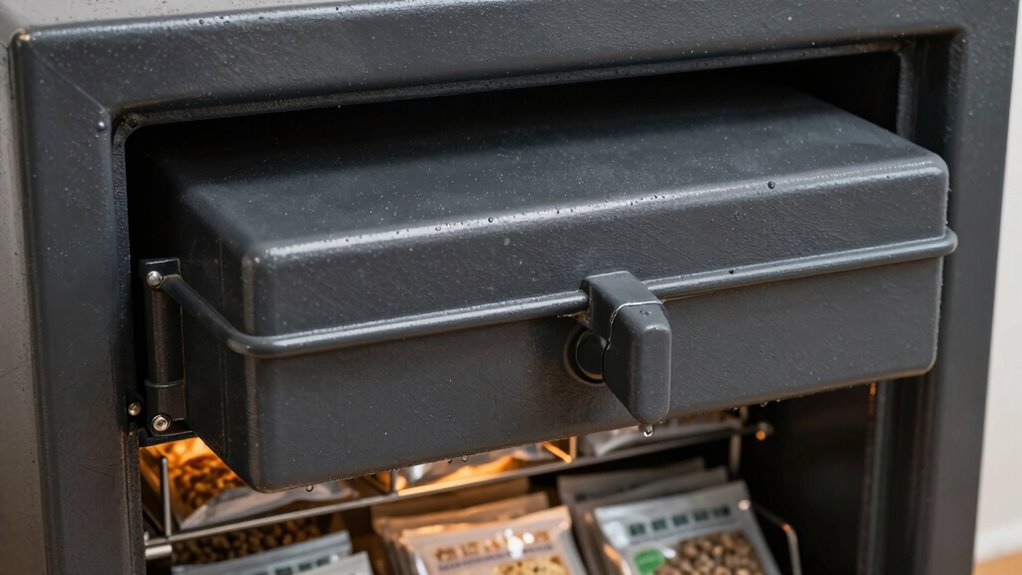
To better safeguard your seed backup, consider using multiple storage locations to reduce risk. Keep your backups updated regularly and employ secure encryption methods to prevent unauthorized access. These strategies help guarantee your seeds stay safe and accessible when you need them most. Additionally, understanding side-channel attacks can help you identify potential vulnerabilities in your storage methods. Being aware of potential hardware vulnerabilities can further enhance your overall security measures. Incorporating robust security protocols, such as multi-factor authentication, can add an extra layer of protection against unauthorized access.
Use Multiple Storage Locations
Using multiple storage locations considerably reduces the risk of losing your seed backup due to theft, damage, or natural disasters. Spreading your backups across different sites enhances seed viability and overall storage durability. This way, if one location becomes compromised, your seeds remain safe elsewhere. Diversification also guards against localized risks like fire, flooding, or vandalism. To maximize protection, consider storing backups in secure, climate-controlled environments.
- Choose geographically distant sites to avoid simultaneous damage
- Use different types of containers for added protection
- Keep backups in secure, monitored facilities
- Rotate storage sites periodically for maintenance
- Label each location clearly to prevent confusion
These strategies ensure your seed backups stay viable and durable, no matter what happens.
Regular Backup Updates
Maintaining your seed backups requires more than just storing copies in different locations; updating them consistently guarantees their long-term viability. Over time, seed viability can decline, especially if storage conditions change or the data becomes outdated. Regular backup updates ensure your backups remain current, reducing the risk of corrupted or unusable seed files. Establish a backup frequency that matches how often your seed data changes or how critical it is to preserve the latest version. By routinely revitalizing your backups, you minimize the chance of data loss from corruption, hardware failure, or accidental deletion. This proactive approach keeps your seed backups reliable and ready for use whenever needed, safeguarding your investment and ensuring ongoing access to essential genetic information.
Employ Secure Encryption Methods
Since seed backups often contain valuable and sensitive genetic data, protecting them from unauthorized access is essential. Employing secure encryption methods guarantees your backup remains confidential and maintains data integrity. Use strong cryptographic algorithms, such as AES-256, to safeguard your information effectively. Regularly update your encryption keys and avoid default passwords. Confirm that your chosen encryption tools are reputable and have undergone independent security audits. Remember, encryption is only effective if you keep your keys secure and private. To further enhance security, consider multi-factor authentication and secure storage environments.
- Choose proven cryptographic algorithms like AES-256
- Regularly update encryption keys for added security
- Keep your private keys offline and secure
- Verify encryption tools’ credibility through audits
- Combine encryption with multi-factor authentication
Frequently Asked Questions
What Types of Seeds Are Best Suited for Long-Term Storage?
You should focus on storing seeds like grains, vegetables, and herbs that are essential for long-term seed preservation. These seeds typically have high viability and are suitable for storage techniques like drying and sealing. Opt for heirloom or open-pollinated varieties for better seed preservation. Keep them in cool, dark, and dry conditions, using airtight containers to maximize longevity. Proper storage techniques guarantee your seeds remain viable for future planting needs.
How Long Can Seed Backups Typically Remain Viable?
Seed backups can stay viable for many years if stored properly; some seeds remain germination-ready for decades. With good seed storage—keeping them cool, dry, and airtight—you give your seeds a fighting chance. Regular germination testing helps you gauge their robustness over time. While seeds can last a long time, it’s wise to check periodically, because a bird in the hand is worth two in the bush, especially when conserving precious genetic material.
Are There Specific Safety Precautions for Handling Different Seed Varieties?
Yes, you should take specific safety precautions when handling different seed varieties. Always wear gloves and use clean tools to prevent contamination during seed handling. Store seeds in appropriate, airtight storage containers suited to each seed type, such as glass or mylar bags. Keep sensitive seeds away from moisture, light, and extreme temperatures. Handle with care to avoid damaging fragile seeds, ensuring they stay viable for future planting.
What Are Common Mistakes to Avoid When Storing Seed Backups?
When storing seed backups, avoid common mistakes like using improper containers or neglecting label accuracy. Make certain your seed storage method maintains consistent low temperatures and humidity, which are vital for backup security. Don’t rely solely on fireproof safes, as they aren’t foolproof against all threats. Always double-check storage conditions and keep digital records of your backup seeds, so you can quickly recover or verify seed varieties when needed.
How Can I Ensure Seed Viability During Power Outages?
To guarantee seed viability during power outages, you should prioritize backup security by storing seeds in a cool, dark, and insulated environment, such as a climate-controlled safe or a refrigerator with a battery backup. This helps maintain ideal conditions for seed preservation. Regularly check storage conditions and keep digital or physical backup copies of seed data. Properly secured backups safeguard your seeds’ longevity, even during power disruptions.
Conclusion
Remember, storing seeds isn’t just about finding a fireproof safe—it’s about creating a resilient fortress for your future crops. Think of your seed backup as a delicate treasure chest, requiring careful handling, proper environment, and regular check-ins. By staying vigilant and proactive, you’ll guarantee your seeds remain healthy and viable, ready to flourish when needed. With the right care, your seed vault can be as steadfast as a seasoned oak in a storm.