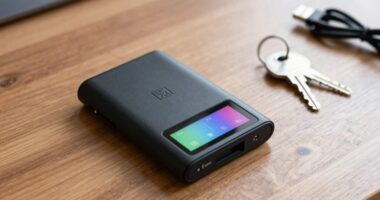
A cryptocurrency wallet stores your private keys, which are crucial for sending and receiving digital assets like Bitcoin and Ethereum. Instead of holding coins physically, the wallet holds these keys securely, allowing you to sign transactions and prove ownership. Wallets can be online, offline, or hardware-based for added protection. Maintaining your private keys carefully is essential — keep them safe and private. If you want to understand more about how wallets keep your assets protected, keep exploring further.

Get hardware and tech essentials delivered free with Prime
- Fast, free delivery on millions of items
- Prime Video, Amazon Music and more included
- Member-only deals all year
Key Takeaways
- Cryptocurrency wallets store private keys that prove ownership of digital assets like Bitcoin and Ethereum.
- Wallets enable sending and receiving assets by signing transactions with private keys.
- Public keys derived from private keys act as wallet addresses for receiving funds.
- Hardware wallets keep private keys offline for enhanced security, while software wallets store them digitally.
- Protecting private keys through secure storage and strong passwords is essential to prevent unauthorized access.

Cryptocurrency wallets serve as your digital safe, allowing you to securely store, send, and receive digital assets like Bitcoin and Ethereum. At the core of this safety are private keys, which are essential for maintaining your wallet’s security. Think of a private key as your secret password that grants you access to your funds. It’s a long string of alphanumeric characters that should never be shared with anyone. When you own a cryptocurrency wallet, you don’t actually “hold” the coins; instead, you hold the private key that proves your ownership and authorizes transactions. The security of your wallet hinges on how well you protect this private key. If someone else gains access to it, they can control your digital assets, making wallet security a top priority.
Your private key is the secret password that protects your cryptocurrency wallet and assets.
Most wallets generate and store private keys either locally on your device or in the cloud, depending on the type of wallet you choose. For instance, hardware wallets keep private keys offline, providing an extra layer of security against hacking. Software wallets, like mobile or desktop apps, store keys digitally, which can be convenient but slightly more vulnerable if your device is compromised. To enhance wallet security, you should use strong, unique passwords and enable two-factor authentication wherever possible. Always keep your private keys secret; if you lose them, you lose access to your funds, and there’s often no way to recover your assets without the key. Private key management is crucial for maintaining your wallet’s integrity.
When you send or receive cryptocurrencies, your wallet uses your private key to sign transactions, verifying that you are the owner and authorized to move the funds. This digital signature ensures the authenticity of each transaction and prevents unauthorized activity. Public keys, which are derived from private keys, are used as your wallet address—think of it like your bank account number—so others can send you digital assets without exposing your private key. Remember, your wallet’s security depends on how well you safeguard your private keys and protect against malware, phishing scams, and hacking attempts.
Choosing the right wallet type and taking precautions can considerably reduce risks. Hardware wallets are ideal for long-term storage, while mobile or web wallets offer convenience for daily transactions. Regardless of your choice, always back up your private keys in a secure location and never share them. By understanding how private keys work and prioritizing wallet security, you ensure that your digital assets remain safe and under your control. Protecting your private keys is the foundation of your cryptocurrency security, and staying vigilant is key to maintaining your peace of mind in the digital financial world.
Frequently Asked Questions
Can I Use Multiple Wallets for Different Cryptocurrencies?
Yes, you can use multiple wallets for different cryptocurrencies. Different wallet types, like hardware, software, or mobile wallets, support various coins and tokens. Using multiple wallets helps you organize your assets and enhances security features by isolating funds. Just make certain you keep your private keys safe and choose reputable wallets to prevent theft or loss. Managing multiple wallets is common among crypto enthusiasts to diversify and secure their investments.
How Do I Recover My Wallet if I Lose Access?
Losing access to your wallet is like losing your map in a maze—you need your seed phrase or private key to find your way back. Keep your seed phrase safe and private, as it’s the master key to restore your wallet on any device. If you lose access, use your seed phrase to recover your wallet, ensuring your funds remain within reach and under your control.
Are Cryptocurrency Wallets Protected From Hacking?
Cryptocurrency wallets are protected, but they aren’t completely immune to hacking. You can reduce security vulnerabilities by using strong passwords, enabling two-factor authentication, and choosing reputable wallets. Keep your private keys secure and avoid sharing them. Regularly update your wallet software to prevent hacking attempts. While no system is entirely foolproof, practicing these hacking prevention measures helps safeguard your funds against potential security threats.
What Are the Costs Associated With Wallet Transactions?
You might be surprised by the costs involved in wallet transactions. When you send crypto, transaction fees vary depending on network congestion and wallet type, sometimes making you pay more during busy times. Additionally, don’t forget wallet maintenance costs, which can include fees for certain services or security features. Staying aware of these expenses helps you manage your funds more effectively, avoiding unexpected charges and keeping your crypto journey smooth.
Can I Convert Cryptocurrencies Directly Within My Wallet?
Yes, you can convert cryptocurrencies directly within your wallet if it supports built-in exchange features. These conversions are usually quick and convenient, but keep in mind that transaction fees and wallet security are important. Always verify that your wallet uses secure encryption and trusted exchange partners to protect your funds. Be aware of potential fees, which can vary depending on the wallet provider and the cryptocurrencies involved.
Conclusion
Now, imagine opening your wallet and finding a tiny, digital safe inside, ready to store your treasures securely. Just like that safe, your cryptocurrency wallet keeps your digital assets safe and accessible whenever you need them. It’s a small, powerful tool that works silently in the background, connecting you to the vast world of crypto. With your wallet in hand, you’re now part of this exciting financial journey—ready to explore and grow your digital wealth.
Halloween Picks
halloween
As an affiliate, we earn on qualifying purchases.