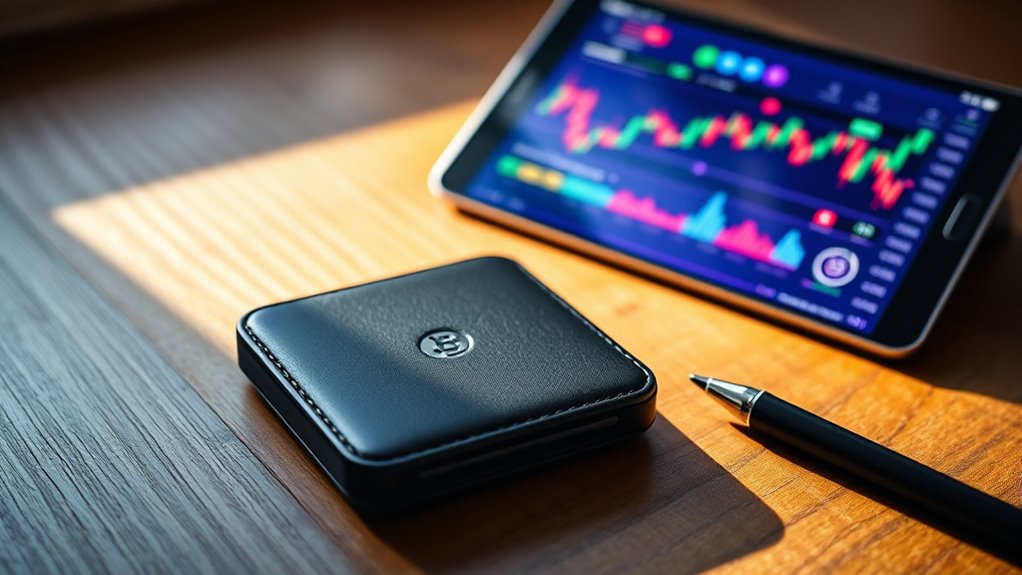

If you prioritize security and plan to store large amounts of cryptocurrency, a hardware wallet is your best choice since it keeps your private keys offline and protected from online threats. For everyday transactions or smaller holdings, a software wallet offers quick access and user-friendly features. To make an informed decision, consider how much security and convenience you need—if you keep exploring, you’ll learn more about which option fits your needs best.
Key Takeaways
- Hardware wallets offer higher security by storing private keys offline, ideal for large holdings and long-term storage.
- Software wallets provide quick, convenient access for daily transactions and active trading.
- Hardware wallets minimize digital hacking risks but require physical access; software wallets are more vulnerable to malware.
- Hardware wallets involve additional setup and physical connection steps, while software wallets are user-friendly and easily accessible.
- Choose based on security priority and convenience: hardware for safety, software for ease of use and frequent transactions.
When it comes to securing your cryptocurrency assets, choosing the right wallet is essential. You need a solution that balances strong cryptocurrency security with user convenience. Hardware wallets and software wallets each offer distinct advantages and drawbacks, so understanding these differences helps you make an informed decision. Hardware wallets are physical devices that store your private keys offline, providing a high level of security. Because your keys are kept isolated from internet-connected devices, they’re less vulnerable to hacking, malware, or phishing attacks. This offline approach makes hardware wallets an excellent choice if you’re serious about protecting large amounts of cryptocurrency. They’re designed specifically to prevent remote breaches, giving you peace of mind that your assets are safe from digital threats. However, this added security often comes with a trade-off in user convenience. Hardware wallets can be less intuitive, requiring you to physically connect your device to a computer or mobile device to manage your funds. Transactions might take a few extra steps, and if you lose the device or it gets damaged, recovery can be more complicated, especially if you haven’t securely backed up your seed phrase. Additionally, understanding climate control technology can help you better appreciate how secure, efficient systems operate, similar to how proper security protocols protect digital assets.
On the other hand, software wallets are applications installed on your computer or smartphone, making them more accessible and easier to use. They’re designed for convenience, allowing quick access to your funds for daily transactions or trading. Many software wallets come with user-friendly interfaces, making it simple for beginners to navigate and manage their cryptocurrency holdings. While they provide good security measures, such as encryption and two-factor authentication, they inherently carry a higher risk since your private keys are stored on or accessible through internet-connected devices. Malware, hacking, or device theft can compromise your assets if you’re not vigilant. Despite these risks, software wallets are ideal for smaller amounts or active trading, where ease of use outweighs the need for maximum security.
Ultimately, your choice depends on your priorities. If you’re storing substantial amounts of cryptocurrency and prioritize security above all else, a hardware wallet offers the strongest protection. But if you value quick access and user convenience for smaller holdings or frequent transactions, a reputable software wallet might be more suitable. Both options can be secure if used properly, but understanding their differences helps you align your wallet choice with your security needs and lifestyle. Protecting your investments isn’t just about choosing the right wallet; it’s about staying vigilant and following best practices regardless of which type you use.
Frequently Asked Questions
How Do Hardware Wallets Protect Against Phishing Attacks?
Hardware wallets protect against phishing attacks by keeping your private keys offline, making it impossible for hackers to access them through phishing schemes. They enhance phishing mitigation because transactions are confirmed directly on the device, not through potentially compromised computers or websites. To maximize security awareness, always verify addresses and details on your hardware wallet screen, reducing the risk of falling for phishing scams and ensuring your crypto remains safe.
Can Software Wallets Be Hacked Remotely?
Did you know that over 60% of hacks target software wallets? Yes, software wallets can be hacked remotely if you don’t secure them properly. They rely on cloud security and data encryption, but vulnerabilities like phishing or malware can still expose your private keys. Always keep your software updated, use strong passwords, and enable two-factor authentication to reduce risks of remote hacking.
What Are the Costs Associated With Hardware Wallets?
Hardware wallets typically require an initial investment ranging from $50 to $200, depending on the model and features. This cost comparison highlights that, while they’re more expensive upfront than software wallets, they offer enhanced security. You pay for peace of mind, especially if you hold significant amounts of cryptocurrency. Keep in mind, some models might have additional costs for accessories or upgrades, so consider your needs carefully.
Which Wallet Type Offers Better Recovery Options?
Backup security and recovery procedures make hardware wallets the better choice for recovery options. You can securely store your recovery seed offline, safeguarding it from online threats. Hardware wallets provide physical backup options, ensuring you can restore access even if the device is lost or damaged. Software wallets rely heavily on digital backups, which are more vulnerable. So, for safer, more reliable recovery, hardware wallets win the way.
Are Hardware Wallets Compatible With All Cryptocurrencies?
Hardware wallets are compatible with many cryptocurrencies, but not all. You can usually connect them to cryptocurrency exchanges and use wallet synchronization features to manage various assets. However, some coins might require additional steps or specific hardware wallets. Always check the device’s supported cryptocurrencies before purchasing, and make certain it works seamlessly with your preferred exchanges to avoid compatibility issues.
Conclusion
Ultimately, choosing between hardware and software wallets depends on your needs. If security is your top priority, a hardware wallet keeps your assets safe from online threats. But if convenience and quick access matter more, a software wallet might suit you better. Remember, don’t put all your eggs in one basket—consider using both for different purposes. By weighing the pros and cons, you can make a choice that keeps your crypto safe and sound.