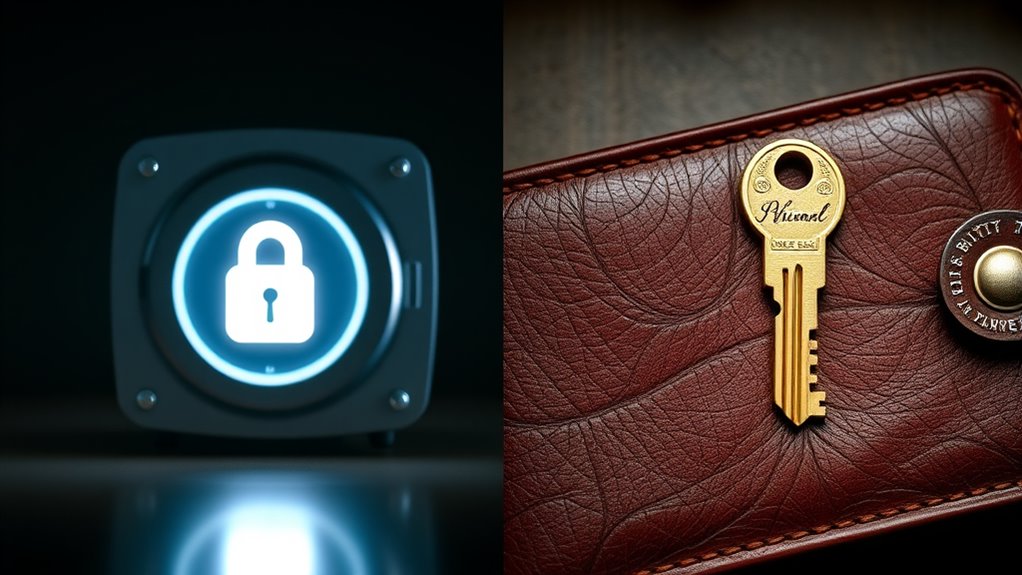

Choosing between custodial and non-custodial wallets depends on your priorities. Custodial wallets offer easier access and management, ideal if you prefer convenience and trust a provider’s security. Non-custodial wallets give you full control over your private keys, boosting privacy and independence, but require greater security awareness. While custodial options are more user-friendly, non-custodial wallets demand responsibility for safeguarding assets. To weigh the risks and benefits effectively, consider what matters most—your control, convenience, or security—beyond what you currently know.

Get hardware and tech essentials delivered free with Prime
- Fast, free delivery on millions of items
- Prime Video, Amazon Music and more included
- Member-only deals all year
Key Takeaways
- Custodial wallets offer ease of use and quick access but rely on third-party security, increasing risks of hacking or provider failure.
- Non-custodial wallets provide full control over private keys, enhancing privacy and independence, but require user security expertise.
- Custodial solutions are suitable for beginners prioritizing convenience, while non-custodial wallets suit users valuing security and personal control.
- Losing private keys in non-custodial wallets results in irreversible asset loss; custodial wallets mitigate this risk but depend on provider trust.
- The choice depends on balancing user control, security responsibilities, and preferences for convenience versus independence.

Are you unsure whether to choose a custodial or non-custodial wallet for your cryptocurrency needs? This decision hinges largely on your priorities around security concerns and user control. With custodial wallets, a third party—like an exchange or wallet provider—holds your private keys, meaning they manage the security and access to your funds. This setup can be convenient, especially if you’re new to crypto, because it reduces the technical barriers of managing your own keys. However, it also introduces a level of trust you must place in the provider, which can be risky if they experience a security breach or mismanage your assets. You might worry about security concerns, especially considering that centralized platforms are common targets for hacking. In this scenario, your user control is limited; you don’t have direct access to your private keys, and if the platform goes down or faces legal issues, your access to funds could be disrupted.
On the other hand, non-custodial wallets give you full control over your private keys, which means you’re responsible for securing and managing your funds. This level of user control appeals to those who want independence from third parties and the ability to transact freely without relying on someone else’s infrastructure. With non-custodial wallets, you’re the sole owner of your keys, so your funds are only as secure as your ability to protect these keys. If you lose your private key, there’s no way to recover your assets, making security concerns more personal and immediate. Still, many see this as a strength since it eliminates the risk of a third party mismanaging or losing your funds. Plus, having complete control means you can transact directly with others, avoiding potential delays or restrictions imposed by custodial services.
Deciding between these options depends on your comfort level with security and control. If you prefer convenience and are willing to trust a reputable provider, a custodial wallet might suit you best. But if you value privacy, independence, and are comfortable managing your own security, a non-custodial wallet could be the right choice. Just remember, with greater user control comes greater responsibility. The more control you have, the more you need to educate yourself about safeguarding your private keys and recognizing security threats. Additionally, understanding the importance of color accuracy and how it impacts your viewing experience can be crucial if you also use your crypto funds for multimedia purposes. Ultimately, understanding your priorities and risk tolerance will guide you toward the wallet that aligns with your crypto journey.
As an affiliate, we earn on qualifying purchases.
Frequently Asked Questions
Can Custodial Wallets Be Hacked More Easily Than Non-Custodial?
Yes, custodial wallets can be more vulnerable to hacking because you rely on a third party’s security measures. If their systems face security concerns or hacking vulnerabilities, your funds could be at risk. With non-custodial wallets, you control your private keys, reducing the risk of hacking through external breaches. So, your security depends greatly on how well the wallet provider or you protect against potential vulnerabilities.
Do Non-Custodial Wallets Support All Cryptocurrencies?
Think of non-custodial wallets as versatile ships steering a vast sea; they often support many cryptocurrencies, but not all. Your wallet’s cryptocurrency compatibility depends on its design and underlying blockchain protocols. While many popular coins are supported, some lesser-known tokens may lack compatibility, limiting wallet interoperability. So, if you’re sailing toward specific assets, make certain your wallet can handle the particular cryptocurrencies you wish to hold.
What Are the Recovery Options for Lost Private Keys?
If you lose your private keys, recovery options include using a private key backup or seed phrase you previously stored safely. Some non-custodial wallets support multi-signature solutions, which add extra security and recovery methods, requiring multiple approvals to access funds. Always make certain you securely back up your private keys or seed phrase to prevent loss, and consider multi-signature wallets for added protection against accidental loss or theft.
Are Custodial Wallets Compliant With International Regulations?
You might think custodial wallets are perfectly compliant with international regulations, but the truth is, they often walk a tightrope of legal considerations and regulatory compliance. Many custodial services adhere strictly to global standards, ensuring your assets are protected, yet others may lag behind or operate in gray areas. Always verify the provider’s adherence to international laws, because staying compliant isn’t just smart — it’s essential for your security and peace of mind.
How Does Transaction Speed Differ Between Wallet Types?
You’ll find that transaction speed varies between wallet types due to blockchain scalability and how quickly transactions get confirmation. Non-custodial wallets often rely on the underlying blockchain’s speed, which can be slower during high traffic. Custodial wallets typically process transactions faster because they manage the blockchain process for you, reducing confirmation times. So, if quick transactions matter, custodial wallets generally offer a speed advantage, especially during network congestion.
As an affiliate, we earn on qualifying purchases.
Conclusion
Ultimately, choosing between custodial and non-custodial wallets depends on your priorities. If you value convenience and easy access, custodial wallets act like a bank, handling security for you. But if you prefer full control and privacy, non-custodial wallets put you in the driver’s seat, though they require you to manage your own security. Think of it like trusting a bank versus managing your own safe—both have their benefits and risks.
secure private key storage device
As an affiliate, we earn on qualifying purchases.
As an affiliate, we earn on qualifying purchases.
cryptocurrency cold storage wallet
As an affiliate, we earn on qualifying purchases.
As an affiliate, we earn on qualifying purchases.
Halloween Picks
halloween
As an affiliate, we earn on qualifying purchases.