

Many believe all crypto wallets are equally secure or that hacking is just inevitable, but that’s not true. Security depends on the wallet type and how you manage it. Hardware wallets, when used properly, are very safe because they store private keys offline. Storing private keys on exchanges or online makes your assets more vulnerable. To protect your funds, understanding these misconceptions and proper security practices is essential—keep going to discover how to secure your crypto wisely.
Key Takeaways
- Not all crypto wallets are equally secure; security depends on type and user practices.
- Hardware wallets offer better protection than software wallets when used properly.
- Storing private keys on exchanges is riskier than offline or hardware storage solutions.
- Good security habits, like keeping recovery phrases private, significantly enhance wallet safety.
- Many misconceptions stem from overestimating wallet security and underestimating user responsibility.
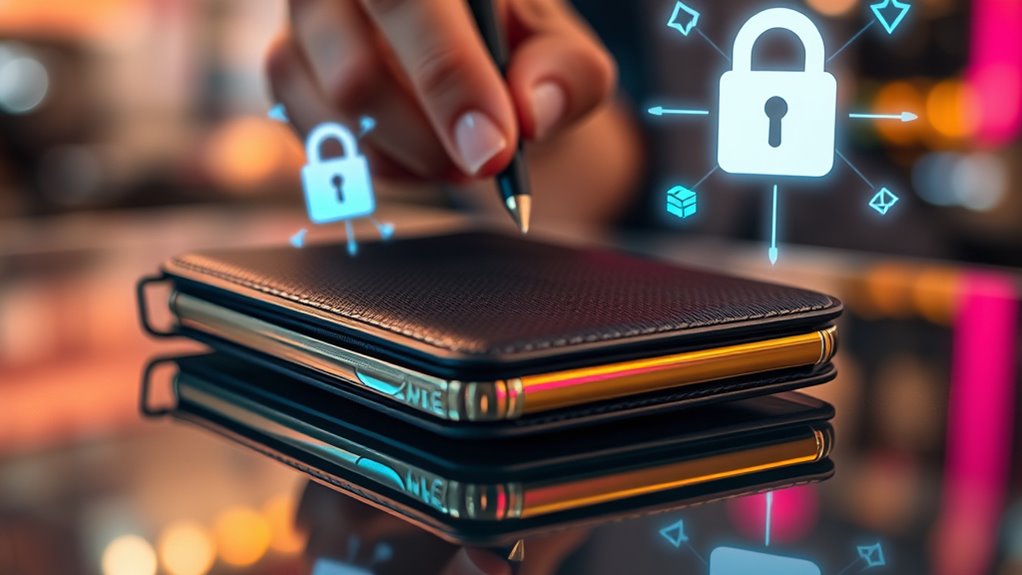
Crypto wallets often come with a lot of misconceptions that can leave you feeling confused or even worried about security. One common myth is that digital wallets are inherently unsafe or easy to hack. In reality, the security of your crypto wallet depends heavily on how you handle hardware security and private key management. Hardware wallets, for example, are designed to store your private keys offline, making it much harder for hackers to access your funds remotely. When you use a hardware wallet, your private keys never leave the device, greatly reducing the risk of theft through online vulnerabilities. This form of cold storage is one of the most secure options available, especially if you keep your device physically safe and avoid connecting it to compromised computers.
Many people also believe that storing private keys on an exchange or online platform is just as secure as a dedicated wallet. This is a dangerous misconception. When your private keys are stored on an exchange, you don’t truly control your funds; the exchange does. These centralized platforms are prime targets for cyberattacks, and history has shown they can be compromised, leading to the loss of user assets. That’s why proper private key management is essential. You want to generate and store your private keys securely, ideally offline, and never share them with anyone. Using hardware wallets or secure software solutions ensures that you maintain control over your private keys, reducing the risk of theft or loss. The security of your wallet can also be influenced by the type of technology it uses, which can significantly affect its overall safety.
Another myth is that all crypto wallets are equally secure, which isn’t true. The security level varies widely depending on the wallet type and your practices. Software wallets, like mobile or desktop wallets, are convenient but more vulnerable to malware or hacking if your device becomes compromised. On the other hand, hardware wallets offer a higher degree of security, especially when used with good security habits, like keeping your recovery phrase private and avoiding suspicious links or malware. Your approach to private key management greatly influences your wallet’s security. Always back up your private keys or recovery phrases in a safe, offline location. Never store them digitally on cloud services or unencrypted files, as these can become targets for hackers.
Frequently Asked Questions
Can Crypto Wallets Be Hacked Even With Strong Passwords?
Yes, crypto wallets can be hacked even with strong passwords. While good password security helps prevent unauthorized access, hackers often use phishing, malware, or security flaws to bypass protections. To improve hacking prevention, you should enable two-factor authentication, keep your software updated, and avoid sharing your private keys. Remember, no system is entirely foolproof, so staying vigilant is essential to protect your funds effectively.
Are All Crypto Wallets Compatible With Every Cryptocurrency?
Not all crypto wallets are compatible with every cryptocurrency. Wallet types vary, with some designed for specific coins, while others support multiple assets. Cross-chain compatibility is limited, meaning a wallet may not hold tokens from different blockchains. To avoid issues, choose a wallet that matches your desired cryptocurrencies and offers the necessary cross-chain functionality, ensuring you can manage your assets seamlessly across different networks.
Is It Necessary to Back up My Crypto Wallet Regularly?
Yes, you should back up your crypto wallet regularly. A wallet backup guarantees your recovery procedures are in place if you lose access or your device gets damaged. By updating your backup, you protect your assets against unforeseen issues. Remember, crypto wallets don’t automatically back up data, so making manual wallet backups is essential for safeguarding your funds and making recovery procedures smooth and simple.
Do Hardware Wallets Guarantee 100% Security?
Hardware wallets offer strong hardware security, but they can’t guarantee 100% security. You still need to be cautious of wallet vulnerabilities, such as physical damage or malware that could infect your device. Keep your recovery seed secure, avoid connecting your hardware wallet to untrusted computers, and stay updated with firmware. While they considerably reduce risks, no wallet is entirely invulnerable, so stay vigilant to protect your assets effectively.
Can I Recover My Crypto Funds if I Lose My Wallet?
Losing your wallet can feel like losing a part of yourself, but don’t despair—you can recover your crypto funds. With proper wallet recovery methods, such as using your seed phrase or recovery phrase, you can restore access and reclaim your lost funds. Always keep your recovery info safe and private. Remember, even if your wallet is lost, your assets aren’t gone forever—they’re just waiting for you to find the way back.
Conclusion
Now that you’ve debunked these common myths, you can approach crypto wallets with confidence, like maneuvering a clear, open road instead of a foggy alley. Remember, understanding the facts helps you protect your assets and make informed decisions. Don’t let misconceptions hold you back—arming yourself with knowledge is the best way to enjoy the ride through the crypto world. Stay curious, stay cautious, and keep exploring with confidence.