
As Bitcoin skyrockets past $100,000, the financial elite are feeling the pressure to adapt quickly. High-net-worth individuals and institutions view Bitcoin as a hedge against inflation and crisis, driving massive investments. The approval of spot ETFs and supportive regulatory changes are enhancing market confidence and liquidity. Corporate holdings have surged, indicating a major shift in strategy. Meanwhile, the volatility presents both significant risks and opportunities. If you think this snapshot of the market is surprising, wait until you uncover the deeper strategies and trends shaping this financial landscape. This evolving market dynamic has also ignited an altcoin surge and Bitcoin dominance battle, as investors diversify their portfolios while still gravitating toward Bitcoin as the flagship cryptocurrency. The influx of institutional capital, combined with retail interest, is fostering innovation in blockchain technology and pushing the limits of decentralized finance (DeFi). As central banks grapple with digital currency strategies, the broader crypto ecosystem continues to cement its role as a transformative force in the global economy.

Get hardware and tech essentials delivered free with Prime
- Fast, free delivery on millions of items
- Prime Video, Amazon Music and more included
- Member-only deals all year
Key Takeaways
- Bitcoin's price surpassing $100K has intensified interest from high-net-worth individuals seeking inflation hedges and economic stability.
- Institutional investments have surged, with companies holding over 3% of total Bitcoin, reflecting growing acceptance in the financial landscape.
- The approval of spot Bitcoin ETFs has significantly boosted market liquidity, attracting pension and hedge funds to invest.
- Regulatory scrutiny is increasing, with new policies aiming to enhance consumer protection and market stability as Bitcoin matures.
- Price projections suggest Bitcoin could reach between $120,000 and $200,000 by 2025, further compelling elite investors to engage.
Products Worth Considering

Apple iPad Air (4th Generation, 10.9-inch, Wi-Fi, 256GB) – Space Gray

Samsung 27-inch Odyssey OLED G6 QD-OLED QHD Gaming Monitor

Sonos Era 100 Wireless Smart Speaker, Black
As an affiliate, we earn on qualifying purchases.
Reasons for Elite Interest
In today's financial landscape, elite interest in Bitcoin is surging, driven by a mix of high return expectations and a desire for market stability. You've likely noticed Bitcoin trading above $100,000 for the first time, fueled by optimism around pro-crypto policies and favorable appointments like Paul Atkins heading the SEC. This excitement has propelled Bitcoin-related stocks, such as MicroStrategy, which is up over 540% year-to-date.
High-net-worth individuals and institutions are flocking to Bitcoin not just for potential returns but also for its role as a hedge against inflation and economic uncertainty. The COVID-19 pandemic highlighted Bitcoin's appeal as a decentralized asset, providing a safe haven during turbulent times. Its decentralized nature and increasing institutional adoption further legitimize it as a viable alternative to traditional investment avenues. Additionally, Bitcoin's balanced approach to risk enhances its attractiveness as a long-term investment strategy. The recent surge in Bitcoin's price to over $100,000 has further solidified its status as a sought-after asset among the elite. Moreover, understanding risk management strategies is essential for navigating the complexities of investing in Bitcoin.
Additionally, Bitcoin's innovative and disruptive potential captivates financial elites, as traditional giants like BlackRock embrace it, signifying a shift in the finance landscape. With major financial institutions investing in Bitcoin, its legitimacy continues to grow, enhancing market stability and drawing even more elite interest into this burgeoning asset class.
Impact of Regulatory Changes

Regulatory changes are reshaping the Bitcoin landscape, impacting everything from consumer protections to market stability. You'll notice that regulations like the EU's MiCA focus on detecting and stopping illicit cryptocurrency uses, emphasizing the need for robust consumer and investor protections against fraud, cyber security threats, and data privacy issues. Regulatory bodies, such as the SEC and CFTC, are actively pursuing enforcement actions to shield you and other investors.
While jurisdictional authority often appears fragmented across federal and state levels, you can expect clearer guidelines from regulatory boards on strategies and risk management. This clarity helps foster a safer environment for your investments. Additionally, blockchain technology plays a crucial role in enhancing the security and transparency of transactions, further supporting regulatory efforts.
Additionally, regulations aim to maintain financial stability by preventing crimes and ensuring market transparency. With the rapid growth of stablecoins, authorities are prioritizing their regulation to safeguard the financial ecosystem. The expansion of the Travel Rule to crypto transactions further helps prevent illicit activities, reinforcing the importance of structured, transparent markets. As a result, systemic risks associated with crypto assets are being thoroughly assessed and monitored to protect the financial system.
As you observe these changes, you'll see how they enhance Bitcoin's integration into traditional finance, ultimately shaping your investment landscape and fostering greater confidence among investors.
Market Performance and Volatility
Bitcoin's market performance has always been closely tied to its volatility, which can make or break investor confidence. Over the years, you've likely witnessed significant fluctuations that reflect broader market trends. As of 2023, Bitcoin's realized volatility dipped below 50% for the first time, showing a stabilization in a market cap exceeding $500 billion. This shift marks a historic low in weekly volatility, suggesting a new phase for Bitcoin. Bitcoin volatility is essential for assessing market risk and understanding potential price movements.
| Year | Average 30-Day BTC/USD Volatility |
|---|---|
| 2010 | 6.21% |
| 2011 | 8.26% |
| 2016 | 2.49% |
| 2020 | 5.17% |
Factors such as supply and demand, investor sentiment, and media hype heavily influence these volatility trends. As Bitcoin moves forward, its ability to stabilize amidst high volatility may reshape your investment strategies. With capital flowing into Bitcoin, it's essential to stay informed. Understanding these patterns can help you navigate the unpredictable waters of cryptocurrency investing effectively.
Institutional and Corporate Involvement

The surge of institutional and corporate involvement in cryptocurrency signals a pivotal shift in the financial landscape. Major players like BlackRock are now entering the crypto space, bridging the gap between traditional finance and digital assets. With Bitcoin exchange-traded products (ETPs) gaining traction, institutions are starting to embrace Bitcoin as a legitimate investment.
Here are some key points about this growing trend:
- 1,179 institutions now hold a combined 193,064 BTC across various spot ETFs in the US.
- BlackRock's Bitcoin ETF is the fastest-growing in US history, showcasing strong institutional demand.
- Corporate Bitcoin holdings have surged 587% since 2020, with companies now holding over 3% of all Bitcoin in circulation.
- Businesses view Bitcoin as a hedge against inflation and a way to diversify treasury assets.
- U.S.-domiciled companies account for 49.3% of business Bitcoin holdings, totaling around $19.7 billion. Additionally, institutional activity makes up around 70% of the region's crypto transactions, emphasizing the growing influence of institutional players in the market.
As these institutional and corporate players continue to invest in Bitcoin, the landscape transforms, potentially pushing Bitcoin's price beyond $100,000 by early 2025.
Political and Economic Factors

As institutional and corporate players ramp up their investments in Bitcoin, political and economic factors are increasingly shaping the cryptocurrency's trajectory. The US presidential elections have considerably impacted Bitcoin's market, with candidates openly supporting crypto. Donald Trump's lead during the election sparked a rally, driven by his promises of crypto-friendly policies and regulatory changes. By pledging to make the US the "crypto capital of the planet," he aimed to create a more favorable environment for cryptocurrency adoption, including appointing a supportive SEC chairperson and proposing a presidential advisory council for Bitcoin.
On the economic front, institutional investments have surged, with over $50 billion flowing into Bitcoin ETFs, propelling its price upward. Bitcoin's price movements now show a correlation with US equities, indicating its integration into the traditional financial system. Additionally, interest rate changes profoundly impact Bitcoin's value, as market expectations shift. Volatility remains a constant, influenced by broader market trends and downturns. Remarkably, breaking psychological price levels like $73,770 signals a maturing market, demonstrating how intertwined political and economic factors are in shaping Bitcoin's future. Furthermore, the growing presence of institutional investments has led to increased scrutiny and calls for regulatory clarity in the cryptocurrency space.
Future Outlook and Potential
Looking ahead, analysts are buzzing with excitement over Bitcoin's potential trajectory, fueled by a combination of market predictions and regulatory developments. As you consider your investment strategy, keep in mind these key factors influencing Bitcoin's future:
- Price Projections: Expected to reach $82,296 in 2024, with highs between $78,000 and $120,000.
- Long-term Growth: Predictions for 2025 suggest potential highs of up to $123,000, with targets of $150,000 to $200,000 beyond that. Experts predict BTC targets up to $200,000 for 2025 could significantly influence market sentiment.
- Regulatory Impact: The approval of spot ETFs and positive regulatory changes are expected to bolster Bitcoin's price.
- Halving Event: The upcoming halving in April 2024 may further reduce supply and drive prices higher.
- Institutional Interest: Growing participation from financial institutions is expected to enhance market confidence and sustain price growth.
With these dynamics at play, it's clear that Bitcoin could continue to surprise investors. Maintain a keen eye on market trends and adjust your strategies accordingly. The coming years may very well reshape the landscape of cryptocurrency investing.
Bitcoin's Unique Properties

Bitcoin stands out in the cryptocurrency landscape due to its unique properties that set it apart from traditional financial systems. Its decentralized nature means there's no central authority controlling it, making Bitcoin resilient against natural disasters and attacks. You can join the network, run a node, or create a wallet without needing permission from anyone. This decentralized model fosters transparency, resilience, and inclusivity.
With peer-to-peer transactions, you can send and receive Bitcoin directly without needing a bank as an intermediary. This not only mimics cash transactions but also eliminates trust issues between parties involved. Blockchain technology securely records and verifies each transaction, reducing fees and the need for middlemen. Additionally, Bitcoin operates continuously, allowing for continuous operation even amid external challenges.
Security is another strong feature. Bitcoin uses advanced cryptography to protect transactions and wallets, ensuring the integrity of the public blockchain. Miners validate transactions through a Proof of Work mechanism, safeguarding against attacks.
Lastly, Bitcoin's economic and technical attributes, like a capped supply of 21 million coins, enhance its value. Operating continuously, it offers low fees and fast processing times, making it accessible 24/7 from anywhere with internet connectivity.
The Role of ETFs in Growth
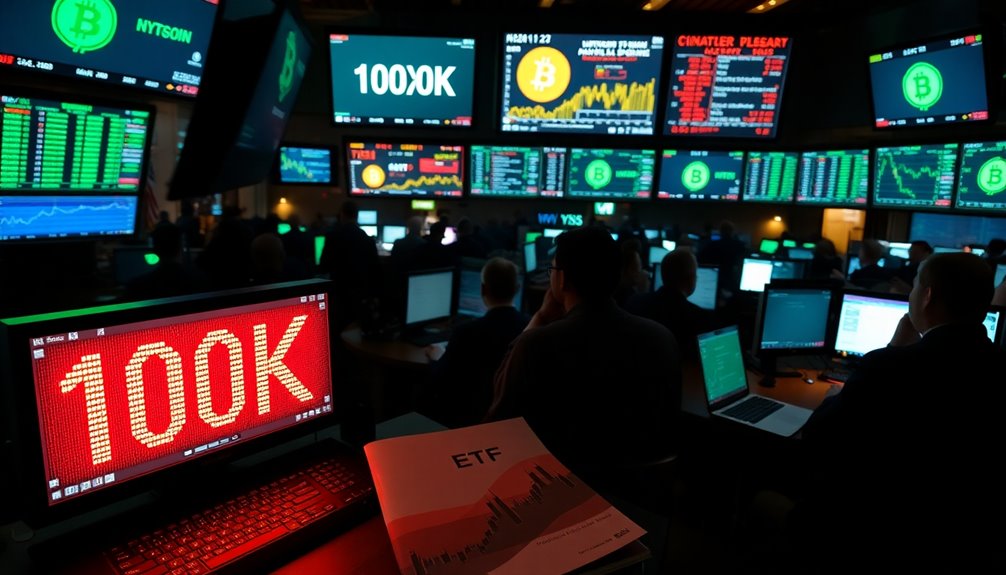
The approval of Bitcoin ETFs has sparked significant changes in the market, enhancing liquidity and attracting a wider range of investors. You'll notice that this shift not only makes it easier for people to invest but also stabilizes Bitcoin's price by bringing in institutional capital. As these ETFs gain traction, they could reshape the landscape of cryptocurrency investment and trading. Additionally, the regulatory endorsement of Bitcoin ETFs boosts confidence in cryptocurrency as an asset class, further broadening participation in the market.
ETF Approval Impact
With the recent approval of Bitcoin ETFs, the landscape for cryptocurrency investment has dramatically shifted, opening doors for a broader audience. This approval not only validates Bitcoin's legitimacy but also attracts various investors enthusiastic to plunge into the crypto market. Here's how ETFs are driving growth:
- Mainstream Appeal: ETFs offer familiar investment vehicles, enticing mainstream investors.
- Increased Inflows: Both retail and institutional investors are pouring money into Bitcoin via brokerage accounts.
- Regulatory Confidence: The SEC's endorsement boosts investor trust, making Bitcoin a more appealing option. Notably, this approval included the first 11 Bitcoin spot ETFs, marking a significant milestone in regulatory acceptance.
- Simplified Access: Retail investors find it easier to invest in Bitcoin without the complexities of direct ownership.
- Market Stability: More capital inflows contribute to price stability and a healthier market environment.
As a result, the approval of Bitcoin ETFs is transforming not just the perception of Bitcoin, but its actual market dynamics. This shift signals a promising future for cryptocurrencies, as participants from all walks of life engage with Bitcoin in ways previously thought impossible. Get ready to watch how these changes unfold!
Increased Market Liquidity
As the landscape of cryptocurrency evolves, increased market liquidity has become an essential element in driving Bitcoin's growth, particularly through the introduction of ETFs. Spot Bitcoin ETFs enhance liquidity, attracting institutional investors like pension funds and hedge funds, which reinforces the ETF ecosystem and positions Bitcoin as a more viable asset class. You'll find that physically-backed Bitcoin ETFs are gaining preference over futures-based options, fostering trust among investors.
The deeper liquidity provided by these ETFs not only stabilizes Bitcoin's trading volumes but also invites a broader range of investors who may prefer not to directly own the asset. Record inflows into Bitcoin ETFs signal growing confidence—$6.4 billion in November alone. This surge indicates that institutional involvement can dampen extreme price swings over time. Additionally, the maturation of Bitcoin is further demonstrated by the increasing preference for physically-backed Bitcoin ETFs over futures-based alternatives.
Moreover, ETF options offer hedging tools that manage Bitcoin's inherent volatility, acting as a stabilizing force in the market. While speculative activities may still introduce short-term instability, the maturation of Bitcoin ETFs is expected to lead to greater price stability in the long run. This integration into mainstream portfolios redefines Bitcoin's role, making it both a store of value and a speculative growth asset.
Strategies for Investors

Investors looking to navigate the turbulent waters of Bitcoin can adopt various strategies tailored to their goals. Whether you're aiming for cash flow, capital gains, or hedging against market volatility, it's essential to establish a game plan.
Consider these effective strategies:
- Cash Flow: Use lending or staking options to generate regular income from your Bitcoin holdings.
- Dollar Cost Averaging: Invest a fixed amount at regular intervals to minimize the risks of market timing. Additionally, this strategy can help mitigate the impact of short-term volatility as market conditions fluctuate.
- Options and ETFs: Utilize Bitcoin options and ETFs to manage risk while potentially generating cash flow.
- Risk Management: Implement stop-loss orders and diversify to protect against Bitcoin's high volatility.
- Technical Analysis: Analyze price charts and patterns to forecast future movements and make informed decisions.
Frequently Asked Questions
How Does Bitcoin Compare to Traditional Investments Like Stocks and Bonds?
When you compare Bitcoin to traditional investments like stocks and bonds, you'll notice Bitcoin offers high potential returns but comes with substantial risk and volatility. While it has outperformed the S&P 500 and NASDAQ in many years, its unpredictable nature can lead to significant losses. Unlike traditional assets, Bitcoin's correlation with stock markets is generally low, making it an alternative investment that requires careful consideration and a sound strategy.
What Are the Risks of Investing in Bitcoin for Beginners?
Investing in Bitcoin can feel like gambling at a Las Vegas casino—you might win big, but you could lose it all too. As a beginner, you should be aware of the risks. Market volatility can lead to sudden price swings, while regulatory uncertainty can change the landscape overnight. Security issues, like losing your digital keys, could cut you off from your assets. Plus, economic factors can also create unexpected challenges. Stay informed and cautious!
How Can One Safely Store Bitcoin Assets?
To safely store your Bitcoin assets, consider using hardware wallets, which keep your private keys offline and provide exceptional security. If you prefer convenience for smaller amounts, software wallets with strong authentication features can work. For added security, you could create a paper wallet as a backup. Always back up your wallet and consider shared wallets for joint access, ensuring multiple approvals for transactions to enhance protection against theft or loss.
What Is the Process for Buying Bitcoin for the First Time?
Ever wondered how to start buying Bitcoin? First, choose a reliable exchange like Coinbase or Binance. Create your account, linking your preferred payment method. Next, deposit funds—start small to get comfortable. When you're ready, select the Bitcoin amount and payment method, then confirm your order. Finally, consider storing your Bitcoin securely in a wallet. With these steps, you're on your way to owning your first Bitcoin!
How Does Bitcoin Mining Impact Its Price and Market Supply?
Bitcoin mining directly influences its price and market supply by creating scarcity. Every four years, the block reward is halved, reducing the number of new bitcoins entering circulation. This limited supply, combined with steady or rising demand, typically drives prices up. As mining costs increase, miners might sell their holdings to cover expenses, introducing volatility. Overall, the halving events and mining dynamics greatly shape Bitcoin's market behavior and price movements.
Conclusion
So, while the financial elite scramble like kids at a candy store, you've got a front-row seat to the chaos. Who would've thought Bitcoin's rise would turn Wall Street into a playground? As regulations tighten and institutions plunge into, it's clear that the game's changing. Forget traditional investments—grab your virtual shovel and start digging into this digital gold. After all, if the rich are panicking, shouldn't you be planning your escape to the moon?