

Investing in daily comfort through ergonomic furniture helps you stay focused, reduces fatigue, and prevents health issues like back pain, making you more productive over time. Comfort boosts your mental clarity and motivation, creating a relaxed yet confident work mindset. In contrast, decor might make your space look nice but often offers little functional benefit. If you want to discover how prioritizing comfort can transform your work routine, there’s more to explore ahead.

Get hardware and tech essentials delivered free with Prime
- Fast, free delivery on millions of items
- Prime Video, Amazon Music and more included
- Member-only deals all year
Key Takeaways
- Comfort reduces physical discomfort, enabling sustained focus and preventing fatigue that decor alone cannot address.
- Ergonomic setups support long-term health, decreasing frequent replacements and health-related work disruptions.
- A comfortable workspace enhances mental well-being, confidence, and motivation more effectively than superficial decor.
- Investing in ergonomics prevents injuries like back pain, leading to fewer sick days and consistent productivity.
- Comfort fosters a positive work environment, promoting engagement and flow states that decor cannot reliably achieve.
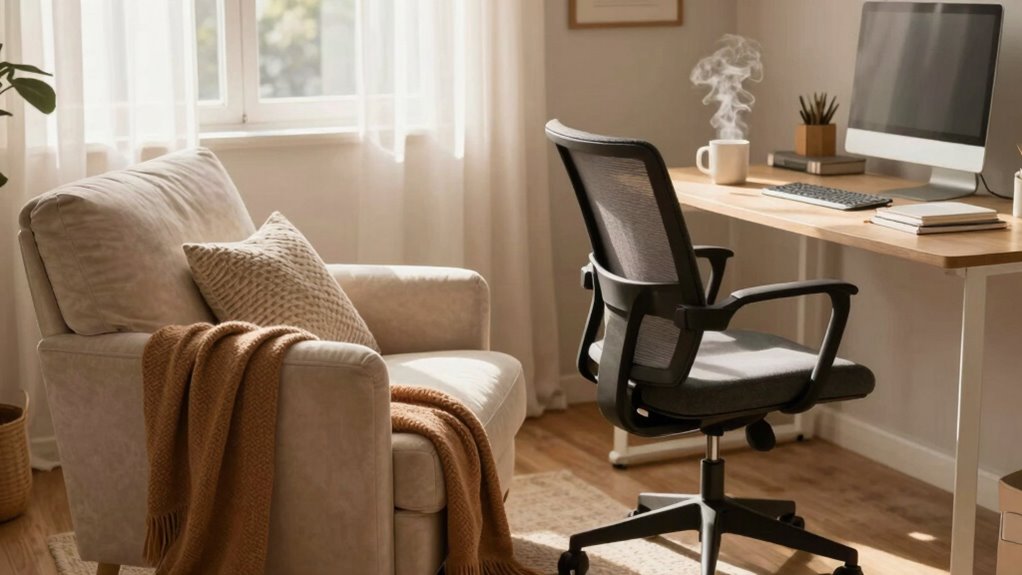
Finding the right balance between daily comfort and productivity can substantially boost your overall well-being and work performance. When it comes to creating a workspace that supports your efforts, prioritizing comfort often outweighs aesthetic upgrades like fancy decor. Investing in ergonomic design isn’t just about looking good; it’s about fostering a healthier environment that enhances your mental well-being. Proper ergonomic furniture, supportive chairs, and adjustable desks help reduce physical strain, preventing discomfort that can distract you from your tasks. When your body is comfortable, your mind naturally stays more focused and engaged, allowing you to work efficiently without the nagging pain or fatigue that often accompanies poorly designed setups. Additionally, understanding ergonomic principles can help you optimize your workspace for maximum comfort and productivity. Recognizing how body mechanics influence your comfort can lead to more effective workspace adjustments and better long-term health. It’s also beneficial to consider long-term health benefits when selecting ergonomic solutions, as they contribute to ongoing well-being and sustained productivity.
Comfort directly influences your mental well-being. If you’re constantly battling discomfort or feeling physically drained, it’s difficult to maintain a positive, motivated mindset. On the other hand, a workspace that feels cozy and supportive boosts your mood and encourages a more relaxed, confident approach to your workday. When you’re comfortable, it’s easier to enter a state of flow, where productivity naturally increases. You’ll find yourself less prone to stress and fatigue, which are common barriers to sustained focus. Meanwhile, spending on decor might make your space look appealing, but it doesn’t necessarily improve your daily experience or mental state. Decor can be distracting or superficial if it doesn’t serve a functional purpose, whereas ergonomic design directly impacts how effectively you can perform your tasks. Incorporating functional workspace elements ensures your environment remains both comfortable and practical.
Prioritizing comfort over decor also offers practical benefits. Comfortable furniture and an ergonomic setup require less frequent replacement, saving you money and effort over time. Plus, these investments reduce the risk of long-term health issues like back pain, joint problems, or repetitive strain injuries. This means fewer sick days and less time lost to discomfort, which translates to genuine productivity gains. Simply put, a workspace designed with your comfort in mind isn’t just a luxury—it’s a foundation for sustained efficiency. When your environment supports your physical and mental health, you’re more likely to stay consistent, motivated, and focused. Enhancing your workspace with ergonomic design is a strategic move that pays off in increased productivity and well-being, far more than decorating with trendy items that don’t contribute to your daily comfort or mental clarity.
As an affiliate, we earn on qualifying purchases.
Frequently Asked Questions
How Can Daily Comfort Improve Mental Health?
Daily comfort boosts your mental health by reducing stress and promoting relaxation. When you incorporate mindfulness practices, you stay present and centered, easing anxiety. Ergonomic adjustments, like proper chair and desk setup, prevent physical discomfort that can drain your mental energy. Together, these habits create a supportive environment, helping you stay focused, calm, and resilient throughout your day, ultimately improving your overall mental well-being.
What Specific Daily Comfort Items Boost Productivity?
Imagine your workspace as a well-tuned orchestra—every element must harmonize. Ergonomic chairs support your posture, reducing fatigue, while soothing scents create a calming atmosphere. These daily comfort items boost your focus and energy, helping you work efficiently. When you prioritize comfort, like investing in a supportive chair and calming aromas, you’ll notice increased productivity and a better mood throughout your workday.
Is Daily Comfort More Cost-Effective Than Decor?
Daily comfort is more cost-effective than decor because a clear cost comparison shows you get ongoing benefits with comfort items, like ergonomic chairs or cozy blankets, without frequent replacements. The value analysis favors daily comfort, as it directly boosts your productivity and well-being, whereas decor often offers aesthetic appeal with less functional impact. Investing in comfort delivers long-term value, making it a smarter financial choice for sustained productivity.
How Quickly Does Comfort Impact Work Performance?
Comfort can boost your work performance within minutes. Studies show ergonomic seating and ambient lighting can increase productivity by up to 20%. When you sit comfortably and have proper lighting, you reduce fatigue and eye strain, allowing you to focus better. You’ll notice improvements almost instantly, making daily comfort a quick and effective way to enhance your work efficiency and overall well-being.
Can Daily Comfort Help Reduce Burnout?
Yes, daily comfort can help reduce burnout. When you invest in ergonomic seating, you minimize physical strain, making work less exhausting. Incorporating soothing scents into your space can also promote relaxation and mental clarity, easing stress. These small daily comforts support your well-being, prevent fatigue, and help maintain motivation, ultimately reducing burnout and keeping you energized and focused throughout your workday.
As an affiliate, we earn on qualifying purchases.
Conclusion
Prioritizing daily comfort over fancy decor can truly boost your productivity. Imagine a remote worker who invests in a supportive chair and ergonomic desk setup—she finds herself more focused and less fatigued, even after long hours. By creating a comfortable environment, you’re not just enhancing your well-being but also setting the stage for sustained success. Remember, small comfort upgrades can lead to big gains—so invest in yourself first.
supportive desk chair for back pain
As an affiliate, we earn on qualifying purchases.
As an affiliate, we earn on qualifying purchases.
ergonomic keyboard and mouse set
As an affiliate, we earn on qualifying purchases.
As an affiliate, we earn on qualifying purchases.
Fall Picks
fall essentials
As an affiliate, we earn on qualifying purchases.