
Good office ergonomics are simple to achieve by making small adjustments to your workspace. Keep your back straight and supported, your monitor at eye level, and feet flat on the floor. Take breaks every 30 to 60 minutes to stretch and move around. Use supportive accessories like lumbar cushions or footrests if needed. Focus on maintaining natural body alignment throughout the day—staying comfortable and avoiding discomfort can be easier than you think. Keep exploring to discover more tips.

Get hardware and tech essentials delivered free with Prime
- Fast, free delivery on millions of items
- Prime Video, Amazon Music and more included
- Member-only deals all year
Key Takeaways
- Maintain good posture with a straight back, relaxed shoulders, and feet flat on the floor.
- Use adjustable furniture and accessories to support natural body alignment comfortably.
- Position your monitor at eye level to prevent neck strain.
- Take short breaks every 30-60 minutes to stretch and move.
- Make small, consistent adjustments to your workspace for ongoing comfort.
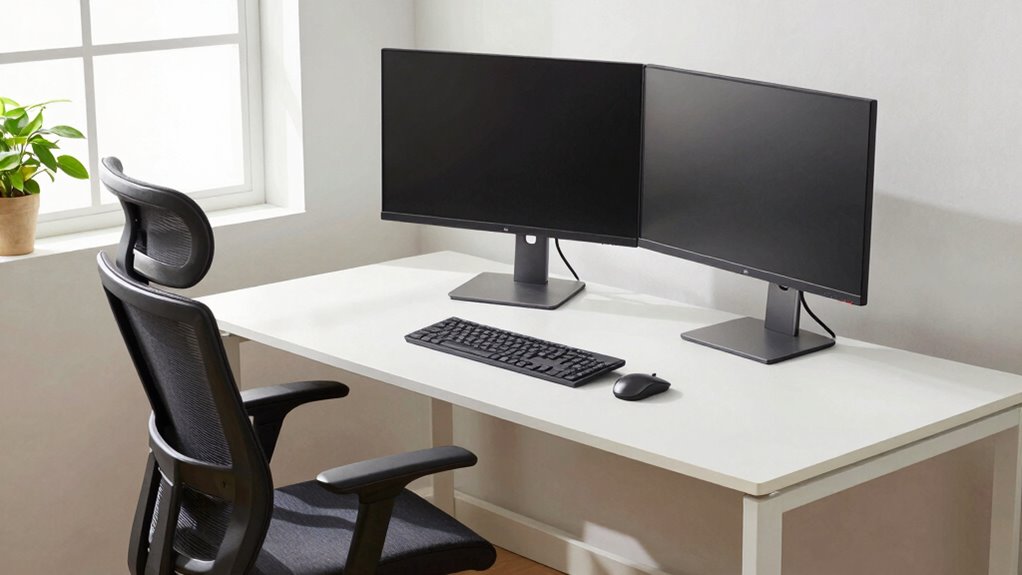
Creating an ergonomic workspace doesn’t have to be complicated. You just need to focus on some straightforward principles that can make a big difference in how you feel during and after your workday. The key is maintaining good posture awareness. When you’re seated at your desk, be mindful of your body’s position. Keep your back straight and supported, guaranteeing your shoulders are relaxed and not hunched forward. Your feet should rest flat on the floor, with knees bent at roughly a 90-degree angle. Your monitor should be at eye level, so you’re not tilting your head up or down, which can cause neck strain. These simple adjustments help you avoid putting unnecessary stress on your muscles and joints. Incorporating proper workspace setup can further enhance your comfort and prevent strain. Using ergonomic accessories can dramatically improve your comfort and posture. An adjustable chair with lumbar support encourages proper spinal alignment, while a footrest can help keep your legs and feet in a comfortable position. A monitor stand or adjustable arm ensures your screen isn’t too low or high, reducing strain on your neck and eyes. Keyboard and mouse pads with wrist supports can prevent discomfort or repetitive strain injuries. The goal is to create a workspace where your body naturally aligns without forcing yourself into awkward positions. When you incorporate these accessories thoughtfully, you can work for longer periods without feeling fatigued or experiencing pain. Additionally, understanding ergonomic principles can help you make informed choices about your workspace setup and accessories. It’s also important to take regular breaks, even if your setup is perfect. Stand up, stretch, and move around every 30 to 60 minutes. Small movements, like shoulder rolls or neck stretches, help relieve tension that builds from sitting in one position for too long. Staying hydrated and practicing deep breathing can also improve your overall comfort and focus. Remember, good ergonomics isn’t about perfection; it’s about making small, consistent adjustments that support your body’s natural structure. Incorporating posture awareness into your daily routine is the foundation of simple, effective office ergonomics. Pay attention to how you’re sitting and make tweaks when you notice discomfort. Using ergonomic accessories as tools to support good habits, rather than relying solely on them to fix problems, can reinforce healthy sitting habits. Turning ergonomic principles into habits ensures long-term comfort. By staying mindful of your body’s position and making minor adjustments, you can create a workspace that promotes health, productivity, and well-being—without the need for complicated setups or costly equipment. The key is consistency and awareness, turning ergonomic principles into everyday habits that keep you comfortable and focused.
ergonomic office chair with lumbar support
As an affiliate, we earn on qualifying purchases.
As an affiliate, we earn on qualifying purchases.
Frequently Asked Questions
How Often Should I Take Breaks During Work?
You should take a break every 30 to 60 minutes during work. Use this time to do stretching routines that target your neck, shoulders, and back, helping to reduce muscle tension. Also, step away from your screen to rest your eyes and prevent eye strain. Short breaks boost your focus and comfort, so make sure to move around and stretch regularly to keep your body and eyes healthy throughout the day.
What Are Some Inexpensive Ergonomic Accessories?
Imagine transforming your workspace without breaking the bank. Inexpensive ergonomic accessories like an ergonomic keyboard and an adjustable monitor stand can make a big difference. They help maintain proper posture, reduce strain, and increase comfort. These simple upgrades are budget-friendly, easy to set up, and make your workday smoother. Investing in them shows that good ergonomics doesn’t have to be complicated or costly, just smart and practical.
Can Standing Desks Improve Posture?
Yes, standing desks can improve your posture by encouraging better alignment and reducing the strain from prolonged sitting. The standing desk benefits include promoting posture correction and increasing movement throughout your day. It’s important to adjust the height correctly and alternate between sitting and standing. This way, you can avoid discomfort and support your overall ergonomic health, making your workspace more comfortable and productive.
How Do I Adjust My Chair for Proper Support?
Imagine your chair as the foundation of your comfort—then, adjust it to achieve perfect posture alignment. Sit back so your lumbar support cradles your lower back, and guarantee your feet rest flat on the floor. Raise or lower the seat height until your knees are at a 90-degree angle. Keep your hips level and shoulders relaxed, turning your chair into a supportive ally for your daily work.
Are Ergonomic Tips Different for Small Spaces?
In small spaces, ergonomic tips focus on space optimization and smart furniture choices. You should select ergonomic furniture that’s compact but still provides good support, like adjustable desks or space-saving chairs. Maximize your area by positioning your setup along a wall or corner, and use vertical storage to keep clutter out of your way. These strategies help you maintain comfort and productivity without overcrowding your workspace.
adjustable monitor stand for desk
As an affiliate, we earn on qualifying purchases.
As an affiliate, we earn on qualifying purchases.
Conclusion
So, there you have it—perfect office ergonomics without turning your desk into a spaceship cockpit. Imagine sitting like royalty with your feet flat, your screen at eye level, and your chair supporting your back like a loyal knight. No fancy gadgets needed—just common sense and a little awareness. Stay comfy, stay productive, and remember: your spine isn’t a pretzel, no matter how many ergonomic tricks you try to twist it into.
As an affiliate, we earn on qualifying purchases.
wrist support keyboard and mouse pad
As an affiliate, we earn on qualifying purchases.
As an affiliate, we earn on qualifying purchases.
Halloween Picks
halloween
As an affiliate, we earn on qualifying purchases.