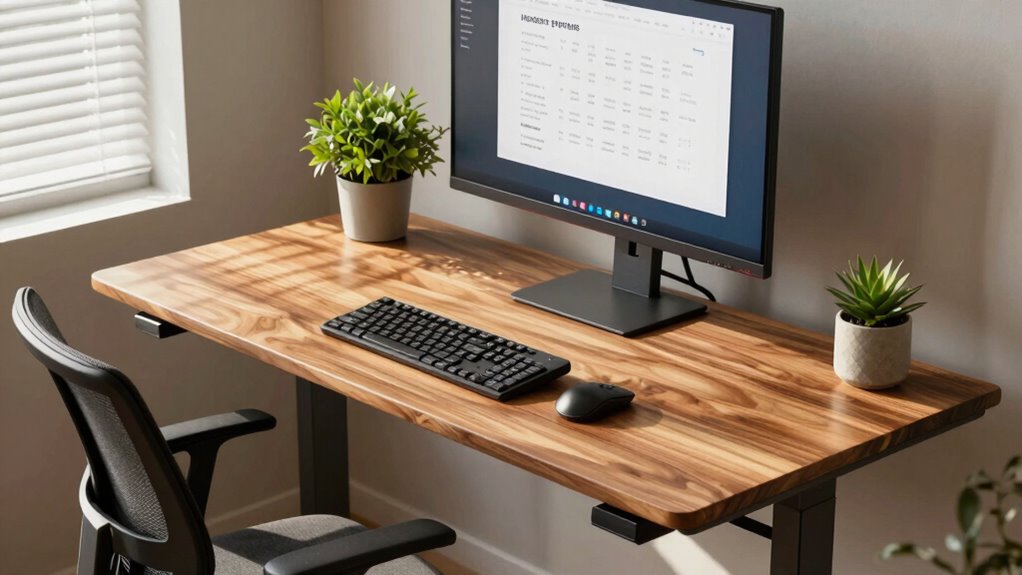

To make your standing desk improve your workflow, you need to set it up properly. Adjust the desk height so your elbows form a 90-degree angle and keep your monitor at eye level to avoid neck strain. Use ergonomic accessories like monitor risers and cable organizers. Remember to switch between sitting and standing, maintain good posture, and move regularly. Keep your workspace organized and avoid common setup mistakes—learn more to optimize your standing desk effectively.

Get hardware and tech essentials delivered free with Prime
- Fast, free delivery on millions of items
- Prime Video, Amazon Music and more included
- Member-only deals all year
Key Takeaways
- Ensure proper ergonomic setup with monitor at eye level and elbows at 90 degrees to prevent discomfort.
- Incorporate both sitting and standing intervals every 30–60 minutes to promote movement and reduce stiffness.
- Organize your workspace with accessible accessories, cable management, and minimal clutter for efficiency.
- Maintain good posture by aligning ears, shoulders, and hips, and engaging core muscles.
- Incorporate regular movement, stretching, and hydration breaks to sustain productivity and prevent fatigue.
adjustable standing desk monitor riser
As an affiliate, we earn on qualifying purchases.
As an affiliate, we earn on qualifying purchases.
How to Set the Correct Desk Height for Comfort and Productivity
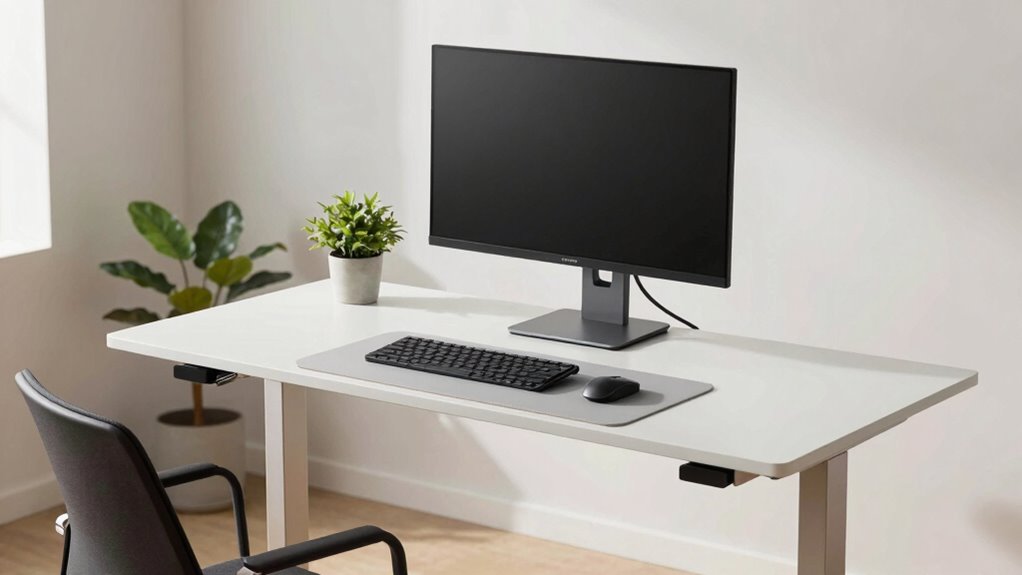
To guarantee you work comfortably and efficiently, setting the correct desk height is essential. You want your desk height to allow your elbows to form a 90-degree angle when typing, reducing strain on your shoulders and wrists. When adjusting, focus on foot positioning—your feet should be flat on the floor, providing stability and support. If your feet don’t reach, consider using a footrest to maintain proper foot placement. A properly set desk height keeps your wrists straight and minimizes fatigue, helping you stay productive longer. Remember, a slight adjustment can make a big difference in comfort. Take the time to fine-tune your standing desk to suit your height and posture, ensuring a healthier, more efficient work experience. Additionally, ergonomic setup can significantly improve your overall comfort and prevent musculoskeletal issues. Ensuring your workspace is organized and clutter-free can also contribute to better focus and efficiency during work hours. Proper desk height is a key component of an effective ergonomic environment that supports your health, especially since silly ergonomic mistakes can sometimes undermine your efforts. Being mindful of workstation ergonomics can help you avoid common pitfalls and promote better long-term health.
ergonomic anti-fatigue mat for standing desk
As an affiliate, we earn on qualifying purchases.
As an affiliate, we earn on qualifying purchases.
Choosing the Best Ergonomic Accessories for Your Standing Desk
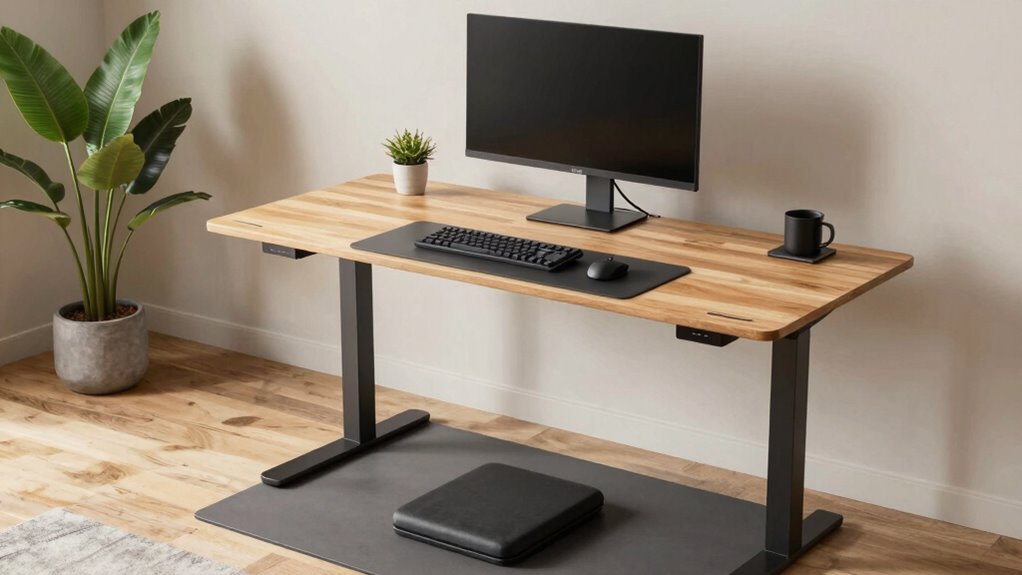
Choosing the right ergonomic accessories can make a big difference in your comfort and productivity. You need to select essentials like anti-fatigue mats, adjustable monitor stands, and wrist supports, and learn how to adjust them properly. When you do, your standing desk setup becomes more effective and easier to use throughout the day. Incorporating anti-fatigue mats can help reduce discomfort and fatigue during long periods of standing. Additionally, understanding proper ergonomic setup can prevent strain and improve overall comfort. Paying attention to mindfulness and presence during your setup can also enhance your focus and well-being as you work. Being aware of your home environment and how it influences your posture and comfort can lead to better adjustments and a more productive workspace. Implementing targeted segmentation of audience strategies ensures your workspace setup aligns with your specific needs, leading to better results.
Essential Ergonomic Accessories
Selecting the right ergonomic accessories can considerably enhance your standing desk experience by promoting better posture and reducing discomfort. Investing in essentials like ergonomic footrests and monitor risers helps maintain proper alignment and reduces strain. A good ergonomic footrest encourages you to shift weight and avoid stiffness, while monitor risers ensure your screen is at eye level, preventing neck strain. Consider these accessories to optimize comfort:
- Adjustable ergonomic footrests
- Monitor risers for proper screen height
- Anti-fatigue mats to reduce leg fatigue
- Wrist supports for keyboard and mouse
- Cable organizers to keep your workspace tidy
Using accessories that improve color accuracy and lighting conditions can also help reduce eye strain and make long hours at your standing desk more comfortable. Incorporating moisture-retaining planters can help create a healthier environment, especially in dry indoor spaces. These accessories support your body’s natural position, helping you stay focused and comfortable throughout the day. Prioritize quality and adjustability to get the most benefit from your standing desk setup.
Proper Adjustment Techniques
Proper adjustment techniques are essential for maximizing the benefits of ergonomic accessories on your standing desk. First, set your desk height so that your elbows form roughly a 90-degree angle when your arms rest comfortably at your sides. This position prevents strain on your shoulders and wrists. When selecting ergonomic accessories, make sure they complement your desk height—think adjustable monitor arms, keyboard trays, and anti-fatigue mats. These accessories should position your monitor at eye level and keep your wrists neutral. Regularly check your setup and make small adjustments to maintain proper alignment throughout the day. The right combination of desk height and ergonomic accessories helps reduce fatigue, improve posture, and boost productivity. Proper adjustment techniques turn your standing desk into a truly effective workspace.
As an affiliate, we earn on qualifying purchases.
How to Maintain Good Posture While Standing

Maintaining good posture while standing is essential for preventing discomfort and long-term health issues. To do this, you need to stay posture-aware and develop ergonomic habits. Focus on aligning your ears, shoulders, and hips in a straight line. Keep your knees slightly bent and your feet hip‑width apart for stability. Engage your core muscles to support your spine. Avoid leaning forward or arching your back excessively. Regularly check your stance and make small adjustments to stay balanced. Incorporating ergonomic habits can further enhance comfort and posture stability. Paying attention to safety and seamanship fundamentals can help you maintain proper body positioning and prevent strain during long periods of standing, especially when considering the importance of Hamster Care and Costs to ensure overall well-being. Additionally, being aware of vacuum filtration efficiency can contribute to maintaining a clean and healthy environment, which supports overall health during prolonged standing. Understanding gold IRA markets can also inform how you optimize your workspace setup for financial planning and stability.
As an affiliate, we earn on qualifying purchases.
How to Incorporate Movement and Breaks for Better Comfort

To stay comfortable at your standing desk, you should schedule regular movement breaks and incorporate dynamic stretches to keep your muscles active. Alternating between sitting and standing throughout the day can help prevent fatigue and improve circulation. By actively managing these habits, you’ll boost both comfort and productivity. Additionally, being mindful of signs of twin flame connection can foster emotional balance and self-awareness, which are essential for maintaining focus and harmony during your workday. Incorporating evidence-based insights into your routine can help you develop sustainable habits that support both your physical comfort and mental clarity, ensuring you stay grounded amidst the noise. For example, adding accessories like remote car covers or gear upgrades can serve as a metaphor for protecting and enhancing your workspace environment, promoting long-term efficiency and comfort.
Schedule Regular Movement Breaks
Taking regular movement breaks is essential to prevent stiffness and boost circulation when using a standing desk. By scheduling these breaks, you help avoid fatigue and maintain focus throughout the day. To make this easier, set hydration reminders to prompt you to drink water and keep your energy up. Wear ergonomic footwear to support your feet during breaks, reducing discomfort. Incorporate quick activities like walking around, stretching your legs, or shifting your weight. Use alarms or apps to remind you every 30-60 minutes to stand, stretch, or move. Remember, user privacy and cookies are important considerations when using apps or online tools for reminders. Regular movement not only refreshes your body but also enhances productivity, making your standing desk setup truly effective. Additionally, understanding ergonomic principles can help you optimize your setup for better comfort and health. Incorporating proper posture strategies can further reduce strain and promote long-term comfort during your workday. To maximize the benefits, consider learning about workplace ergonomics and how to adjust your environment for sustained well-being.
Incorporate Dynamic Stretches
Incorporating dynamic stretches into your routine can considerably improve comfort and reduce stiffness throughout the day. These stretch routines help keep your muscles active, preventing tension from prolonged static postures. To make the most of your stretches, organize your desk efficiently so you can easily access space for movement without disrupting your workflow. Simple moves like arm circles, leg swings, and torso twists can be performed between tasks or during short breaks. Keep your desk organized to avoid clutter, which can hinder your ability to stretch freely. Regularly incorporating these dynamic stretches promotes better circulation and flexibility, making it easier to switch between sitting and standing. Remember, consistency in your stretch routines is key to maintaining comfort and reducing fatigue.
Alternate Between Sitting and Standing
Switching between sitting and standing throughout your workday helps prevent stiffness and promotes better circulation. To make this switch comfortable, use ergonomic footrests or standing desk mats to reduce fatigue. Incorporate these tips:
- Alternate every 30–60 minutes to avoid prolonged strain
- Use standing desk mats for cushioning and support
- Incorporate ergonomic footrests to shift weight and reduce lower back stress
- Take short breaks to stretch or walk around
- Listen to your body—adjust your position as needed
Balancing sitting and standing isn’t just about switching; it’s about doing so mindfully. These small adjustments help you stay comfortable, boost productivity, and prevent discomfort over time.
Organizing Your Standing Desk for a More Efficient Workspace
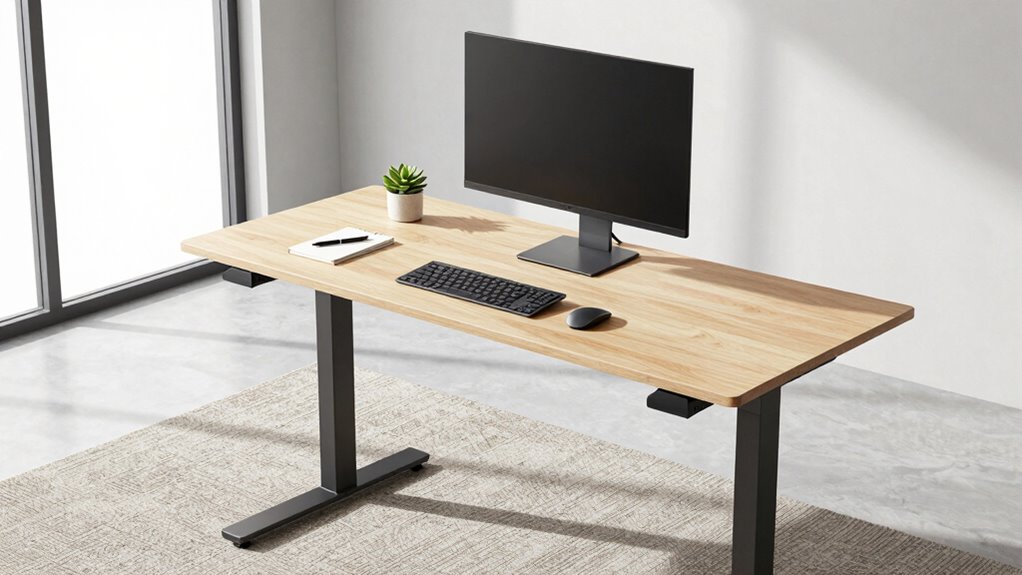
To create a more efficient workspace at your standing desk, start by decluttering your surface and organizing essential items within easy reach. Use color coordination to create a visually appealing setup that also helps you quickly identify items. For instance, keep your pens, notepads, and accessories in matching or complementary colors to reduce clutter and mental noise. Incorporate simple desk decor that boosts motivation without taking up too much space, like a small plant or a minimal clock. Arrange your monitor, keyboard, and mouse at ergonomic heights, ensuring everything is easily accessible. Keep frequently used items close, while storing less-used supplies elsewhere. A tidy, well-organized desk improves focus, speeds up your workflow, and makes standing work more comfortable.
Common Standing Desk Setup Mistakes to Avoid
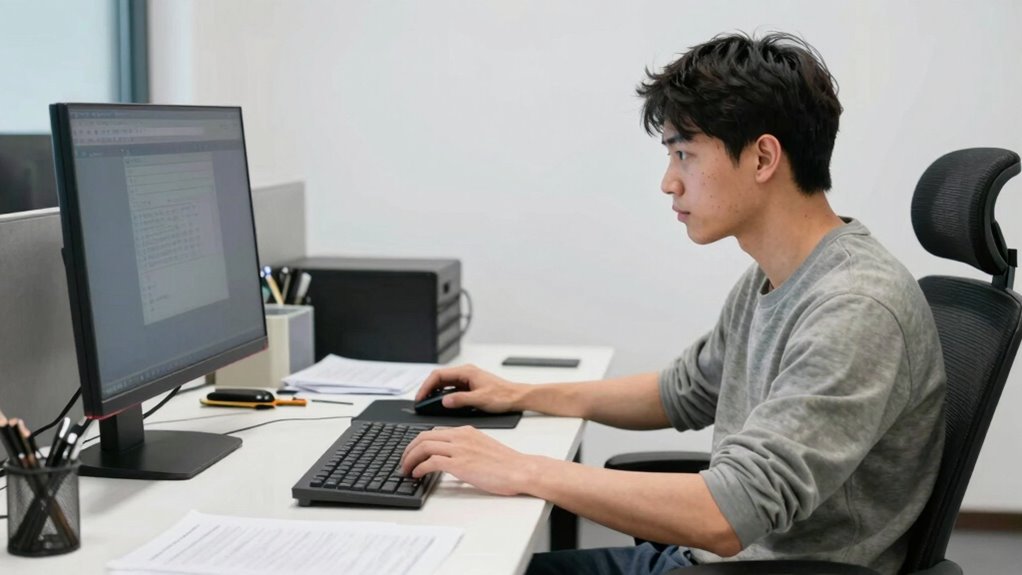
One common mistake to avoid when setting up your standing desk is neglecting proper ergonomics, which can lead to discomfort or injury over time. Poor positioning can cause strain on your neck, shoulders, and back. To prevent this, pay attention to key details.
- Ignore color coordination; mismatched accessories can create visual clutter and distract you.
- Overlook the height of your monitor, forcing you to crane your neck.
- Use cluttered desk accessories that block your workspace.
- Set your keyboard and mouse too high or low, causing wrist strain.
- Neglect to adjust your standing desk regularly, leading to poor posture.
Avoid these mistakes by focusing on ergonomic setup, thoughtful color coordination, and organized desk accessories for a healthier, more productive workday.
How to Adjust Your Standing Desk Over Time for Long-Term Benefits
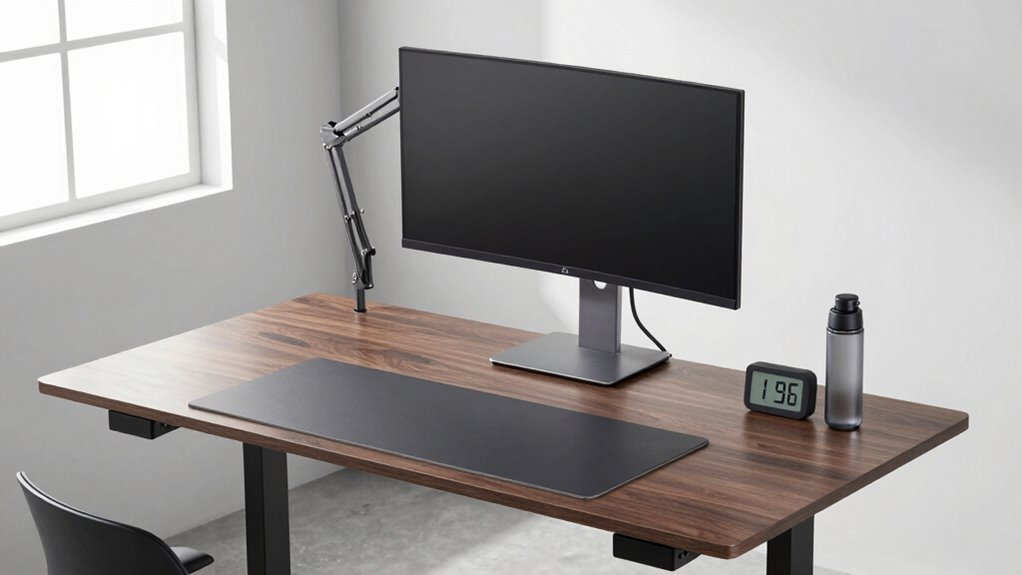
Adjusting your standing desk over time is crucial to maintain comfort and prevent strain. As you get accustomed to your setup, small tweaks can improve ergonomics and reduce fatigue. Regularly check that your ergonomic wrist position remains natural, avoiding strain on your wrists during long work sessions. Adjust the desk height if you notice discomfort or if your posture shifts. Cable management is important; as your workspace evolves, ensure cables are organized to prevent tripping or pulling, which can cause misalignment. Keep your monitor at eye level to avoid neck strain, and consider switching between standing and sitting to prevent fatigue. Consistent adjustments help sustain long-term benefits, making your standing desk a sustainable, ergonomic workspace.
Frequently Asked Questions
How Do I Choose the Right Type of Standing Desk?
To choose the right standing desk, focus on adjustable desk height and ergonomic accessories. Guarantee the desk easily switches between sitting and standing positions, supporting your ideal ergonomic setup. Look for features like a stable frame and smooth height adjustments. Add ergonomic accessories like a monitor arm and footrest to improve comfort. The right desk adapts to your needs, helping prevent strain and boosting productivity.
What Are the Signs My Standing Desk Setup Is Ineffective?
You’ll notice your standing desk setup is ineffective if your ergonomic accessories don’t support proper posture or if your desk height isn’t adjustable enough for comfort. You might feel strain in your neck, shoulders, or back, or experience fatigue after short periods of standing. If your monitor isn’t at eye level or your keyboard causes wrist discomfort, it’s time to reassess your desk height and accessories to improve alignment and reduce strain.
Can Standing Desks Help Reduce Back Pain Long-Term?
Standing desks can be a game-changer for reducing back pain long-term if you set them up correctly. Think of your workstation as a symphony — every element, from ergonomic accessories to posture correction, must work in harmony. When you adjust your desk to maintain neutral spine alignment and incorporate ergonomic accessories like supportive mats and monitor stands, you help prevent strain and promote better posture, easing back pain over time.
How Do I Transition From Sitting to Standing Comfortably?
To shift comfortably from sitting to standing, start by adjusting your desk height to guarantee your elbows are at a 90-degree angle and your monitor is eye level. Use ergonomic accessories like anti-fatigue mats and footrests to support your posture adjustment. Gradually increase your standing time each day, listening to your body. This approach helps prevent strain, making the switch more natural and comfortable.
Are There Specific Exercises to Do at My Standing Desk?
Did you know that regular ergonomic stretches can reduce back pain by up to 50%? At your standing desk, do simple exercises like shoulder rolls, neck stretches, and calf raises. Focus on posture adjustments—keep your shoulders relaxed, your monitor at eye level, and your feet flat. These exercises and tweaks improve circulation, prevent stiffness, and help you stay comfortable and productive while standing.
Conclusion
Remember, your standing desk is only as effective as how you set it up. When you prioritize comfort, posture, and movement, you reveal its true potential to boost productivity and well-being. Sometimes, it’s the small adjustments—like a better chair or taking breaks—that make the biggest difference. After all, the right setup isn’t just about equipment; it’s about caring for yourself. In the end, your workspace reflects your mindset—so set it up thoughtfully and watch your day transform.
Halloween Picks
halloween
As an affiliate, we earn on qualifying purchases.