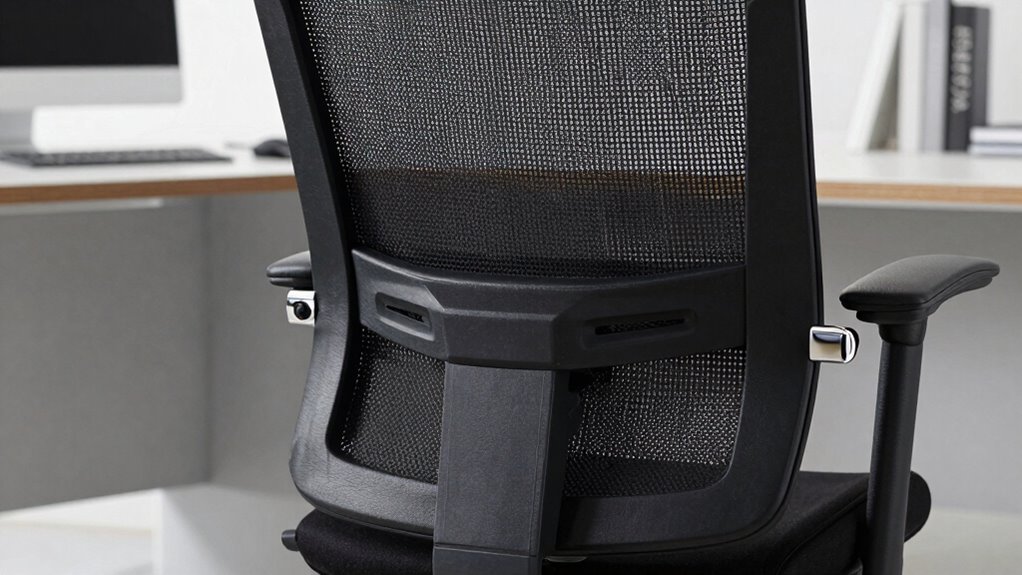

Many chair buyers overlook the importance of properly adjusting lumbar support to match their unique spinal curve, assuming a one-size-fits-all approach is enough. You need to focus on customizing the height, angle, and firmness to ensure it aligns with your lower back’s natural shape. Relying solely on fixed or generic supports can cause discomfort and worsen posture over time. Keep exploring to discover how proper adjustments can considerably improve your sitting experience and long-term spinal health.

Get hardware and tech essentials delivered free — and shop member deals
- Fast, free delivery on millions of items
- Access to Prime Big Deal Days deals on October 6–7
- Prime Video, Amazon Music and more included
Key Takeaways
- Does the lumbar support be adjustable to match my natural spine curve?
- Is the lumbar support positioned to align with my specific lower back anatomy?
- Will the support force push or pull my lower back into unnatural postures?
- Does the chair allow comprehensive ergonomic adjustments beyond just lumbar support?
- How does the lumbar support integrate with overall seat height, backrest, and posture for true comfort?
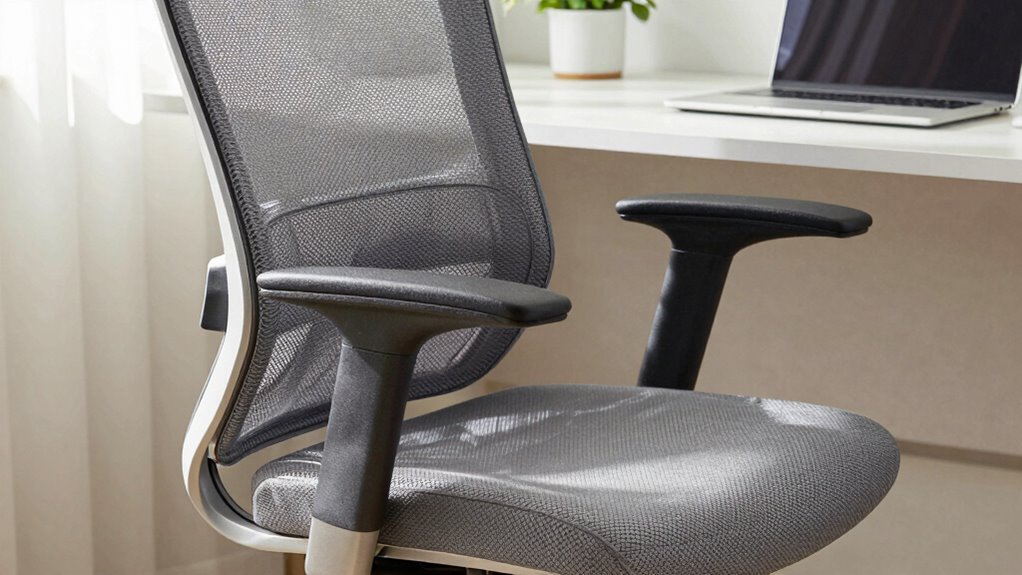
Are you wondering whether lumbar support is really necessary for your chair? Many people assume that a built-in or added lumbar pillow automatically guarantees better comfort, but the truth is more nuanced. The real key isn’t just about adding lumbar support but about making ergonomic adjustments that promote proper posture. When you focus on posture correction, you’re addressing the root of discomfort and strain, rather than just masking symptoms with extra cushions or supports.
Lumbar support becomes truly effective only when it aligns with your body’s natural curve. If your chair’s support isn’t adjustable, or if you rely solely on a pillow that doesn’t fit your spine’s shape, it might not help much. Instead, you should evaluate whether your chair allows you to make ergonomic adjustments, like changing seat height, backrest angle, and lumbar positioning. These adjustments help you find a position where your lower back is supported naturally without forcing your spine into unnatural angles. When you actively customize your chair, you’re practicing posture correction, which reduces the risk of long-term back pain and discomfort. Additionally, understanding spinal alignment is crucial for maintaining long-term comfort and avoiding strain. Proper ergonomic adjustments can also help you achieve correct sitting posture, which is vital for overall spinal health.
Many chair buyers overlook the importance of proper ergonomic adjustments, assuming that lumbar support alone will solve their problems. But you need to consider how your entire sitting setup works as a system. Good posture isn’t just about supporting the lower back; it involves aligning your hips, shoulders, and neck. If your lumbar support pushes your lower back too far forward or isn’t adjustable, it can lead to tension rather than relief. The goal is to maintain the spine’s natural lordotic curve, which can be achieved through thoughtful ergonomic adjustments rather than relying solely on a fixed support feature. Moreover, understanding ergonomic principles helps ensure your sitting arrangement promotes healthy spinal alignment and long-term comfort.
adjustable lumbar support office chair
As an affiliate, we earn on qualifying purchases.
As an affiliate, we earn on qualifying purchases.
Frequently Asked Questions
How Do I Know if My Chair’s Lumbar Support Is Adjustable?
You can tell if your chair’s lumbar support is adjustable by checking for a lever, knob, or slider near the backrest. An ergonomic design often includes these features for easy adjustments. Feel the support to see if it moves or changes shape, and consider the material’s durability to guarantee it maintains support over time. Adjustable lumbar support helps you customize comfort, reducing strain during long sits.
Can Lumbar Support Prevent Long-Term Back Pain?
Yes, lumbar support can prevent long-term back pain by providing ergonomic benefits that promote proper posture and spinal alignment. When your lumbar support is adjustable, you can customize comfort, reducing strain and fatigue. While aesthetic considerations matter, prioritizing ergonomic benefits guarantees your chair offers real relief. Proper support encourages healthy habits, helping you avoid chronic discomfort and maintaining your back’s health over time.
What Materials Are Best for Lumbar Support in Chairs?
The best materials for lumbar support in chairs are memory foam and gel padding. Memory foam molds to your lower back, providing personalized comfort and support, while gel padding offers cooling, cushioned relief that maintains its shape. You should look for chairs that feature these materials because they reduce strain, promote proper posture, and help prevent long-term back pain. Combining these ensures maximum comfort and ongoing spinal health.
Is Lumbar Support Necessary for Short-Term Sitting?
Think of lumbar support as a safety net—you might not need it for a quick jump, but it still offers benefits. If your short-term sitting involves minimal strain, lumbar support isn’t essential. However, it can still provide ergonomic benefits and posture improvement, making even brief periods more comfortable. So, while not always necessary, lumbar support can help you maintain better alignment and reduce discomfort, even during short sits.
How Often Should I Replace or Upgrade Lumbar Support?
You should replace or upgrade your lumbar support every 1 to 2 years to maintain ideal office ergonomics. Regularly assess whether it still provides proper support based on ergonomic principles; if it becomes compressed, uncomfortable, or loses its shape, it’s time for an upgrade. Staying proactive ensures your chair promotes good posture, prevents strain, and aligns with the latest office ergonomics standards, keeping you comfortable and healthy during long work hours.
As an affiliate, we earn on qualifying purchases.
Conclusion
Think of choosing lumbar support like planting a sturdy tree. If you don’t consider the right soil or position, it won’t grow strong or provide shade. The same goes for your chair—without proper lumbar support, your back struggles to thrive. Ask the right questions now, and you’ll guarantee your chair becomes a strong, supportive partner in your daily journey. Don’t let your back be a sapling—nurture it with the support it deserves.
height adjustable lumbar support
As an affiliate, we earn on qualifying purchases.
As an affiliate, we earn on qualifying purchases.
ergonomic chair with customizable lumbar support
As an affiliate, we earn on qualifying purchases.
As an affiliate, we earn on qualifying purchases.
Evergreen bestsellers Picks
bestsellers
As an affiliate, we earn on qualifying purchases.