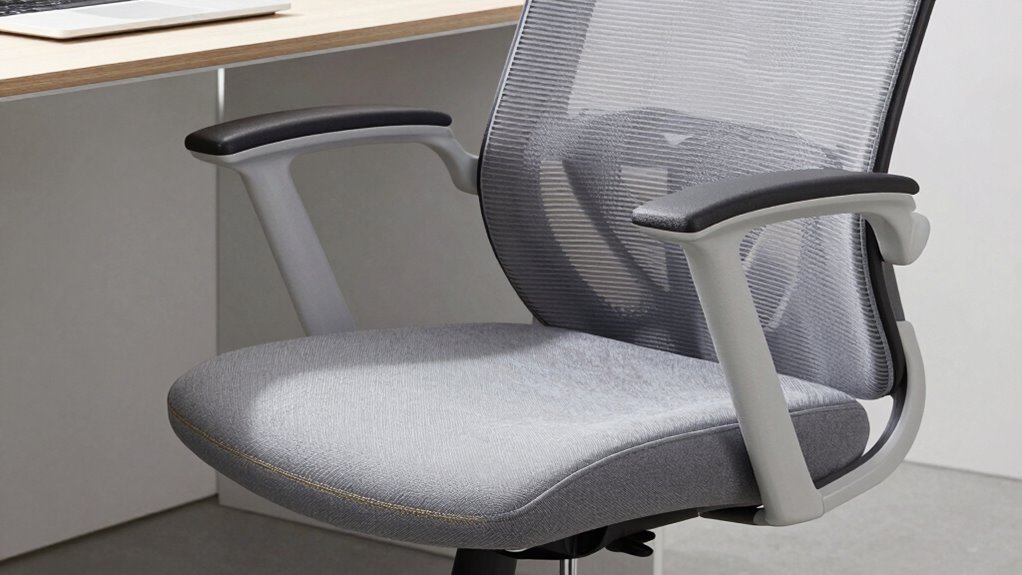

To determine if a chair is genuinely ergonomic, focus on its seat depth, lumbar support, and armrests. You want adjustable seat depth to guarantee proper thigh support and circulation, while lumbar support should align with your spine’s natural curve to prevent strain. Armrests need to be customizable in height, width, and angle for comfortable shoulder and neck positioning. If you’re curious about how these features work together for your comfort, keep exploring further.

Get hardware and tech essentials delivered free with Prime
- Fast, free delivery on millions of items
- Prime Video, Amazon Music and more included
- Member-only deals all year
Key Takeaways
- Proper seat depth ensures thighs are supported without pressure, promoting circulation and maintaining good posture.
- Adjustable lumbar support aligns with the spine’s natural curve, reducing lower back strain and enhancing spinal health.
- Customizable armrests support shoulders and elbows, minimizing tension and encouraging proper upper body posture.
- Ergonomic chairs allow personalized adjustments to seat depth, lumbar support, and armrests for tailored comfort.
- Well-designed support features prevent discomfort during extended sitting, promoting long-term ergonomic health.
ergonomic office chair with adjustable seat depth
As an affiliate, we earn on qualifying purchases.
As an affiliate, we earn on qualifying purchases.
Why Ergonomic Support Matters in Office Chairs

Ergonomic support is essential in office chairs because it directly impacts your comfort and health throughout the workday. When a chair offers proper lumbar support and adjustable features, you reduce strain on your back and neck, preventing discomfort and injury. An aesthetic design isn’t just about looks—it can also inspire confidence and create a professional environment. Material durability matters too; a sturdy chair made from high-quality materials guarantees longevity, saving you money and hassle over time. When your chair combines ergonomic support with a sleek design and durable materials, it promotes better posture, enhances productivity, and makes your workspace more inviting. Incorporating gear care tips into your routine helps maintain your chair’s condition, ensuring consistent support and longevity. Understanding early warning signs of discomfort can help you address issues before they develop into more serious health problems. Additionally, paying attention to ergonomic principles can guide you in selecting and adjusting your chair for optimal comfort and support. Proper adjustability features allow you to customize your chair to fit your body’s needs, further improving ergonomic benefits. Regularly assessing your posture awareness can also prevent long-term musculoskeletal issues.
lumbar support ergonomic desk chair
As an affiliate, we earn on qualifying purchases.
As an affiliate, we earn on qualifying purchases.
Key Features to Look for in an Office Chair

When choosing an office chair, you should prioritize adjustable seat depth to fit your body properly. Proper lumbar support is essential to maintain good posture and prevent back pain. Additionally, comfortable armrests help reduce shoulder strain during long hours at your desk. Incorporating ergonomic features can further enhance overall comfort and support throughout your workday. Paying attention to ergonomic design can also help prevent discomfort and promote better health during extended periods of sitting. A focus on adjustable components ensures that the chair can be tailored to your individual needs, allowing for better posture alignment and overall comfort.
Adjustable Seat Depth
Adjustable seat depth is a crucial feature to take into account because it guarantees your thighs rest comfortably against the chair without putting pressure on the backs of your knees. This feature allows you to customize the seat to your body, promoting better circulation and reducing discomfort during long hours. Look for chairs with a smooth, easy-to-adjust mechanism that lets you set the depth precisely. Some models incorporate memory foam padding, enhancing comfort and support. Additionally, an aesthetic design shouldn’t compromise functionality; choose a chair that combines style with practicality. Proper seat depth ensures you maintain good posture without sacrificing comfort, making your workspace more ergonomic and inviting. Prioritizing this feature helps you find a chair that adapts perfectly to your body’s needs.
Proper Lumbar Support
How can you guarantee your lower back stays comfortable and supported during long hours at your desk? The key is proper lumbar support that aligns with your spine’s natural curve. Look for a chair with adjustable lumbar support to customize fit and verify consistent comfort. Aesthetic appeal matters too—you want a design that blends seamlessly with your workspace. Material durability is essential; sturdy plastics, reinforced fabrics, or high-quality foam ensure the lumbar region maintains its supportive shape over time. Avoid flimsy padding that flattens with use. The right lumbar support reduces strain and fatigue, helping you stay focused and comfortable throughout the day. Additionally, choosing a chair with features that promote optimal posture alignment can significantly enhance long-term comfort and reduce the risk of back pain. Investing in chairs with high-quality ergonomic design can further ensure sustained support and adaptability. Selecting a chair with a well-designed Gold IRA market reputation can also ensure you invest in durable, high-quality components that last. Regularly checking the body jewelry measurements and materials used can help maintain proper support and comfort in your seating. To truly optimize your ergonomic setup, consider the importance of adjustable armrests, which can help reduce shoulder strain and improve overall posture. Prioritize these features when choosing your office chair to promote better posture and long-term health.
Comfortable Armrests
Comfortable armrests play a significant role in maintaining proper posture and reducing shoulder strain during long hours at your desk. Look for ergonomic armrest adjustments so you can customize height, width, and angle, ensuring they support your arms without causing tension. Armrest material choices matter too—soft padding offers comfort, while hard plastic might cause discomfort after extended use. Choosing the right combination helps prevent fatigue and promotes better alignment. Here’s a quick comparison:
| Feature | Benefit | Material Choice |
|---|---|---|
| Ergonomic adjustments | Fit your body perfectly | Soft foam, breathable fabric |
| Fixed armrests | No customization, less comfort | Hard plastic, leather |
| Adjustable height | Prevent shoulder strain | Padded or non-padded |
| Armrest width | Accommodate different body sizes | Cushioned or rigid |
Prioritize comfort and adjustability for all-day support.
As an affiliate, we earn on qualifying purchases.
How Seat Depth Affects Your Comfort and Posture

Your seat depth should support your thighs without cutting off circulation or causing discomfort. When it’s just right, it helps maintain proper spinal alignment and reduces strain on your lower back. If the depth is off, you might experience poor posture or circulation issues that can affect your comfort all day. Proper seat adjustment is essential for ensuring ergonomic seating and preventing discomfort during long periods of sitting. Additionally, understanding how to strain paint properly can prevent unnecessary strain and improve your overall comfort when working at a desk or workstation. Being aware of ergonomic principles can help you make better adjustments and promote healthier sitting habits, much like mastering kitchen knives improves safety and efficiency in cooking.
Proper Seat Depth Fit
When selecting a chair, guaranteeing the proper seat depth is essential for maintaining good posture and preventing discomfort. You want a seat that allows you to sit back comfortably without pressing against the front edge, which can restrict circulation. The ideal seat depth should leave about two to four inches of space between the back of your knees and the chair’s edge. Look for options with adjustable features to customize fit, especially if you prefer a specific aesthetic design or custom fabric that complements your space. Proper seat depth helps distribute your weight evenly and supports your lower back. Choosing a chair with this in mind ensures you stay comfortable during long periods of sitting while enhancing the overall look of your workspace. Additionally, selecting a chair with supportive ergonomic features can further improve comfort and promote better posture throughout your day.
Impact on Spinal Alignment
Since seat depth directly influences how well your spine stays aligned, choosing the right fit is essential for maintaining good posture. A properly fitted seat supports your lumbar region, encouraging spinal flexibility and reducing strain. If the seat is too deep, you might lean forward or slouch, hindering posture correction. Conversely, a seat that’s too shallow can cause pressure behind your knees, forcing you to shift frequently, disrupting alignment. Proper seat depth promotes natural spinal curves and minimizes discomfort during prolonged sitting. To optimize spinal alignment, consider these factors:
- Ensuring your back fully contacts the chair’s backrest for support
- Maintaining a slight gap between the seat edge and the back of your knees
- Adjusting the seat depth to allow your feet to rest flat on the floor while supporting your lower back
- Workplace ergonomics play a crucial role in overall comfort and posture maintenance.
- Additionally, selecting chairs with adjustable armrests can help support your upper body and reduce shoulder strain.
- Understanding family photoshoot fails can help you choose ergonomic seating that minimizes unintentional movements or distractions during long periods of sitting.
- Proper seat dimensions are essential to ensure the chair fits your body properly and promotes healthy sitting habits.
- Ensuring the seat height is adjustable allows you to fine-tune your positioning and further support your spinal health.
Reducing Circulation Issues
Choosing the right seat depth is essential for preventing circulation issues that can lead to discomfort or numbness during prolonged sitting. When your seat is too deep, it can restrict blood flow to your legs, causing numbness or swelling over time. An ergonomic design promotes circulation enhancement by guaranteeing your thighs are fully supported without pressure points. Look for a chair with adjustable seat depth, allowing your back to rest against the lumbar support while leaving a small gap between the edge of the seat and your knees. Proper seat depth helps maintain healthy blood flow, reducing fatigue and discomfort. Prioritizing ergonomic features in your chair ensures better circulation, supporting overall comfort and allowing you to sit longer without experiencing circulation-related issues. Incorporating adjustable features into your chair design can further improve circulation and overall ergonomic support.
ergonomic task chair for long hours
As an affiliate, we earn on qualifying purchases.
As an affiliate, we earn on qualifying purchases.
Why Lumbar Support Is Essential for Your Back

Lumbar support is essential because it helps maintain the natural curve of your lower back, preventing strain and discomfort during long periods of sitting. Proper lumbar support promotes lumbar health and reduces the risk of developing chronic back pain. When your lower back is supported, you distribute your weight evenly, reducing pressure on your spine and muscles. Without it, you’re more prone to poor posture and back pain.
- Encourages proper spinal alignment during extended sitting sessions
- Reduces muscle fatigue and tension in your lower back
- Supports long-term back pain prevention by maintaining healthy posture
Incorporating lumbar support into your chair guarantees your back stays healthy, minimizing discomfort and helping you stay focused for longer periods.
Choosing Armrests That Improve Ergonomics

Proper armrest selection can greatly enhance your overall sitting posture and comfort. When choosing armrests, consider the armrest material—soft padding offers comfort, while hard plastic or metal provides durability. The material impacts how long you can sit comfortably without fatigue. Equally important is armrest height; it should be adjustable so your shoulders stay relaxed and your elbows form about a 90-degree angle. If the armrests are too high, they cause shoulder tension; too low, and your arms strain downward. Properly adjusted armrests support your forearms, reduce neck and shoulder tension, and promote better alignment. Focus on finding a chair with adjustable armrest height and quality material to guarantee maximum ergonomic benefit during long work hours.
How to Adjust Your Office Chair for Maximum Support

To guarantee your office chair provides maximum support, you need to make precise adjustments to its various features. Start by setting the seat height so your feet rest flat on the floor and your knees are at a 90-degree angle. Adjust the lumbar support to fit the natural curve of your lower back, ensuring proper spinal alignment. Check the armrests to support your arms without shrugging or slumping. When selecting a new chair, consider color options that match your workspace aesthetic and material durability for long-lasting comfort.
- Fine-tune the tilt tension to balance recline ease and support
- Ensure the seat depth allows a two-finger gap behind your knees
- Choose a chair with durable materials for sustained support and style
Compare Office Chairs Based on Ergonomic Features

Choosing the right office chair involves comparing ergonomic features that support comfort and productivity throughout your workday. When evaluating options, look at features like lumbar support, seat depth, and armrests. Consider color options to match your workspace style and material durability to guarantee long-lasting use.
| Feature | Benefits |
|---|---|
| Color options | Personalizes your workspace, boosts mood |
| Material durability | Ensures the chair withstands daily use |
| Lumbar support | Reduces back strain, promotes posture |
| Seat depth | Fits your body, prevents pressure points |
Frequently Asked Questions
How Do I Know if a Chair Fits My Body Size?
To know if a chair fits your body size, sit comfortably and check your body posture. Your feet should rest flat on the ground, and your knees should be at a 90-degree angle. Adjust the chair’s height and backrest as needed to support your lower back. Proper chair adjustments help you maintain good posture, reducing strain and discomfort. If you feel supported and comfortable, the chair likely fits your body size well.
Can Ergonomic Features Prevent Long-Term Back Pain?
Yes, ergonomic features can help prevent long-term back pain by promoting proper posture correction. A supportive seat cushion keeps your spine aligned, reducing strain on your lower back. When your chair encourages good posture, you’re less likely to develop chronic pain. Look for adjustable lumbar support and a cushioned seat that fits your body. These features work together to maintain comfort and prevent long-term back issues.
Are Adjustable Armrests Better Than Fixed Ones?
Adjustable armrests are definitely better than fixed ones—they’re like having a personal assistant for your arms! With adjustable armrests, you can customize height and width, reducing strain and preventing aches. Fixed armrests, on the other hand, are like trying to fit into someone else’s shoes—they rarely match your body perfectly. So, if you want true comfort and support, go for adjustable armrests; your arms will thank you!
What Materials Are Best for Ergonomic Office Chairs?
You should choose ergonomic office chairs made from breathable mesh and memory foam. Breathable mesh keeps you cool and comfortable during long work hours, preventing heat buildup. Memory foam provides excellent support and molds to your body, reducing pressure points and enhancing comfort. These materials boost your posture and overall comfort, making your workspace healthier. Prioritize these materials when selecting your chair to guarantee proper support and breathability for extended use.
How Often Should I Replace My Ergonomic Office Chair?
Like a trusted companion, your ergonomic chair needs regular check-ups. You should replace it every 5 to 8 years, depending on wear. Over time, the chair cushion flattens, and foot support weakens, reducing comfort and support. If you notice persistent discomfort or decreased support despite adjustments, it’s time to say goodbye. Keeping your chair fresh guarantees your posture stays strong and your day stays productive.
Conclusion
Choosing the right ergonomic office chair isn’t just about style; it’s about supporting your body and boosting productivity. Think of it like a good pair of shoes—comfort and support make all the difference. When seat depth, lumbar support, and armrests work harmoniously, your posture improves and discomfort fades. So, prioritize these features, tweak your chair, and enjoy the balance of comfort and function—because a well-supported seat makes every workday better.
Fall Picks
fall essentials
As an affiliate, we earn on qualifying purchases.