
Using the wrong chair height can quickly wreck your good posture by causing misalignments that lead to discomfort and strain. When your feet aren’t flat on the floor or your knees aren’t level with your hips, your spine shifts, tension builds, and muscles fatigue faster. Small adjustments make a big difference, and ignoring proper setup worsens long-term health. Keep going to discover how adjusting your chair correctly can protect your body and improve comfort all day.

Get hardware and tech essentials delivered free with Prime
- Fast, free delivery on millions of items
- Prime Video, Amazon Music and more included
- Member-only deals all year
Key Takeaways
- Incorrect chair height disrupts foot and knee alignment, leading to poor posture more quickly than an unsuitable desk setup.
- Wrong chair height causes muscle strain and misalignment, accelerating posture deterioration compared to a bad desk.
- Improper chair height forces compensatory postures, increasing discomfort and fatigue faster than a poorly designed workspace.
- Poor chair height affects spinal support and joint positioning, hastening long-term postural issues more than a bad desk.
- Adjusting chair height improperly undermines ergonomic benefits, making posture issues develop faster than with a suboptimal desk.
ergonomic adjustable office chair
As an affiliate, we earn on qualifying purchases.
As an affiliate, we earn on qualifying purchases.
Why Your Chair Height Is Key to Good Posture
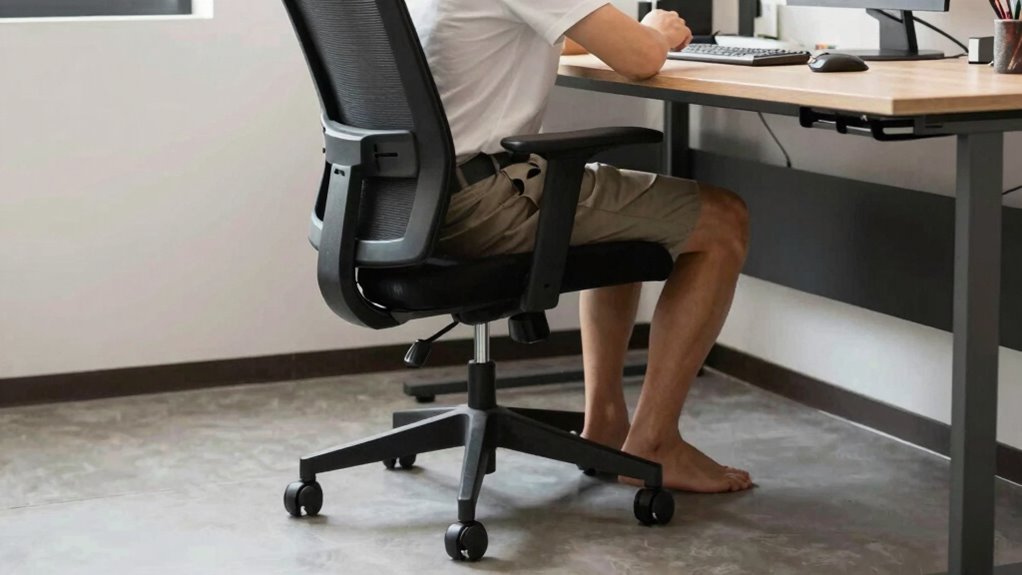
Your chair height directly influences your posture because it determines how comfortably your feet rest flat on the floor and how your knees bend. Proper alignment reduces strain on your lower back and helps maintain neutral spine positioning. Using ergonomic accessories, like footrests, can enhance comfort if your chair height isn’t adjustable enough. The right office chair type supports your body by allowing easy adjustment of height and tilt, encouraging good posture throughout the day. When your chair is too high or too low, it forces you into awkward positions that strain muscles and joints. Selecting the correct chair height guarantees your hips are level with your knees and your shoulders are relaxed, promoting better posture and preventing long-term discomfort. Additionally, modern ergonomic designs can improve overall comfort and support, making it easier to maintain proper posture during extended periods of sitting. Ensuring your ergonomic setup includes the correct chair height is essential for overall comfort and health. Proper chair adjustment is a key factor in avoiding postural issues caused by incorrect seating positions. To optimize your seating ergonomics, understanding the importance of adjustable features on your chair can make a significant difference.
As an affiliate, we earn on qualifying purchases.
Signs You’re Using the Wrong Chair Height

If your chair height isn’t right, your body will start sending clear signals that something’s off. You might notice discomfort or strain in your shoulders, neck, or lower back. You may also find yourself constantly adjusting your position or feeling fatigued during the day. Poor chair height can lead to improper use of ergonomic accessories, compromising office ergonomics. Watch for these signs:
- Your feet don’t rest flat on the floor
- Your knees are either too high or too low relative to your hips
- You experience numbness or tingling in your legs
- Your forearms aren’t parallel to the ground when typing
- Ignoring proper ergonomics can make small issues turn into long-term health problems. Ensuring your chair height aligns with your home design can improve overall comfort and support proper body posture. Additionally, considering ergonomic accessories can further enhance your workspace setup. Maintaining the correct seat height can also help prevent repetitive strain injuries and promote better circulation. Being mindful of posture alignment is crucial for long-term spinal health as well.
Recognizing these signs helps you correct your setup early, ensuring better posture and reducing strain. Proper chair height is essential for maintaining ideal office ergonomics and comfort.
As an affiliate, we earn on qualifying purchases.
How Incorrect Chair Height Causes Body Strain
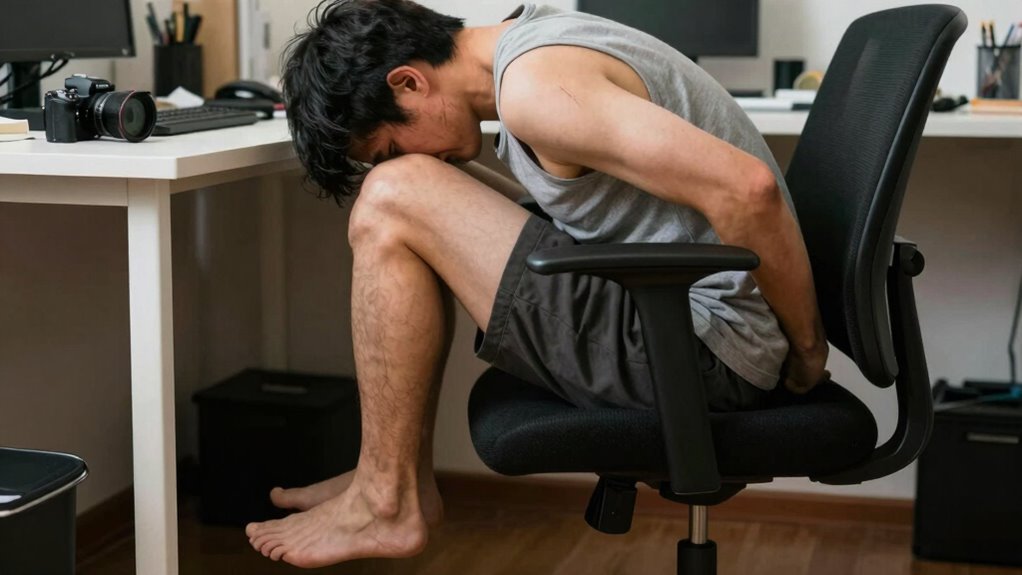
When your chair height is off, you put unnecessary stress on your lower back, leading to discomfort and potential pain. You might also notice tension building in your shoulders and arms as you adjust your posture to compensate. Additionally, wrong height can cause wrist and arm discomfort, making it harder to work comfortably all day. Maintaining proper ergonomic posture is essential for long-term comfort and health. Using DIY tools and safety tips can help you make adjustments that promote better posture and prevent strain. Being aware of ethical consumer choices can also guide you toward more sustainable and health-conscious office furniture options. Ensuring your workspace includes smart locks and security gear can further enhance safety without compromising ergonomic setup. Incorporating soundproofing solutions can create a quieter environment that reduces stress and improves focus during work.
Strain on Lower Back
Incorrect chair height forces your lower back into improper alignment, leading to unnecessary strain. When your chair is too high or low, your lumbar region bears extra pressure, which can cause discomfort and long-term pain. Proper ergonomic accessories can help, but only if your office layout allows for correct setup. A smart thermostat setup can optimize your workspace environment, contributing to overall comfort and health. Poor alignment increases pressure on spinal discs, risking injury. Extra muscle tension develops as your body compensates. In addition, ergonomic design principles play a crucial role in minimizing strain and promoting better posture. Inadequate lumbar support worsens lower back fatigue. Constant strain hampers circulation and causes stiffness. Adjusting chair height to match your body ensures your lower back remains supported. This reduces strain and promotes better posture. Remember, your office layout plays a key role—ensuring your workspace is set up ergonomically helps prevent unnecessary lower back pain. Proper setup can make all the difference in maintaining health during long working hours.
Shoulder Tension Builds
Have you noticed your shoulders creeping up or feeling tense after long hours at your desk? Incorrect chair height forces your shoulders into an awkward position, leading to persistent tension. When your chair is too high, you might lift your shoulders to reach your keyboard or mouse, causing neck tension and muscle strain. Conversely, if it’s too low, your hips become tight, which can indirectly affect your shoulder posture. This misalignment increases body strain and promotes muscle fatigue. Over time, the tension builds, making you feel stiff and uncomfortable. Proper chair height supports your hips and keeps your shoulders relaxed. When you sit correctly, your neck stays loose, and your shoulders can rest naturally, preventing unnecessary tension and promoting better overall posture. Maintaining ergonomic workspace setup is essential for long-term comfort and posture health. Additionally, using ergonomic office furniture can further help reduce strain and improve your sitting posture. Being aware of proper chair height can also prevent long-term musculoskeletal issues. Paying attention to ergonomic adjustments can make a significant difference in your comfort throughout the day. Incorporating environmental considerations, such as adequate lighting and a clutter-free workspace, can also contribute to better posture and reduce physical stress.
Wrist and Arm Discomfort
If your chair height isn’t properly adjusted, it can cause your wrists and arms to bear unnecessary strain. Poor height setup disrupts wrist alignment, leading to discomfort and fatigue. When your arms lack proper support, you may find yourself reaching or slouching, further aggravating strain. Incorrect height often results in wrists bending awkwardly, increasing the risk of strain injuries. Without adequate arm support, your muscles work harder to hold your position, causing fatigue and soreness. Poor positioning can also put pressure on nerves, leading to tingling or numbness. Proper ergonomic adjustment promotes better wrist alignment and reduces overall arm discomfort. Additionally, using supportive ergonomic kitchen gear can help maintain proper posture during extended tasks and can be tailored to support various textile and craft activities. Paying attention to ergonomic principles in your workspace setup can prevent many common musculoskeletal issues.
As an affiliate, we earn on qualifying purchases.
Adjusting Your Chair for Better Posture
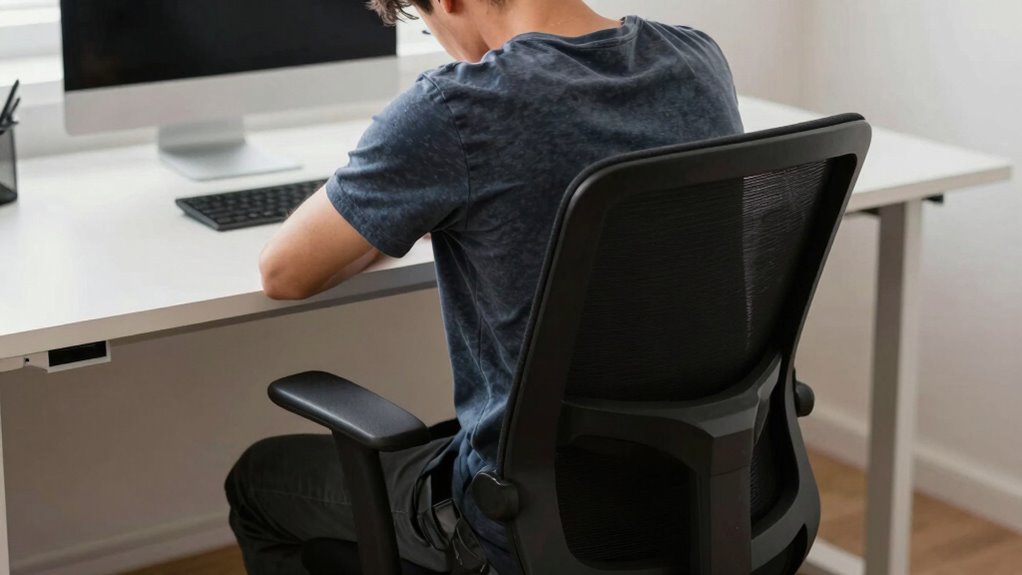
To improve your posture, start by adjusting your chair so that your feet rest flat on the floor and your knees are roughly level with your hips. Once your basic position is set, consider ergonomic accessories like lumbar supports or seat cushions to promote proper spinal alignment. Office ergonomics isn’t just about the desk height; it’s about creating a workspace that supports your body’s natural posture. Adjust your chair’s height so that your elbows are at a 90-degree angle when typing, reducing shoulder strain. Make sure your back is fully supported, and your screen is at eye level to prevent neck strain. Small, precise adjustments can make a significant difference in maintaining good posture throughout your workday.
The Long-Term Benefits of Proper Chair Height
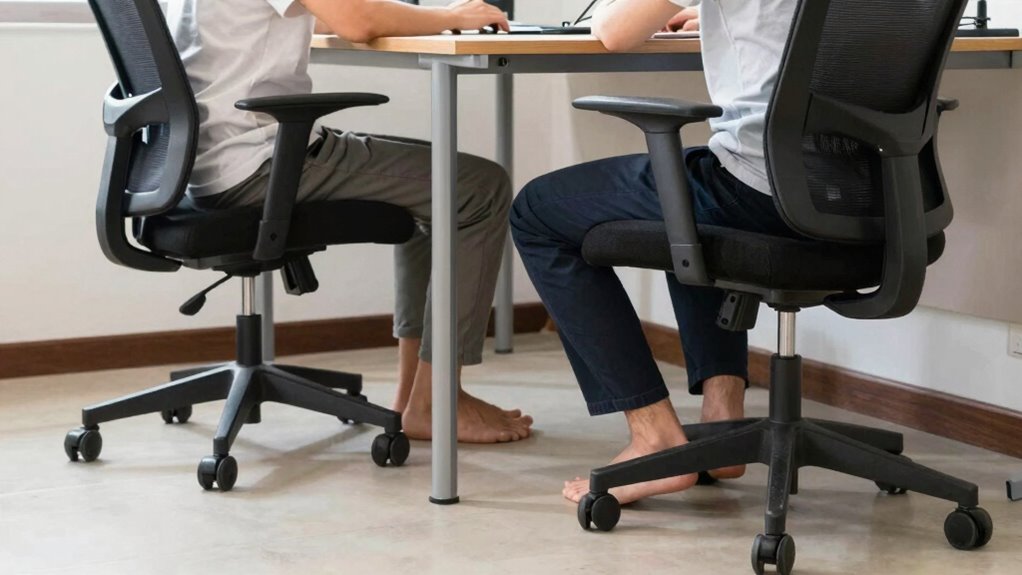
When you keep your chair at the right height, you support your spine‘s natural curve and prevent misalignment over time. This also lessens muscle strain, so you won’t experience as much fatigue or discomfort. In the long run, maintaining proper chair height helps you stay seated with good posture consistently.
Enhances Spinal Alignment
Proper chair height directly influences spinal alignment, guaranteeing your vertebrae stack correctly and your posture remains natural over time. When your chair is at the right height, you promote better posture habits and prevent misalignments. Using ergonomic accessories like lumbar supports can further enhance seating comfort and maintain proper spinal curvature. This alignment reduces strain on your back muscles and discs, encouraging long-term health. When your spine is properly aligned, you’re less likely to develop chronic pain or discomfort. Adjusting your chair height to match your body ensures you sit in a neutral position, supporting your overall posture. Key factors include keeping your feet flat, knees at a 90-degree angle, and your hips level, all of which contribute to sustained spinal health and comfort.
Reduces Muscle Strain
Maintaining the right chair height minimizes muscle strain by ensuring your body stays in a supported, balanced position. When your chair is at the proper height, your muscles don’t have to work overtime to hold you upright. This reduces fatigue and long-term discomfort. Using ergonomic accessories, like footrests or lumbar supports, further alleviates strain. Incorporate simple posture exercises to strengthen muscles and promote better alignment. Here’s a quick guide:
| Practice | Benefit | Tips |
|---|---|---|
| Adjust chair height | Prevents neck and back tension | Keep feet flat, knees at 90° |
| Use ergonomic accessories | Supports natural posture | Use lumbar pillows or footrests |
| Posture exercises | Strengthens supporting muscles | Incorporate stretches daily |
| Regular breaks | Reduces muscle fatigue | Stand or walk every 30 mins |
| Proper desk setup | Encourages healthy positioning | Keep monitor at eye level |
Promotes Consistent Posture
Adjusting your chair height correctly not only reduces immediate muscle strain but also encourages a more consistent posture over time. When your chair height aligns with ergonomic design principles, your body naturally adopts proper alignment, preventing slouching or leaning. This consistency enhances seating comfort, making it easier to maintain good posture throughout the day. Over time, this reduces fatigue and minimizes the risk of developing chronic pain. Proper chair height supports your lower back and shoulders, promoting alignment that becomes second nature. To maximize these benefits, consider:
- Ensuring your feet are flat on the floor
- Keeping knees at a 90-degree angle
- Supporting your lower back with the chair’s lumbar curve
- Maintaining your monitor at eye level for neck alignment
Common Mistakes When Setting Your Chair and How to Avoid Them

Many people make the mistake of setting their chair height without considering their body’s natural alignment, which can quickly lead to poor posture. They often overlook the importance of ergonomic accessories, like adjustable footrests or lumbar supports, to fine-tune their setup. Poor sitting habits, such as slouching or leaning forward, compound these issues. Instead, focus on adjusting your chair so your feet rest flat on the floor and your knees are roughly level with your hips. Keep your back supported and shoulders relaxed. Avoid rushing the adjustment process; take time to find the right height that promotes proper alignment. Small tweaks, combined with mindful sitting habits, can prevent strain and set the foundation for better posture throughout the day.
Tips to Maintain Good Posture All Day
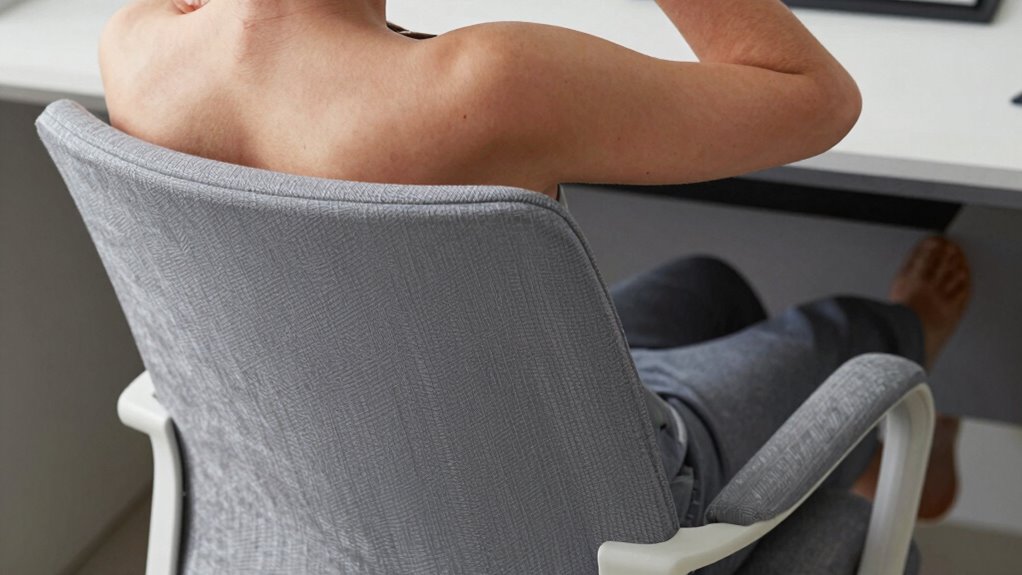
To keep good posture throughout the day, you need to be mindful of your body’s positioning and make small, consistent adjustments. Use ergonomic accessories like adjustable keyboard trays and supportive cushions to support proper alignment. Regularly check your office furniture choices to guarantee your chair and desk promote good posture—your feet should rest flat, and your monitor should be at eye level. Take short breaks every 30 minutes to stretch and reset your position. Keep your shoulders relaxed and avoid slouching. Maintain a neutral spine and keep your wrists straight when typing or using a mouse. Remember, small habits build lasting good posture, so stay attentive and adjust your workspace as needed. Consistent awareness is key to preventing discomfort and long-term injury.
Frequently Asked Questions
Can a Poorly Adjusted Chair Cause Long-Term Spinal Issues?
A poorly adjusted chair can indeed cause long-term spinal issues. Many believe ergonomic myths, thinking posture myths like “slouching is okay” won’t harm you, but consistent poor support strains your spine over time. If your chair isn’t correctly adjusted, it forces you into unnatural positions, leading to chronic pain and misalignment. Properly setting your chair and addressing these posture myths helps prevent long-term spinal problems and promotes healthier sitting habits.
How Often Should I Recheck My Chair Height During the Day?
You should recheck your chair height about every hour, especially if you’re busy or distracted. Ironically, even with ergonomic accessories, your body forgets proper alignment fast in a chaotic office layout. Regular adjustments help maintain good posture, preventing strain or discomfort. Keep a reminder or set a timer—your spine will thank you for staying vigilant, even when your workspace becomes a whirlwind of activity.
Does Desk Height Impact the Importance of Chair Height?
Yes, desk height impacts your chair height because proper alignment depends on both. When your desk is too high or low, you might strain your shoulders or neck, even if your chair is at the right height. Incorporate cable management to keep your workspace tidy and guarantee foot support is adequate, preventing discomfort. Adjust your chair so your feet rest flat on the floor, promoting good posture regardless of desk height.
Are There Specific Chair Features That Help Maintain Proper Posture?
Yes, specific chair features can help you maintain proper posture. Look for ergonomic cushions that provide comfort and support, reducing pressure on your hips and thighs. Lumbar support is essential to keep your lower back aligned and prevent slouching. These features encourage a healthy sitting position, reduce strain, and promote comfort during long hours at your desk, making it easier to maintain good posture effortlessly.
How Does Chair Height Affect Arm and Wrist Positioning?
If your chair isn’t at the right height, your arm support and wrist alignment suffer immediately. You might find yourself reaching too high or low, causing strain and discomfort. When the chair is just right, your arms rest comfortably at your sides, elbows at a 90-degree angle, and your wrists stay in a natural, neutral position. Don’t let an improper height sabotage your posture—adjust it now for maximum support.
Conclusion
Imagine your body as a finely tuned instrument, each part harmonizing perfectly when your chair matches your height. When you sit correctly, it’s like a gentle breeze guiding your posture into alignment, preventing strain and fatigue. But a wrong chair height throws the tune off, causing discomfort and long-term damage. Keep your seat just right, and you’ll sit tall and steady, like a sturdy tree rooted firmly in the ground, supporting you all day long.
Fall Picks
fall essentials
As an affiliate, we earn on qualifying purchases.