
Using a standing desk correctly can boost your comfort and health. Adjust your desk so your elbows are at a 90° angle, and position your monitor at eye level. Shift your weight often, stand for 15-30 minutes every hour, and incorporate movement like stretching or walking in place. Wear supportive shoes and use ergonomic accessories to prevent strain. Want to stay comfortable and avoid common pitfalls? Keep exploring for tips to make the most of your standing desk.

Get hardware and tech essentials delivered free — and shop member deals
- Fast, free delivery on millions of items
- Access to Prime Big Deal Days deals on October 6–7
- Prime Video, Amazon Music and more included
Key Takeaways
- Adjust the desk height so elbows are at a 90° angle and monitor is at eye level to promote proper posture.
- Take regular breaks every 15-30 minutes to shift positions, stretch, or walk to prevent fatigue.
- Use ergonomic accessories like anti-fatigue mats and supportive footwear to enhance comfort during standing.
- Maintain a neutral wrist position and avoid locking knees to reduce strain and discomfort.
- Incorporate movement, such as shifting weight or standing on one leg, to boost circulation and reduce stiffness.
ergonomic anti-fatigue standing desk mat
As an affiliate, we earn on qualifying purchases.
As an affiliate, we earn on qualifying purchases.
Why Proper Standing Desk Technique Matters for Your Health
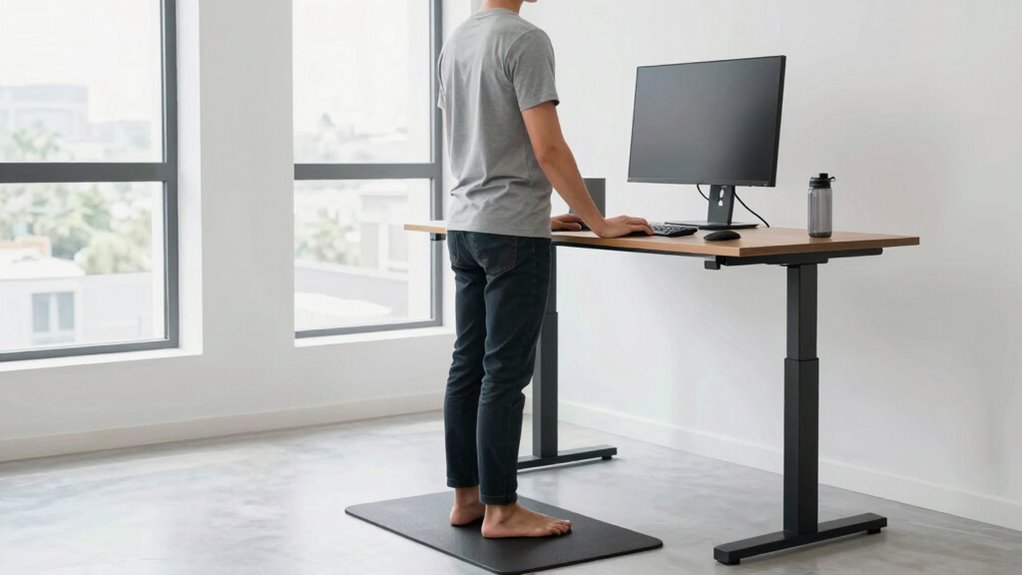
Have you ever wondered why your posture at a standing desk impacts your health? Maintaining an ergonomic posture is essential to prevent discomfort and long-term issues. When you stand correctly, you distribute your weight evenly, reducing strain on your back, neck, and shoulders. Proper standing technique encourages movement and adjustment, which helps keep your muscles engaged without overworking them. Proper standing posture can also help improve circulation and reduce fatigue throughout your workday. Using a proven milk steaming technique can also enhance your overall comfort and efficiency while working at your desk. Incorporating sound vibrations into your routine may further support relaxation and stress relief during breaks. By focusing on an ergonomic posture, you support your overall health, minimize fatigue, and make standing a sustainable, comfortable alternative to sitting all day. Additionally, practicing proper standing desk technique can help prevent long-term musculoskeletal issues. Paying attention to ergonomic principles ensures you maintain a healthy standing position and avoid common pitfalls like leaning or slouching.
adjustable monitor stand for ergonomic setup
As an affiliate, we earn on qualifying purchases.
As an affiliate, we earn on qualifying purchases.
How to Set Up Your Standing Desk for Comfort and Safety

To set up your standing desk for maximum comfort and safety, start by adjusting the height so that your elbows are bent at about a 90-degree angle when your hands rest on the keyboard or work surface. Proper desk placement ensures your monitor is at eye level, reducing neck strain. Select accessories that promote ergonomics, like an anti-fatigue mat or adjustable keyboard tray. Position your monitor about an arm’s length away and directly in front of you. Keep frequently used items within easy reach to avoid stretching or twisting. Using the correct ergonomic principles can further enhance your workspace setup and prevent discomfort. Use the table below to guide your setup:
| Aspect | Recommendations | Benefits |
|---|---|---|
| Desk placement | Eye level, arm’s length distance | Reduce neck and eye strain |
| Accessory selection | Adjustable monitor, ergonomic accessories | Improve posture and comfort |
| Work surface | Clear, at comfortable height | Enhance focus and reduce fatigue |
supportive footwear for standing desks
As an affiliate, we earn on qualifying purchases.
As an affiliate, we earn on qualifying purchases.
How Long and How Often Should You Stand? Best Practices
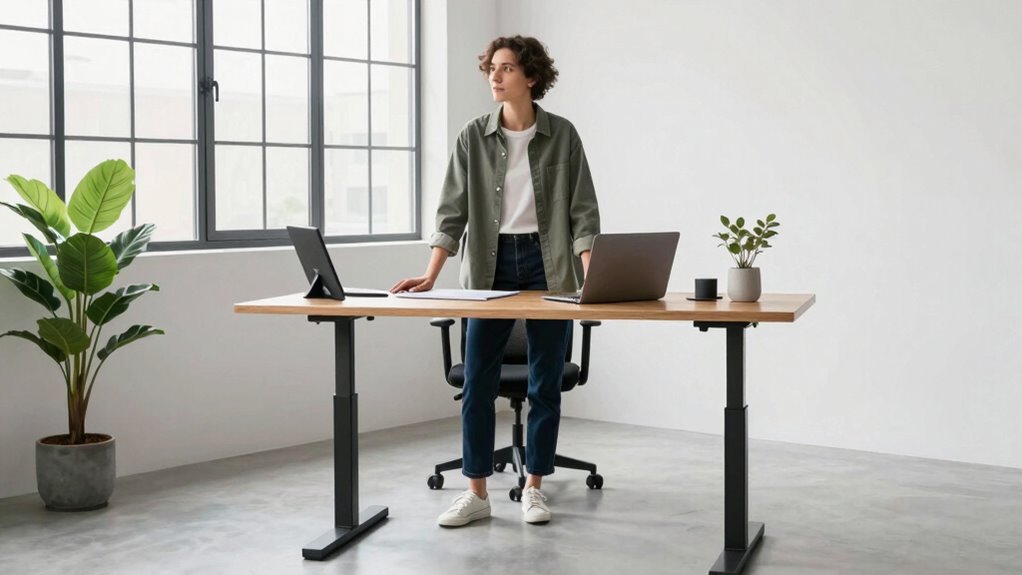
Although standing desks offer numerous health benefits, standing for long periods without breaks can cause discomfort or fatigue. To prevent this, aim to stand for about 15 to 30 minutes every hour. During these intervals, focus on maintaining good posture alignment—keep your shoulders relaxed, core engaged, and head aligned with your spine. Proper desk organization helps facilitate this, so keep your monitor at eye level and your keyboard and mouse within easy reach. Shift your weight occasionally or take brief steps to reduce strain. Remember, standing is beneficial only when combined with regular movement and proper posture. Incorporating ergonomic principles such as proper cable management and equipment placement can further enhance your ergonomic setup. Using anti-fatigue mats can also help reduce strain on your legs and feet during prolonged standing. Additionally, integrating movement breaks throughout your workday encourages circulation and reduces fatigue. Ensuring your workspace setup follows ergonomic standards can help you maintain comfort and prevent musculoskeletal issues. Balancing standing and sitting throughout the day guarantees you maximize health benefits while minimizing discomfort.
ergonomic keyboard tray for standing desk
As an affiliate, we earn on qualifying purchases.
As an affiliate, we earn on qualifying purchases.
How to Reduce Discomfort When Standing at Your Desk
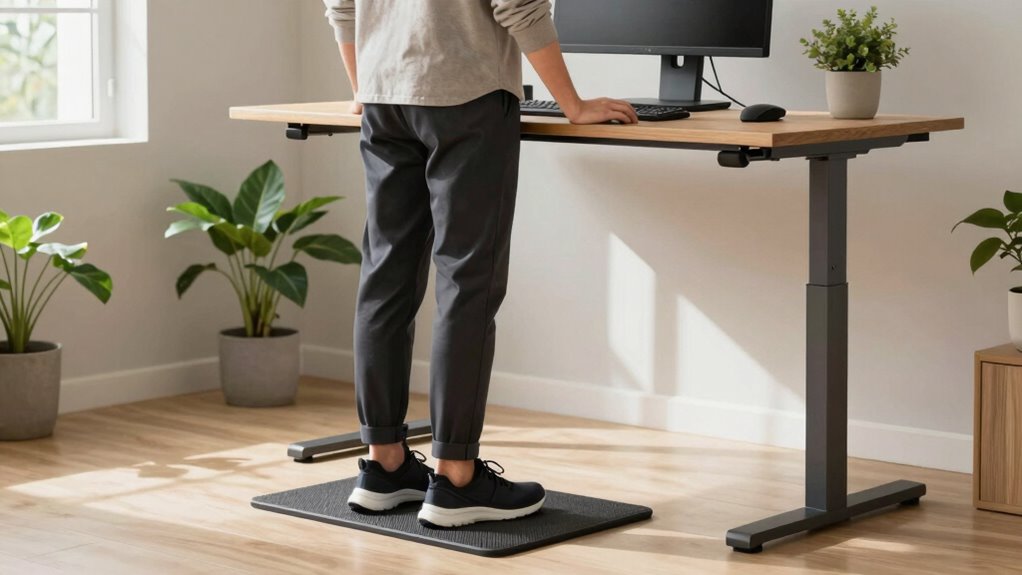
To reduce discomfort at your standing desk, start by choosing supportive footwear that cushions your feet throughout the day. Make sure your desk height is adjusted properly so your hips and knees stay in a comfortable position. Additionally, take regular movement breaks to stretch and shift your weight, preventing stiffness and fatigue. Incorporating cycling-inspired posture techniques can also help maintain proper alignment and reduce strain during long periods of standing. Consider using car protection accessories like supportive mats or ergonomic accessories to further enhance comfort and promote better posture. Integrating natural landscaping principles, such as placing your workspace near windows with outdoor views, can also help reduce eye strain and improve overall wellbeing.
Proper Footwear Choices
Ever wonder how your choice of footwear can impact your comfort during long hours at a standing desk? Wearing the right shoes can make a significant difference. Opt for supportive footwear that provides stability and reduces fatigue. Consider these tips:
- Choose shoes with cushioned soles to absorb shock and lessen pressure.
- Incorporate comfortable insoles for additional arch support and comfort.
- Avoid high heels or thin-soled shoes that lack support.
- Select footwear made from breathable materials to prevent overheating and discomfort.
- Using proper footwear, such as those designed for comfort and support, can further enhance your standing experience and reduce strain. Additionally, choosing footwear with ergonomic features can help promote better posture and reduce long-term discomfort, especially when combined with proper piercing care and hygiene practices to prevent discomfort or irritation. Being mindful of microplastics in dust and maintaining a clean environment can also contribute to overall comfort and health while standing.
Adjust Desk Height Correctly
Adjusting your desk to the correct height is essential for minimizing discomfort and preventing strain during long periods of standing. Your desk height should allow your elbows to be bent at about a 90-degree angle, with your forearms parallel to the floor. This promotes ergonomic alignment, reducing pressure on your shoulders and neck. Make sure your monitor is at eye level so you don’t have to tilt your head up or down. When your desk is set correctly, your wrists stay neutral and your hips remain in a comfortable position. Take the time to adjust your desk height as needed, ensuring it supports good posture and helps you avoid fatigue or musculoskeletal issues. Proper desk height is key to making standing work comfortable and sustainable. Additionally, user consent management is important for customizing your browsing experience and managing cookies related to website performance metrics.
Incorporate Movement Breaks
Incorporating movement breaks into your routine helps counteract the stiffness and discomfort that can come from standing in one place for too long. Regularly shifting your position promotes better posture awareness and reduces strain. To maximize comfort, consider these strategies:
- Pause every 30 minutes to stretch or walk around, relieving tension.
- Use ergonomic accessories like anti-fatigue mats to ease foot and leg strain.
- Alternate between standing and sitting to avoid prolonged static postures.
- Perform simple stretches, such as calf raises or shoulder rolls, to improve circulation.
- Explore smart automation solutions, like adjustable standing desks, to seamlessly switch between sitting and standing positions.
These small adjustments help prevent discomfort and maintain productivity. Remember, movement is key to supporting your body’s ergonomic needs and staying comfortable throughout the day.
Incorporating Movement to Maximize Standing Desk Benefits
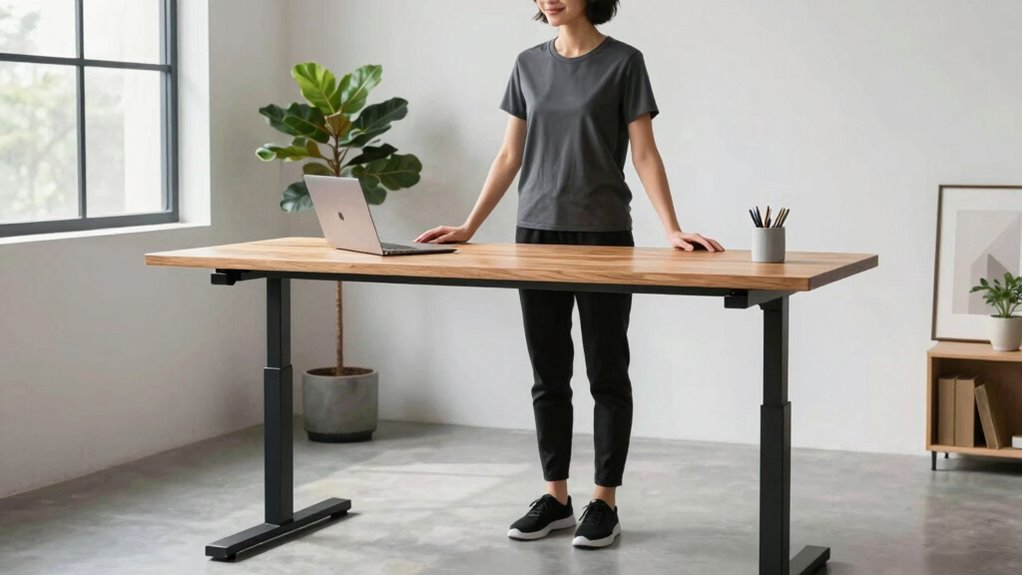
To truly maximize the benefits of a standing desk, you need to actively include movement throughout your workday. Regularly shifting your position, stretching, or walking around keeps your muscles engaged and promotes better posture awareness. Using ergonomic accessories like anti-fatigue mats or footrests encourages comfort and encourages movement. Incorporate these activities:
| Action | Benefit |
|---|---|
| Standing on one leg | Improves balance and activates core muscles |
| Walking in place | Boosts circulation and reduces stiffness |
| Stretching regularly | Prevents muscle strain and enhances flexibility |
Engaging in foam rolling techniques during breaks can further enhance recovery and HRV, supporting overall well-being. Additionally, maintaining proper floor and rug care can prevent slips or injuries associated with water damage, ensuring a safer environment while you focus on staying active. Incorporating movement-based strategies like these can also help counteract the negative effects of prolonged sitting on cardiovascular health. Recognizing the importance of alignment and posture can further improve comfort and reduce strain during extended periods of standing. Notably, integrating muscle engagement practices can enhance overall physical resilience during sedentary work hours.
Common Mistakes to Avoid When Using a Standing Desk
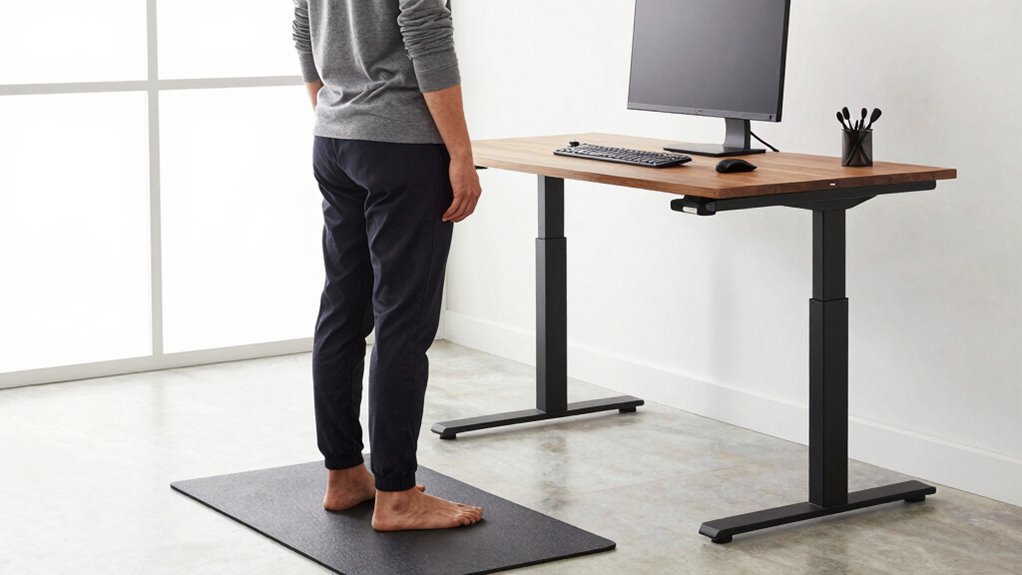
Many people make the mistake of setting up their desk ergonomically without proper adjustments, which can cause discomfort or injury. Standing for long periods without taking breaks can also lead to fatigue and strain. To get the most benefits, you need to avoid these common pitfalls and listen to your body’s signals.
Poor Ergonomic Setup
Are you making common mistakes with your standing desk setup? Poor ergonomic setup can lead to discomfort and reduce productivity. To optimize your workspace, avoid these pitfalls:
- Neglecting ergonomic accessories like footrests or anti-fatigue mats that support proper posture.
- Setting your monitor too high or low, causing neck strain.
- Ignoring the importance of maintaining a neutral wrist position.
- Creating cluttered or overly aesthetic desk setups that distract or hinder movement.
Focusing on ergonomic accessories helps promote comfort, while a clean, functional aesthetic ensures efficiency. Proper setup means aligning your monitor at eye level, keeping your elbows close to your body, and maintaining a relaxed posture. Avoid these mistakes to make your standing desk experience healthier and more sustainable.
Extended Standing Periods
Standing all day without breaks can seem productive, but it often leads to fatigue and discomfort. To avoid this, listen to your body’s signals and switch between sitting and standing. Using ergonomic accessories like anti-fatigue mats and adjustable desks helps maintain comfort during extended periods. Remember, posture awareness is key—stand with your shoulders relaxed and your monitor at eye level. Avoid locking your knees or leaning forward, which strains your back and neck. Take short breaks every 30 minutes to stretch or walk around, reducing muscle tension. Incorporate these habits to prevent fatigue and promote better circulation.
| Mistake | Solution |
|---|---|
| Standing too long without breaks | Use ergonomic accessories and take frequent breaks |
| Poor posture awareness | Adjust your desk and monitor height regularly |
| Locking knees | Shift weight and keep knees slightly bent |
| Leaning forward | Maintain upright posture with proper support |
| Ignoring discomfort | Address pain early with proper ergonomics |
Frequently Asked Questions
Can Standing All Day Improve Productivity or Cause Fatigue?
Standing all day can boost productivity if you maintain an ergonomic posture, but it may cause muscle fatigue if you stand excessively without breaks. You should alternate between sitting and standing, ensuring your desk setup supports good alignment—like keeping your monitor at eye level and your shoulders relaxed. This balance helps you stay energized without overexerting muscles, ultimately improving focus while preventing fatigue.
What Are the Best Shoes to Wear When Using a Standing Desk?
Imagine your feet as the foundation of a sturdy house. For standing desks, choose ergonomic shoe choices like cushioned sneakers or supportive loafers to keep you comfortable. Opt for shoes with good arch support and shock absorption, enhancing foot support options and reducing fatigue. Avoid high heels or unsupportive flats. Your goal is to keep your feet happy so you can stand longer without discomfort or pain.
How Do I Transition From Sitting to Standing Gradually?
To shift from sitting to standing gradually, start by adjusting your desk height for ergonomic comfort and use ergonomic accessories like anti-fatigue mats. Begin with 15-30 minute standing intervals, then slowly increase your standing time each day. Pay attention to posture adjustments, keeping your shoulders relaxed and your monitor at eye level. This gradual approach helps your body adapt comfortably while reducing strain and promoting better overall ergonomics.
Is a Sit-Stand Desk Suitable for All Body Types?
A sit-stand desk can work well for many body types, but you should tailor it to your needs. Use ergonomic accessories, like supportive mats and adjustable monitor arms, to enhance comfort. Focus on proper desk height adjustment so your elbows stay at a 90-degree angle and your monitor aligns with your eye level. If you have specific concerns, consulting an ergonomic specialist can guarantee a perfect fit for your unique body.
How Can I Tell if I’m Standing or Sitting Correctly?
You can tell if you’re standing or sitting correctly by checking your posture alignment and desk ergonomics. When standing, keep your shoulders relaxed, elbows at about 90 degrees, and your wrists straight. Your monitor should be at eye level to avoid neck strain. When sitting, guarantee your back is supported, feet flat on the floor, and your hips and knees are at roughly 90 degrees. Regularly adjust to maintain proper posture and ergonomics.
Conclusion
Using a standing desk the right way is your ticket to better health, like steering a ship through calm waters. By setting up correctly, balancing standing with movement, and avoiding common pitfalls, you’ll turn your workspace into a haven of comfort and productivity. Remember, it’s not about standing all day but about finding harmony—like a well-tuned orchestra—so you can thrive without the discomfort of a misstep.
Fall Picks
fall essentials
As an affiliate, we earn on qualifying purchases.