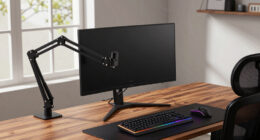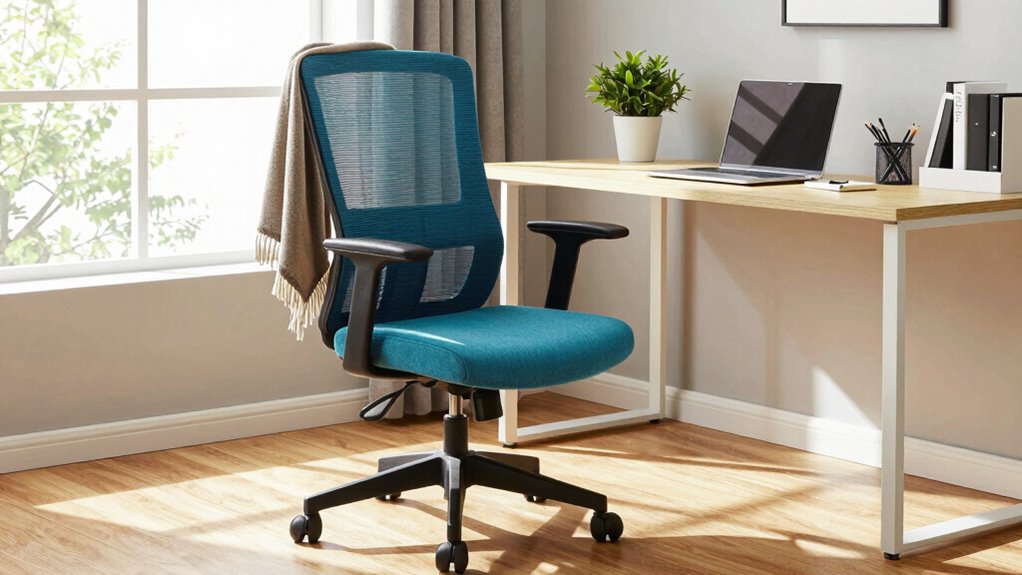

The most immediate way to improve your work-from-home setup is to make sure your chair is adjusted correctly. You should set the seat height so your feet are flat on the floor and your knees are at a 90° angle. Adjust lumbar support to fit snugly against your lower back and customize armrests for comfort. With proper adjustments, you’ll sit more comfortably and support good posture—stay tuned to learn more ways to optimize your workspace.

Get hardware and tech essentials delivered free with Prime
- Fast, free delivery on millions of items
- Prime Video, Amazon Music and more included
- Member-only deals all year
Key Takeaways
- Adjust chair height so feet are flat, knees at 90°, and hips slightly higher than knees for proper alignment.
- Ensure lumbar support fits snugly against the lower back to promote spinal health immediately.
- Keep monitor at eye level to prevent neck strain and encourage upright posture from the start.
- Use ergonomic accessories like cushions and footrests for immediate comfort improvements.
- Regularly check and fine-tune chair adjustments to maintain optimal ergonomic positioning throughout the day.
adjustable ergonomic office chair
As an affiliate, we earn on qualifying purchases.
As an affiliate, we earn on qualifying purchases.
Why Proper Chair Setup Changes Your Workday
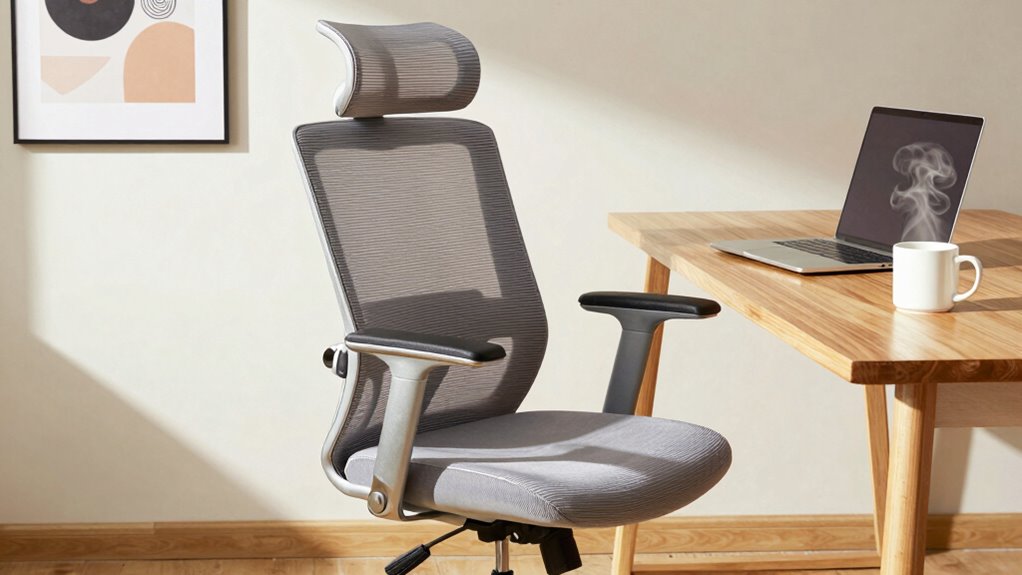
A proper chair setup can considerably improve your workday by reducing discomfort and preventing long-term health issues. When you focus on your sitting posture, you’re less likely to experience neck, back, or shoulder pain. Ergonomic accessories, like lumbar supports or adjustable armrests, help maintain proper alignment and support your body’s natural curves. Correct setup encourages you to sit upright, with your feet flat on the floor and knees at a 90-degree angle. This reduces strain on your spine and enhances circulation. Additionally, understanding ergonomic setup and other supportive gear can help you stay comfortable during extended periods of standing or working. Paying attention to your chair’s height, depth, and tilt, combined with proper ergonomic principles, creates an environment that fosters comfort and focus. Investing time in adjusting your chair properly ensures you stay productive and healthy throughout your work-from-home routine, especially when choosing chairs with adjustable features designed for long-term support.
lumbar support pillow for office chair
As an affiliate, we earn on qualifying purchases.
As an affiliate, we earn on qualifying purchases.
Adjust Your Office Chair for Maximum Comfort

To stay comfortable, start by adjusting your seat height so your feet rest flat on the floor and your knees are at a 90-degree angle. Make sure your lumbar support fits snugly against your lower back to maintain proper spine alignment. Small adjustments can make a big difference in preventing discomfort during long work hours. Additionally, consider using a supportive vacuum to keep your workspace tidy and free of distractions. Ensuring your chair provides the right hold and finish can also enhance overall comfort and support throughout the day. Incorporating ergonomic principles like proper posture can further improve your overall comfort during extended periods of sitting. Recognizing how ethical choices impact your health and well-being can also motivate you to prioritize ergonomic improvements.
Proper Seat Height
Ensuring your office chair is set to the proper height is essential for comfort and productivity. When your chair is adjusted correctly, your feet should rest flat on the floor, and your knees should form about a 90-degree angle. This positioning reduces strain and improves circulation. To achieve this, use ergonomic accessories like adjustable footrests if needed. Regular chair maintenance helps keep height adjustments smooth and secure, preventing slips or uneven positions. Remember, a proper seat height minimizes pressure on your lower back and enhances your focus. Adjusting your chair regularly ensures it stays aligned with your work habits, making long hours more comfortable. Additionally, maintaining proper chair ergonomics can further improve your comfort during extended work sessions. Choosing the right office chair with adjustable features can make a significant difference in supporting good posture throughout the day. Being aware of ergonomic principles can help you optimize your workspace setup for better health and productivity, especially since proper ergonomic setup is linked to reduced discomfort and fatigue. Incorporating regular breaks and movement practices can also alleviate stiffness and promote overall well-being during work hours.
Correct Lumbar Support
How can you make certain your lower back stays comfortable and supported during long work hours? The key is proper lumbar support. You should use ergonomic cushions designed to fill the natural curve of your lower back, providing extra support where your chair might fall short. Adjust your armrests to keep your shoulders relaxed, which helps prevent strain that can affect your lumbar area. Confirm your chair’s lumbar support aligns with your lower back’s curve, not just the seat. If your chair lacks built-in support, ergonomic cushions are a simple fix. Incorporating ergonomic technology can further enhance comfort and reduce the risk of discomfort. Ensuring your workspace setup follows best practices can improve overall comfort and support your back effectively. Proper adjustments and additional support, such as a natural support system, ensure your lower back remains supported, reducing fatigue and discomfort throughout your workday.
As an affiliate, we earn on qualifying purchases.
Why Lumbar Support Is Essential for Back Health
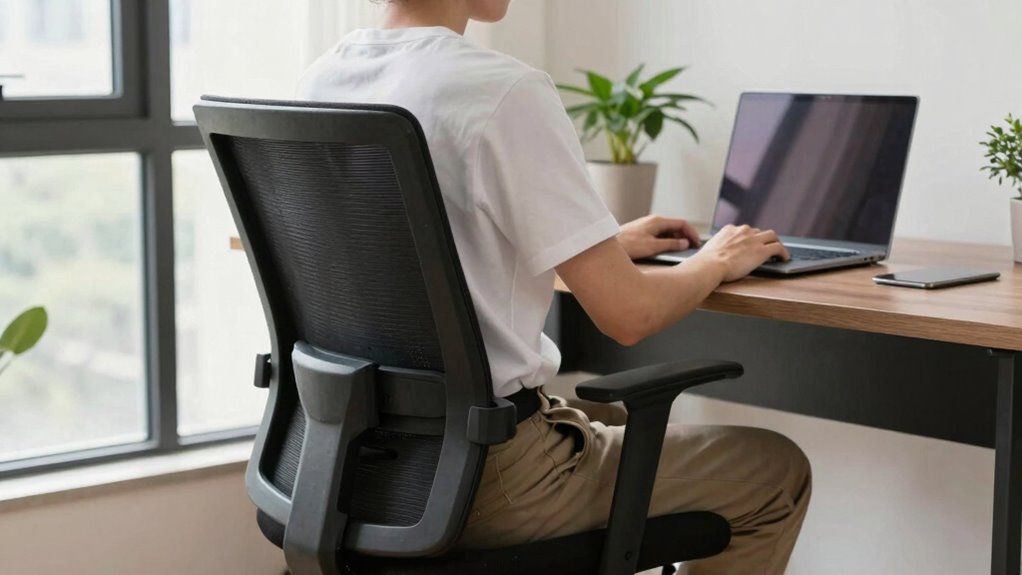
Lumbar support plays a crucial role in maintaining your back health, especially when working from home for extended periods. Proper lumbar support ensures your lumbar alignment stays natural, reducing strain on your spine and preventing discomfort. Without it, you risk poor posture and long-term spine issues. A supportive lumbar region keeps your spine healthy by maintaining its natural curve and reducing pressure on discs. Use the table below to see how lumbar support benefits your back:
| Benefit | How It Helps | Result |
|---|---|---|
| Maintains lumbar alignment | Keeps spine properly aligned | Reduces back pain |
| Supports natural curve | Prevents slouching | Improves posture |
| Reduces pressure | Less strain on discs | Prevents injuries |
| Enhances comfort | Minimizes fatigue | Boosts productivity |
| Promotes spine health | Prevents long-term issues | Keeps you pain-free |
Proper ergonomic design, including lumbar support, is essential for long-term back health. Additionally, understanding ergonomic principles can help you choose the right chair and setup to further protect your spine. Incorporating electric bike concepts like proper support and efficient design can also inspire better workspace ergonomics and promote overall well-being.
As an affiliate, we earn on qualifying purchases.
Set Your Seat Depth and Angle for Better Focus

Adjusting your seat depth and angle might seem minor, but these tweaks can substantially boost your focus during work sessions. Proper seat depth ensures your back is fully supported without putting pressure on your thighs, promoting comfort and reducing fatigue. Use ergonomic accessories like seat cushions or adjustable chairs to fine-tune this setting. Additionally, adjusting the seat angle can help maintain better posture and reduce strain, especially if you’re working long hours. Keep your workspace organized so that your monitor, keyboard, and mouse are aligned correctly, making it easier to find the right seat position. When your seat is set correctly, you’ll stay more engaged and focused, avoiding distractions caused by discomfort or poor ergonomics. Small adjustments can markedly improve your overall productivity.
Tips for Maintaining Good Sitting Habits All Day
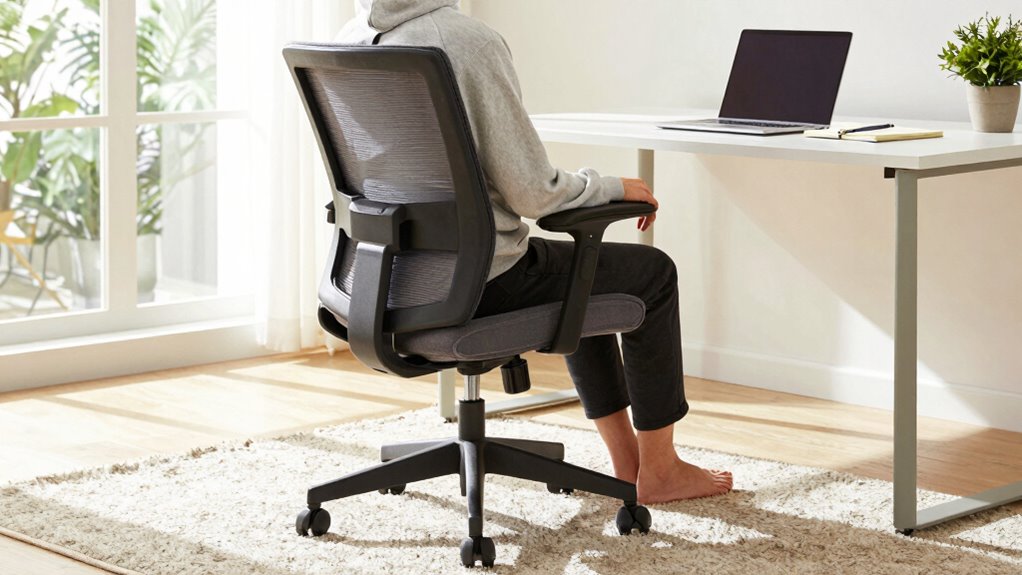
To stay comfortable and productive, you need to focus on maintaining proper posture throughout the day. Make sure your workstation supports good alignment, and don’t forget to take regular breaks to stretch and move around. These habits help prevent discomfort and keep you alert. Additionally, incorporating soundproofing solutions into your workspace can minimize distractions and create a quieter environment for better focus. Remember, understanding ergonomics can significantly enhance your overall comfort and efficiency during long work sessions. Being aware of mythology-inspired names can also inspire a sense of strength and wisdom in your workspace environment.
Maintain Proper Posture
Maintaining proper posture throughout the day is essential for preventing discomfort and long-term health issues. Keep your monitor at eye level to avoid neck strain, and use ergonomic accessories like supportive cushions or adjustable stands to improve alignment. Sit back fully in your chair, keeping your feet flat on the floor, and avoid crossing your legs, which can affect circulation. Adjust your chair’s height so your hips are slightly higher than your knees. Good ambient lighting reduces eye strain and prevents you from leaning forward, which can compromise posture. Stay mindful of your sitting position, making small adjustments as needed to stay comfortable. Regularly check in with your body to guarantee you’re maintaining a neutral spine and avoiding unnecessary tension. Incorporating posture awareness techniques can further enhance your sitting habits and support overall metabolic health.
Take Regular Breaks
Taking regular breaks is essential for keeping your body comfortable and your mind alert throughout the workday. Stand up, stretch, or incorporate sitting exercises to relieve muscle tension and improve circulation. Using ergonomic accessories like footrests or adjustable desks can make breaks more effective. During these pauses, focus on moving your neck, shoulders, and back to prevent stiffness. Simple sitting exercises, such as seated leg lifts or shoulder rolls, help reset your posture and reduce fatigue. Regular breaks also boost productivity by giving your brain a moment to recharge. Remember, staying seated for long periods isn’t healthy, so schedule short breaks every 30 minutes. This habit keeps you energized, reduces discomfort, and promotes good sitting habits all day.
Troubleshooting Common Chair Setup Problems
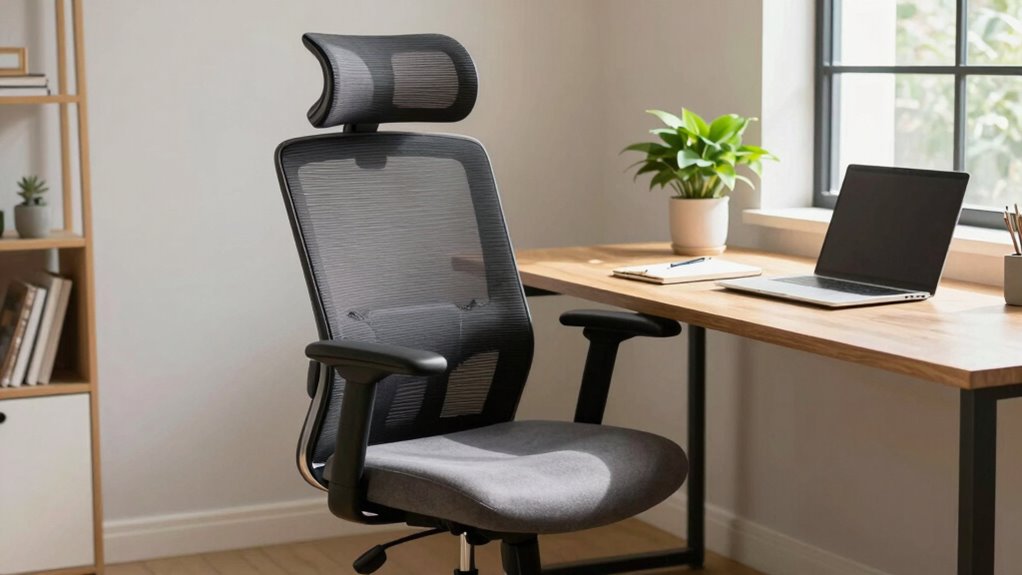
If your chair isn’t providing proper support or feels uncomfortable, it’s likely due to setup issues that can be easily fixed. First, check your chair’s height and verify your feet are flat on the floor, with knees at a 90-degree angle. Adjust the lumbar support or add ergonomic accessories like cushions or lumbar rolls for better back support. If the chair still feels wrong, consider alternative seating options, such as a stability ball or kneeling chair, to reduce strain. Make sure your armrests support your arms without elevating your shoulders. Regularly review your setup and make small adjustments as needed. Troubleshooting these common problems helps prevent discomfort and promotes better posture, making your work-from-home experience more comfortable and productive.
Frequently Asked Questions
How Often Should I Adjust My Office Chair During the Day?
You should adjust your office chair regularly throughout the day, ideally every 30 to 60 minutes. Check your chair height to keep your feet flat on the floor and your knees at a 90-degree angle. Also, make certain your lumbar support stays aligned with your lower back to prevent strain. These quick adjustments help maintain comfort, improve posture, and reduce fatigue during long work hours.
What Signs Indicate My Chair Setup Is Incorrect?
Imagine your spine as a delicate garden that needs tending. If you feel neck or back pain, it’s a sign your posture correction is off. Slouching, discomfort, or uneven desk alignment signal your chair setup isn’t right. You might also notice numbness or tingling in your limbs. These signs show your desk and chair aren’t supporting proper posture, so adjust for better comfort and to prevent long-term issues.
Can an Ergonomic Chair Improve Productivity?
Yes, an ergonomic chair can boost your productivity. Its benefits include better posture, reducing discomfort and fatigue, which helps you focus longer. When your workspace feels comfortable, you’re less likely to be distracted by aches or pain. An ergonomic chair supports your body properly, promoting movement and circulation. This creates a healthier, more efficient workspace, allowing you to work comfortably and stay productive throughout your day.
Are There Specific Chair Features Best for Long Hours?
Yes, for long hours, look for a chair with lumbar support and adjustable height. Lumbar support helps maintain proper spine alignment, reducing fatigue and discomfort. Adjustable height guarantees your feet stay flat on the floor, promoting good posture. These features allow you to customize your seating, preventing strain during extended work periods. Prioritizing these elements makes your workspace more comfortable and helps you stay productive longer.
How Do I Choose the Right Chair Size for My Body?
To choose the right chair size for your body, focus on chair material and seat height adjustment. Pick a chair with breathable material like mesh for comfort. Guarantee the seat height adjusts so your feet rest flat on the floor and your knees are at a 90-degree angle. Test the chair’s size by sitting comfortably—your hips should align with the seat edge, and there should be enough room to move freely.
Conclusion
When you fine-tune your chair, you’re planting a seed of comfort that grows into a forest of focus and well-being. It’s not just about the right height or support—it’s about creating a sanctuary where your body can thrive. Think of your workspace as a symphony, and your chair as the conductor. When harmony is restored, your workday flows smoothly, and you feel truly grounded. Embrace this simple rule, and watch your productivity blossom like a well-tended garden.
Halloween Picks
halloween
As an affiliate, we earn on qualifying purchases.