If you’re producing high-quality content like tutorials, vlogs, or professional videos, a mirrorless camera is the better choice because it offers superior image clarity, better sensors, and more lens options. For casual streams, video calls, or live interactions, a webcam is quick, easy, and portable, perfect for everyday use. Your decision depends on your content goals—if you want polished visuals or quick setup. Stay with us to discover more tips for choosing the right camera.

Get hardware and tech essentials delivered free with Prime
- Fast, free delivery on millions of items
- Prime Video, Amazon Music and more included
- Member-only deals all year
Key Takeaways
- Choose a mirrorless camera for high-quality, professional content like tutorials, vlogs, or product videos requiring cinematic visuals.
- Opt for a webcam for casual streaming, video calls, and live interactions that prioritize convenience and quick setup.
- Consider platform requirements—professional platforms benefit from mirrorless camera resolution, while casual streams favor webcams’ simplicity.
- Use mirrorless cameras when content quality directly impacts audience engagement or monetization potential.
- Rely on webcams for frequent, informal virtual meetings, where ease of use and minimal technical setup are essential.
Products Worth Considering

Amazon Kindle Paperwhite (12th Generation, 2024), 16 GB, 7-inch Display, Jade

Sony WH-1000XM4C Wireless Noise-Cancelling Headphones, Black

Apple AirPods Pro 3 Wireless Earbuds with Active Noise Cancellation
As an affiliate, we earn on qualifying purchases.
Mirrorless Cameras vs. Webcams: Which Is Right for You?
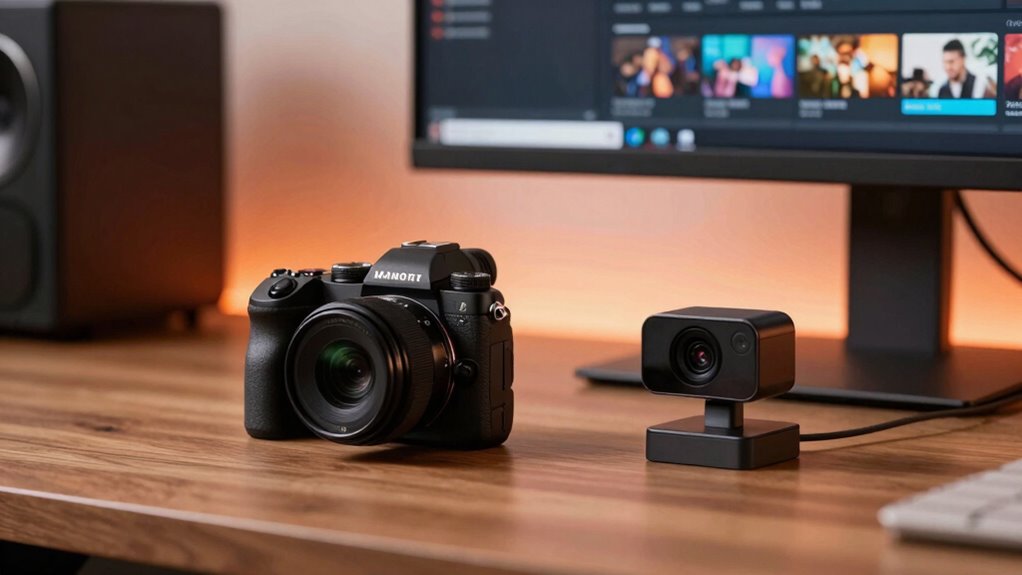
Deciding between a mirrorless camera and a webcam depends on how you plan to use it and what you prioritize in image quality. If you want high-quality videos and photos, a mirrorless camera is the better choice. It offers superior image resolution, better sensor performance, and a range of camera accessories like lenses and lighting that enhance your setup. However, keep in mind that mirrorless cameras often have shorter battery life compared to webcams, which are designed for extended streaming sessions. Webcams, on the other hand, are more convenient for casual use and require minimal accessories. They’re portable and easy to set up but don’t match the image quality or flexibility of a mirrorless camera. Your decision should reflect your specific needs and how much you’re willing to invest in accessories. Additionally, understanding device maintenance can help you keep your equipment in optimal condition for long-term use. Moreover, considering image quality and how it impacts your content can help you make a more informed choice.
How Your Content Goals Influence Your Camera Choice
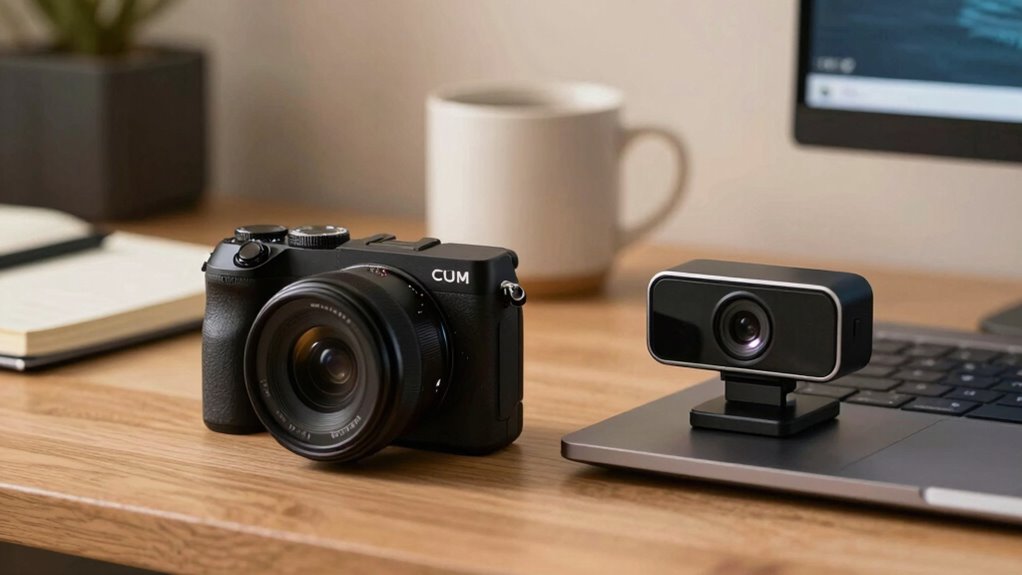
Your content goals play a significant role in choosing the right camera, shaping how much quality and flexibility you need. If your goal is content monetization through professional videos, a mirrorless camera offers higher image quality, enhancing audience engagement and perceived value. On the other hand, if you’re creating casual content or live streams, a webcam can be sufficient and easier to set up. Here’s a quick comparison:
| Purpose | Recommended Camera |
|---|---|
| Professional, high-quality content | Mirrorless camera |
| Live streaming, casual videos | Webcam |
| Content monetization focus | Mirrorless camera |
| Audience engagement importance | Mirrorless or webcam |
| Quick setup, portability | Webcam |
When Is a Mirrorless Camera the Best for Content Creation?
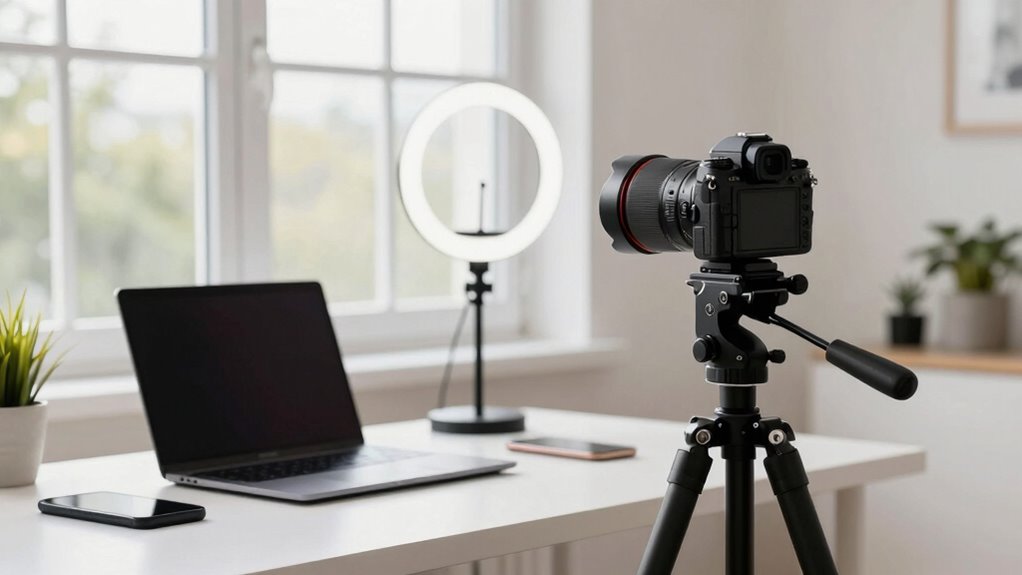
A mirrorless camera becomes the best choice for content creation when you need professional-quality visuals and greater creative control. Its larger sensor size captures more light and detail, resulting in sharper, more vibrant images. This sensor size advantage is especially beneficial if your content demands high resolution or cinematic quality. Additionally, camera specifications such as autofocus speed and lens versatility can significantly enhance your production quality. However, consider the battery life; mirrorless cameras typically drain power faster than webcams, so you’ll need extra batteries or power solutions for extended shoots. When your focus is on producing polished, high-quality content—such as tutorials, vlogs, or product videos—a mirrorless camera offers the flexibility and image quality that webcams can’t match. It’s ideal when you prioritize visual excellence and are prepared to manage its power needs during longer sessions. Understanding camera specifications can help you make the best choice based on your content needs.
Why Webcams Are Perfect for Live Streaming and Video Calls
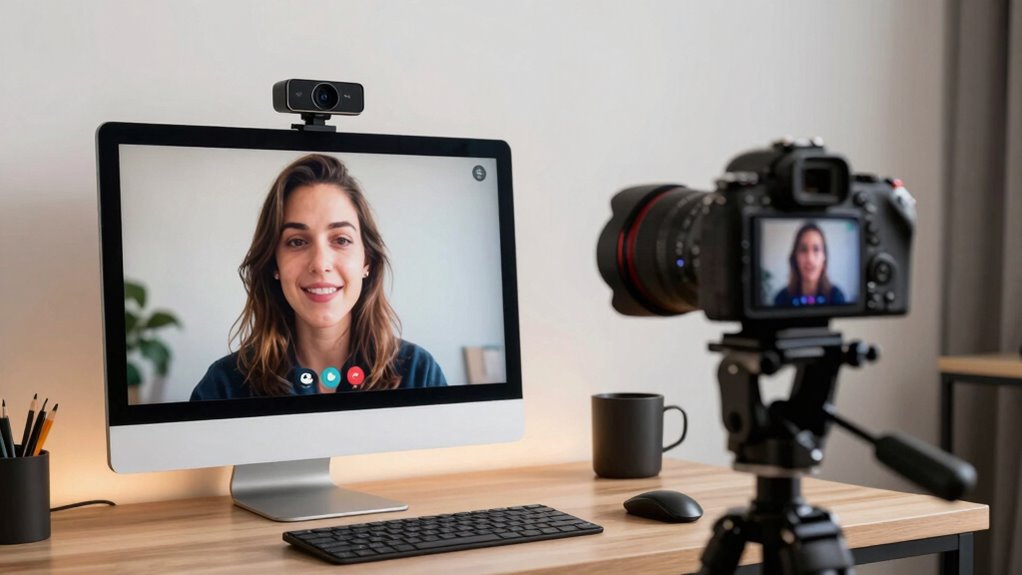
Ever wondered why webcams are a popular choice for live streaming and video calls? They’re simple, affordable, and designed for quick setup, making them ideal for real-time communication. Webcams often feature built-in microphone integration, reducing clutter and ensuring clear audio. While they typically have limited camera lens options, their fixed lenses are optimized for close-up, face-centered shots. This setup creates consistent framing and reduces technical issues during calls or streams. Additionally, their spiritual alignment can help foster positive interactions during virtual meetings. Understanding sauna safety tips and recognizing heatstroke signs can also promote a balanced approach to technology use, ensuring mental clarity and well-being. Incorporating sustainable textile care practices, such as choosing eco-friendly fabrics and reducing pollution impact, can further enhance the overall quality and mindfulness of your digital and physical environments. Recognizing the weight of machines is also important when setting up or moving equipment to avoid damage or injury. Moreover, paying attention to solar system safety can help prevent accidents during installation or maintenance, ensuring a secure environment for all users.
What Factors Should You Consider When Choosing a Camera Setup?
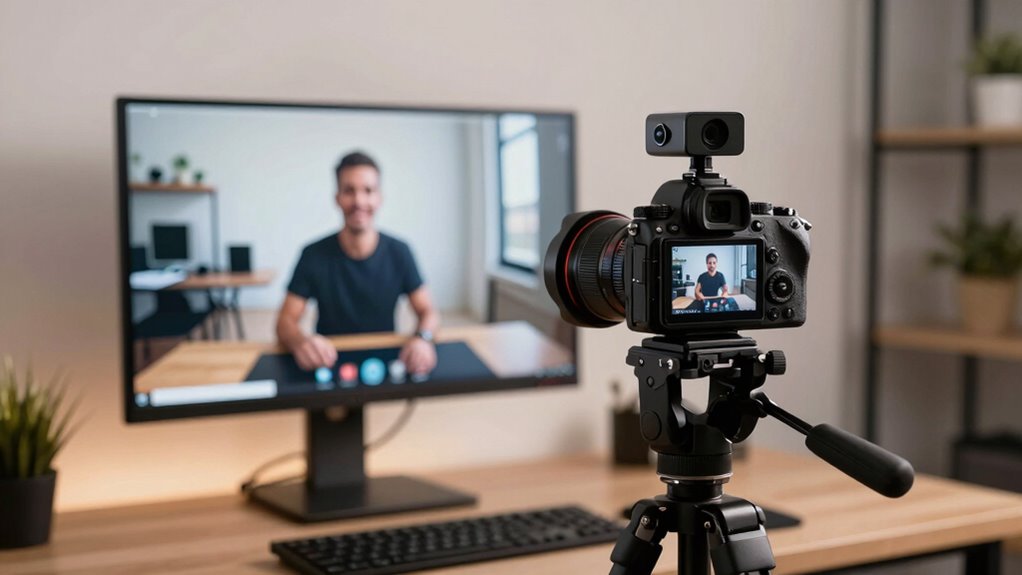
When choosing a camera setup, you need to take into account image quality and detail to ensure your visuals are sharp and professional. Portability and convenience also matter, especially if you move between locations or have limited space. Balancing these factors helps you pick a setup that fits your needs and enhances your content. Additionally, consider the level of protection and accessories available, such as remote car covers, to safeguard your equipment during transport and storage. Ensuring proper equipment maintenance can extend the lifespan of your camera gear and keep your visuals consistently clear. Recognizing the importance of content quality can help you select the right tools to produce engaging and polished visuals.
Image Quality and Detail
Choosing the right camera setup directly impacts the clarity and detail of your images, making it vital to take into account several key factors. Image stabilization helps prevent blurry footage, especially in handheld shots, while color accuracy ensures your visuals look vibrant and true to life. Higher resolution sensors capture more detail, essential for professional quality. Consider lens quality and aperture settings to improve sharpness and depth of field. Lighting conditions also influence image quality, affecting how well details are rendered.
| Factor | Why It Matters |
|---|---|
| Image stabilization | Prevents motion blur during recording |
| Color accuracy | Ensures authentic, vivid colors |
| Resolution | Defines the level of detail captured |
| Lens quality | Affects sharpness and clarity |
| Lighting | Impacts overall image detail and tone |
Portability and Convenience
While image quality determines how sharp and vibrant your visuals are, practicality plays a significant role in your day-to-day use. When choosing a setup, consider portability—especially if you travel frequently or enjoy spontaneous shoots. A compact mirrorless camera is ideal for travel photography, as it balances quality with ease of carrying. If you’re into underwater filming, look for models that are lightweight and waterproof, making it easier to capture moments on the go. Webcams, on the other hand, are highly convenient for quick setups and remote work, but can be less portable for outdoor or adventurous shoots. Ultimately, your choice should reflect how often you need to move your gear and whether convenience outweighs the need for high-end features.
How to Pick the Best Camera for Your Audience and Platform
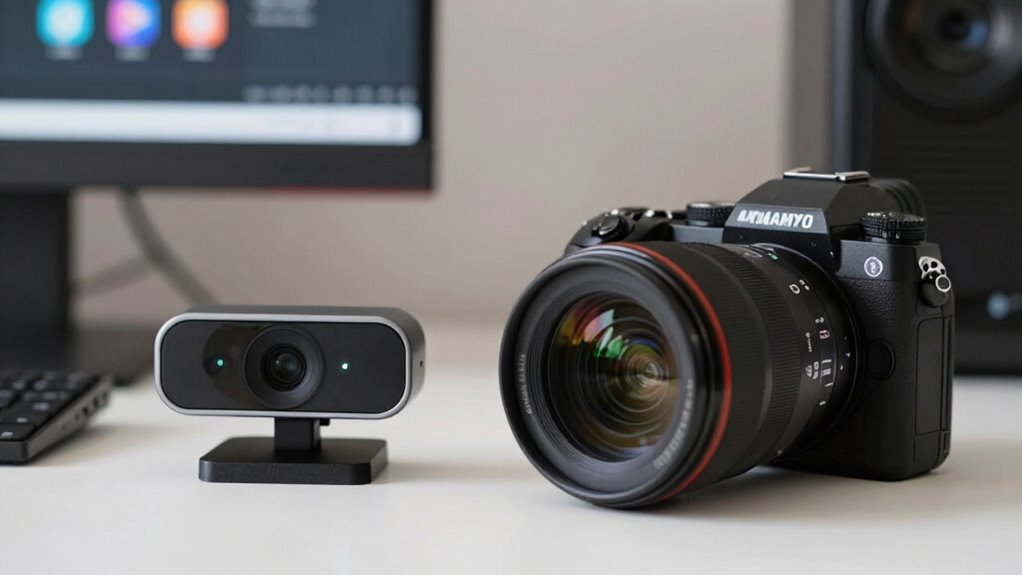
Selecting the right camera depends on understanding your audience and the platform where you’ll share your content. Consider camera ergonomics—how comfortable and easy it is to handle during recordings or live streams. If you’re producing long-form videos, a camera with better ergonomics and stable controls will help you stay focused. Also, think about battery life; if you plan to stream or record for extended periods, choose a camera with longer battery endurance to avoid interruptions. Different platforms have varied requirements—what works for a casual live session might not suit professional webinars or social media content. Assess your needs carefully, balancing ease of use, comfort, and power longevity to pick a camera that keeps your production smooth and consistent for your audience.
Troubleshooting Common Camera Compatibility and Video Quality Problems
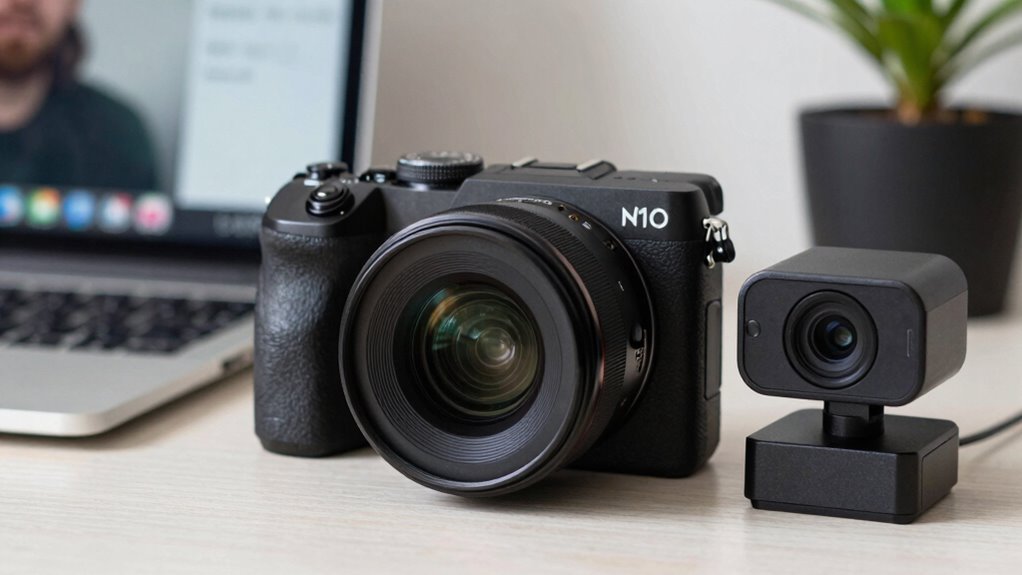
If your camera isn’t connecting properly or your video looks blurry, there are quick fixes to try. Ensuring your settings are correct, updating drivers, and checking cables can resolve many issues. Also, optimizing lighting and focus helps improve overall video quality instantly.
Camera Connection Issues
Are your camera connection issues preventing you from achieving smooth video quality? If so, first check the camera’s ergonomics—ensure it’s securely connected and properly configured for your setup. Loose cables or incompatible ports often cause disconnections or flickering. Also, consider your camera’s battery life; a low battery can lead to unstable connections or sudden shutdowns, disrupting your stream. Use quality cables and adapters designed for your camera model to minimize compatibility issues. Keep the firmware updated to fix known bugs and improve stability. If you’re using a portable setup, have spare batteries ready. By paying attention to connection stability, ergonomics, and power management, you can troubleshoot most common camera connection problems effectively, ensuring a reliable, high-quality video feed. Additionally, understanding your camera’s compatibility with various devices can help prevent unexpected issues and improve overall performance. Being aware of connection stability and how it impacts your setup can also help you identify potential issues before they disrupt your recording or streaming sessions. Regularly testing your setup and device integration can further reduce the chances of last-minute failures, especially when dealing with the complex interplay of hardware and software involved in modern streaming setups.
Video Resolution Problems
When your camera connection seems stable but the video quality isn’t meeting expectations, resolution issues might be to blame. You may notice blurry images or pixelation, often caused by incompatible settings or subpar camera lens quality. Confirm your camera’s resolution matches your streaming platform’s requirements for sharpness and clarity. Additionally, poor audio quality can distract viewers from visual issues, so check your audio settings too. Monitoring market trends and insights can also help understand external factors affecting your streaming equipment performance. Ensuring your camera’s resolution settings are properly configured is essential for optimal video output. Being aware of camera compatibility with your devices and software can also prevent common problems and improve overall performance. Paying attention to hardware specifications can further help in troubleshooting and selecting the right equipment for your needs. Regularly updating your device drivers and firmware can also enhance camera performance and stability.
Lighting and Focus Tips
Proper lighting and precise focus are vital for achieving clear, professional-looking video. When you master lighting techniques, your face becomes vibrant and engaging, drawing viewers in. Focus adjustments are equally important; sharp focus ensures your audience sees every detail clearly. To improve your video quality, consider these tips:
- Use soft, diffused lighting to eliminate harsh shadows and create a natural glow.
- Experiment with focus adjustments to keep your eyes sharp and in focus, especially if you move around.
- Position your light source at eye level for even illumination and better clarity.
- Incorporate outdoor lighting techniques to naturally enhance your overall video presentation.
- Adjust your camera settings to optimize video clarity and reduce blurriness, ensuring your footage remains crisp and professional. Additionally, understanding camera compatibility can help you troubleshoot common issues that affect video quality.
How to Switch Camera Setups as Your Needs Change

Adapting your camera setup to suit different needs is straightforward once you understand the key steps. First, regularly perform gear maintenance to guarantee your equipment functions smoothly and reliably. Adjust your camera ergonomics by repositioning or changing mounts for comfort and stability. When switching from a webcam to a mirrorless camera, disconnect the current device and reconnect your new camera, assuring proper power and data connections. Keep spare batteries and accessories handy for quick changes. Label your cables and mounts to avoid confusion. Before starting, double-check your settings to match your new setup’s requirements. This approach minimizes downtime and keeps your workflow seamless as your publishing needs evolve. Flexibility is key to delivering high-quality content, regardless of the camera you choose.
Frequently Asked Questions
Can I Use a Mirrorless Camera Without Additional Accessories?
Yes, you can use a mirrorless camera without additional accessories, but your experience depends on factors like lens versatility and battery life. Without extra gear, you’ll need a suitable lens to match your shooting style. Keep in mind, battery life may be limited, so consider carrying spare batteries if you plan long shoots. Using it directly, you’ll get good image quality, but accessories can enhance functionality if needed later.
What Is the Typical Price Range for High-Quality Webcams?
A high-quality webcam typically costs between $100 and $300, offering a crystal-clear window into your world. Think of it as a reliable lighthouse guiding your broadcast through the fog. When doing a price comparison, you’ll find budget options starting around $50, but they might lack some premium features. Investing in a mid-range webcam provides a balance of sharp image quality and affordability, perfect for professional or casual use.
How Do Lighting Conditions Affect Webcam vs. Mirrorless Camera Quality?
Lighting conditions greatly influence both webcam and mirrorless camera quality. You’ll notice that poor or inconsistent lighting diminishes color accuracy and causes graininess, especially with webcams. Mirrorless cameras manage lighting fluctuations better, providing sharper images and true-to-life colors even in varied conditions. To get the best quality, guarantee consistent lighting, avoid harsh shadows, and use diffusers or softboxes for ideal color accuracy, regardless of your device.
Are There Portability Differences Between Using a Mirrorless Camera and a Webcam?
Think of your gear as a trusty steed—your mirrorless camera offers robust camera ergonomics and equipment versatility, making it less portable but more adaptable for different setups. A webcam, like a swift courier, is lightweight and easy to carry everywhere, perfect for quick, on-the-go streaming. Your choice hinges on your needs: if portability is key, the webcam wins; if flexibility and quality matter, the mirrorless camera is your ride.
How Does Audio Quality Compare Between These Two Camera Setups?
Your audio quality with a mirrorless camera generally surpasses that of a webcam, thanks to better microphone integration options and enhanced audio clarity. With a mirrorless setup, you can connect high-quality external microphones, reducing background noise and improving overall sound. Webcams often have built-in microphones that may not deliver the same clarity, but they’re more convenient for quick setups. If audio quality matters, a mirrorless camera with an external mic is the better choice.
Conclusion
Choosing between a mirrorless camera and a webcam depends on how you want to share your content. Think about your goals, audience, and platform—your perfect setup might surprise you. Sometimes, the best choice comes from an unexpected coincidence, like discovering a webcam’s high quality for live chats or a mirrorless camera’s versatility for varied projects. Whichever path you take, trust that your unique needs will guide you to the right camera—just like it did for countless creators before you.