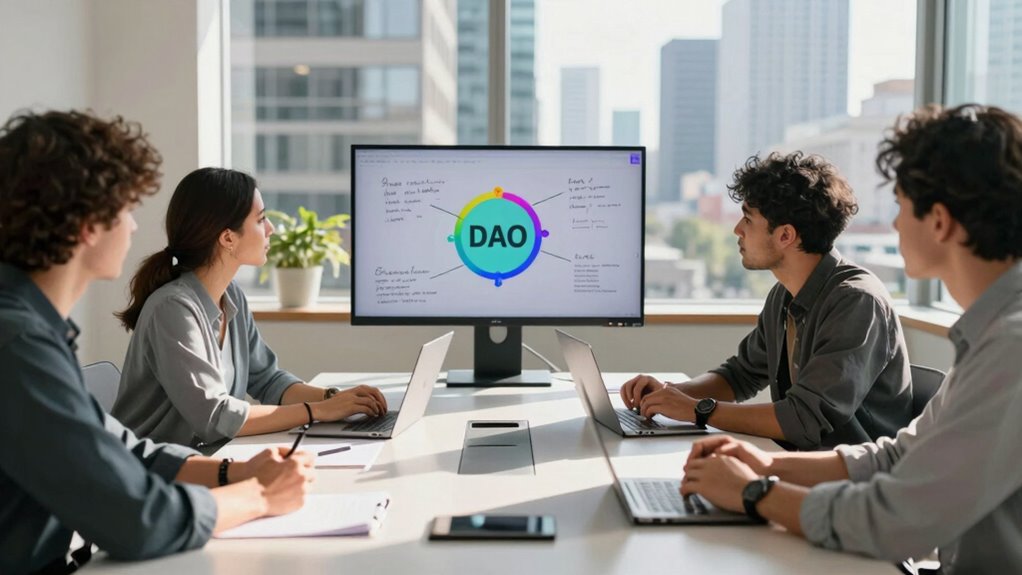

DAOs still matter because they revolutionize how you’ll organize and participate in communities, making decisions transparent and democratic. Even after the hype fades, their core principles of decentralization, trust, and shared ownership remain powerful tools for creating resilience and long-term value. By empowering members to influence project directions and adapt swiftly, DAOs foster genuine engagement. Want to discover how these principles can impact your involvement? Keep exploring to uncover more about their ongoing relevance.

Get hardware and tech essentials delivered free with Prime
- Fast, free delivery on millions of items
- Prime Video, Amazon Music and more included
- Member-only deals all year
Key Takeaways
- DAOs promote decentralized decision-making, reducing reliance on traditional hierarchies and increasing resilience.
- They foster genuine community engagement and shared ownership beyond temporary hype.
- Transparency and security via blockchain ensure trust and accountability in ongoing operations.
- DAOs enable flexible, community-driven adaptation to market or environmental changes.
- Long-term value is maintained through inclusive participation and alignment of community goals.
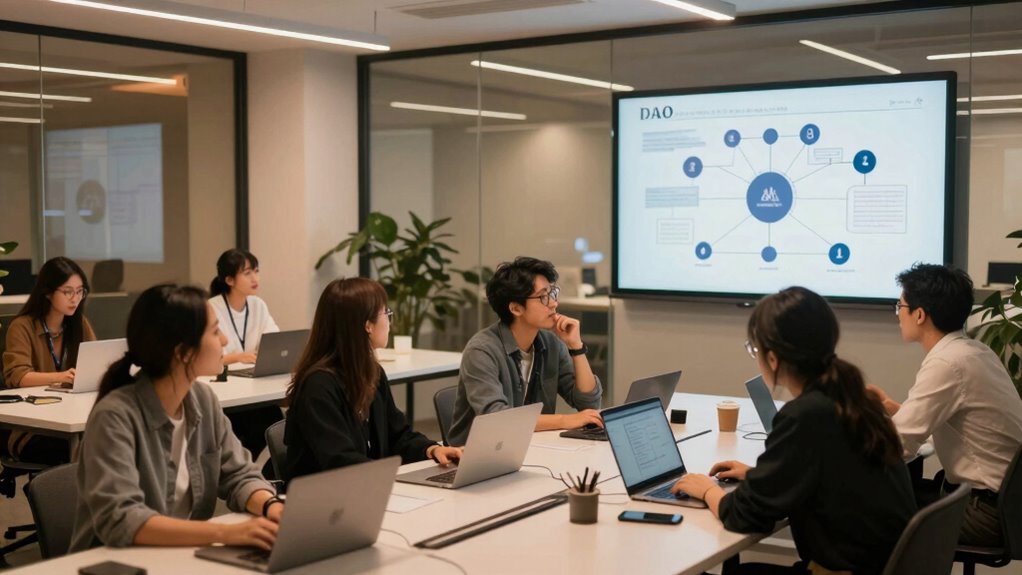
Decentralized Autonomous Organizations (DAOs) continue to prove their relevance in the evolving blockchain landscape, offering a new way for communities to organize and make decisions without traditional hierarchies. While the hype around them has cooled, their core principles remain powerful. One of the key reasons DAOs still matter is their approach to token governance. Instead of relying on centralized authorities, DAOs empower token holders to participate directly in decision-making processes. You, as a member, can influence project directions, funding allocations, and protocol changes simply through your token holdings. This system fosters a sense of ownership and accountability, which is hard to replicate in traditional organizations. Token governance isn’t just about voting; it’s about creating a transparent, inclusive platform where everyone’s voice can be heard, regardless of their position or background. This democratization attracts participants who want more than just passive engagement—they want to shape the future of the projects they believe in. Additionally, the decentralization of decision-making processes helps prevent single points of failure and promotes resilience within the ecosystem. The shared ownership model further encourages active participation, as community members see tangible benefits from their contributions. Community engagement remains at the heart of a DAO’s value. Even as the initial hype wanes, the strength of a DAO lies in its ability to cultivate active participation. Unlike hierarchical institutions, DAOs thrive on collective input. You’re encouraged to contribute ideas, propose initiatives, and collaborate with others to solve problems. This participatory environment keeps the community invested and motivated. As projects grow, community members often assume roles beyond simple voting—taking part in discussions, onboarding new members, and even managing day-to-day operations. This deep engagement creates a resilient ecosystem where members feel personally connected to the organization’s success. Furthermore, the inherent inclusiveness of DAOs means they can adapt quickly to changing circumstances, as community members rally around shared goals and values. This agility ensures DAOs remain relevant, even when market conditions shift or hype fades. By embracing blockchain transparency****, DAOs can build trust and accountability within their communities, reinforcing their long-term viability.
Additionally, the security and immutability of blockchain technology underpin the trustworthiness of DAO operations, making it difficult for malicious actors to manipulate decisions. Ultimately, the enduring importance of DAOs lies in their ability to combine token governance with genuine community engagement. They challenge traditional power structures, offering a platform where collective decision-making and active participation are the norm. You’re not just a passive spectator but an active participant in shaping the organization’s trajectory. Even when the spotlight dims, DAOs prove their resilience by continuing to foster decentralized, democratic environments. They remind us that meaningful community-driven projects don’t rely on hype; instead, they flourish through transparency, shared ownership, and real engagement. That’s why, despite the fluctuations in popularity, DAOs still matter and will likely remain an essential part of the blockchain ecosystem.
As an affiliate, we earn on qualifying purchases.
Frequently Asked Questions
How Do DAOS Ensure Security and Prevent Hacking?
You can guarantee DAO security through cryptographic safeguards that protect transactions and data, making hacking difficult. Governance protocols also play a key role by establishing transparent rules and voting systems, preventing malicious activities. Regular audits, multi-signature wallets, and smart contract security checks further strengthen defenses. By combining these measures, you reduce vulnerabilities and maintain trust in the DAO’s decentralized operations.
Can DAOS Operate Across Different Legal Jurisdictions?
You can operate DAOs across different legal jurisdictions, but legal recognition varies. While some countries accept DAOs as legal entities, others don’t yet have clear regulations. To facilitate cross-border collaboration, you should understand each jurisdiction’s rules and adapt your DAO’s structure accordingly. This way, you can navigate legal differences, guarantee compliance, and foster international cooperation, making your DAO more resilient and effective in a global environment.
What Are Common Challenges in Managing a DAO?
Managing a DAO is like steering a ship through unpredictable waters. You face challenges like maintaining community engagement and ensuring transparency practices are upheld. Balancing diverse opinions and decision-making can feel like walking a tightrope. To succeed, you need clear communication, active participation, and consistent transparency. Addressing these issues helps keep your DAO aligned, trusted, and resilient, even amid the shifting tides of the crypto landscape.
How Do Voting Mechanisms in DAOS Work?
You participate in DAO voting through a governance model that relies on token distribution, where your voting power depends on the number of tokens you hold. When a proposal is made, token holders cast their votes, influencing decisions. This system guarantees decentralized decision-making, but it can also favor large token holders. Different governance models, like one-token-one-vote or quadratic voting, shape how fair and effective your voting experience feels.
Are DAOS Suitable for All Types of Organizations?
DAOs aren’t suitable for all organizations, especially those needing strict hierarchies or regulatory compliance. However, if your organization values organizational flexibility and embraces cultural diversity, a DAO can work well. You’ll benefit from decentralized decision-making and increased transparency. But, consider the challenges of coordination and legal uncertainties. For some, the innovative, adaptable nature of DAOs makes them a compelling option, while others might find traditional structures more effective.
decentralized organization software
As an affiliate, we earn on qualifying purchases.
As an affiliate, we earn on qualifying purchases.
Conclusion
Even as the hype fades, DAOs remain the backbone of decentralized innovation. Think of them as sturdy bridges connecting passionate individuals worldwide, fostering collaboration without middlemen. Their true value lies in transparency and collective decision-making, qualities that haven’t lost their shine. So, don’t dismiss DAOs as just a fleeting trend—they’re the seeds of a more democratic future, waiting to bloom even when the spotlight dims. Keep your eyes on them; their impact is just beginning to unfold.
As an affiliate, we earn on qualifying purchases.
DAO community management platform
As an affiliate, we earn on qualifying purchases.
As an affiliate, we earn on qualifying purchases.
Halloween Picks
halloween
As an affiliate, we earn on qualifying purchases.