
To secure your small business, focus on combining employee training with data encryption. Educate your staff to recognize phishing scams, suspicious links, and proper password practices. Use encryption to protect sensitive information, even if hackers access or intercept files. Implement layered security with firewalls and antivirus software, and establish clear policies on data handling. These proactive steps help prevent cyberattacks and build resilience—continue exploring how to strengthen your defenses effectively.
Key Takeaways
- Conduct regular employee cybersecurity training to recognize scams, phishing, and safe data handling practices.
- Implement data encryption to protect sensitive information from unauthorized access or interception.
- Use layered security measures, including firewalls and antivirus software, alongside staff awareness.
- Recognize small businesses are targeted more easily; invest in cybersecurity to protect assets and reputation.
- Establish clear security policies and keep software updated to ensure ongoing protection against evolving threats.
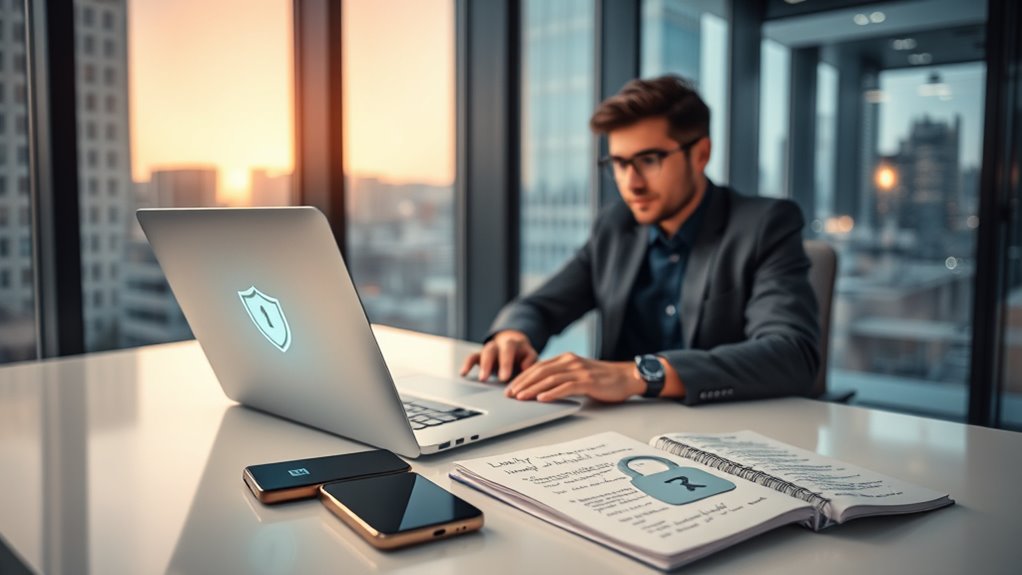
Have you ever wondered how safe your digital information really is? As a small business owner, you often juggle multiple responsibilities, but protecting your data should be a top priority. One of the most effective ways to bolster your cybersecurity defenses is through employee training. Your staff are on the front lines—they handle sensitive customer data, passwords, and internal communications. If they’re unaware of potential threats or best practices, your business becomes vulnerable to phishing scams, malware, and accidental data leaks. Regular training sessions help your team recognize suspicious emails, avoid risky links, and understand the importance of strong, unique passwords. By empowering your employees with knowledge, you create a human firewall that’s much harder for cybercriminals to breach.
Employee training turns staff into a human firewall against cyber threats.
In addition to educating your team, implementing data encryption is a fundamental step in safeguarding your information. Data encryption transforms your sensitive data into a coded format that’s unreadable without the proper decryption key. Even if hackers manage to access your files or intercept data during transmission, encryption ensures they can’t decipher the information. This is especially essential for protecting customer details, financial records, and proprietary business information. Encryption acts as an invisible shield, making it markedly harder for cybercriminals to exploit your data, even if they manage to breach your defenses. Incorporating advanced security measures like encryption can significantly reduce your risk of data breaches.
Combining employee training with data encryption creates a layered security approach that small businesses often overlook. While technology like firewalls and antivirus software are necessary, human error remains a common vulnerability. Regularly updating your training ensures your staff stays aware of evolving threats, and encryption keeps your most valuable data protected from unauthorized access. It’s also important to establish clear policies around data handling, password management, and device security, so everyone understands their role in maintaining cybersecurity.
Many small business owners underestimate their risk, thinking they’re too small to be targeted. However, cybercriminals often see smaller companies as easier targets, especially if they lack proper security measures. Investing in employee training and encryption might seem like extra effort or expense, but the cost of a data breach can be far greater—damaging your reputation, losing customer trust, and incurring legal penalties. Protecting your digital assets isn’t just a technical issue; it’s an essential part of your business strategy. Taking these steps now helps you stay one step ahead of cyber threats, ensuring your business remains resilient and trustworthy in an increasingly digital world.
Frequently Asked Questions
How Often Should I Update My Business Passwords?
You should update your business passwords regularly, ideally every 60 to 90 days, to maintain security. Practice password rotation by changing passwords frequently and avoid reusing old ones. Make sure your passwords are complex, combining uppercase and lowercase letters, numbers, and special characters. This reduces the risk of hacking attempts. Regular updates and strong, complex passwords are essential to protect your business data effectively.
What Are Common Signs of a Cybersecurity Breach?
You’ll notice signs of a cybersecurity breach through unusual login activity, like unfamiliar IP addresses or login times, and phishing attempts, such as suspicious emails asking for sensitive info. You might also see unexpected system slowdowns or data discrepancies. Stay vigilant, regularly monitor your accounts, and educate your team to recognize these signs early. Prompt action can prevent further damage and protect your business’s valuable information.
Is Free Antivirus Software Sufficient for Small Business Needs?
Did you know 70% of small businesses face cyberattacks? Free antivirus software isn’t enough because of its limitations; it often lacks advanced features and real-time threat detection. While free options may help detect basic viruses, paid antivirus solutions offer extensive protection, including ransomware and phishing defenses. Relying solely on free antivirus leaves your business vulnerable, so investing in a reputable paid program is a smarter, more secure choice.
How Can I Train My Staff on Cybersecurity Best Practices?
You can train your staff on cybersecurity best practices by fostering employee awareness through regular, engaging training sessions. Use simulation exercises to mimic real-world cyber threats, helping your team recognize and respond effectively to phishing attempts or ransomware attacks. Reinforce the importance of strong passwords, cautious email handling, and data security. Consistent training keeps cybersecurity top of mind, reducing risks and empowering your staff to act confidently against potential threats.
What Legal Liabilities Exist if My Business Data Is Hacked?
If your business data is hacked, you face legal liabilities like cyber liability claims and potential penalties for failing to protect customer data. You could be held responsible for damages caused by a data breach, including financial losses and reputational harm. To minimize this risk, you should implement strong security measures, understand applicable data breach laws, and have an incident response plan ready to address any cyber threats swiftly.
Conclusion
Remember, cybersecurity isn’t just a shield; it’s the heartbeat of your business’s trust and growth. By staying vigilant and implementing simple security measures, you transform potential vulnerabilities into your strongest armor. Think of your defenses as a fortress—each proactive step you take fortifies your walls against unseen threats. So, stay informed, stay prepared, and let security be the steady pulse that keeps your business thriving in an ever-changing digital landscape.