Choosing between 110V and 220V for your Bitcoin miners is essential for maximum performance and safety. Using the wrong voltage can cause unstable power, hardware damage, or reduced efficiency, limiting your mining potential. A mismatched setup can also lead to overheating or equipment failure, increasing costs and downtime. To get the most from your mining rig, you’ll want to make sure your power supply matches your infrastructure. Keep going to discover how to choose and set up your voltage correctly.
Key Takeaways
- Choosing the wrong voltage can prevent miners from powering on or cause unstable operation.
- 220V setups generally offer better efficiency and stability for larger mining rigs.
- Incorrect voltage selection risks overheating, hardware damage, and electrical hazards.
- Compatibility with your electrical infrastructure is crucial to avoid costly upgrades or safety issues.
- Proper voltage ensures optimal performance, reduces downtime, and maximizes mining profitability.
How Voltage Impacts Your Bitcoin Mining Performance
Voltage directly affects the power output and efficiency of your Bitcoin miner. When voltage is stable, your miner runs smoothly, maximizing hash rates and reducing downtime. Fluctuations or inconsistent voltage can cause power surges, risking hardware damage and system crashes. Power surges force your equipment to handle sudden electrical spikes, which can degrade components over time or cause immediate failures. Maintaining voltage stability ensures your miner operates at peak performance, avoiding unnecessary repairs or replacements. If voltage dips, your miner might underperform, resulting in lower profits. Conversely, too high voltage increases the risk of power surges, which can damage your setup. Proper voltage management is essential for keeping your mining operation efficient, safe, and profitable. Electrical stability is a crucial factor in preventing hardware failures and optimizing your mining output. Additionally, understanding how voltage regulation impacts your system can help you implement better safeguards and improve overall reliability. This understanding is especially important considering the dependence on consistent power supply to maintain optimal mining performance. Properly regulated voltage can also help in minimizing energy waste, leading to more sustainable and cost-effective mining practices. Regular monitoring of voltage levels enhances overall system performance and reduces unexpected downtimes.
110V vs. 220V Power Supplies: Which Is Better for Mining?
When choosing between 110V and 220V power supplies, you’ll want to take into account their efficiency and how easily they fit into your setup. Higher voltage supplies generally offer better power efficiency and can handle larger rigs, but compatibility and installation might be more complex. Understanding these differences helps you select the best option for your mining needs. Additionally, considering the contrast ratio can influence your decision if you plan to use projectors for monitoring or entertainment during downtime. Proper safety precautions are essential when working with high-voltage equipment to prevent accidents and ensure a safe mining environment. It’s also important to evaluate system compatibility to ensure your power supply integrates seamlessly with your existing setup. Being aware of electrical load management can help prevent overloads and optimize performance.
Power Efficiency Differences
Choosing between 110V and 220V power supplies can considerably impact your mining rig’s efficiency. Higher voltage systems typically deliver better power efficiency because they reduce current flow, minimizing heat loss in cables and components. This improved efficiency means more of your energy goes directly into mining operations rather than wasted as heat. Additionally, power distribution can influence the overall stability of your setup, making 220V setups more reliable in many scenarios. Properly managing electrical load is essential to prevent overloads and ensure consistent performance. Properly assessing power supply compatibility ensures optimal performance and safety for your mining operation. Moreover, a well-designed electrical system can help prevent potential hazards and improve overall safety during operation.
Compatibility and Setup
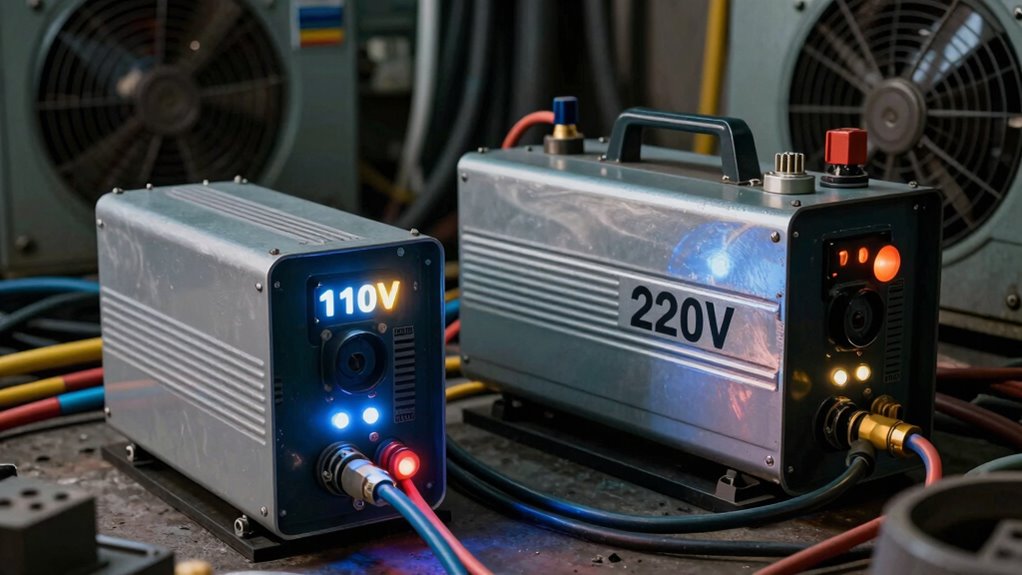
Ensuring your mining setup is compatible with your power supply is essential for smooth operation. Choosing between 110V and 220V impacts voltage regulation and power distribution. 220V supplies generally offer better voltage regulation, providing steadier power to your miners, reducing risks of voltage drops. Proper setup depends on your power source and infrastructure. Here’s a quick comparison:
| Aspect | 110V Power Supply | 220V Power Supply | Best For |
|---|---|---|---|
| Voltage Regulation | Moderate | Better | Stable power, less fluctuations |
| Power Distribution | Less efficient | More efficient | Higher load capacity |
| Compatibility | Common in US | Common internationally | Suitability depends on location |
Choosing the right voltage ensures maximum power distribution and minimizes setup issues. Additionally, understanding power supply compatibility is crucial to prevent potential damage or inefficiencies, especially considering voltage regulation capabilities. Being aware of electricity standards can help avoid costly mistakes during installation, and proper installation practices are key to a safe and effective setup. Moreover, consulting a professional can help identify any infrastructure limitations before deployment, ensuring your system runs optimally.
What Happens When You Choose the Wrong Voltage for Mining?

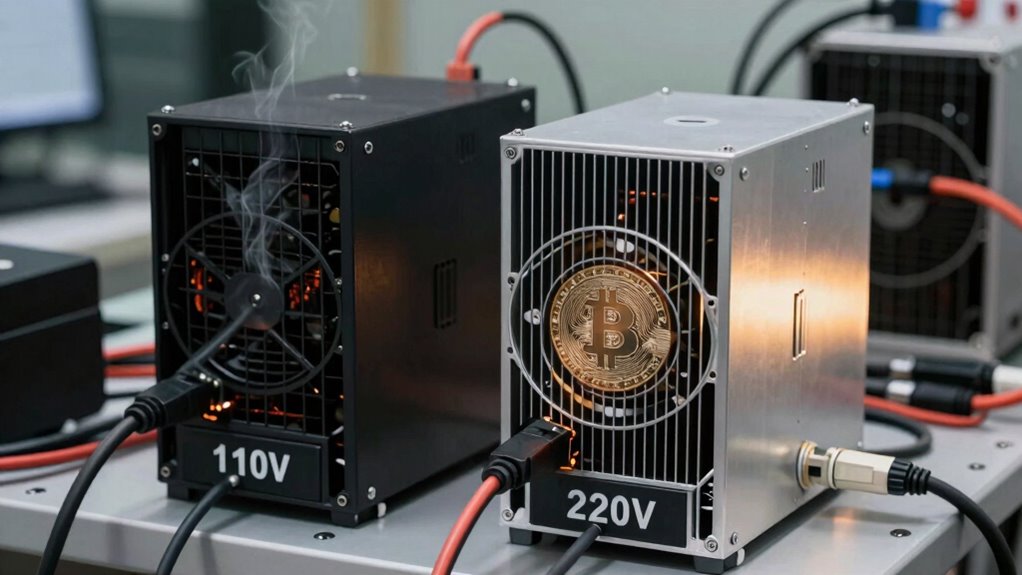
Selecting the wrong voltage for your Bitcoin miner can lead to immediate and costly problems. If your miner’s voltage compatibility isn’t matched properly, it may not power on at all, or worse, cause damage to the device’s internal components. Using a lower voltage than required can result in insufficient power, leading to frequent shutdowns and unstable operation. Conversely, applying a higher voltage risks overheating, damaging the power supply, or causing electrical failures. Poor voltage selection also impacts power stability, which is vital for consistent mining performance. Fluctuations or mismatched voltage can reduce efficiency, increase downtime, and lead to costly repairs. Understanding the importance of regional voltage standards can help prevent these issues. Ensuring you choose the correct voltage is essential to maintain a stable setup and avoid unnecessary expenses. Additionally, being aware of electrical compatibility can help safeguard your investment and ensure smooth operation. Being mindful of power regulation can further improve your setup’s reliability by minimizing voltage fluctuations. Proper electrical safety practices should also be considered to prevent potential hazards during operation.
Factors to Consider When Picking Your Mining Power Voltage

When choosing your mining power voltage, you need to take into account several key factors, like whether your electrical system can handle the required power. You should also check if your infrastructure supports the voltage to avoid costly upgrades. Additionally, think about the cost and energy efficiency, since these can greatly influence your overall mining profitability.
Power Compatibility Requirements
Choosing the right mining power voltage isn’t just about preferences; it’s about compatibility with your setup and the electrical standards in your area. You need to factor in voltage fluctuations, which can cause instability or damage your equipment if it isn’t rated for your power supply. Power surges pose another risk, potentially frying sensitive components or leading to costly repairs. Make sure your power supply can handle the voltage levels and that your wiring and circuit breakers are rated for either 110V or 220V, depending on your choice. Failing to match your miner’s voltage requirements with your electrical system increases the risk of damage and downtime. Always verify your area’s electrical standards and consult with a professional if unsure to maintain a safe, efficient mining operation.
Electrical Infrastructure Compatibility
Understanding your existing electrical infrastructure is essential because it determines whether your setup can support 110V or 220V miners safely and efficiently. Voltage standards vary across regions, so you need to verify if your wiring and outlets match the required voltage for your miners. If your infrastructure isn’t compatible, attempting to operate higher or lower voltage miners can create electrical hazards, risking shocks or fires. Confirm your circuit breakers, wiring capacity, and outlets are rated for the voltage you plan to use. Ignoring these factors can lead to electrical hazards and damage to your equipment. Evaluating your electrical infrastructure beforehand helps prevent safety issues, ensures proper operation, and avoids costly upgrades or modifications later.
Cost and Energy Efficiency
Selecting the right voltage for your Bitcoin miners can considerably impact both your upfront costs and ongoing energy expenses. Higher voltage setups, like 220V, often provide better voltage stability, reducing the risk of fluctuations that can affect performance. When considering cost and energy efficiency, compare these factors:
- Initial investment: 220V systems may require additional wiring or infrastructure upgrades.
- Energy consumption: Higher voltage setups typically operate more efficiently, consuming less power for the same hash rate.
- Operational costs: Lower power bills over time make 220V setups more cost-effective.
- Cost comparison: Although 220V may have higher upfront costs, the long-term savings on energy outweigh initial expenses.
Choosing the correct voltage balances upfront costs with ongoing efficiency, affecting your overall profitability.
Common Bitcoin Mining Voltage Mistakes to Avoid
Mistakes with voltage setup are among the most common pitfalls in Bitcoin mining, often leading to equipment damage or reduced efficiency. One key mistake is ignoring proper voltage regulation, which can cause inconsistent power delivery, risking hardware failure. Another is using the wrong cable gauge; undersized cables can overheat and pose fire hazards.
| Issue | Consequence |
|---|---|
| Poor voltage regulation | Equipment damage, unstable mining |
| Inadequate cable gauge | Overheating, potential fire hazards |
Always guarantee your power supply provides stable voltage and use the correct cable gauge for your setup. Avoid these common mistakes to protect your investment and optimize mining performance.
How to Set Up and Optimize Your Power Supply for Maximum Mining Efficiency
To maximize your mining efficiency, you need to carefully set up and optimize your power supply. Start by guaranteeing your power source can handle the load, avoiding voltage fluctuations that can harm your equipment. Use surge protectors to guard against power surges that could cause damage or shutdowns. Check that your wiring and outlets are rated for your miner’s voltage—whether 110V or 220V. Maintain a stable environment by monitoring voltage levels regularly. Consider installing a UPS (Uninterruptible Power Supply) for backup power during outages. Also, guarantee your power supply is properly ventilated to prevent overheating.
Ensure your power source is stable, properly rated, and protected to maximize mining efficiency and prevent equipment damage.
- Use high-quality surge protectors
- Verify wiring and outlet ratings
- Monitor voltage levels consistently
- Install a UPS for backup power
Frequently Asked Questions
Can I Upgrade My Existing Miner to a Different Voltage?
You can usually upgrade your existing miner to a different voltage if it’s designed for voltage compatibility, but it’s not always straightforward. Check your miner’s specifications and consult the manufacturer before attempting a miner upgrade. Some models require additional components or modifications, and incompatible upgrades could damage your equipment. Always make certain your power supply can handle the new voltage to keep your setup safe and efficient.
Are There Safety Concerns Switching Between 110V and 220V?
Switching between 110V and 220V can pose safety concerns if you don’t follow voltage regulations and safety precautions. You should verify your power supply matches your miner’s voltage requirements and use proper grounding. Always turn off power before making changes, and consider consulting a licensed electrician to prevent electrical hazards. Ignoring these precautions could lead to damage or safety risks, so prioritize proper handling and adherence to safety standards.
How Does Voltage Affect Overall Energy Costs?
Voltage impacts your energy costs because higher voltage often means better power efficiency, reducing overall energy consumption. When you use 220V miners, they typically operate more efficiently than 110V models, meaning less electricity is needed for the same performance. This lower energy consumption translates to reduced electricity bills over time. So, choosing the right voltage directly influences your setup’s energy costs and operational efficiency.
Is It Possible to Run 110V Miners on a 220V Outlet?
You can’t directly run 110V miners on a 220V outlet without proper voltage compatibility and power conversion. To do this safely, you need a step-down transformer or a converter that adjusts the voltage from 220V to 110V. This guarantees your miner operates correctly and prevents damage. Always check your device’s specifications and use appropriate power conversion equipment to avoid safety risks and optimize performance.
What Tools Are Needed to Modify My Miner’s Power Supply?
Think of your miner’s power supply as a bridge needing the right tools to stand tall. To modify it for power supply compatibility, you’ll need a screwdriver, wire strippers, and possibly a soldering kit. Voltage conversion adapters can help, but make sure your skills match the task. Carefully follow wiring diagrams, and double-check connections to avoid damaging your miner or causing safety hazards. Proper tools make this delicate dance safer and more successful.
Conclusion
Choosing the right voltage is essential for your mining success. Using the wrong one can limit your setup’s efficiency and profitability. Have you considered how a simple voltage mistake could hold back your entire operation? By understanding the differences and optimizing your power supply, you set yourself up for maximum performance. Don’t let a preventable error keep you from reaching your mining potential—make informed choices and power up for success.