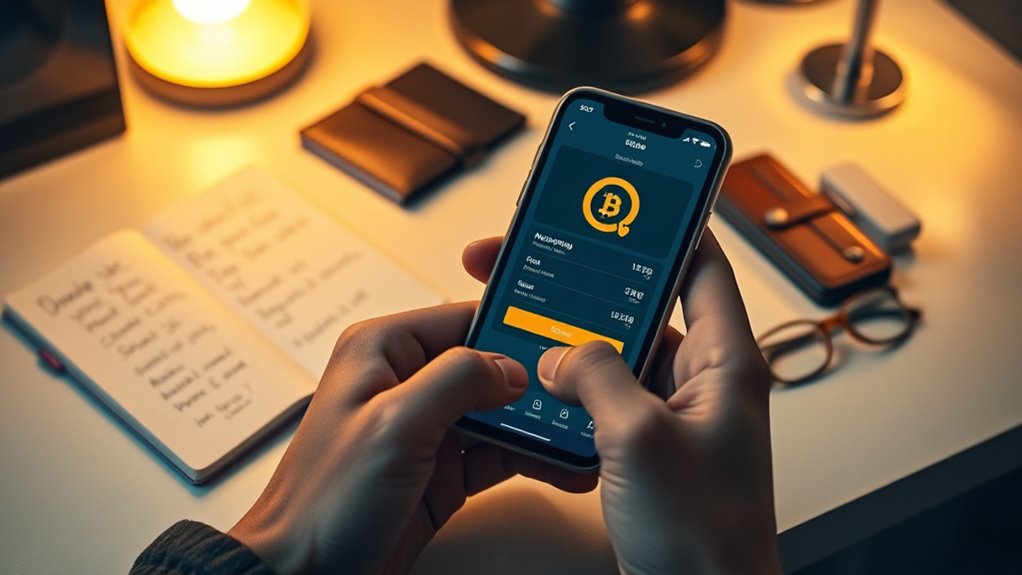

To buy Bitcoin safely, start by choosing a reputable exchange with strong security features like two-factor authentication and cold storage. Always use unique, complex passwords and verify the website’s URL to avoid scams. Prefer bank transfers over credit cards, and double-check all details before confirming transactions. Transfer your Bitcoin to a personal wallet, especially a hardware one, for added safety. Following these steps boosts your security—keep exploring to learn more about protecting your investments.
Key Takeaways
- Choose a reputable exchange with strong security measures and positive user reviews.
- Enable two-factor authentication (2FA) and use complex, unique passwords for your account.
- Opt for bank transfers over credit cards and verify all transaction details before confirming.
- Transfer purchased Bitcoin to a personal or hardware wallet for enhanced security.
- Research exchange reputation and follow best security practices to protect your funds and data.
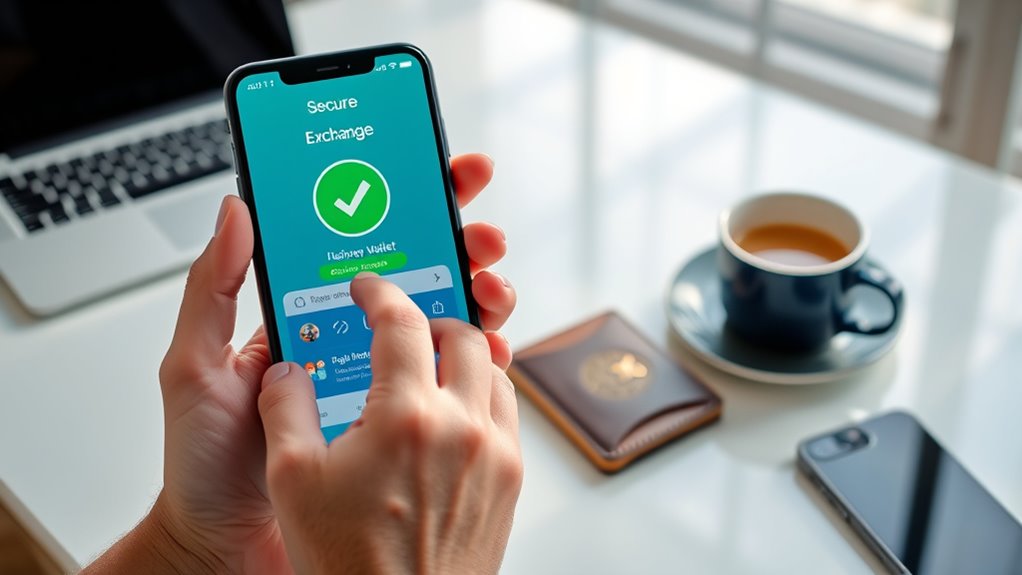
Purchasing Bitcoin can be straightforward, but doing so safely requires careful planning and awareness of potential risks. The first step is to prioritize security measures when selecting where to buy. Not all exchanges are created equal, so it’s essential to research their reputation thoroughly. Look for platforms with a solid track record of security, positive user reviews, and transparent policies. An exchange’s reputation reflects how well it protects users’ funds and personal information, which is vital when dealing with digital assets. If an exchange has a history of security breaches or unresolved complaints, it’s best to avoid it. Reliable exchanges often implement advanced security features such as two-factor authentication (2FA), cold storage for assets, and regular security audits. These measures help safeguard your funds from hackers and unauthorized access, giving you peace of mind during the buying process.
Choose reputable exchanges with strong security and transparent policies to protect your Bitcoin investments.
Once you’ve identified a reputable exchange, setting up your account with strong security measures is the next essential step. Use a complex, unique password that isn’t shared across other accounts, and enable 2FA wherever possible. This extra layer of security makes it markedly harder for cybercriminals to access your account even if they manage to steal your password. Be cautious about sharing personal information and avoid phishing scams—always verify you’re on the official website before entering sensitive data. Many exchanges also offer biometric authentication options, which add another layer of protection, so take advantage of those features if available.
After establishing secure account settings, you should consider your payment method carefully. Using a bank transfer or wire transfer can be safer than credit cards, which might be more vulnerable to fraud. Always verify your banking details are entered on the official exchange site and that your device has updated security software to prevent malware or keyloggers from capturing your information. When completing the purchase, double-check transaction details before confirming. Some exchanges offer additional security features, such as withdrawal whitelist addresses—using these can prevent your funds from being sent to unintended addresses if your account gets compromised.
Lastly, be aware that even with all these precautions, the security of your Bitcoin also depends on how you store it afterward. Transferring your assets to a personal wallet—preferably a hardware wallet—adds an extra layer of protection, as it keeps your private keys offline and inaccessible to online threats. Remember, no matter how secure the exchange is, safeguarding your private keys is your ultimate responsibility. Additionally, understanding that the security features of the platform, such as password strength indicators and profile management, are designed to enhance your safety can significantly reduce your risk of digital theft. By choosing reputable platforms, implementing strong security measures, and managing your assets carefully afterwards, you considerably reduce the risks associated with buying Bitcoin and ensure a safer investing experience.
Frequently Asked Questions
How Do I Recognize Legitimate Cryptocurrency Exchanges?
You recognize legitimate cryptocurrency exchanges by checking their adherence to exchange regulations and looking at user reviews. A trustworthy platform complies with local laws and security standards, which you can verify through official regulators. Read user reviews to see if others have had positive experiences and if the exchange handles issues transparently. Avoid platforms with poor reviews or unclear policies, and always prioritize exchanges with strong security measures and good reputations.
What Are Common Scams to Watch Out for in Bitcoin Trading?
Be aware of common scams in Bitcoin trading, like fake giveaways promising free coins if you send money or personal info. Phishing scams are also prevalent, where fraudsters send fake emails or messages pretending to be legit exchanges or contacts to steal your login details. Always verify sources, avoid clicking suspicious links, and never share your private keys or personal info to stay safe from these scams.
How Can I Verify the Authenticity of a Bitcoin Wallet?
To verify the authenticity of a bitcoin wallet, start with wallet verification by checking its source—use official websites or trusted app stores. Look for reviews and user feedback to confirm legitimacy. Make certain the wallet’s security features, like two-factor authentication, are in place. Always double-check the wallet’s public address and compare it with official documentation. This authenticity confirmation helps protect your funds from scams and unauthorized access.
What Are the Best Security Practices for Storing Bitcoin?
Think of your Bitcoin like a treasure chest; you want it locked tight. Use cold storage to keep your coins offline, away from hackers’ reach. Consider multi-signature wallets, which require multiple keys to access your funds, adding extra protection. Regularly update your security practices, use strong passwords, and enable two-factor authentication. These steps act like an unbreakable fortress, ensuring your Bitcoin stays safe and sound.
How Do I Recover My Bitcoin if I Lose Access?
If you lose access to your bitcoin, start by locating your recovery seed phrase, which is essential for private key management. Use this seed phrase to restore your wallet on a compatible platform or device. Keep your recovery seed secure and private, because anyone with access can control your bitcoins. Regularly back up your seed phrase and private keys to prevent future loss and guarantee you can recover your funds easily.
Conclusion
Now that you know how to buy Bitcoin safely, you’re steering your ship through the digital storm with confidence. By choosing reputable exchanges, enabling security features, and storing your coins securely, you’re building a sturdy fortress around your investment. Remember, patience and vigilance are your best allies. With these tools in hand, you’re ready to navigate the world of Bitcoin, turning the vast ocean of cryptocurrency into a treasure chest of opportunity.