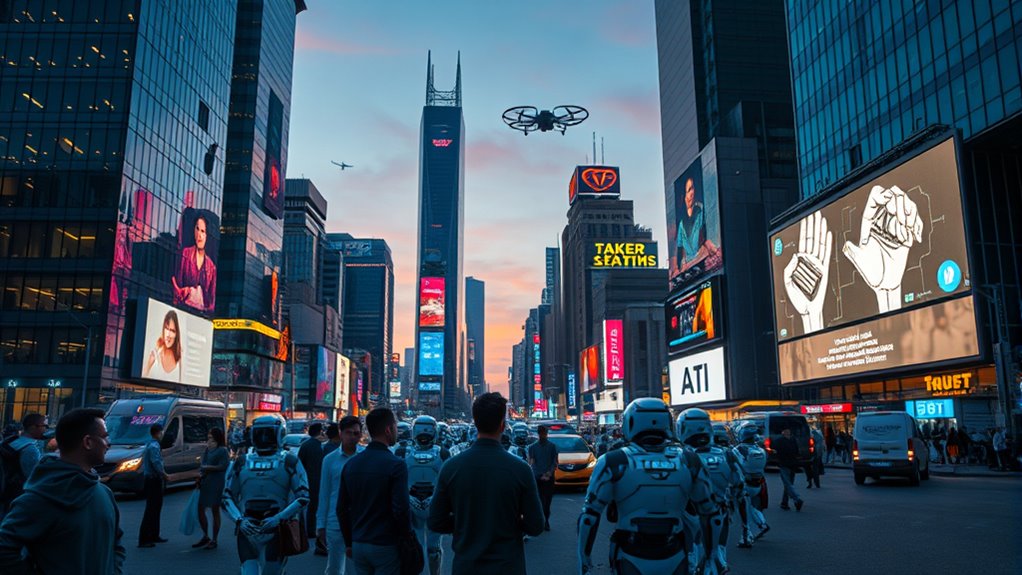

The 2026 AI wave could dramatically reshape your job landscape, eliminating millions of roles like clerical work, cashiers, and routine manufacturing jobs. At the same time, new opportunities will emerge in AI development, data science, cybersecurity, and green tech. Jobs that rely on emotional intelligence or creative thinking will likely remain resilient. Staying adaptable and gaining new skills will be key to steering through these changes. If you’re curious about how to prepare, there’s more to discover ahead.

Get hardware and tech essentials delivered free with Prime
- Fast, free delivery on millions of items
- Prime Video, Amazon Music and more included
- Member-only deals all year
Key Takeaways
- AI advancements by 2026 may automate millions of roles, especially in routine and clerical jobs.
- New job opportunities will emerge in AI development, ethics, cybersecurity, and green technologies.
- Jobs requiring emotional intelligence and complex judgment are more resistant to automation.
- Reskilling and lifelong learning are essential to adapt to the rapidly evolving AI-driven job landscape.
- Societal impacts include potential increased inequality and the need for policies supporting workforce transition.

As we approach 2026, the AI wave is set to reshape the global workforce dramatically. You might wonder which jobs will disappear and which will thrive. According to the World Economic Forum, by 2030, AI could displace about 92 million jobs worldwide but also create 170 million new roles, resulting in a net increase of 78 million jobs. These emerging roles will be centered on AI development, data science, cybersecurity, and green technologies. Goldman Sachs projects that AI could replace around 300 million jobs globally by 2030, but it also emphasizes the potential for new job opportunities if investments in human capital are prioritized. This shift suggests a labor market in evolution, where some roles are at high risk of automation, but new avenues are opening for those ready to adapt.
AI may displace 92 million jobs by 2030 but will also create 170 million new roles, transforming the global workforce.
Many traditional jobs face significant disruption. Clerical roles like secretaries and data entry clerks are highly vulnerable because their tasks can be easily automated. Similarly, bank tellers and cashiers are impacted by digital banking and self-checkout systems; projections show teller jobs could fall by 15%, and cashier positions by 11% by 2033. Routine manufacturing jobs have already declined sharply, losing 1.7 million positions since 2000 due to automation. Telemarketers and call center agents are increasingly replaced by AI-driven chatbots, and medical transcriptionists alongside customer service representatives face declines of around 4.7% to 5% over the next decade. These jobs share common traits: repetitive tasks, routine procedures, or interactions that can be handled efficiently by AI. Additionally, the high refresh rates of AI systems could further enhance the efficiency and speed of task execution in various industries.
Nonetheless, not all roles are equally exposed to automation. Jobs requiring emotional intelligence, creativity, complex judgment, and interpersonal skills tend to be more resilient. Healthcare professionals, educators, mental health counselors, and skilled tradespeople are less vulnerable because their work depends on human empathy and adaptability. Occupations like therapists or caregiving roles are particularly resistant since they involve nuanced human interactions that AI cannot replicate. Positions involving unpredictable environments, such as dredge operators or water treatment plant operators, also remain less susceptible. Additionally, new roles in AI oversight and collaboration highlight opportunities for humans to work alongside machines, focusing on managing, fine-tuning, and ethical deployment of AI systems. Furthermore, continuous advancements in AI are expected to create specialized jobs that require a combination of technical knowledge and human oversight, emphasizing the importance of adaptable skill sets in the evolving job landscape.
The societal implications are profound. The decline of entry-level jobs could hamper skill development and wage growth for young and inexperienced workers, deepening economic inequality without adequate reskilling programs. If governments and companies don’t act proactively, the divide between those benefiting from AI and those displaced will widen. Ethical concerns around job quality, worker well-being, and transparency in AI deployment are increasingly urgent. To navigate this transition successfully, investments in reskilling, AI literacy, and lifelong learning are essential, ensuring that the workforce can adapt to the evolving landscape and harness the full potential of AI’s opportunities.
Products Worth Considering

Sony WH-1000XM4C Wireless Noise-Cancelling Headphones, Black

Apple AirPods Pro 3 Wireless Earbuds with Active Noise Cancellation

LG 34GX90SA-W 34-inch Ultragear WQHD OLED Curved Gaming Monitor
As an affiliate, we earn on qualifying purchases.
Frequently Asked Questions
How Will AI Impact Global Economic Inequality?
AI will widen global economic inequality by benefiting high-skilled workers and wealthy nations more than others. You might see better opportunities and higher wages if you’re in a developed economy or advanced sector, but many in developing countries could face job displacement and limited access to AI’s benefits. To avoid increasing gaps, you need policies that support skill development and equitable access to AI technology worldwide.
What New Jobs Might Emerge From AI Advancements?
New roles are rapidly rising in AI advancement. You might find yourself designing diligent data datasets, developing dynamic AI models, or deploying dependable deployment systems. Positions like prompt engineers, ethics officers, and human-AI harmony specialists are emerging, opening doors to diverse industries—from finance and healthcare to transportation and content creation. By gaining relevant certifications and honing your skills, you’ll stay ahead in this evolving ecosystem, excelling in exciting, innovative AI-driven job opportunities.
How Can Workers Prepare for Ai-Driven Shifts?
To prepare for AI-driven shifts, you should focus on developing skills in AI oversight, data ethics, and human-AI collaboration. Consider upskilling through training programs or online courses, especially in technical and analytical areas. Stay adaptable by exploring roles that combine human judgment with AI, like healthcare or education. Keep learning continuously to stay ahead of changing demands, and be open to shifting into new industries or job functions.
Will AI Influence Privacy Laws and Data Security?
Imagine your company’s customer data being mishandled due to lax AI privacy rules—disaster, right? AI will definitely influence privacy laws and data security, pushing regulations to evolve rapidly. You’ll see states like California and Colorado enforce stricter rules, requiring transparency and risk mitigation. This means you’ll need to stay informed about compliance, implement better safeguards, and adapt to new standards to protect personal data and avoid penalties.
What Ethical Considerations Will Shape AI Development?
You should focus on transparency, fairness, privacy, accountability, and global standards. Make sure AI decision processes are clear, biases are minimized, and personal data stays protected. Stay responsible for your AI systems, ensuring they don’t cause harm or discrimination. Collaborate internationally to develop consistent ethical guidelines. Always keep human oversight in place to prevent unintended consequences, and consider AI’s environmental impact as part of your ethical development process.
Conclusion
As we stand on the cusp of this AI tide, you might find some jobs gently shifting like sands in a breeze, while others fade quietly into the horizon. Embrace the changing landscape, for it’s an invitation to adapt and grow. Though the road ahead may feel like a winding river, your resilience will be the steady boat guiding you through the currents of transformation. Together, you’ll navigate this new dawn, shaping a future full of unseen possibilities.