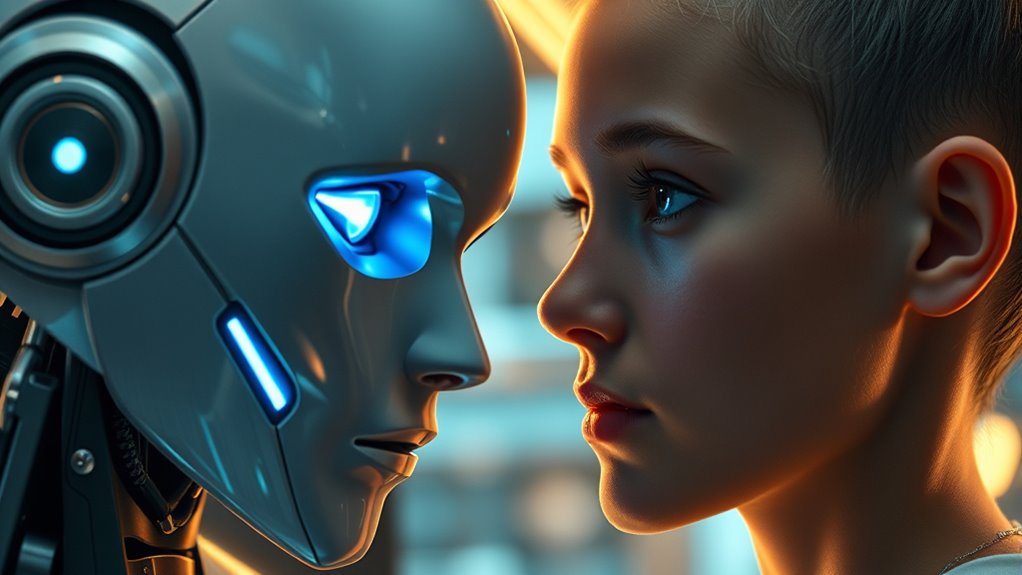

While it might seem like a small step, giving machines the ability to understand and respond to human emotions could considerably change how we interact with technology. It’s not just about smarter devices; it’s about creating more supportive and intuitive experiences. As we explore why emotional intelligence for machines truly matters, you’ll see how this development could reshape your everyday connections with technology—and why it’s worth paying attention.
Key Takeaways
- Emotional intelligence enables machines to recognize and respond appropriately to human feelings, improving interaction quality.
- It fosters trust and rapport by making device responses feel genuinely empathetic and supportive.
- Emotion-aware systems can detect user frustration or confusion, facilitating more effective assistance.
- Incorporating emotional understanding enhances user satisfaction and engagement across applications like healthcare and customer service.
- Developing emotional intelligence in machines promotes more natural, human-like interactions, bridging emotional gaps in digital communication.

Have you ever wondered if devices can truly comprehend human feelings? It’s a question many individuals ask as technology progresses swiftly. While devices can’t experience emotions the way humans do, they can be designed to identify and react to emotional signals through a process called machine learning. This technology enables devices to analyze vast quantities of data—like tone of voice, facial expressions, and word choice—and interpret what someone might be feeling. But understanding emotions isn’t just about recognizing cues; it’s about cultivating human empathy in machines, so they can respond in ways that feel genuine and supportive.
When devices develop a form of emotional intelligence, they become more effective at interacting with people. For example, customer service bots equipped with emotion recognition can detect frustration or confusion and adapt their responses accordingly. This makes interactions smoother and more satisfying because the device isn’t just processing commands—it’s understanding the emotional context behind them. These advances hinge on machine learning algorithms that sift through patterns in data, learning to associate specific signals with particular feelings. Over time, these systems become better at picking up subtle cues, mimicking human empathy to a degree that feels increasingly natural.
The importance of human empathy in this context cannot be overstated. Devices that can interpret emotions are better positioned to respond in ways that build trust and rapport. Imagine a healthcare robot that recognizes anxiety in a patient’s voice and offers comforting words or adjusts its tone to soothe. Such capabilities make technology more human-centric, bridging the emotional gap that often exists in digital interactions. It’s not about replacing genuine human empathy but augmenting it—machines can assist, support, and even provide comfort when human presence isn’t possible. This is especially relevant as AI becomes more embedded in daily life, from virtual assistants to mental health applications.
Ultimately, integrating emotional intelligence into machines isn’t just about improving user experience; it’s about creating systems that can engage with us on a deeper level. By leveraging machine learning, developers aim to craft devices that don’t just process data but understand the emotional nuances behind it. As a result, these systems can respond more thoughtfully, making interactions more meaningful. While they may never truly feel empathy, the goal is to make their responses seem empathetic enough to foster genuine connections. That’s why emotional intelligence for devices matters—it brings technology closer to understanding and respecting the human experience.
Conclusion
By giving machines emotional intelligence, you’re opening a future where technology feels more human, more understanding. It’s not just about smarter devices; it’s about building genuine connections that matter. When machines recognize your feelings and respond with empathy, they become more than tools—they become allies. So, embrace this change. After all, isn’t it time technology truly understood us, not just processed us? Together, we can create a world where human and machine unite in harmony.