
📊 Full opportunity report: Corvus ISR Day 1: Using Synthetic Data To Build A WAMI Exploitation Framework on ThorstenMeyerAI.com — validation score, market gap, and execution plan.

Get hardware and tech essentials delivered free — and shop member deals
- Fast, free delivery on millions of items
- Access to Prime Big Deal Days deals on October 6–7
- Prime Video, Amazon Music and more included
TL;DR
Corvus ISR has publicly demonstrated a prototype WAMI exploitation system using synthetic data, enabling detection and tracking of moving objects in a browser-based scene. This marks the first step in building a privacy-compliant, flexible analysis platform.
Corvus ISR has publicly launched its initial WAMI exploitation framework, demonstrating live detection and tracking within a synthetic scene. This development marks the first tangible step in building a privacy-compliant, flexible analysis platform designed to address the exploitation gap in wide-area motion imagery (WAMI), a sensor class characterized by massive data volumes and analysis challenges.
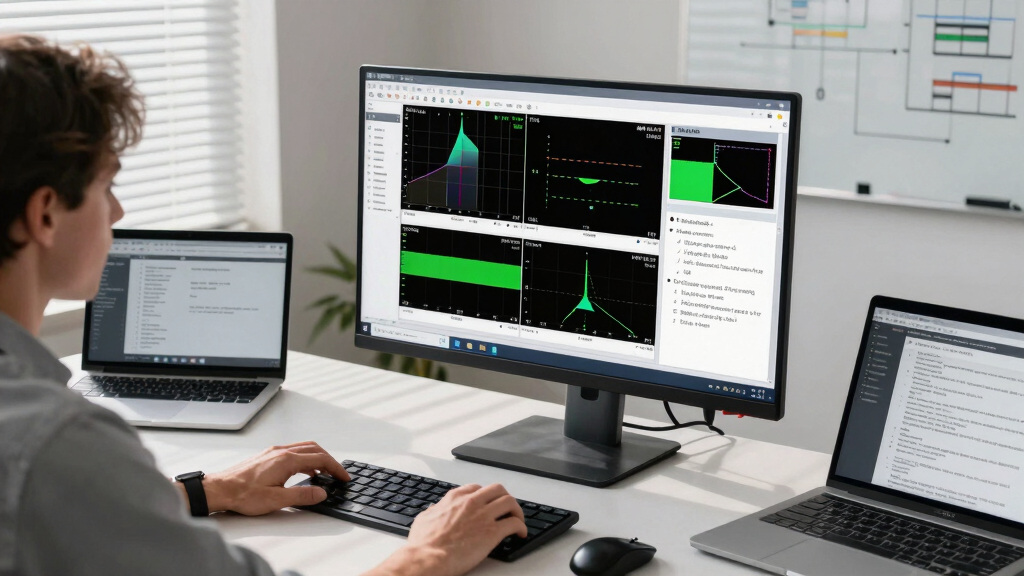
The project, announced by Thorsten Meyer on his website, involves creating a browser-based prototype that processes a fully synthetic WAMI scene. The scene features a procedurally generated road network with hundreds of moving vehicles, a simulated sensor with adjustable coverage, and real-time detection and tracking algorithms. This artifact is significant because it operates without any real-world data, ensuring legal and privacy compliance, especially under European regulations.
Corvus ISR emphasizes that synthetic data allows for perfect ground truth, enabling honest benchmarking of detection and tracking algorithms. Scene generation includes controlled difficulty settings—such as traffic density, occlusion, and sensor jitter—to test system robustness before deploying on real data. The approach prioritizes building the exploitation pipeline first, then transitioning to real-world scenarios, addressing the challenge of data scarcity and legal restrictions.
The platform is designed with two deployment editions: a Sovereign version for air-gapped, local deployment, and a Governed version for cloud operation within EU jurisdictions. This dual strategy responds to the increasing demand among European ISR users for data custody and compliance, as highlighted by Meyer.
CORVUS ISR · synthetic WAMI scene — live detect & track
BUILD IN PUBLIC · DAY 1 ARTIFACTPotential Impact of Synthetic Data in WAMI Exploitation
This development is significant because it demonstrates a practical method for developing and benchmarking WAMI analysis software without relying on sensitive or restricted real-world data. By starting with synthetic scenes, Corvus ISR aims to accelerate innovation, reduce dependency on US-controlled analysis tools, and provide tailored solutions for European and other privacy-conscious markets. The approach could reshape how ISR exploitation software is built, tested, and deployed, especially in jurisdictions with strict data governance.
Furthermore, the ability to generate labeled data with perfect ground truth enables more honest performance evaluation and iterative improvement. This could lead to more effective and adaptable exploitation systems, ultimately narrowing the gap between data collection and analysis capabilities in the WAMI domain.
synthetic data generation software
As an affiliate, we earn on qualifying purchases.
As an affiliate, we earn on qualifying purchases.
WAMI Data Challenges and the Shift Toward Synthetic Solutions
Wide-area motion imagery (WAMI) involves capturing gigapixel-scale images of large urban areas at high frame rates. Although WAMI sensors are proliferating across military and civilian platforms, the software for analyzing this data remains limited, largely controlled by US entities. Historically, reliance on real surveillance footage for development and benchmarking has been hampered by legal restrictions, privacy laws, and high costs.
Recent trends show increasing demand for European and other non-US solutions, driven by concerns over data sovereignty and compliance with GDPR. Synthetic data has emerged as a promising alternative, allowing developers to create unlimited labeled datasets, simulate challenging scenarios, and test algorithms without legal hurdles. Corvus ISR’s approach aligns with this shift, aiming to build a fully synthetic exploitation pipeline before tackling real-world data challenges.
“Starting with synthetic data dissolves legal and privacy constraints, allowing us to focus on building robust detection and tracking algorithms.”
— Thorsten Meyer
wide-area motion imagery analysis tools
As an affiliate, we earn on qualifying purchases.
As an affiliate, we earn on qualifying purchases.
Remaining Questions About Synthetic-to-Real Transition
It is not yet clear how well the algorithms developed with synthetic data will transfer to real-world WAMI scenes. The effectiveness of the synthetic scene as a training and benchmarking substrate remains to be validated against operational data, and the complexity of real environments may reveal unforeseen challenges.
Additionally, the timeline for transitioning from synthetic prototypes to real data deployment, and the specific technical hurdles involved, are still in development.
browser-based object detection system
As an affiliate, we earn on qualifying purchases.
As an affiliate, we earn on qualifying purchases.
Next Steps for Corvus ISR and Real Data Testing
Corvus ISR plans to refine its detection and tracking algorithms within the synthetic environment, gradually increasing scene complexity. The next milestone involves testing the pipeline with real WAMI data, once available, to evaluate transferability and performance.
Further development will include integrating deep learning models, expanding scene variability, and deploying the system in pilot projects for operational validation. The company also aims to release more detailed benchmarks and open-source components to foster community collaboration.
As an affiliate, we earn on qualifying purchases.
Key Questions
Why is synthetic data important for WAMI development?
Synthetic data allows for unlimited, labeled datasets that facilitate algorithm development and benchmarking without legal or privacy constraints, accelerating progress in WAMI exploitation software.
Will the system work on real WAMI data?
This remains to be tested. The current prototype demonstrates the pipeline with synthetic scenes, and its effectiveness on real data will depend on further validation and adaptation.
What are the advantages of a dual deployment model?
The Sovereign edition ensures data remains within secure, local environments, while the Governed edition offers cloud deployment compliant with EU regulations, addressing diverse customer needs.
When can we expect a full operational system?
There is no fixed timeline yet. Development will proceed through iterative testing with real data, with deployment likely several months to years away, depending on validation results.
Source: ThorstenMeyerAI.com
Fall Picks
fall essentials
As an affiliate, we earn on qualifying purchases.