Artificial intelligence is revolutionizing healthcare by enabling faster diagnoses, personalized treatments, and early prevention. It analyzes medical images, lab results, and patient data to spot issues more accurately and quickly. AI also helps tailor therapies based on your genetic makeup and predicts potential health risks before symptoms appear. This innovation improves recovery chances and enhances overall care. If you keep exploring, you’ll discover even more ways AI is saving lives every day.
Key Takeaways
- AI-powered diagnostics quickly analyze medical images and data, reducing errors and enabling faster disease detection.
- Personalized medicine uses AI to customize treatments based on genetic and health profiles, improving outcomes.
- Predictive analytics identify health risks early, allowing proactive interventions and preventing severe conditions.
- AI optimizes healthcare workflows, decreasing wait times and enhancing patient care efficiency.
- Continuous innovation in AI enhances accuracy and supports active patient engagement, saving lives and improving healthcare quality.
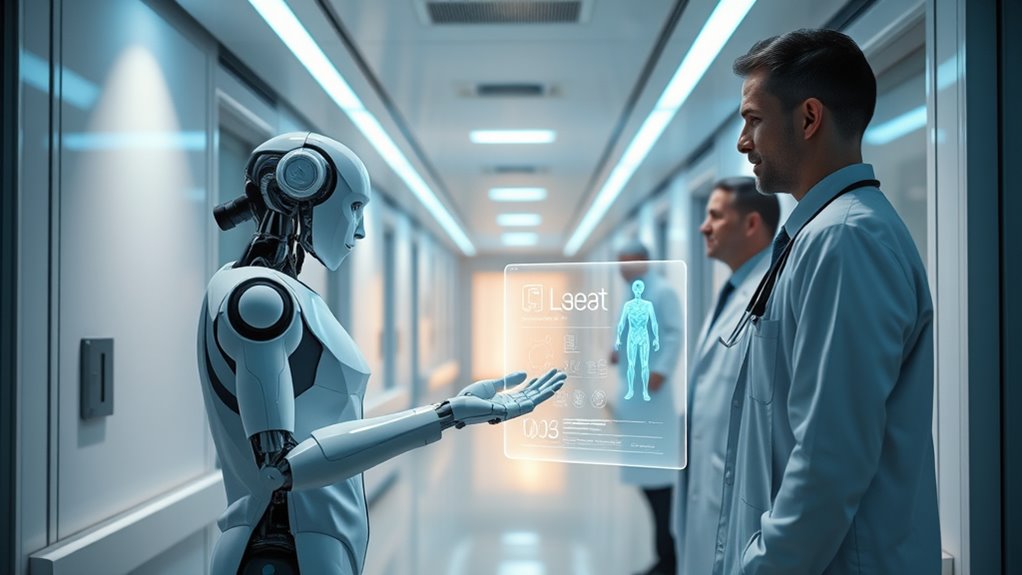
Artificial intelligence is transforming healthcare by enabling faster diagnoses, personalized treatment plans, and improved patient outcomes. One of the most remarkable advancements is robotic diagnostics, which uses AI-powered machines to analyze medical images, lab results, and patient data with incredible speed and accuracy. When you visit a healthcare facility, you might not see these robots, but they’re working behind the scenes, scanning MRI scans or X-rays to detect anomalies that could indicate diseases like cancer or neurological conditions. These robotic diagnostic tools reduce human error and shorten the time it takes to arrive at a diagnosis, allowing you to start treatment sooner. This not only saves lives but also alleviates anxiety by providing clearer, more reliable results.
In addition to robotic diagnostics, AI is revolutionizing personalized medicine, tailoring treatments specifically to your genetic makeup, lifestyle, and health history. Instead of the one-size-fits-all approach, AI algorithms analyze vast amounts of data to recommend the most effective therapies for you. For example, if you’re diagnosed with cancer, AI can help identify specific genetic mutations driving your disease and suggest targeted therapies that are more likely to work. This precise approach improves treatment efficacy while minimizing side effects, giving you a better quality of life during your recovery. Personalized medicine powered by AI also enables ongoing monitoring, adjusting treatment plans as your condition evolves, ensuring you get the most suitable care at each stage.
Furthermore, understanding grocery store hours and their variations can assist in planning your shopping trips efficiently, reducing wait times and improving convenience. The integration of AI in healthcare isn’t just about diagnostics and treatment; it’s also about prevention. AI tools can analyze patterns in your health data over time, predicting potential health risks before symptoms appear. This proactive approach allows you to take preventive measures, whether that means lifestyle changes or early interventions, ultimately reducing the likelihood of severe health issues. Hospitals and clinics utilize AI-driven decision support systems to assist healthcare professionals in making more accurate and timely decisions, ensuring you receive ideal care. The use of AI in robotic diagnostics and personalized medicine exemplifies how technology is making healthcare more precise, efficient, and patient-centered. It’s empowering you to have a more active role in your health journey, with faster diagnoses, better-tailored treatments, and improved chances of recovery. As AI continues to evolve, expect even more innovative solutions that save lives and enhance the quality of care you receive.
Frequently Asked Questions
How Does AI Improve Patient Diagnosis Accuracy?
You can see AI improve diagnosis accuracy through advanced machine learning and diagnostic algorithms. These tools analyze vast amounts of medical data quickly, identifying patterns that humans might miss. By continuously learning from new cases, AI refines its predictions, helping you make more precise diagnoses. This leads to earlier treatment, better patient outcomes, and reduced errors, ultimately making healthcare more effective and reliable for everyone.
What Are the Ethical Concerns of AI in Healthcare?
You might worry about algorithm bias skewing diagnoses or treatments, but addressing this concern requires transparency and ongoing validation. Ethical issues like ensuring informed consent become vital as you rely on AI for decisions. You must ask: are patients truly aware of how their data is used? Balancing innovation with ethical responsibility helps prevent harm and builds trust, making AI a safe addition to healthcare.
How Is AI Integrated Into Existing Medical Systems?
You integrate AI into existing medical systems by connecting it with your electronic medical records to analyze patient data swiftly. AI assists your clinical decision making by providing insights, alerts, and predictive analytics that enhance accuracy. You can automate routine tasks, streamline workflows, and improve diagnostics, all while maintaining compatibility with current medical software. This seamless integration helps you deliver better patient care and optimize healthcare operations efficiently.
What Training Is Needed for Healthcare Professionals to Use AI?
You need specialized AI training and healthcare certification to effectively use AI tools. This training covers understanding AI algorithms, interpreting data outputs, and integrating AI into clinical workflows. Healthcare professionals should attend workshops, online courses, or certification programs focused on AI applications in medicine. Gaining these skills guarantees you confidently leverage AI’s potential to improve patient outcomes and stay current with evolving technology in healthcare.
How Does AI Handle Patient Data Privacy and Security?
You guarantee patient data privacy and security by implementing strict protocols like obtaining patient consent before using their data and using data encryption to protect sensitive information. AI systems are designed to comply with healthcare regulations, and you regularly monitor these systems to prevent breaches. By combining consent processes with advanced security measures, you help maintain trust and safeguard patient information effectively.
Conclusion
Just like a modern-day hero, AI is transforming healthcare, saving lives with every breakthrough. It’s your silent guardian, working behind the scenes to detect diseases early and personalize treatments. As you witness this technological revolution, remember how AI’s relentless pursuit of innovation echoes the relentless spirit of Icarus reaching for the sun—only this time, it’s lifting humanity toward a brighter, healthier future. Embrace this change; the future of healing is now in your hands.