

🔍 Read the full analysis: The Future Of Automation: 13 Best AI Tools For 2026 on ThorstenMeyerAI.com

Get hardware and tech essentials delivered free with Prime
- Fast, free delivery on millions of items
- Prime Video, Amazon Music and more included
- Member-only deals all year
TL;DR
In 2026, the landscape of AI automation tools is expanding, with 13 leading solutions offering advanced integration, scalability, and ease of use. These tools are transforming workflows across industries, emphasizing AI-driven automation for development, testing, and network operations.
As of 2026, the AI automation landscape is dominated by 13 top tools that combine advanced AI capabilities with user-friendly interfaces, enabling organizations to automate complex workflows with minimal coding. These solutions are shaping the future of automation across industries, from software development to network management, making them essential for competitive enterprises.
The selected tools were evaluated based on their ability to automate complex workflows, ease of integration with existing systems, scalability for enterprise deployment, and overall value. Among the top performers are platforms like Google AI Studio, which excels in building scalable workflows, and Spec-Driven AI Testing, known for its testing automation capabilities. The primary tradeoffs involve balancing ease of use against customization depth, with premium solutions offering extensive features suitable for large-scale operations.
Many of these tools focus on integrating AI agents with minimal coding, supporting rapid development and deployment across various platforms. Pricing models vary, with some solutions offering tiered subscriptions to accommodate small teams and large enterprises alike. The evaluation process prioritized tools with active development, comprehensive documentation, and strong community support, ensuring long-term reliability and continuous improvement.
The 13 picks
- 1
 Software Testing with Generative AIView on Amazon →
 - 2
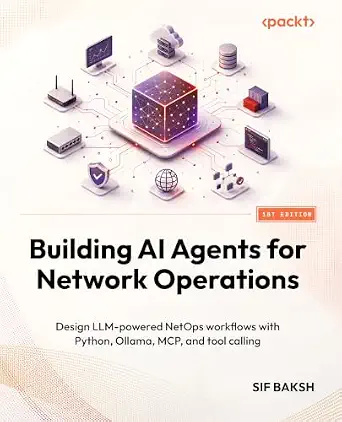 Building AI Agents for Network Operations: Design LLM-powered NetOps workflow…View on Amazon →
 - 3
 40 Python Programming Projects for AI Agents and AutomationsView on Amazon →
 - 4
 The Claude Code Operating Model: Build Scalable AI Coding Systems with Skills…View on Amazon →
 - 5
 Spec-Driven AI Engineering: Build Reliable Software from Requirements to Code…View on Amazon →
 - 6
 Building Agentic AI Systems: A Step-by-Step Guide to Creating LLM-Powered AI…View on Amazon →
 - 7
 AI for Quality Assurance and Software Testing: The Practitioner’s Complete Gu…View on Amazon →
 - 8
 Building Intelligent Applications with Claude AI: A Practical Guide to Creati…View on Amazon →
 - 9
 Spec-Driven Software Testing with AI: Build Reliable Test Suites from Specifi…View on Amazon →
 - 10
 Mastering Claude AI: The Complete Practical Guide to Prompt Engineering, Proj…View on Amazon →
 - 11
 Claude AI Automation & Monetization: Build AI-Powered Systems, Automate Workf…View on Amazon →
 - 12
 Google AI Studio Guide 2026: Master Google AI Studio to Build Intelligent AI…View on Amazon →
 - 13
 Agentic Coding with Claude Code (5-in-1): A Practical Developer’s Handbook fo…View on Amazon →
How These AI Tools Are Changing Automation in 2026
The emergence of these 13 AI automation tools signifies a major shift in how organizations approach workflow automation. They enable faster deployment, reduce manual effort, and improve accuracy across tasks such as testing, coding, and network management. This evolution is critical as businesses seek to stay competitive in a rapidly digitizing economy, where automation directly impacts productivity and innovation.
Furthermore, the emphasis on integration with existing development pipelines means companies can adopt AI-driven automation without overhauling their infrastructure. The availability of scalable, user-friendly solutions democratizes automation, allowing teams with varying technical expertise to leverage AI effectively. Overall, these tools are shaping a future where AI-driven automation becomes a standard component of organizational operations, increasing efficiency and reducing costs.
Development of AI Automation Tools Leading to 2026
The AI automation market has evolved significantly over the past few years, driven by advances in machine learning, natural language processing, and cloud computing. Early solutions focused on simple task automation, but recent innovations have enabled complex, multi-step workflows that integrate seamlessly with existing development and operational systems. Major players like Google, Microsoft, and emerging startups have released platforms emphasizing ease of integration, scalability, and customizable AI agents.
By 2025, industry reports highlighted a surge in AI automation adoption across sectors such as software development, network management, and quality testing. The trend towards low-code and no-code platforms gained momentum, making automation accessible to non-technical users. This growth set the stage for 2026’s top 13 tools, which combine these innovations into comprehensive solutions tailored for diverse organizational needs.
Unresolved Questions About Future AI Automation Adoption
While the top 13 tools are highly regarded in 2026, it remains unclear how broadly and quickly organizations will adopt these solutions across different industries. The long-term reliability of these platforms, especially in highly regulated sectors, is still being evaluated. Additionally, the impact of emerging AI regulations and data privacy laws on automation practices is an ongoing development, which could influence future tool features and deployment strategies.
Next Steps for AI Automation in 2026 and Beyond
In the coming months, expect further updates to these top tools, including enhanced features for security, compliance, and customization. Industry surveys and user feedback will shape future development priorities. Organizations should monitor these developments and plan phased integrations to maximize benefits while managing risks associated with rapid AI adoption. Additionally, regulatory frameworks are likely to evolve, requiring continuous adaptation of AI automation strategies.
Key Questions
How do I choose the best AI automation tool for my organization?
Assess your organization’s specific needs, including workflow complexity, existing systems, scalability requirements, and budget. Prioritize tools that offer seamless integration, user-friendly interfaces, and active support communities. Consider starting with trial versions to evaluate ease of use and fit before committing to long-term deployment.
Can these AI tools replace human workers?
While these tools significantly automate routine and complex tasks, they are designed to augment human workers rather than replace them entirely. AI automation enhances efficiency and accuracy but still requires human oversight, especially for strategic decision-making and handling exceptions.
Are these tools compliant with current data privacy laws?
Most leading AI automation platforms incorporate features to support compliance with data privacy regulations like GDPR and CCPA. However, organizations must configure and use these tools within their legal frameworks, ensuring proper data handling and security practices.
What is the learning curve for implementing these AI tools?
The learning curve varies depending on the platform’s complexity and the user’s technical background. Many tools offer low-code or no-code options suitable for non-technical users, while advanced solutions may require some programming knowledge. Proper training and support resources can facilitate smoother adoption.
Source: ThorstenMeyerAI.com
Halloween Picks
halloween
As an affiliate, we earn on qualifying purchases.