📊 Full opportunity report: Achieve Marketing Excellence With These 13 AI Automation Tools In 2026 on ThorstenMeyerAI.com — validation score, market gap, and execution plan.

Get hardware and tech essentials delivered free with Prime
- Fast, free delivery on millions of items
- Prime Video, Amazon Music and more included
- Member-only deals all year
TL;DR
In 2026, marketers are increasingly adopting 13 AI automation tools to enhance campaign efficiency, personalization, and reporting. These tools span strategy, execution, and niche workflows, offering options for various business needs.
Marketing professionals in 2026 are leveraging a curated set of 13 AI automation tools to optimize campaign production, lead management, personalization, and reporting. This development reflects a significant shift toward AI-driven marketing workflows, driven by advances in AI technology and growing demand for automation. For a comprehensive overview, see the original analysis.
This roundup highlights the most effective AI tools for marketing automation in 2026, focusing on strategies that connect workflows, growth systems, and channel-specific tactics. Learn more about these strategies in this guide to AI automation software. The top-ranked resource, AI Marketing Automation, emphasizes broad integration of tools and strategic planning, making it suitable for diverse business models. Other notable guides include 25 AI Tools for Digital Marketing, valued for its wide coverage of tools across channels, and Agent-Powered Growth, which targets advanced marketers with autonomous pipeline capabilities.Sources such as Thorsten Meyer AI emphasize that these guides are educational resources rather than software platforms, and they are meant to assist in planning and implementing automation strategies before investing in specific tools. For a detailed review, see the original analysis. The focus remains on practical workflows, setup demands, and long-term usability, rather than immediate tool subscriptions.
The 13 picks
- 1
 The Best AI Tools for Accountants: Moving from Compliance to Explosive GrowthView on Amazon →
 - 2
 AI Marketing Automation: The Complete Guide to AI-Powered Business Growth, Ma…View on Amazon →
 - 3
 Agent-Powered Growth: Deploy AI Agents That Build Your Marketing Pipeline 24/7View on Amazon →
 - 4
 AI Powered Marketing Tools Mastery: The Complete Guide to AI Copywriting, Des…View on Amazon →
 - 5
 Claude AI Automation & Monetization: Build AI-Powered Systems, Automate Workf…View on Amazon →
 - 6
 The AI-Powered Email Marketing Specialist: How to Use ChatGPT, AI Tools and S…View on Amazon →
 - 7
 25 AI Tools for Digital Marketing: Powerful AI Tools to Automate Content, SEO…View on Amazon →
 - 8
 AI-Powered Social Media Marketing: Step-by-Step Prompts and Workflows to Grow…View on Amazon →
 - 9
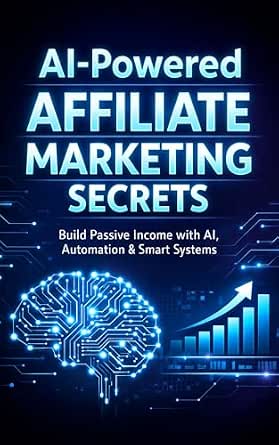 AI-Powered Affiliate Marketing Secrets: Build Passive Income with AI Tools, A…View on Amazon →
 - 10
 AI Automation for Real Estate Agents: Transform Your Business with AI and Lea…View on Amazon →
 - 11
 AI-Powered Creative Agency: Build, Automate, and Grow a Modern Creative Busin…View on Amazon →
 - 12
 AI Prompts for Digital Marketing Strategists: 840 Powerful Prompts to Build S…View on Amazon →
 - 13
 AI-Powered Real Estate: Close More Deals Using AI ToolsView on Amazon →
Why 2026 Marketers Are Turning to AI Automation Guides
The adoption of these 13 AI automation tools signifies a strategic shift in marketing toward more efficient, data-driven workflows. Businesses that leverage these guides can better align their marketing processes with AI capabilities, leading to improved personalization, faster campaign deployment, and more accurate reporting. This trend underscores the importance of strategic planning over quick fixes, especially as AI tools evolve rapidly. For marketers, understanding how to select and implement these tools can determine competitive advantage in a crowded digital landscape.Evolution of AI in Marketing Strategy
Over recent years, AI-powered marketing has shifted from experimental to essential, with many organizations adopting automation to handle increasing data volumes and customer expectations. In 2026, the focus is on comprehensive guides that help marketers build scalable, repeatable systems. Previous developments include the rise of AI chatbots, predictive analytics, and multi-channel automation platforms, setting the stage for these curated tool recommendations. The current trend emphasizes strategic integration, workflow depth, and niche specialization, reflecting a maturing AI marketing ecosystem.“These new AI guides offer a practical roadmap for businesses looking to scale their marketing automation without falling into common pitfalls.”
— Marketing strategist Jane Doe
Uncertainties About AI Tool Longevity and Integration
It remains unclear how quickly the recommended tools and strategies will evolve beyond 2026, given the rapid pace of AI development. The longevity of specific guides and their applicability to future tools is uncertain, as AI interfaces and best practices continue to change. Additionally, the actual effectiveness of these tools in diverse industries has yet to be fully validated through widespread case studies.Next Steps for Marketers Adopting AI Automation in 2026
Marketers should focus on integrating these guides into their strategic planning, selecting tools that align with their operational capacity and channel priorities. As AI technology advances, ongoing education and adaptation will be necessary. Future developments may include more autonomous systems and deeper integration with customer data platforms, making continuous learning essential. Industry events and updates from leading AI vendors are expected to shape the evolving landscape.Key Questions
Are these AI tools available as software platforms?
No, the guides discussed are educational resources and strategies, not software platforms. They help in planning and implementing automation but do not include actual AI tools or services.
How should businesses choose the right AI automation guide?
Businesses should consider their current workflow maturity, channel focus, and automation goals. Broad guides are suitable for initial planning, while niche guides serve specialized needs. Matching the guide to operational capacity is essential.
Will these guides remain useful as AI technology evolves?
While the principles and strategies in these guides are likely to remain relevant, specific tool recommendations may become outdated as new AI solutions emerge. Ongoing education is recommended.
Is investing in these guides enough to implement AI automation?
No, these guides are starting points. Successful implementation requires selecting appropriate tools, integrating systems, and ongoing management, which may involve additional software investments and technical support.
What are the risks of relying heavily on AI automation in marketing?
Over-reliance on automation can lead to errors, loss of human oversight, or misaligned personalization if workflows are not carefully designed. Continuous monitoring and strategic oversight are necessary to mitigate these risks.
Source: ThorstenMeyerAI.com
Fall Picks
fall essentials
As an affiliate, we earn on qualifying purchases.