🔍 Read the full analysis: 10 Gaming And Professional Graphics Cards To Compare In 2027 on ThorstenMeyerAI.com

Get hardware and tech essentials delivered free with Prime
- Fast, free delivery on millions of items
- Prime Video, Amazon Music and more included
- Member-only deals all year
TL;DR
A buying guide from ThorstenMeyerAI.com compares 10 graphics cards for gaming, creative work and basic display tasks. It names the ASUS ROG Astral RTX 5080 as its premium pick, but the supplied material does not establish independent benchmark results, current 2027 prices or availability.
ThorstenMeyerAI.com has published a 10-card comparison for readers weighing graphics hardware for gaming, creative applications and basic display tasks. The guide puts the ASUS ROG Astral GeForce RTX 5080 at the premium end, while also including AMD alternatives, mid-range cards and older models that it says are suited mainly to limited or legacy uses.
The guide identifies the RTX 5080 as its best overall choice, citing ray-tracing performance, cooling and overclocking headroom, as described in the original analysis. It also lists the ASUS Dual RTX 5060 Ti series as a mid-range option and says those models offer 16GB of GDDR7 memory. These are the guide’s assessments; the supplied material includes no benchmark tables or test methodology with measured results.
Its 10 cards are the ASUS ROG Astral RTX 5080, PNY RTX 5080, ASUS Dual RTX 5060 Ti, AMD RX 9070 XT, AMD RX 9070, RTX 3060, VisionTek RX 580, AMD RX 550, NVIDIA GT 730 and AMD RX 580. The source does not provide exact model numbers or specifications for every entry, and it lists both a VisionTek RX 580 and an RX 580 without clarifying whether these refer to distinct configurations.
The guide’s selection criteria include architecture generation, memory bandwidth and thermal performance, along with cooling, connectivity and physical size, considerations also covered in this graphics card guide. It favors newer RTX 50-series and RX 9000-series cards for newer graphics features, while treating older cards as niche choices, a distinction relevant to graphics cards for gaming and creative work. It says 4GB is inadequate for modern 1080p gaming, but does not cite specific games, settings or test results to support that threshold.
The 10 picks
- 1
 ASUS ROG Astral GeForce RTX 5080 OC Edition 16GB GDDR7 Graphics CardView on Amazon →
- 2
 PNY NVIDIA GeForce RTX 5080 OC Triple-Fan Graphics CardView on Amazon →
- 3
 ASUS Prime Radeon RX 9070 XT 16GB GDDR6 OC Edition Gaming Graphics CardView on Amazon →
- 4
 ASUS Prime Radeon RX 9070 EVO 16GB GDDR6 OC Gaming Graphics CardView on Amazon →
- 5
 ASUS Dual GeForce RTX 5060 Ti 16GB GDDR7 White OC Edition Graphics CardView on Amazon →
- 6
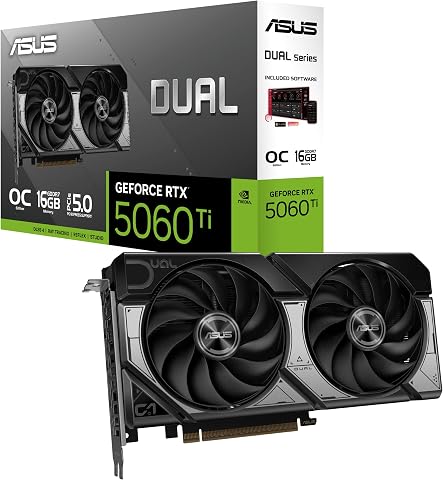 ASUS Dual GeForce RTX 5060 Ti 16GB GDDR7 OC Edition Gaming Graphics CardView on Amazon →
- 7
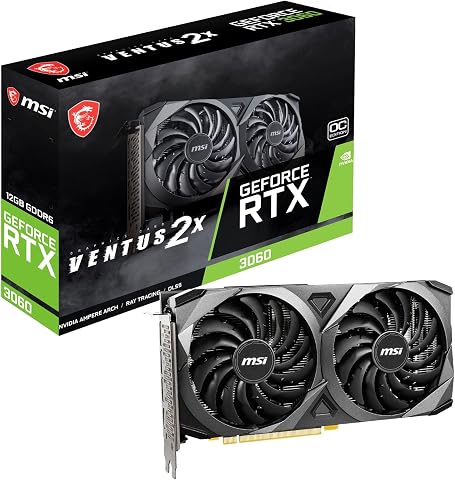 MSI GeForce RTX 3060 Ventus 2X 12G OC V1 Graphics CardView on Amazon →
- 8
 VisionTek AMD Radeon RX 580 8GB Graphics Card with 6 Mini DisplayPort OutputsView on Amazon →
- 9
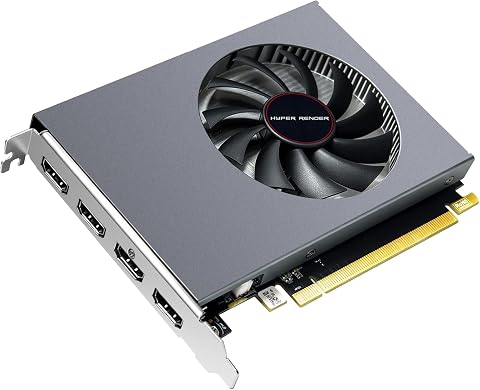 RX 550 4GB GDDR5 Graphics Card 4 HDMI GPU Tarjeta Gráfica 4 Port Video cardView on Amazon →
- 10
 Vandossy GeForce GT 730 4GB GDDR5 Graphics Card with 4 HDMI PortsView on Amazon →
Matching GPUs to Real Workloads
The comparison matters because these cards target different budgets and workloads, and a model suitable for gaming may not be the best fit for rendering, video editing or a multi-monitor office setup. The guide points readers toward checking application support as well as frame rates: it describes NVIDIA’s CUDA and NVENC tools as relevant to creative workflows, while identifying AMD cards as alternatives for gaming, particularly rasterization-heavy tasks.
It also highlights practical costs beyond the card’s listed price. A high-power GPU can require a compatible power supply, case clearance and adequate airflow; a large cooler may occupy several expansion slots. Older low-cost cards avoid some of those demands but, according to the guide, are not appropriate substitutes for modern gaming hardware. Those tradeoffs can help readers narrow a shortlist, but buyers still need current pricing, compatibility checks and workload-specific evidence.
Products Worth Considering

Kindle Paperwhite (12th Generation, 2024), 16 GB, 7-inch Display, Black

Sonos One Two-Room Smart Speaker Set with Alexa, Black

Jackery Explorer 300 Portable Power Station, 292Wh
As an affiliate, we earn on qualifying purchases.
A Wide Range of Card Generations
The list spans newer RTX 50-series and RX 9000-series products as well as the RTX 3060 and older RX 580, RX 550 and GT 730 models. That range makes it less a direct, same-price contest than a comparison of distinct use cases: high-performance gaming and creative work at one end, and basic display output or legacy systems at the other.
The source says newer architectures can support features older hardware cannot reproduce through driver updates alone, while memory capacity and type affect performance in demanding games. It also notes that professional software can favor particular GPU ecosystems. The supplied material does not identify the date of its testing or say whether prices, drivers and product availability were checked for 2027.
“The main tradeoff lies between paying for cutting-edge architecture and accepting older technology for cost savings.”
— ThorstenMeyerAI.com guide
Missing Benchmarks and Pricing
The supplied comparison does not include prices, benchmark scores, test systems or measured power consumption. It is consequently not possible to verify from this material how the cards compare in particular games or professional applications, or whether the rankings reflect current market value. The guide’s claims about cooling, performance and future suitability should be read as its editorial conclusions, not as independently confirmed results.
Some specifications and product identities also need clarification. The source names two RX 580 entries without explaining their differences, and it does not give full model details for every card. Availability, driver status and support can vary by exact board and software version; the source does not provide a dated check of those details.
Check Models Before Buying
The next step for readers is to compare the exact card model, current price and independent tests for the games or applications they use. They should also check system requirements, including power-supply capacity, connector type, card dimensions and case airflow. For professional work, confirm that the intended software supports the GPU’s features and drivers.
No follow-up testing or publication schedule is given in the supplied source. Prices, availability and software support may change, so the comparison should be treated as a starting shortlist rather than a current purchasing verdict. Graphics cards can be costly and performance varies by workload; buyers should account for the risk of paying for capabilities they do not need.
Key Questions
Which card does the guide rank as its top overall pick?
The guide names the ASUS ROG Astral GeForce RTX 5080, citing ray tracing, cooling and overclocking headroom. The supplied material does not include benchmark data to independently substantiate that ranking.
Does the comparison include AMD options?
Yes. It includes the RX 9070 XT and RX 9070, as well as older RX 580 and RX 550 cards. The guide describes the RX 9070 XT as an alternative for rasterization-heavy workloads.
Are the RX 550 and GT 730 presented as modern gaming cards?
No. The source describes them as options for basic display output and light tasks, not modern gaming. Check the requirements of any specific game or application before relying on older hardware.
Does the source establish which card offers the best value in 2027?
No. It provides no current prices or price-to-performance testing, so it does not establish a best-value choice. Availability and value depend on the market and the buyer’s workload.
Source: ThorstenMeyerAI.com