🔍 Read the full analysis: Mac Mini And Local AI: A Look At 16, 32, And 64 GB Setups on ThorstenMeyerAI.com

Get hardware and tech essentials delivered free with Prime
- Fast, free delivery on millions of items
- Prime Video, Amazon Music and more included
- Member-only deals all year
TL;DR
Apple’s 2026 Mac mini lineup offers 16GB to 64GB of unified memory, making some small and mid-size AI models practical to run locally. Model fit depends on precision and memory for macOS and context, while the Mac mini’s bandwidth remains far below a data-center GPU’s. Apple’s U.S. prices listed November 16 range from $899 to $3,199.
Apple is marketing its 2026 Mac mini as a desktop for “always-on agentic computing,” and its 16GB, 32GB and 64GB memory configurations determine which AI models users can run locally. Published model requirements suggest that smaller models can fit on the entry configuration, while larger models need more memory; even the top model cannot hold every large model or match data-center GPU bandwidth.
Apple announced the new Mac mini on August 25, 2026, describing it in a press release as “the leading desktop for always-on agentic computing.” The lineup includes M6 models with 16GB to 32GB of unified memory and M5 Pro models with 24GB to 64GB. Apple’s U.S. list prices, as of November 16, start at $899 for a 16GB configuration and reach $3,199 for an M5 Pro system with 64GB and 1TB of storage.
Model makers’ published figures provide a rough guide to what fits. Google lists its Gemma 4 12B model at 6.7GB at 4-bit precision, and its 31B model at 17.5GB at 4-bit or 34.9GB at 8-bit. OpenAI says gpt-oss-20b runs “within 16GB of memory.” These figures describe model weights, not the total memory a computer needs while running a model.
That distinction matters because the Mac’s memory pool is shared by the CPU, GPU, operating system and applications. Google says its model figures cover “the static model weights” and that larger context windows require more memory. A model that technically fits may leave limited room for longer conversations, documents or other apps.
Memory Sets the Local AI Limits
For users considering local AI, memory capacity is a practical dividing line: it affects which models can load, at what precision, and how much room remains for the prompt and other software. A 16GB Mac mini can accommodate some compact models, while the 32GB and 64GB options provide more room for larger weights or higher precision. These are fit estimates based on published requirements, not guarantees of a particular speed or user experience.
Local processing can appeal to people seeking on-device data handling, offline access or fewer cloud-service charges tied to usage. The source material also cites an idle power draw of 4 watts while an agent waits, but that figure is not accompanied by testing conditions. Running a model locally does not by itself establish lower total cost or better privacy in every setup; electricity, purchase price, configuration and software practices matter.
Performance is a separate constraint. Apple lists memory bandwidth of 153–170GB/s for M6 and 307GB/s for M5 Pro. Nvidia’s H100 SXM specification is 3.35TB/s. That comparison indicates a substantial bandwidth gap, but it does not directly predict how quickly a particular model will respond: software, model architecture and other hardware factors also affect performance.
Products Worth Considering

Samsung Galaxy Tab A11+ Tablet (6GB RAM, 128GB Storage, Gray)

Bose QuietComfort Headphones (2nd Gen), Wireless Noise-Cancelling Over-Ear Headphones, Eucalyptus Green
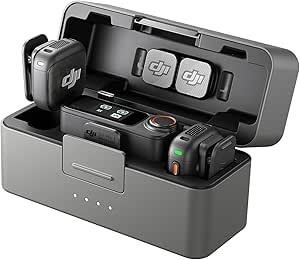
DJI Mic 3 (2 TX + 1 RX + Charging Case), Wireless Microphone
As an affiliate, we earn on qualifying purchases.
Why Unified Memory Matters
AI models store learned parameters, commonly called weights, in memory while generating responses. On many PCs, the graphics card has dedicated memory separate from system RAM. Apple silicon uses a unified memory architecture, giving the CPU and GPU access to the same pool, according to Apple’s MLX documentation. That makes a relatively large shared pool useful for loading models, but it is not all available to model weights.
Lower-precision versions, such as 4-bit weights instead of 16-bit, occupy less memory, with potential quality trade-offs. Google’s Gemma figures illustrate the effect: its 31B model is listed at 17.5GB at 4-bit and 69.9GB at 16-bit. The latter exceeds the Mac mini’s 64GB maximum before accounting for macOS, applications or context.
Apple CEO Tim Cook said on the company’s April 30 earnings call that customer recognition of the Mac mini and Mac Studio as platforms for AI and agentic tools was growing faster than expected, according to MacRumors. Apple’s August positioning followed that earlier comment. The source material says Apple had warned in April that it could not build enough units, but does not provide the exact statement or explain whether supply constraints remain.
““the leading desktop for always-on agentic computing””
— Apple press release, August 25, 2026
Fit Does Not Guarantee Speed
The cited memory requirements are approximate and depend on model version, precision, context length and software. They do not specify a single benchmark environment or establish how quickly each model will generate responses on a Mac mini. Actual usable memory also varies with macOS and other running applications.
The source material does not give independent tests comparing the 16GB, 32GB and 64GB configurations on the same tasks. Nor does it provide measured energy use during active AI workloads, a full cost comparison with cloud services, or details about the supply situation Apple reportedly discussed in April. Apple says Thunderbolt 5 can be used to cluster Mac mini systems for larger models, but the material does not quantify the performance, cost or setup requirements of such a cluster.
Check Tests and Availability
Readers evaluating these systems should look for hands-on benchmarks that identify the model, quantization, context length and software version, and report both memory use and response speed. Those details would help distinguish a model that merely loads from one that performs well for a sustained workload. Apple’s technical specifications and model developers’ requirements are the available reference points in the source material; no new test results or release milestone are provided.
Availability may also matter for buyers: the source says Apple flagged production limits in April but does not state whether they continue. Current U.S. list prices and configuration options are reported as of November 16, 2026; buyers would need to check Apple’s current store for stock and pricing.
Key Questions
Can a 16GB Mac mini run AI models locally?
Published requirements indicate that some smaller models can fit. Google lists Gemma 4 12B at 6.7GB at 4-bit precision, and OpenAI says gpt-oss-20b runs within 16GB. The system and other applications also use memory, so the full experience depends on workload and configuration.
What does 32GB add for local AI?
It gives more room for model weights and context. Google lists Gemma 4 31B at 17.5GB at 4-bit, which is within 32GB on paper, though memory used by macOS, apps and longer prompts must also be accounted for.
Can the 64GB model run the largest AI models?
No, not all of them. OpenAI sizes gpt-oss-120b for a single 80GB GPU, more memory than the Mac mini’s 64GB maximum. Apple says Thunderbolt 5 can connect multiple Mac minis to run larger models, but the source provides no performance figures for that approach.
Does a model that fits run as fast as a cloud model?
Memory fit does not establish speed. The listed bandwidth for the M5 Pro is 307GB/s, compared with Nvidia’s 3.35TB/s figure for the H100 SXM. That is a hardware specification comparison, not a direct response-time benchmark for particular models.
Source: ThorstenMeyerAI.com