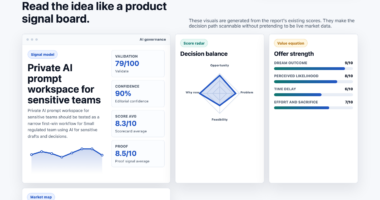

📊 Full opportunity report: How A Single Cross-Domain Attack Can Disrupt Entire AI Frameworks on ThorstenMeyerAI.com — validation score, market gap, and execution plan.
TL;DR
A single cross-domain attack can trigger cascading failures across interconnected systems, affecting AI frameworks and decision-making. Experts warn that such attacks target not just infrastructure but political and systemic resilience.
A single cross-domain attack has the potential to cause widespread disruption in AI frameworks by triggering cascading failures across interconnected systems, according to recent expert analysis. This type of attack, which leverages multiple operational domains, aims to undermine not just infrastructure but also decision-making processes and alliance cohesion, making it a strategic threat that is difficult to detect and counter.
Experts emphasize that modern multi-domain operations—spanning cyber, space, electromagnetic spectrum, and physical domains—are designed to produce effects across multiple systems simultaneously. When a malicious actor executes a coordinated attack, the impact extends beyond the initial point of failure, propagating through dependency chains that link civilian and military infrastructure. This cascading effect can amplify damage, destabilizing entire AI frameworks that rely on interconnected data, processing, and control systems.
Additionally, such attacks are often engineered to stay below the threshold that would trigger collective defense responses, exploiting ambiguity in attribution and impact. This makes it difficult for targeted entities to determine whether an attack has crossed a critical threshold, delaying or preventing coordinated responses. The goal is to erode trust and cohesion within alliances by making it unclear whether a physical or cyber incident is an isolated event or part of a larger, coordinated effort.
Furthermore, the information domain itself becomes a battlefield, aiming to fracture political consensus and undermine collective decision-making. Disrupting the shared understanding of an incident’s severity can paralyze response mechanisms, leaving AI systems vulnerable to cascading failures that threaten systemic resilience and operational integrity.
Its potency is in the cascade between domains and the ambiguity that jams the response. Grade the threat one domain at a time and you miss the thing living in the seams.
Implications for AI System Resilience and Strategic Stability
This analysis underscores the vulnerability of AI frameworks to multi-domain, coordinated attacks that can trigger cascading failures across interconnected systems. Such disruptions threaten not only the technical infrastructure but also the political cohesion and strategic stability of alliances. The ability to detect and respond swiftly to these complex, ambiguous threats is becoming a critical challenge for defenders worldwide, as failure to do so may result in paralysis, miscalculation, or escalation.
As an affiliate, we earn on qualifying purchases.
Evolution of Multi-Domain Warfare and AI Vulnerabilities
Over the past decade, military and civilian sectors have increasingly adopted multi-domain operational concepts, integrating cyber, space, electromagnetic, and physical domains to achieve strategic effects. This shift has made infrastructure more interconnected and efficient but also more vulnerable to cascading failures. Recent high-profile cyber incidents and space-based disruptions have demonstrated the potential for single actions to cause widespread systemic effects, highlighting the importance of understanding the complex interplay between domains.
Experts note that adversaries are developing capabilities specifically designed to exploit these interdependencies, aiming to create ambiguity and delay attribution. As AI frameworks become integral to decision-making and operational control, their vulnerability to such multi-domain cascades grows, posing new challenges for defense and resilience planning.
"The real danger lies in the ambiguity—attacks designed to stay below response thresholds can cause paralysis by eroding trust and cohesion within alliances."
— Defense strategist Jane Liu
cross-domain attack detection software
As an affiliate, we earn on qualifying purchases.
As an affiliate, we earn on qualifying purchases.
Unresolved Questions About Detection and Response Capabilities
It remains unclear how effective current detection systems are at identifying the full scope of multi-domain, coordinated attacks in real time. While fusion of signals across domains is a recognized challenge, the precise technological and strategic measures needed to reliably detect and attribute such complex operations are still under development. Additionally, how quickly organizations can adapt their response protocols to counteract cascading effects remains an open question.
AI infrastructure security hardware
As an affiliate, we earn on qualifying purchases.
As an affiliate, we earn on qualifying purchases.
Developing Strategies for Multi-Domain Attack Mitigation
Experts suggest that advancing cross-domain sensing, improving fusion algorithms, and establishing clearer attribution frameworks are crucial next steps. Military and civilian agencies are likely to prioritize research into rapid detection and coordinated response systems that can isolate and contain cascading failures before they escalate. Policy discussions around establishing thresholds and response protocols for ambiguous attacks are also expected to intensify in the coming months.
As an affiliate, we earn on qualifying purchases.
Key Questions
How can an attack cascade through interconnected systems?
Because modern infrastructure relies on tightly coupled systems—such as space-based signals supporting finance and communication—an attack in one domain can propagate through these dependencies, amplifying damage beyond the initial target.
Why are multi-domain attacks difficult to detect?
Such attacks are often designed to stay below detection thresholds and to create ambiguity in attribution, making it hard for defenders to recognize a coordinated effort in time to respond effectively.
What makes AI frameworks particularly vulnerable?
AI systems depend on interconnected data and control systems that, if disrupted, can cascade failures across multiple operational layers, especially when combined with other domain attacks.
What are the main challenges in responding to these attacks?
The primary challenge is timely detection and attribution within a narrow window, combined with the difficulty of containing cascading effects across complex, interdependent systems.
Will current defenses be enough to prevent such attacks?
It is uncertain; defense capabilities are evolving, but the sophistication of multi-domain, ambiguous attacks requires continuous innovation in detection, attribution, and response strategies.
Source: ThorstenMeyerAI.com