
TL;DR

Get hardware and tech essentials delivered free — and shop member deals
- Fast, free delivery on millions of items
- Access to Prime Big Deal Days deals on October 6–7
- Prime Video, Amazon Music and more included
In 2026, 14 AI marketing automation tools stand out for their effectiveness in supporting business growth. Experts highlight the importance of system-wide strategies and platform independence for long-term success.
Fourteen AI marketing automation tools have been recognized as the most effective for business growth in 2026, according to recent industry analyses. These tools support a wide range of marketing activities, from email campaigns to lead generation, with a focus on system-wide automation strategies and platform flexibility. This ranking is based on expert evaluations of their strategic value, ease of integration, and long-term relevance, making it a key resource for marketers seeking to optimize their automation strategies this year.
Industry experts have identified 14 AI-powered marketing automation tools that are expected to drive significant growth in 2026. These tools span multiple channels, including email, social media, SEO, and lead management, emphasizing the importance of broad workflow coverage over niche solutions. The selection criteria prioritized tools that support system-wide automation strategies and are platform-neutral, reducing the risk of obsolescence due to interface or feature updates.
According to Thorsten Meyer, a leading AI marketing analyst, “The most effective tools are those that integrate seamlessly into comprehensive marketing systems, rather than isolated prompts or platform-specific solutions.” The tools vary in complexity and focus, from beginner-friendly options to advanced systems designed for experienced marketers. Experts also warn that tools centered on specific platforms, such as Claude, may face quicker obsolescence if interface changes occur, highlighting the value of platform-independent frameworks.
The 14 picks
- 1
 AI-Powered Social Media Marketing: Step-by-Step Prompts and Workflows to Grow…View on Amazon →
 - 2
 AI Marketing Automation: The Complete Guide to AI-Powered Business Growth, Ma…View on Amazon →
 - 3
 Zero-Skill AI-Powered SMMA Startup: How To Start And Scale A Social Media Mar…View on Amazon →
 - 4
 AI Powered Marketing Tools Mastery: The Complete Guide to AI Copywriting, Des…View on Amazon →
 - 5
 The AI-Powered Email Marketing Specialist: How to Use ChatGPT, AI Tools and S…View on Amazon →
 - 6
 Claude AI Automation & Monetization: Build AI-Powered Systems, Automate Workf…View on Amazon →
 - 7
 25 AI Tools for Digital Marketing: Powerful AI Tools to Automate Content, SEO…View on Amazon →
 - 8
 AI Automation for Real Estate Agents: A Realtor’s Guide to Systems, Prompts,…View on Amazon →
 - 9
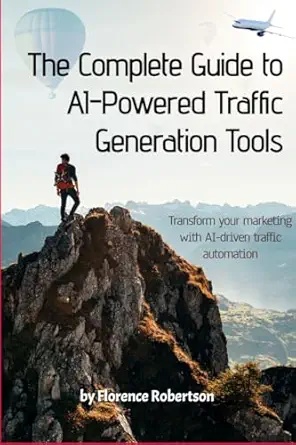 The Complete Guide to AI-Powered Automation Tools: Transform Your Marketing w…View on Amazon →
 - 10
 AI-Powered Affiliate Marketing Secrets: Build Passive Income with AI Tools, A…View on Amazon →
 - 11
 AI-Powered Creative Agency: Build, Automate, and Grow a Modern Creative Busin…View on Amazon →
 - 12
 Claude AI for Real Estate Agents: Using One of the World’s Most Powerful AI T…View on Amazon →
 - 13
 Foundations of AI-Powered Marketing: Understanding and Implementing Artificia…View on Amazon →
 - 14
 Agent-Powered Growth: Deploy AI Agents That Build Your Marketing Pipeline 24/7View on Amazon →
Why Identifying Top AI Marketing Tools in 2026 Matters
This ranking is significant because it guides marketers toward tools that can support long-term growth and system-wide automation. As AI technology evolves rapidly, selecting tools with flexible, workflow-oriented design can prevent obsolescence and ensure sustained ROI. The emphasis on platform independence and comprehensive strategies helps businesses build resilient marketing systems capable of adapting to future changes, making these tools critical assets for competitive advantage in 2026.
Recent Trends and Industry Shifts in AI Marketing Automation
Over the past few years, AI marketing automation has shifted from isolated tools to integrated systems capable of supporting entire marketing workflows. Recent industry reports, including those from Thorsten Meyer, emphasize the importance of broad system coverage and platform-neutral solutions. The proliferation of AI tools has led to a crowded market, making strategic evaluation essential. Experts note that tools designed with inputs, decision rules, and measurement in mind are more likely to stay relevant as features and interfaces evolve, unlike platform-specific applications that risk quick obsolescence.
Remaining Questions About the 14 Leading AI Tools
While the list of 14 tools is based on expert analysis, it is still unclear how these tools will perform in different industry contexts or how rapidly they will evolve over the coming months. Specific platform updates or interface changes could impact their effectiveness, particularly for platform-dependent solutions. Additionally, the long-term adaptability of these tools to emerging AI innovations remains to be seen.
Next Steps for Marketers Adopting AI Automation in 2026
Marketers should focus on evaluating these tools based on their integration capabilities and alignment with strategic goals. As new updates and features are released, ongoing assessment will be necessary to ensure optimal performance. Industry analysts recommend prioritizing platform-neutral solutions and designing workflows that can adapt to future technological shifts. Further research and testing are expected to refine understanding of each tool’s long-term value.
Key Questions
How were these 14 AI marketing tools selected?
The tools were chosen based on expert evaluations of their strategic value, workflow coverage, platform independence, and potential for supporting business growth in 2026.
Are platform-specific AI tools still viable in 2026?
Yes, but they carry a higher risk of obsolescence due to interface changes. Experts recommend prioritizing platform-neutral tools for long-term resilience.
What should businesses consider when choosing an AI marketing automation tool?
Businesses should evaluate tools based on their ability to support comprehensive workflows, integrate with existing systems, and adapt to future platform updates.
Will the effectiveness of these tools change over time?
Yes, as AI technology evolves and platforms update, the relative effectiveness of each tool may shift. Continuous assessment and adaptation are essential.
What is the main benefit of using these top AI tools in 2026?
The main benefit is the ability to support scalable, integrated marketing systems that can adapt to changing technology and sustain long-term growth.
Source: ThorstenMeyerAI.com
Fall Picks
fall essentials
As an affiliate, we earn on qualifying purchases.