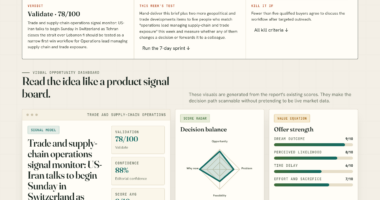

📊 Full opportunity report: When Does Cheap Memory Come Back? The 2027–2029 Question on ThorstenMeyerAI.com — validation score, market gap, and execution plan.
TL;DR
Memory shortages are projected to persist until at least 2028 or beyond, with prices likely staying 30–50% above pre-crisis levels. Industry capacity growth is slow, and demand remains high, delaying relief.
Memory prices are unlikely to fall significantly before 2028 or later, according to industry forecasts and manufacturer warnings. The persistent shortage is driven by physical constraints in capacity expansion, making relief a delayed prospect despite new fab openings.
Analysts and memory makers agree that a true easing in supply and a return to pre-crisis pricing levels are unlikely before late 2028 or 2029. Major capacity additions, such as Micron’s Idaho fab and SK Hynix’s Indiana plant, are expected to ramp up only after 2027, with the largest projects delayed until 2030. The industry faces bottlenecks in cleanroom space and wafer processing, which cannot be accelerated.
Most forecasts point to a new baseline where prices stay 30–50% higher than pre-2024 levels, reflecting a permanent shift in market dynamics. While some relief may occur around 2027–2028, it will be modest, and prices are unlikely to revert to previous lows for years.
Demand remains high, especially from AI applications, with long-term supply agreements locking up a significant share of wafer output through 2029. Industry leaders like Samsung, SK Hynix, and Micron are cautious about overbuilding, which could lead to oversupply and price crashes, maintaining tight supply conditions for the foreseeable future.
When does cheap memory come back?
The question everyone’s really asking: do I just wait this out? The honest answer is a timeline, three scenarios, and news you may not want — the cheap memory you remember isn’t coming back. A less-expensive market probably is — later, and at a higher floor.
Capacity ramps ’27–’28; price climbs stop, then ease. Settles ~30–50% above pre-crisis — the new baseline, not a return to 2024.
AI keeps accelerating; OpenAI locked ~40% of DRAM through 2029; makers pause expansion to protect record margins; each HBM gen worsens the math.
AI demand moderates just as delayed ’27–’28 fabs all arrive → classic overshoot → prices crash. Not the bet — but never impossible in this industry.
The one relief valve that needs no fab is efficiency: if compression (Part 9) cuts how much memory each model needs, demand softens on the timescale of a software update, not a construction project. So the posture isn’t waiting — it’s the discipline this series has been about. Memory is now a scarce, valuable resource; treat it that way. Buy what you need, right-size, own what’s steady, rent what’s spiky, quantize either way. The people who do best won’t be the ones who guessed the bottom — they’ll be the ones who stopped needing so much. That’s the squeeze, end to end.
Why Persistent Memory Shortages Impact Tech and Markets
The delay in memory supply relief means sustained high prices for hardware components, affecting manufacturers of data centers, AI infrastructure, and consumer electronics. This situation could slow down technological upgrades and increase costs for end users. Additionally, the industry’s cautious capacity expansion reflects a shift toward profit preservation over growth, influencing market dynamics and investment strategies.

CORSAIR Vengeance LPX DDR4 RAM 32GB (2x16GB) Up to 3200MHz CL16-20-20-38 1.35V Intel XMP AMD EXPO Computer Memory – Black (CMK32GX4M2E3200C16)
- Maximum Speed Note: Requires overclocking and BIOS adjustments
- High Performance Chips: Hand-sorted for overclocking potential
- Wide Compatibility: Optimized for Intel and AMD DDR4 motherboards
As an affiliate, we earn on qualifying purchases.
As an affiliate, we earn on qualifying purchases.
Industry Capacity Expansion and Demand Trends Since 2024
The memory industry has faced a severe supply crunch since 2024, driven by physical constraints in building new fabs and increased demand from AI and data center applications. Major projects, like Micron’s Clay megafab, are delayed until 2030, and existing capacity is largely committed under long-term contracts. The industry’s history of boom and bust suggests that a glut and price crash could still occur if demand suddenly drops, but current signals favor sustained scarcity.
Recent developments include new fab openings in 2027–2028, but these are insufficient to meet the rapid demand growth. The physical bottleneck—cleanroom space and wafer processing—remains a fundamental obstacle to faster capacity expansion, ensuring that relief will be gradual and delayed.
“The shortage could extend through 2027 and beyond, with a potential easing only in late 2028.”
— Samsung and SK Hynix

SANDISK 1TB Portable SSD – Up to 800MB/s, USB-C, USB 3.2 Gen 2, Updated Firmware – External Solid State Drive – SDSSDE30-1T00-G26
- High-Speed Data Transfer: Up to 800MB/s read speeds
- Portable Storage Solution: Compact and mobile-friendly design
- Durable and Drop-Resistant: Up to two-meter drop protection
As an affiliate, we earn on qualifying purchases.
As an affiliate, we earn on qualifying purchases.
Uncertainties in Memory Market Recovery Timeline
While projections point to late 2028 or 2029 for relief, unforeseen factors such as demand fluctuations, technological breakthroughs in fabrication, or geopolitical disruptions could accelerate or delay this timeline. The possibility of a market crash due to oversupply remains, although current signals favor continued scarcity.

Original Memory Stick pro Duo 16GB (Mark2) PSP1000 2000 3000
- MagicGate Compatibility: Supports copyright protection technology
- Versatile Use: Compatible with PSP and digital cameras
- High-Speed Data Transfer: Ideal for fast data transfer and continuous shooting
As an affiliate, we earn on qualifying purchases.
As an affiliate, we earn on qualifying purchases.
Upcoming Capacity Expansions and Market Indicators
Key developments include the ramp-up of Micron’s Idaho fab and SK Hynix’s Indiana plant, expected after 2027, along with the potential impact of US CHIPS Act-funded projects starting around 2028. Monitoring demand trends, especially from AI, and capacity utilization will be essential to assess when relief might finally materialize. Industry stakeholders are also focusing on efficiency improvements and advanced packaging as alternative relief measures.

Simmtec RAM 32GB (2x16GB) DDR4 2666MHz SODIMM PC4-21300 (PC4-2666V) CL19 1.2V Non-ECC SO-DIMM 260 PinLaptop, Notebook & AIO Computer Memory Upgrade Kit
- Capacity: 32GB (2x16GB modules)
- Speed: DDR4 2666MHz / 2667MHz
- Form Factor: 260-Pin SO-DIMM
As an affiliate, we earn on qualifying purchases.
As an affiliate, we earn on qualifying purchases.
Key Questions
When will memory prices start to decline significantly?
Most forecasts suggest that a meaningful decline in prices is unlikely before late 2028 or early 2029, as new capacity ramps up and demand stabilizes.
Why is it taking so long for memory supply to recover?
The primary reason is physical constraints in building new fabs, especially in cleanroom space and wafer processing, which cannot be accelerated easily or quickly.
Could the market crash if supply exceeds demand?
Yes, a glut and crash are possible if demand weakens suddenly or if new capacity comes online faster than expected, but current signals point toward sustained scarcity.
What role can demand-side improvements play in relief?
Advances in AI efficiency and memory compression techniques could reduce demand, providing relief without additional fab capacity, but such improvements are still developing.
Are there any new memory technologies that could change the outlook?
While research into alternative memory types continues, no immediate breakthroughs are expected to significantly alter the current capacity and demand balance before 2028–2029.
Source: ThorstenMeyerAI.com