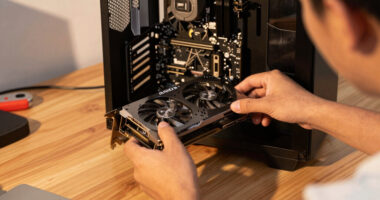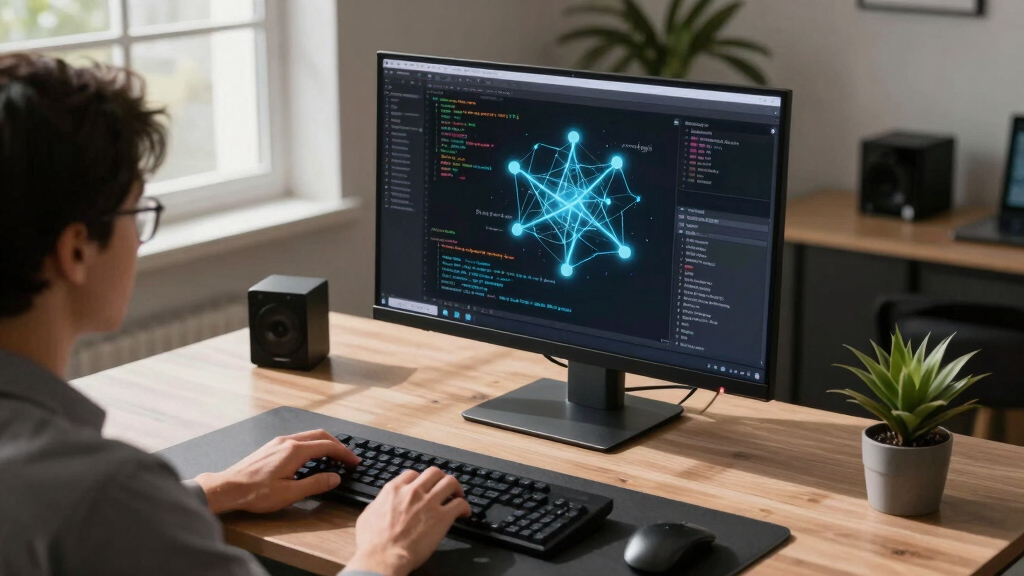

Finding the best prebuilt AI workstations in 2026 means balancing performance, price, and usability. The MINISFORUM MS-S1 Max stands out for its compact size and strong AI capabilities, making it ideal for space-constrained setups. Meanwhile, the HP OMEN 45L offers high-end GPU power suited for demanding AI workloads, though at a higher cost. Many options deliver impressive specs, but tradeoffs include size, upgradeability, and price. Continue reading to see how these models compare and discover which one fits your specific AI needs best.
Prime for Young Adults — start your free trial
Fast free delivery, streaming and member deals for eligible 18–24 year olds.
Try it freeAs an affiliate, we earn on qualifying purchases.
Complete the kit

Key Takeaways
- High-end GPUs, like NVIDIA RTX 5090, significantly boost AI processing but come with a steep price tag.
- Mini workstations such as the MINISFORUM MS-S1 Max provide powerful AI features in a compact design, ideal for limited spaces.
- Upgradeability varies; some desktops offer easier component upgrades, impacting long-term value.
- Price ranges widely, with premium models suited for professional workloads and budget options for entry-level AI tasks.
- Not all systems are equally future-proof; consider expandability and component support for long-term use.
| MINISFORUM MS-S1 Max Mini Workstation AMD Ryzen AI Max+ 395, 128GB LPDDR5, 2TB SSD, HDMI, USB4, 10G Ethernet, WiFi 7, BT 5.4, Radeon 8060S Graphics |  | Best Overall Performance in a Compact Form | Processor: AMD Ryzen AI Max+ 395 (16C/32T, up to 5.1GHz) | Graphics: Radeon 8060S (RDNA 3.5 architecture) | Memory: 128GB LPDDR5-8000MHz | VIEW LATEST PRICE | See Our Full Breakdown |
| HP OMEN 45L Gaming Desktop with Intel Core Ultra 9 285K, 64GB RAM, 2TB SSD, NVIDIA GeForce RTX 5090, Windows 11 Pro |  | Best for Gaming and Creative Powerhouses | Processor: Intel Core Ultra 9 285K | RAM: 64 GB DDR5 | Storage: 2 TB PCIe Gen4 NVMe SSD | VIEW LATEST PRICE | See Our Full Breakdown |
| MSI Aegis R2 Gaming Desktop, Core Ultra 9 285, RTX 5070, 32GB DDR5, 2TB SSD |  | Best for Gaming and Content Creation | Processor: Intel Core Ultra 9 285 | Graphics Card: NVIDIA GeForce RTX 5070 | RAM: 32GB DDR5 | VIEW LATEST PRICE | See Our Full Breakdown |
| Dell Tower Desktop with Intel Core Ultra 9-285 Processor |  | Best for Upgradeable, AI-Enhanced Performance | Processor: Intel Core Ultra 9-285 | Design: Thermal optimized airflow and acoustics | AI Engines: CPU, GPU, NPU | VIEW LATEST PRICE | See Our Full Breakdown |
| HP OmniDesk Desktop Computer PC with AMD Ryzen 7 8700G, 32GB DDR5, 1TB NVMe SSD, Radeon 780M Graphics, Wi-Fi 6 & Bluetooth 5.4 |  | Best for Versatile Power in a Budget-Friendly Package | Processor: AMD Ryzen 7 8700G 4.2GHz | Memory: 32GB DDR5 | Storage: 1TB PCIe Gen4 NVMe SSD | VIEW LATEST PRICE | See Our Full Breakdown |
| AI Workstation Gaming PC with AMD Radeon Pro R9700 and Ryzen 5 9600X |  | Best Overall for High-Performance AI and Content Creation | Processor: Ryzen 5 9600X (5.4 GHz Turbo) | Graphics Card: AMD Radeon Pro R9700 with 32GB VRAM | Memory: 32GB DDR5 6000MHz | VIEW LATEST PRICE | See Our Full Breakdown |
| MINISFORUM MS-S1 MAX Mini AI Workstation PC with AMD Ryzen AI Max+ 395, 128GB RAM, 2TB SSD, RDNA 3.5 GPU, Dual M.2, Wi-Fi 7 |  | Best Compact Powerhouse for Enterprise AI and Data Processing | Processor: AMD Ryzen AI Max+ 395 (16C/32T, up to 5.1GHz) | GPU: RDNA 3.5 | Memory: 128GB LPDDR5x | VIEW LATEST PRICE | See Our Full Breakdown |
| Dell Tower Desktop with Intel Core Ultra 7-265, 16GB DDR5 RAM, Windows 11 Pro |  | Best for Basic AI Work and Office Productivity | Processor: Intel Core Ultra 7-265 | RAM: 16GB DDR5 | Operating System: Windows 11 Pro | VIEW LATEST PRICE | See Our Full Breakdown |
| prebuilt AI workstation | Processor | Storage | Memory |
|---|---|---|---|
| MINISFORUM MS-S1 Max Mini Work | AMD Ryzen AI Max+ 395 (16C/32T, up to 5.1GHz) | 2TB PCIe4.0 SSD, expandable up to 8TB | 128GB LPDDR5-8000MHz |
| HP OMEN 45L Gaming Desktop wit | Intel Core Ultra 9 285K | 2 TB PCIe Gen4 NVMe SSD | — |
| MSI Aegis R2 Gaming Desktop | Intel Core Ultra 9 285 | 2TB SSD | — |
| Dell Tower Desktop with Intel | Intel Core Ultra 9-285 | — | — |
| HP OmniDesk Desktop Computer P | AMD Ryzen 7 8700G 4.2GHz | 1TB PCIe Gen4 NVMe SSD | 32GB DDR5 |
| AI Workstation Gaming PC with | Ryzen 5 9600X (5.4 GHz Turbo) | 1TB NVMe Gen4 SSD | 32GB DDR5 6000MHz |
| MINISFORUM MS-S1 MAX Mini AI W | AMD Ryzen AI Max+ 395 (16C/32T, up to 5.1GHz) | 2TB SSD | 128GB LPDDR5x |
| Dell Tower Desktop with Intel | Intel Core Ultra 7-265 | — | — |
More Details on Our Top Picks
MINISFORUM MS-S1 Max Mini Workstation AMD Ryzen AI Max+ 395, 128GB LPDDR5, 2TB SSD, HDMI, USB4, 10G Ethernet, WiFi 7, BT 5.4, Radeon 8060S Graphics
This mini workstation stands out for packing a powerful AMD Ryzen AI Max+ 395 processor with 16 cores and 32 threads, making it well-suited for demanding AI and multimedia tasks. Its support for multiple 8K outputs and extensive connectivity, including WiFi 7 and 10G Ethernet, surpasses many competitors like the HP OMEN 45L, which focuses more on gaming than high-end professional workflows. The extensive storage options and PCIe expansion make it flexible for complex projects. However, its high price point and dense setup may be barriers for those unfamiliar with hardware, and its size could be an issue for limited spaces.
Pros:- Exceptional multi-core performance with AMD Ryzen AI Max+ 395
- Supports multiple 8K video outputs for complex multi-monitor setups
- Fast wired and wireless connectivity including WiFi 7 and 10G Ethernet
- Highly expandable storage with RAID support
Cons:- Likely expensive due to high-end specs
- Setup and configuration may require technical expertise
- Larger footprint unsuitable for tight spaces
Best for: AI developers, multimedia professionals, or high-end content creators needing a compact yet powerful workstation
Not ideal for: Small office environments with space constraints or users seeking a plug-and-play simple setup
- Processor:AMD Ryzen AI Max+ 395 (16C/32T, up to 5.1GHz)
- Graphics:Radeon 8060S (RDNA 3.5 architecture)
- Memory:128GB LPDDR5-8000MHz
- Storage:2TB PCIe4.0 SSD, expandable up to 8TB
- Video Outputs:5 (1x HDMI 8K@60Hz, 4x USB4)
- Network:Two 10G Ethernet, WiFi 7, BT 5.4
Our verdict“This mini workstation is ideal for professionals who need top-tier performance in a compact but expandable form.”
HP OMEN 45L Gaming Desktop with Intel Core Ultra 9 285K, 64GB RAM, 2TB SSD, NVIDIA GeForce RTX 5090, Windows 11 Pro
The HP OMEN 45L offers impressive specs like the Intel Core Ultra 9 285K paired with an NVIDIA GeForce RTX 5090, making it a top choice for gamers who also handle creative workloads, such as video editing or 3D rendering. Its advanced liquid cooling system keeps temperatures low under heavy load, a step above the cooling in the MSI Aegis R2, which has more noise and less thermal management detail. The system’s immersive audio and eco-conscious manufacturing add value. Yet, its high power draw and large size mean it’s less suitable for compact spaces or energy-conscious users.
Pros:- Powerful CPU and GPU combo for gaming and demanding creative tasks
- Robust cooling system with liquid cooling for sustained performance
- Immersive audio technology enhances user experience
- Environmentally friendly manufacturing certifications
Cons:- High power consumption may increase operational costs
- Large physical size limits placement options
- Premium price point
Best for: High-end gamers and creative professionals needing raw power and cooling efficiency
Not ideal for: Small offices or users with limited space who prefer quieter, more energy-efficient systems
- Processor:Intel Core Ultra 9 285K
- RAM:64 GB DDR5
- Storage:2 TB PCIe Gen4 NVMe SSD
- Graphics Card:NVIDIA GeForce RTX 5090
- Operating System:Windows 11 Pro
- Cooling System:OMEN Cryo Chamber with 360mm LCD liquid cooler
Our verdict“This system targets high-performance users who prioritize gaming and multimedia creation in a large, well-cooled package.”
MSI Aegis R2 Gaming Desktop, Core Ultra 9 285, RTX 5070, 32GB DDR5, 2TB SSD
The MSI Aegis R2 combines a Core Ultra 9 285 with an NVIDIA GeForce RTX 5070, offering solid performance for gaming and multimedia editing. Its 32GB DDR5 RAM and 2TB SSD enable fast multitasking, putting it ahead of less RAM-heavy options like the Dell Tower with Intel Core Ultra 9-285 that lacks dedicated GPU power. The inclusion of RGB lighting and modern connectivity makes it appealing for gaming setups, but the multiple fans can generate noticeable noise, which might bother quiet work environments. Overkill for casual users, it’s best suited for gamers and creators who need high specs.
Pros:- Strong processor and GPU for gaming and editing
- Large 32GB DDR5 RAM ensures smooth multitasking
- Fast 2TB SSD for quick load times
- Customizable RGB lighting
Cons:- High noise levels due to cooling fans
- Designed primarily for gaming, possibly excessive for casual users
- Potentially higher price due to high-end specs
Best for: Gaming enthusiasts, streamers, and content creators who want high performance and customization
Not ideal for: Users seeking a quiet or budget-oriented machine for basic tasks
- Processor:Intel Core Ultra 9 285
- Graphics Card:NVIDIA GeForce RTX 5070
- RAM:32GB DDR5
- Storage:2TB SSD
- Cooling System:Advanced cooling with 4 fans
- Operating System:Windows 11 Home
Our verdict“This desktop is tailored for gamers and creators needing high performance and visual customization in a visually striking case.”
Dell Tower Desktop with Intel Core Ultra 9-285 Processor
This Dell tower centers on the Intel Core Ultra 9-285, offering a solid foundation for AI-accelerated workflows, especially with its support for AI engines including CPU, GPU, and NPU. Compared to the HP OMEN 45L, which emphasizes gaming and multimedia, the Dell’s focus on upgradeability and AI makes it more adaptable for evolving workloads. Its thermal design optimizes airflow and acoustics, but the lack of specific GPU or RAM details leaves some questions about raw power. It’s best suited for users who prefer a customizable, AI-capable machine with support services.
Pros:- Supports AI engines for advanced workflows
- Designed for easy internal upgrades
- Focus on thermal management for quiet operation
- Includes onsite support service
Cons:- Limited details on GPU and RAM configurations
- Potentially less powerful out-of-the-box without upgrades
- No dedicated GPU included
Best for: AI developers and professionals seeking a flexible, upgradeable workstation with AI support
Not ideal for: People who want a preconfigured gaming system or need detailed specs upfront
- Processor:Intel Core Ultra 9-285
- Design:Thermal optimized airflow and acoustics
- AI Engines:CPU, GPU, NPU
- Support:1 Year Onsite Service
Our verdict“This Dell system suits professionals who value upgradeability and AI integration over out-of-the-box GPU power.”
HP OmniDesk Desktop Computer PC with AMD Ryzen 7 8700G, 32GB DDR5, 1TB NVMe SSD, Radeon 780M Graphics, Wi-Fi 6 & Bluetooth 5.4
The HP OmniDesk with Ryzen 7 8700G and 32GB DDR5 offers reliable performance for a variety of tasks, from productivity to light creative work. Its Radeon 780M integrated graphics makes it less suited for graphics-intensive applications but sufficient for everyday tasks and some multimedia editing. Compared to the MSI Aegis R2, it’s more compact and budget-conscious, but with less gaming and GPU capability. For users who don’t need dedicated graphics or high-end specs, it delivers solid value, though at a higher cost than entry-level PCs.
Pros:- Powerful AMD Ryzen 7 processor
- Large 32GB DDR5 memory for multitasking
- Fast 1TB NVMe SSD storage
- Includes accessories and Windows 11 Home pre-installed
Cons:- Lacks dedicated graphics card, limiting high-end creative work
- Potentially higher price for a non-gaming, integrated graphics system
- Limited upgrade options without more info
Best for: Power users who need a versatile, upgrade-friendly desktop for work and light creative tasks
Not ideal for: Gamers or professionals requiring dedicated GPU power or intensive multimedia editing
- Processor:AMD Ryzen 7 8700G 4.2GHz
- Memory:32GB DDR5
- Storage:1TB PCIe Gen4 NVMe SSD
- Graphics:Radeon 780M (integrated)
- Connectivity:Wi-Fi 6, Bluetooth 5.4
Our verdict“This desktop offers versatile, reliable performance for users needing a capable all-around machine without demanding graphics power.”
AI Workstation Gaming PC with AMD Radeon Pro R9700 and Ryzen 5 9600X
This workstation stands out for its powerful combination of a high-turbo Ryzen 5 9600X and a substantial 32GB VRAM Radeon Pro R9700, making it capable of handling complex AI models and demanding creative tasks. Compared to the MINISFORUM MS-S1 MAX, it offers stronger CPU and GPU performance, but at a higher cost and with less expansion flexibility. The inclusion of a digital display cooler helps maintain thermal stability during intensive workloads, though the lack of detailed GPU benchmarks leaves some questions about raw AI processing speed. This machine is ideal for professionals seeking a robust, all-in-one AI workhorse, especially where gaming or content creation overlaps with AI development. It’s less suited for users needing extensive future expansion or budget-conscious buyers.
Pros:- Powerful multi-core CPU with high turbo speeds for demanding tasks
- Large VRAM suitable for complex AI models
- Fast DDR5 RAM for quick load times and multitasking
- Includes an innovative digital display cooler for thermal stability
Cons:- Potentially high price for the performance offered
- Limited details on GPU benchmark performance
Best for: AI developers, content creators, and professionals requiring high multitasking power in a single desktop
Not ideal for: Budget-conscious users or those needing extensive hardware customization or upgrade options
- Processor:Ryzen 5 9600X (5.4 GHz Turbo)
- Graphics Card:AMD Radeon Pro R9700 with 32GB VRAM
- Memory:32GB DDR5 6000MHz
- Storage:1TB NVMe Gen4 SSD
- Cooling:Digital display cooler
- Warranty:2-Year Parts, Lifetime Labor & Technical Support
Our verdict“This workstation suits professionals who prioritize raw AI and creative power in a streamlined, high-performance package.”
MINISFORUM MS-S1 MAX Mini AI Workstation PC with AMD Ryzen AI Max+ 395, 128GB RAM, 2TB SSD, RDNA 3.5 GPU, Dual M.2, Wi-Fi 7
The MINISFORUM MS-S1 MAX offers an impressive blend of compact size and high-end specs, with an AMD Ryzen AI Max+ 395 CPU and 128GB of RAM, making it ideal for large-scale AI workloads, data crunching, and flexible deployment in server racks or small offices. Unlike the AI Workstation Gaming PC, it emphasizes dense, scalable performance with multiple expansion options, including dual M.2 slots and a PCIe x16, suitable for building up in clusters. Its advanced cooling system enables stable operation under heavy loads. However, the complexity of setup and high power consumption may challenge users without technical expertise, and its focus on enterprise features makes it less suitable for casual or home use. This pick is perfect for AI teams needing a compact, scalable server-grade solution.
Pros:- Exceptional AI performance with AMD Ryzen AI Max+ 395 and RDNA 3.5 GPU
- Massive 128GB RAM supports intensive workloads
- Flexible expansion with dual M.2, PCIe x16, and RAID support
- Advanced cooling system for sustained heavy use
Cons:- Setup complexity demands technical knowledge
- High power consumption and size may be overkill for small-scale tasks
Best for: AI researchers, enterprise data scientists, and creative teams deploying cluster setups
Not ideal for: Casual users or those seeking plug-and-play desktop solutions with minimal setup
- Processor:AMD Ryzen AI Max+ 395 (16C/32T, up to 5.1GHz)
- GPU:RDNA 3.5
- Memory:128GB LPDDR5x
- Storage:2TB SSD
- Expansion Slots:PCIe x16, dual M.2
- Networking:Dual 10GbE LAN, Wi-Fi 7
Our verdict“This mini workstation excels for AI professionals needing scalable, dense computing in a compact form factor.”
Dell Tower Desktop with Intel Core Ultra 7-265, 16GB DDR5 RAM, Windows 11 Pro
The Dell Tower Desktop delivers a balanced entry point for AI and general use, with an Intel Core Ultra 7-265 processor and 16GB of DDR5 RAM, making it suitable for lighter AI tasks, data analysis, and office workflows. Unlike the AI Workstation Gaming PC, it lacks a dedicated GPU, which limits its ability to handle intensive AI models or graphics-heavy content, but its support for multiple monitor setups and easy upgrades make it accessible for users needing flexible workspace configurations. The security features like a TPM chip and a sleek, sustainable design add to its appeal, though the absence of larger storage options and dedicated graphics may restrict its use in more demanding AI scenarios. This machine fits well for small teams or individuals starting with AI and productivity tools.
Pros:- Supports multiple monitors, enhancing multitasking
- Easy tool-less upgrades for quick component replacement
- Built-in security features for data protection
- Modern, stylish, and sustainable design
Cons:- Limited to 16GB RAM, restricting large-scale AI workloads
- No dedicated graphics card, limiting processing of graphics-intensive tasks
Best for: Small business users, students, and professionals requiring a versatile, upgradeable desktop for basic AI tasks
Not ideal for: Power users or AI developers working on large models requiring high-end GPU acceleration
- Processor:Intel Core Ultra 7-265
- RAM:16GB DDR5
- Operating System:Windows 11 Pro
- Monitor Support:Up to four FHD or two 4K monitors
- Security:Hardware TPM security chip
- Service:1 Year Onsite Service
Our verdict“This desktop is a practical choice for small teams or individuals starting with AI or needing versatile office functions, but not for intensive AI model training.”
How We Picked
These products were selected based on a combination of performance, build quality, usability, and value. Priority was given to systems equipped with dedicated AI-optimized GPUs, ample RAM, and fast storage to handle intensive AI workloads. We also considered size and upgrade options, as well as user reviews and reputation for reliability. The ranking reflects how well each workstation balances these factors for different user needs, from professional AI developers to hobbyists. Cost-effectiveness was a key factor, ensuring choices cover a broad spectrum of budgets without sacrificing core performance.Factors to Consider When Choosing Best Prebuilt AI Workstations
Choosing the right prebuilt AI workstation involves more than just hardware specs. Understanding your specific workload, future upgrade plans, and space constraints can dramatically influence your best choice. This guide explores key factors to consider, helping you avoid common pitfalls and select a machine that aligns with your goals.Performance and GPU Power
AI workloads demand powerful GPUs, so prioritize systems with dedicated graphics cards like NVIDIA RTX 30 series or AMD Radeon Pro. Higher-tier GPUs accelerate training times and enable more complex models, but they also increase cost and power consumption. If you plan to work with large datasets or deep learning models, investing in a workstation with a top-tier GPU offers clear advantages, while lighter tasks might do well with mid-range or integrated graphics to save money.
Memory and Storage
Ample RAM—preferably 64GB or more—is essential for handling large models and datasets efficiently. Fast NVMe SSDs reduce data transfer bottlenecks, speeding up training and inference. Be cautious about systems with limited RAM or slower storage options, as they can hinder performance in demanding AI applications. Consider future expandability if your projects are expected to grow in complexity.
Upgradeability and Expandability
Many prebuilt systems vary in how easy they are to upgrade. Look for models with accessible cases, additional RAM slots, and extra PCIe slots for GPUs. Upgradability extends the workstation’s lifespan and allows you to adapt to evolving AI tasks without replacing the entire machine. However, some compact models trade ease of upgrade for size savings, so weigh your long-term needs carefully.
Size, Noise, and Power
Size matters if you have limited space; mini or compact workstations like the MINISFORUM are ideal for tight environments. Noise levels can impact a shared workspace—look for quieter models if noise is a concern. Power consumption also influences operational costs, especially with high-end GPUs, so check energy efficiency ratings and power supply quality to avoid future issues.
Budget vs. Future Proofing
While high-end systems deliver maximum performance, they come at a premium. Balance your current needs with future growth—spending more now might save money later by reducing the need for upgrades. Conversely, entry-level options may suffice for simple tasks but could limit your ability to scale or handle more complex AI projects. Clarify your primary workload to find the best value for your investment.
Frequently Asked Questions
Can I upgrade the GPU in these prebuilt workstations later?
Many prebuilt AI workstations allow GPU upgrades, especially those with accessible cases and extra PCIe slots. However, some compact models or those with specialized cooling may limit upgrade options. Always verify compatibility with your chosen GPU and ensure the power supply can support higher-end cards. Planning for future upgrades can extend the usefulness of your investment and adapt to growing AI demands.
Is a high-end GPU necessary for all AI tasks?
Not necessarily. The need for a top-tier GPU depends on your workload. If you’re training large neural networks or working with complex models, a high-end GPU like an RTX 5090 offers substantial time savings. For lighter tasks, such as data preprocessing or smaller models, mid-range GPUs or integrated graphics may suffice, saving costs without significantly impacting productivity.
How important is CPU choice in an AI workstation?
While the GPU handles most AI computations, a strong CPU still plays a vital role in data handling and overall system responsiveness. Multi-core processors like AMD Ryzen or Intel Core Ultra series improve multitasking and data processing, especially when working with large datasets. Balancing CPU and GPU power is key to avoiding bottlenecks and ensuring smooth workflow.
What should I prioritize: size or upgradeability?
If you have limited space, a compact workstation like a mini PC may be ideal, but it might restrict future upgrades. Conversely, larger tower models typically offer more upgrade options and better cooling but require more space. Consider your current needs versus future plans—if you expect to scale your AI projects, opting for a system with higher upgrade potential makes sense.
Are prebuilt AI workstations cost-effective compared to custom builds?
Prebuilt AI workstations provide convenience, warranty support, and tested compatibility, often making them more cost-effective than building your own, especially for those unfamiliar with hardware assembly. However, custom builds can sometimes offer better value by tailoring components precisely to your needs. Weigh the benefits of support and reliability against potential savings and customization options.
Conclusion
For those seeking the best overall performance, the HP OMEN 45L makes a compelling choice thanks to its high-end GPU and premium build. Budget-conscious buyers aiming for great value should consider the MINISFORUM MS-S1 Max, which packs impressive specs into a compact frame. If you prefer a premium setup with maximum upgrade flexibility, a larger tower like the Dell with better expandability is ideal. Beginners or those with limited space will find the MINISFORUM models more accessible, while professionals needing maximum GPU power should prioritize high-tier NVIDIA options. Ultimately, your choice hinges on your specific workload, space, and future plans.
Fall Picks
fall essentials
As an affiliate, we earn on qualifying purchases.