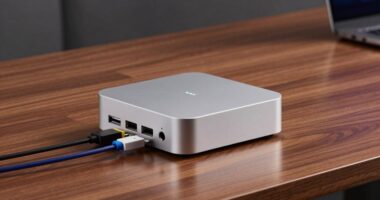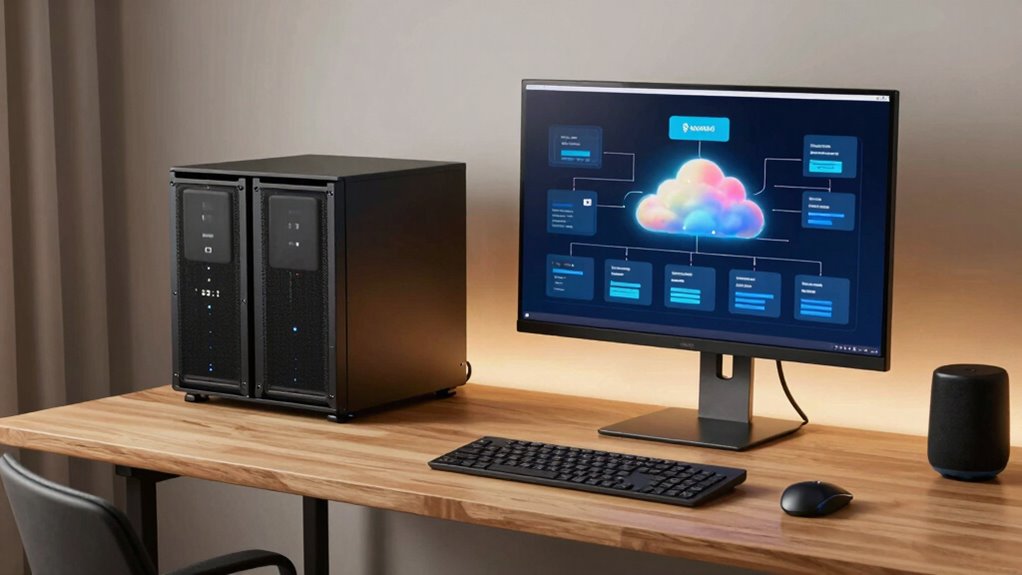

Setting up a private cloud for your home office is easier than you think, thanks to modern tools and cost-effective hardware. You can choose a platform that fits your needs, install reliable servers or NAS devices, and use simple management software to keep everything organized. With basic security measures, ongoing maintenance, and scalability in mind, your private cloud can grow with you. Keep exploring to discover how straightforward it can be to build your own cloud solution.

Get hardware and tech essentials delivered free with Prime
- Fast, free delivery on millions of items
- Prime Video, Amazon Music and more included
- Member-only deals all year
Key Takeaways
- A private cloud can be built using straightforward hardware and management tools, making setup accessible for small-scale environments.
- Cloud platforms offer scalable solutions that grow with your needs, simplifying future expansion and maintenance.
- Implementing strong security measures, like encryption and multi-factor authentication, ensures data safety without complex configurations.
- Regular software updates and monitoring help maintain system integrity and prevent downtime with minimal effort.
- Virtualization and automation streamline management, reducing complexity and making private cloud deployment manageable for home or small offices.
home NAS device for private cloud
As an affiliate, we earn on qualifying purchases.
As an affiliate, we earn on qualifying purchases.
How to Choose the Right Private Cloud Platform for Small Offices
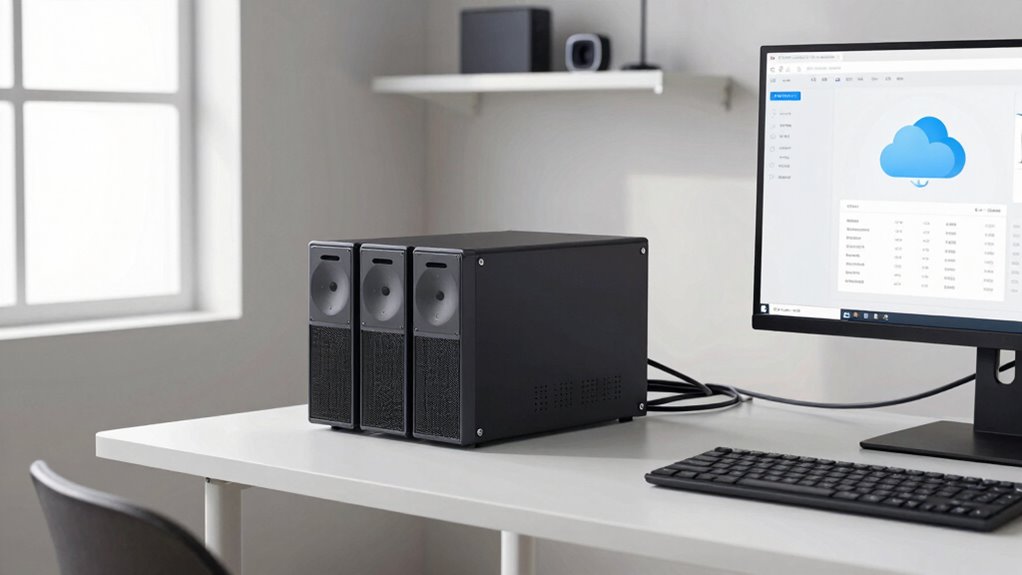
Choosing the right private cloud platform for a small office can considerably boost your efficiency and security. To make an informed decision, start with cloud provider comparisons to understand each platform’s features, costs, and support options. Consider how well they align with your business needs and growth plans. Hybrid cloud strategies often work best for small offices because they combine private and public clouds, offering flexibility and cost savings. Look for providers that support seamless integration, reliable performance, and strong security measures. Evaluate their scalability options to ensure your setup can grow with you. Additionally, assessing security features is crucial to protect sensitive data and maintain compliance. Understanding the content formats supported by different platforms can help optimize how your team collaborates and shares information. By comparing these factors carefully, you’ll select a platform that enhances collaboration, streamlines workflows, and keeps your data safe without overextending your budget.
As an affiliate, we earn on qualifying purchases.
Hardware and Software Essentials for Setting Up Your Private Cloud
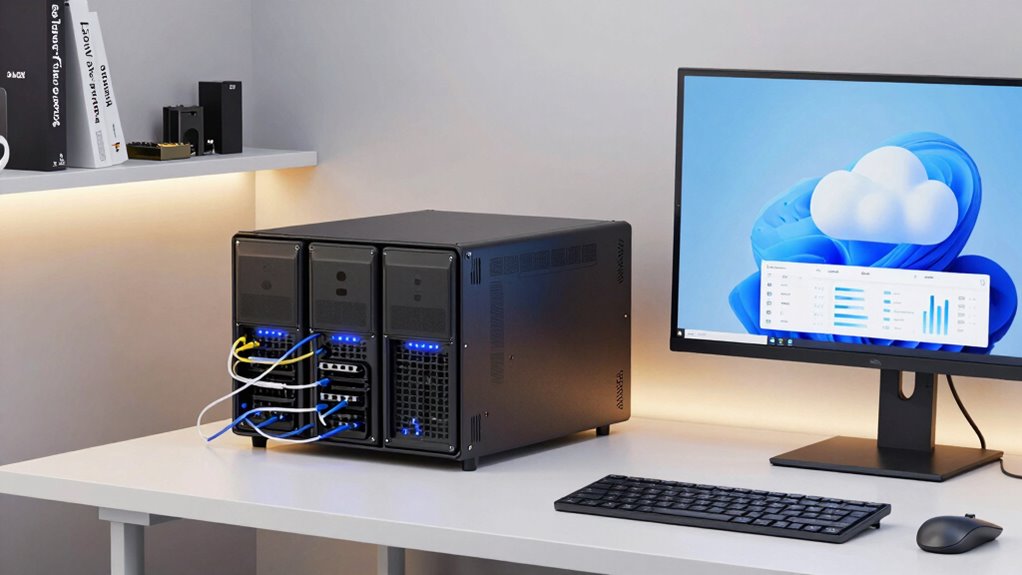
Setting up your private cloud starts with choosing the right hardware, like reliable servers and sufficient storage, to support your workload. You’ll also need key software solutions for virtualization, management, and security to keep everything running smoothly. Don’t forget to follow best practices for setup and security to protect your data and guarantee peak performance.
Essential Hardware Components
To build a reliable private cloud, you need to start with the right hardware components that can handle your data and workload demands. A robust server or NAS device forms the core, providing ample storage and processing power for smooth data synchronization. Choose hardware with sufficient RAM and CPU capacity to support cloud migration and ongoing operations. Reliable network equipment, like gigabit switches and high-quality routers, ensures fast, stable connectivity. Redundant power supplies and cooling systems help prevent downtime. Remember, scalable hardware lets you expand as your data grows. The goal is to set up a foundation that’s resilient and efficient, simplifying data management and supporting seamless cloud migration. Proper hardware choices keep your private cloud running smoothly and ready to adapt to future needs.
Key Software Solutions
Once you’ve selected solid hardware, the next step is to equip your private cloud with the right software solutions that coordinate and optimize your infrastructure. These tools facilitate smooth cloud migration, guaranteeing data moves securely and efficiently. They also handle data synchronization across devices and platforms, keeping everything up-to-date in real-time. Key software includes:
- Cloud management platforms for centralized control
- Backup and disaster recovery tools
- Data synchronization applications
- Virtualization and containerization software
- Monitoring and analytics tools
These solutions simplify management, improve performance, and guarantee your private cloud runs seamlessly. Choosing the right software helps you maximize hardware potential, streamline updates, and maintain data integrity—all vital for a reliable, efficient private cloud setup.
Setup and Security Tips
When you’re establishing your private cloud, prioritizing both hardware and software security is essential to protect your data and guarantee reliable operation. Start with robust hardware like a dedicated server or NAS device with built-in security features. Use strong, unique passwords and enable encryption for data in transit and at rest. To safeguard your cloud storage, implement data redundancy by setting up automatic backups and RAID configurations, ensuring your data remains accessible even if hardware fails. Keep your software up to date with the latest patches to defend against vulnerabilities. Additionally, consider setting up firewalls and VPN access to restrict unauthorized entry. Regularly monitor your system for unusual activity. Incorporating cable safety considerations into your setup can enhance your overall experience and security by ensuring your system remains reliable and true to your content. Understanding hardware security features can further strengthen your defenses and prevent potential breaches. Recognizing the importance of security regulations can help you stay compliant and protect your data from evolving cyber threats. Regularly evaluating your setup for potential security vulnerabilities is also crucial to maintaining a resilient private cloud. These steps create a secure foundation, safeguarding your private cloud against threats while maintaining smooth, reliable performance.
network switch gigabit for home office
As an affiliate, we earn on qualifying purchases.
As an affiliate, we earn on qualifying purchases.
A Step-by-Step Guide to Building Your Private Cloud at Home
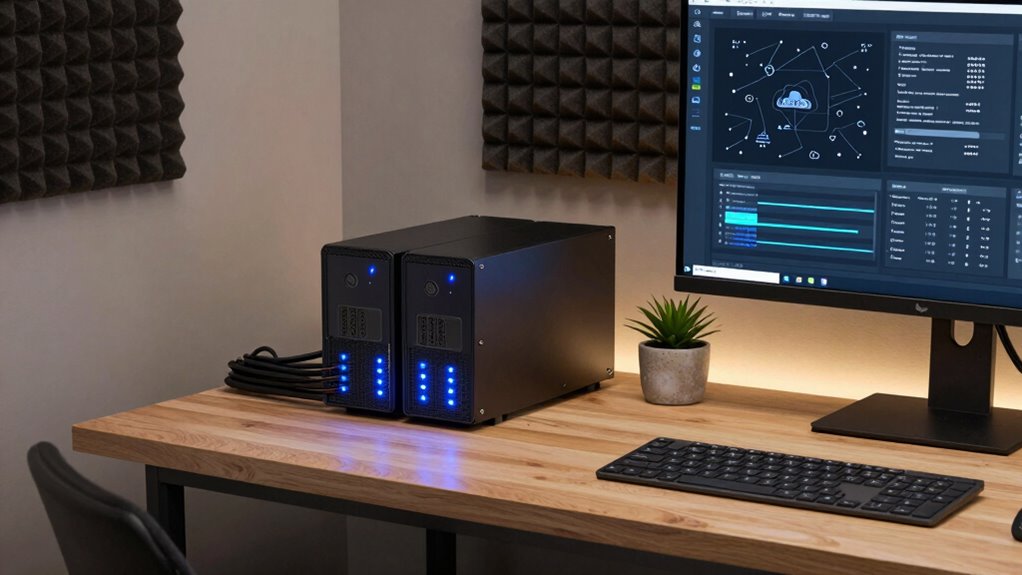
To build your private cloud at home, start by selecting hardware that fits your needs and budget. Once you’ve chosen your components, you’ll need to configure your system to guarantee everything works smoothly. Proper setup is key to creating a reliable and efficient private cloud environment.
Choosing the Right Hardware
Choosing the right hardware is essential for building a reliable and efficient private cloud at home. Your hardware must support seamless cloud storage and guarantee hardware compatibility with your chosen software. Focus on components that handle data transfer efficiently and have sufficient capacity for your needs.
Consider these key factors:
- Processor speed and cores for smooth performance
- Sufficient RAM for multitasking
- Storage capacity, including SSDs or HDDs
- Compatibility with your cloud management software
- Network interfaces for fast data transfer
Selecting compatible hardware minimizes issues and boosts stability. Prioritize quality components that suit your storage needs and guarantee they integrate well with your existing devices. This foundation keeps your private cloud running smoothly and securely.
Configuring Your Cloud System
Setting up your private cloud system involves careful configuration to guarantee smooth operation and security. First, configure your cloud storage to assure easy access and reliable performance. Organize your data into folders and set permissions to control access. Next, implement data redundancy by setting up automatic backups across multiple drives or servers. This protects your data against hardware failure and assures continuous availability. Enable encryption and strong authentication to secure your cloud system from unauthorized access. Adjust network settings to optimize speed and stability, making sure your devices connect seamlessly. Regularly update your software and firmware to patch vulnerabilities. Additionally, understanding home soundproofing can help reduce noise disruptions in your home office, creating a more focused environment. By focusing on these steps, you’ll create a resilient, efficient private cloud that keeps your data safe and accessible at all times.
private cloud management software
As an affiliate, we earn on qualifying purchases.
As an affiliate, we earn on qualifying purchases.
How to Secure Your Private Cloud and Protect Your Data
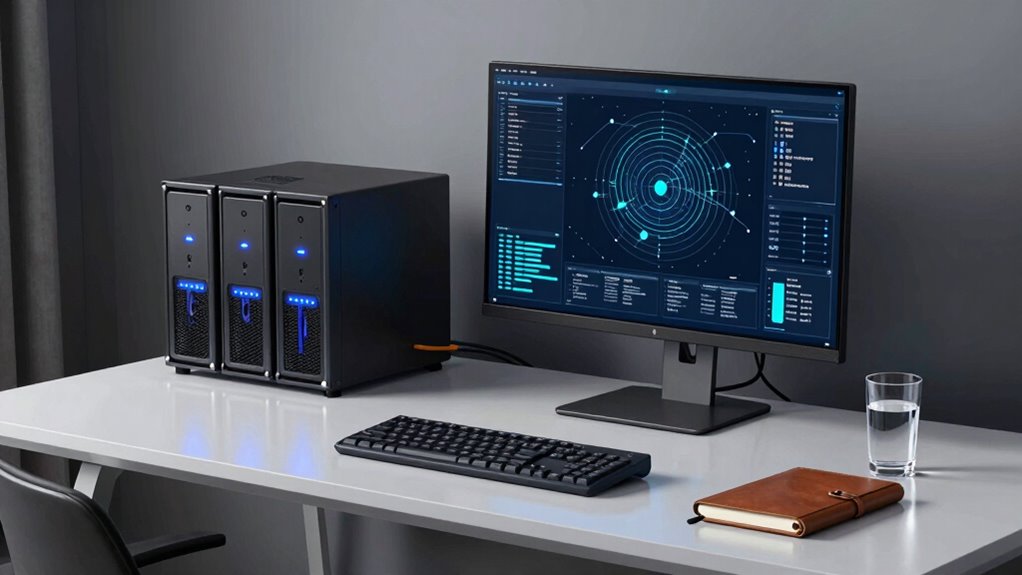
Ever wonder how to keep your private cloud safe from threats? Protecting your data requires proactive measures. Start with data encryption—encrypt sensitive files both at rest and in transit to prevent unauthorized access. Implement strict access controls by assigning permissions based on roles, ensuring only authorized users can view or modify data. Regularly update your software and security patches to close vulnerabilities. Use strong, unique passwords and enable multi-factor authentication for added security. Monitor activity logs to detect unusual behaviors early. Additionally, stay informed about security best practices to adapt your defenses as threats evolve. Finally, back up your data frequently and store copies securely offsite. Incorporate cloud security best practices to further enhance your protection. Be aware of early warning signs for potential security breaches to respond promptly.
Scaling Your Private Cloud When Your Business Grows

As your business expands, your private cloud must also evolve to handle increased workloads and user demands. You’ll need to plan a seamless cloud migration to scale efficiently without downtime. This involves upgrading storage, computing power, and network capacity while ensuring your data remains protected. Implementing robust disaster recovery strategies becomes critical, so you can quickly recover from failures or cyberattacks as your data volume grows. Consider adding redundancy and off-site backups to maintain business continuity. Scaling intelligently means balancing performance with security, so your private cloud remains reliable. Regularly monitor your system’s capacity and performance metrics, and be prepared to adapt your infrastructure as needed. This proactive approach keeps your private cloud resilient and ready for future growth.
Troubleshooting Common Private Cloud Setup Challenges
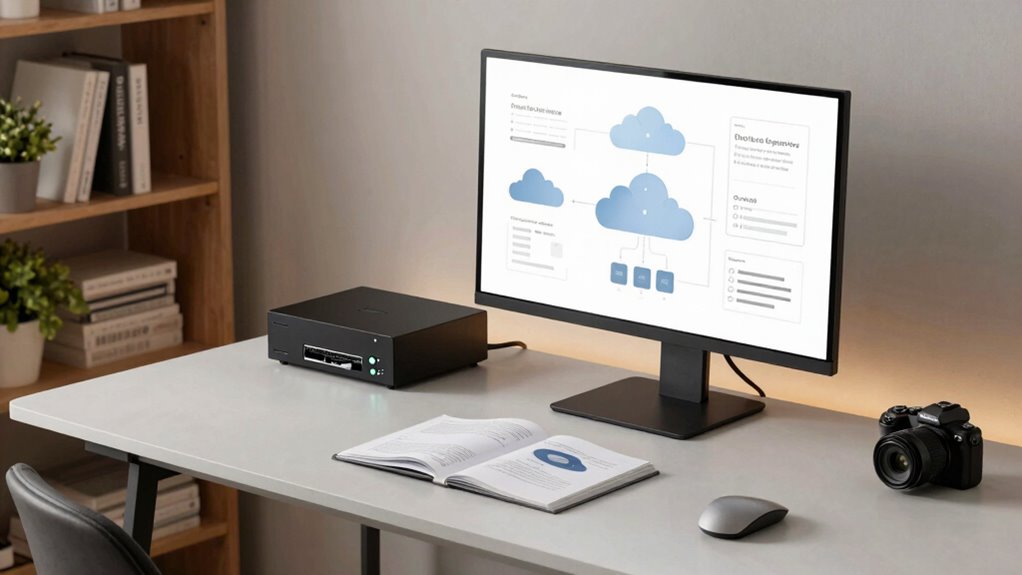
Have you ever faced unexpected issues during your private cloud setup that disrupted your workflow? Troubleshooting these challenges is key to maintaining a smooth system. Common issues include problems with cloud migration, where data transfer stalls or corrupts. User access can also become problematic if permissions are misconfigured, blocking essential workflows. Other obstacles involve network connectivity, hardware compatibility, and security settings. To resolve these, start by verifying your cloud migration process and ensuring data integrity. Check user access permissions and update them as needed. Review network configurations and hardware compatibility. Keep security settings tight but flexible enough for legitimate users. Regular monitoring and testing help catch issues early, making troubleshooting more straightforward and reducing downtime during your private cloud setup. Additionally, understanding the ethics in genetic testing can influence how data privacy and security are handled within cloud environments. Being aware of data privacy considerations can help you implement better security protocols and avoid potential breaches.
FAQs: Private Cloud Setup for Small Businesses and Home Offices
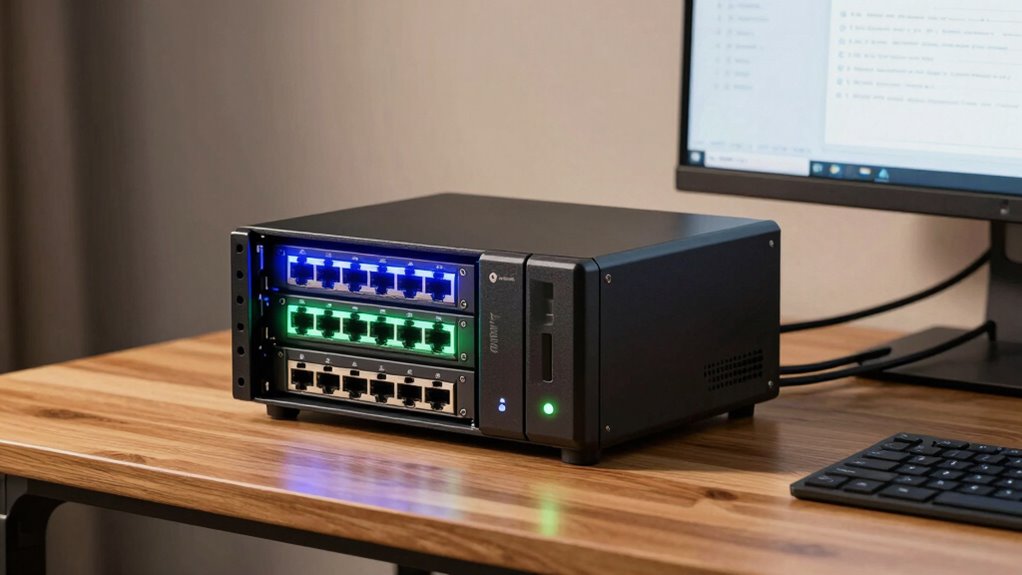
Setting up a private cloud for small businesses or home offices can seem intimidating, especially when you’re trying to avoid common pitfalls like data loss or access issues. To guarantee a smooth cloud migration, plan your data redundancy strategies carefully. Implementing multiple backups across different locations safeguards your data against hardware failures or cyber threats. Many small offices overlook the importance of redundancy, risking significant data loss. Focus on setting up automated backups and syncs to maintain real-time data protection. Also, choose scalable solutions that grow with your needs, simplifying future cloud migration. Clear organization and testing your setup beforehand help prevent access issues. Remember, a well-planned private cloud setup minimizes downtime and secures your data efficiently.
Frequently Asked Questions
Can I Integrate My Existing Office Tools With a Private Cloud?
Yes, you can integrate your existing office tools with a private cloud easily. This integration boosts office collaboration by centralizing files and applications, making teamwork seamless. Plus, it enhances data security by keeping sensitive information protected within your private cloud environment. You’ll find that connecting tools like email, document editors, and communication apps is straightforward, giving you a secure, efficient workspace without disrupting your current workflows.
What Are the Ongoing Maintenance Costs of a Private Cloud?
The ongoing maintenance costs of a private cloud vary, but you should do a thorough cost analysis to understand expenses like hardware updates, software licenses, and staff support. Security considerations also add to costs, ensuring your data stays protected. While initial setup is straightforward, regular upkeep requires investment, but it’s often less than you’d expect, especially when balancing performance, security, and scalability.
How Long Does It Typically Take to Set up a Private Cloud?
Setting up a private cloud typically takes a few days to a couple of weeks, depending on your familiarity with the process and the complexity of your network. You’ll want to focus on cloud scalability and data security during setup. If you plan carefully, automate where possible, and choose reliable hardware, you can streamline the process and guarantee your private cloud is secure, scalable, and ready for your needs.
Is Technical Expertise Required to Manage a Private Cloud Effectively?
You don’t need to be a tech expert to manage a private cloud effectively. With user-friendly tools, you can handle tasks like cloud security and data scalability easily. These platforms are designed to simplify management, so you can focus on your business rather than technical complexities. Even beginners find it manageable, and ongoing support guarantees you stay secure and scalable without requiring deep technical knowledge.
Can a Private Cloud Improve My Remote Work Capabilities?
Yes, a private cloud can considerably improve your remote work capabilities. It offers enhanced data security, ensuring your sensitive information stays protected, even when accessed remotely. Plus, its scalability options let you easily adjust resources as your needs grow, providing flexibility without sacrificing performance. This means you can collaborate seamlessly, access files securely from anywhere, and expand your infrastructure effortlessly, making remote work more efficient and secure.
Conclusion
Building your private cloud may seem like climbing a mountain, but with the right tools and steps, it’s more like planting a seed that grows strong and tall. As you nurture your setup, it’ll become your digital fortress, safeguarding your data while giving you the freedom to expand. Remember, simplicity is your best guide—so keep it straightforward, stay vigilant, and watch your small office’s cloud flourish into a reliable, scalable sanctuary for your business needs.
Halloween Picks
halloween
As an affiliate, we earn on qualifying purchases.