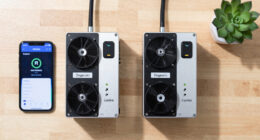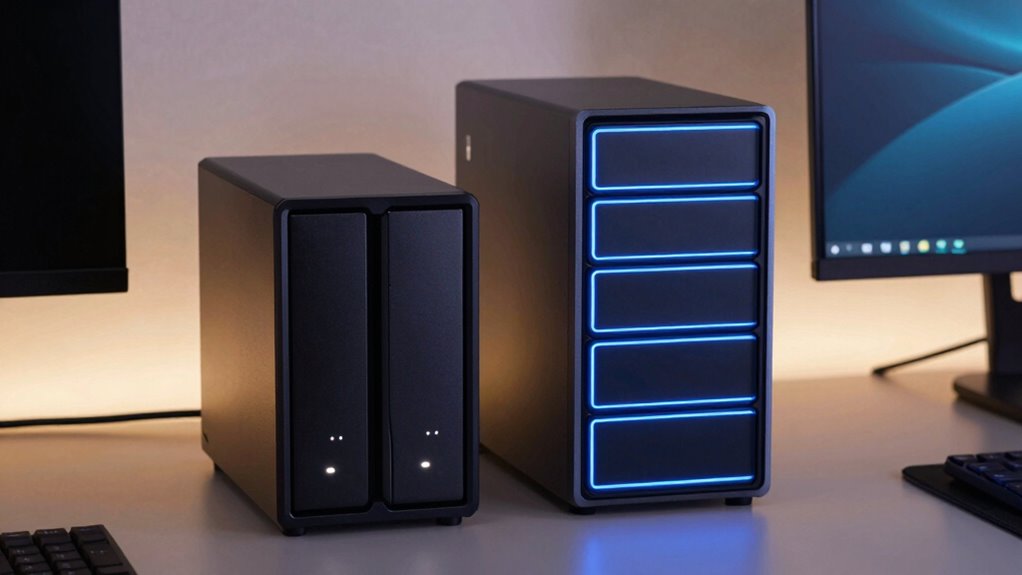

Choosing between a 2-bay and a 4-bay NAS impacts how quickly you’ll need to upgrade. A 2-bay offers limited capacity and requires replacing drives for growth, making it suitable for smaller storage needs. A 4-bay provides more initial space and easy expansion options, letting you grow without frequent upgrades. Your choice depends on your current needs and future plans—exploring further will help you pick the best fit as your storage demands evolve.
Open a free Amazon Business account
Business pricing, bulk buying and tax-exempt orders.
As an affiliate, we earn on qualifying purchases.
Key Takeaways
- 2-bay NAS offers limited initial storage and slower expansion options, leading to quicker outgrowing of capacity.
- 4-bay NAS supports adding drives or expansion units, enabling longer-term growth and scalability.
- Upgrading a 2-bay NAS often requires replacing drives, which can be more disruptive and costly over time.
- 4-bay NAS provides better flexibility for future-proofing with hardware upgrades and cloud integration.
- Energy efficiency and initial cost favor 2-bay NAS, but long-term investment and growth potential favor 4-bay systems.
As an affiliate, we earn on qualifying purchases.
How Do 2-Bay and 4-Bay NAS Devices Differ in Size and Capacity?
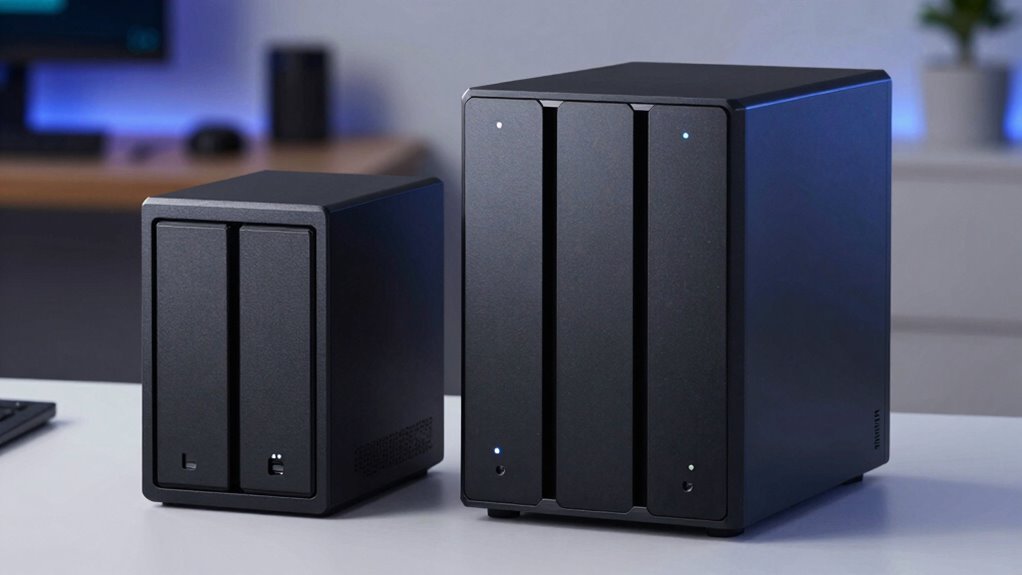
When comparing 2-bay and 4-bay NAS devices, size and capacity are key differences that can influence your choice. A 2-bay NAS typically has a smaller physical footprint, making it ideal for limited spaces, while a 4-bay offers increased storage density, allowing you to host more drives and data. The larger physical footprint of a 4-bay device reflects its capacity for higher storage, which is essential if you anticipate outgrowing your current setup. With more bays, you can expand storage without replacing the entire device, giving you flexibility for future growth. Additionally, understanding the importance of contrast ratio can help you choose a device that provides clear and detailed data management visuals. However, consider your available space and current storage needs. The difference in size and capacity directly impacts how much data you can store and how your setup fits into your environment.
As an affiliate, we earn on qualifying purchases.
Which NAS Performs Better for Your Specific Needs?
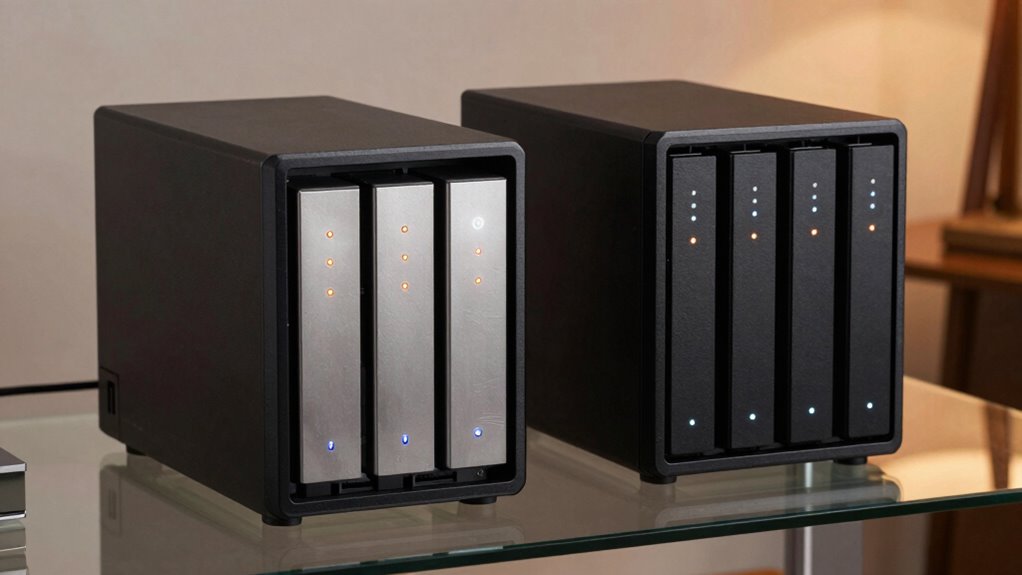
Choosing the right NAS depends on your specific needs and how you plan to use it. If you prioritize cloud integration, look for models that seamlessly connect with services like Dropbox or Google Drive. For enhanced security features, guarantee your NAS offers robust encryption, multi-factor authentication, and regular firmware updates. Consider your storage demands and whether you need remote access or multimedia streaming. Additionally, evaluating content formats and digital concepts can help ensure your setup remains adaptable for future needs.
As an affiliate, we earn on qualifying purchases.
How Easy Is It to Expand Storage on 2-Bay and 4-Bay NAS?
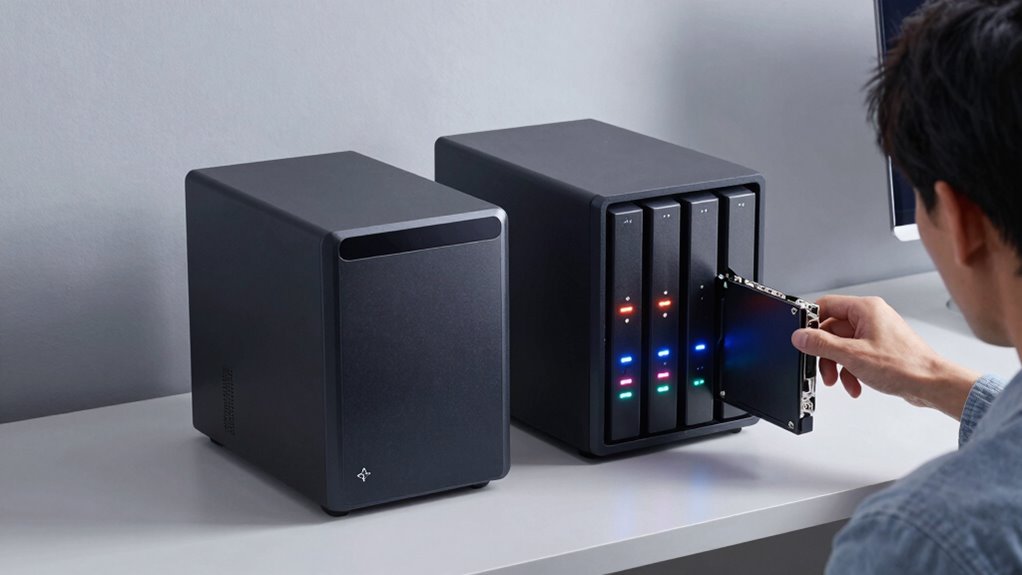
Expanding storage on a 2-bay NAS usually involves replacing drives with larger ones, which can be straightforward but limited by the device’s capacity. Data analytics can help you monitor and optimize storage performance during this process. With a 4-bay NAS, you often have more options, such as adding drives or using expansion units, making growth easier. The ease and cost of upgrades depend on hardware compatibility and available expansion methods, so it’s worth considering these factors upfront. Additionally, understanding best storage strategies and how to maintain NAS performance can help you plan for future needs effectively.
Expansion Methods Available
Expanding storage on a 2-bay or 4-bay NAS varies in ease depending on the device’s design and capabilities. With a 2-bay NAS, expansion options are limited—often requiring you to replace existing drives with larger ones, which can momentarily disrupt data transfer and compromise network security during upgrades. Conversely, 4-bay NAS devices typically offer straightforward expansion methods, such as adding drives or utilizing expansion units, minimizing downtime. Many 4-bay models support hot-swappable drives, allowing you to upgrade without shutting down, ensuring continuous data transfer and maintaining network security. Overall, 4-bay NAS units provide more flexible expansion methods, making it easier to grow your storage while safeguarding your data and network integrity. Additionally, HRV insights can help optimize your setup for better recovery and performance.
Hardware Compatibility Ease
When it comes to hardware compatibility, 4-bay NAS devices generally make upgrading storage much easier than 2-bay models. With more drive bays, they offer greater flexibility for device integration, allowing you to add or replace drives without much hassle. This means you can expand your storage capacity smoothly as your needs grow. In contrast, 2-bay NAS units often limit you to two drives, making upgrades more constrained and sometimes requiring data migration or complex configurations. The design of 4-bay systems typically supports a wider range of hard drives and SSDs, simplifying hardware compatibility. Overall, if seamless device integration and future-proofing are priorities, 4-bay NAS devices are better equipped to handle storage expansion.
Cost of Upgrades
Upgrading storage on a 2-bay NAS can be more limited and sometimes costly compared to a 4-bay system. The cost implications are significant because expanding capacity often means replacing existing drives with larger ones or adding external solutions, which can add up quickly. The upgrade pathways on a 2-bay unit are straightforward but restricted; you’re limited to swapping drives or using external drives, which may require additional hardware. In contrast, a 4-bay NAS offers more flexible upgrade options, including replacing drives with larger ones or expanding via RAID configurations. This makes future upgrades easier and more cost-effective over time. Overall, the cost of upgrades on a 4-bay NAS tends to be lower because of its greater expandability and more versatile upgrade pathways.
As an affiliate, we earn on qualifying purchases.
What Are the Cost Differences Between 2-Bay and 4-Bay NAS?
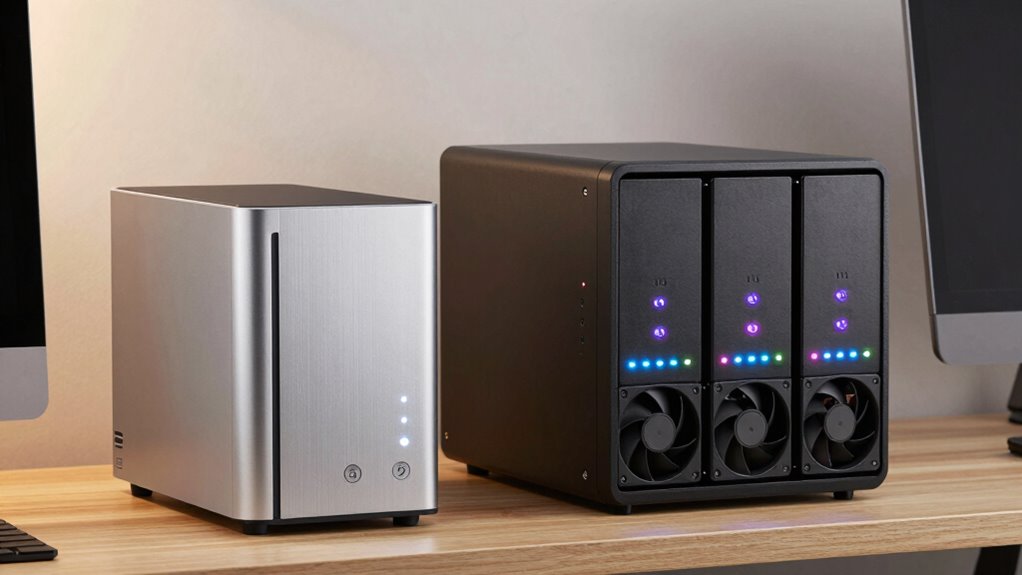
A 2-bay NAS generally costs less upfront than a 4-bay model, making it an attractive option for budget-conscious users. When considering the cost comparison, the initial purchase price is just the beginning. With a 2-bay, you typically pay:
A 2-bay NAS is more affordable initially, ideal for budget-conscious users starting with fewer drives.
- Fewer drives, reducing initial hardware expenses.
- Lower power consumption, saving on electricity.
- Simpler setup, which minimizes installation costs.
However, keep in mind that upgrade expenses differ. A 4-bay NAS may be pricier initially but offers more flexibility for future storage needs. Over time, expanding a 2-bay setup can incur additional costs, such as replacing drives or upgrading the entire system. So, while the 2-bay saves money upfront, a 4-bay might be more cost-effective long-term if you anticipate heavy data growth.
How to Decide Which NAS Is Right for You?
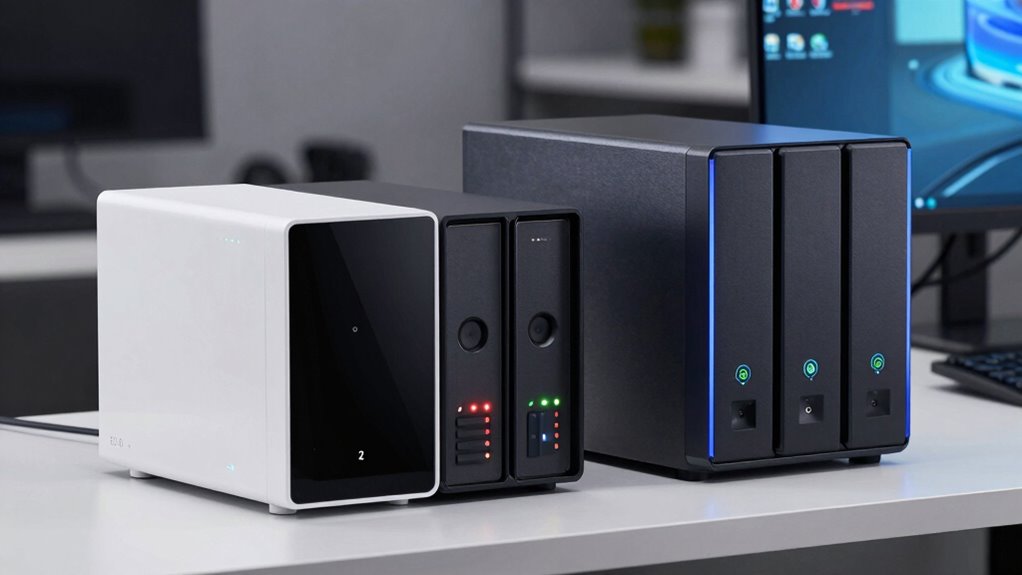
Deciding which NAS is right for you depends on your specific storage needs, budget, and future plans. Consider how important network security is—if you handle sensitive data, choose a model with robust security features. The user interface also matters; a simple, intuitive interface makes managing your storage easier, especially if you’re new to NAS devices. If you prefer quick setup and straightforward controls, a 2-bay NAS may suffice. But if you anticipate expanding your storage or need advanced management options, a 4-bay NAS offers more flexibility. Balance your current demands with potential growth. By evaluating these factors, you’ll choose a device that fits your needs now and adapts to future requirements.
What Future Storage Needs Should You Consider When Choosing a NAS?
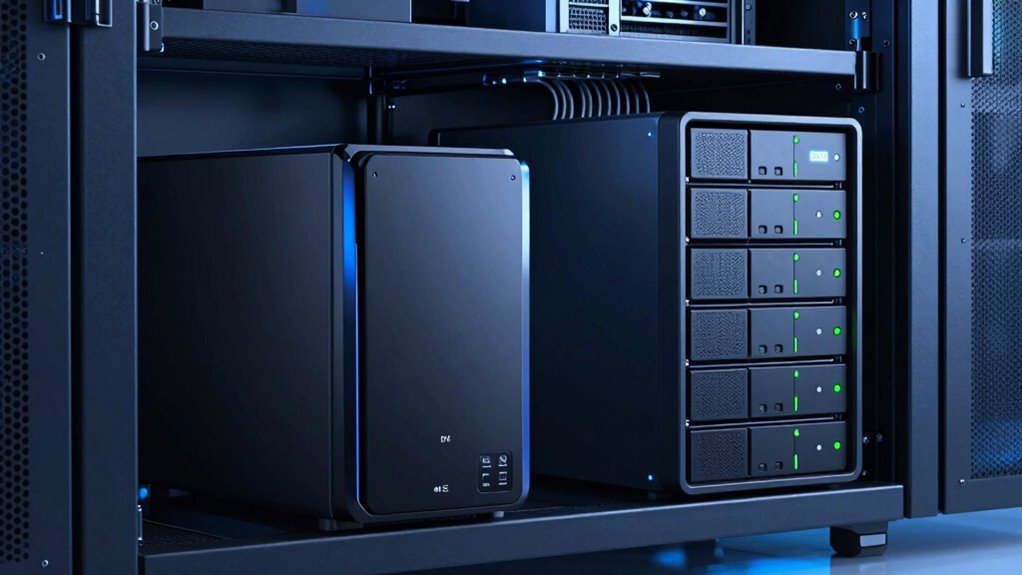
When choosing a NAS, think about how your storage needs might grow over time and whether the device can expand easily. Consider the scalability options, like additional drives or upgrade paths, to avoid outgrowing your system quickly. Planning for future data growth now can save you hassle and money later on. Additionally, understanding compatibility guardrails can help ensure your upgrades and expansions remain reliable and effective.
Scalability Options
Considering your future storage needs is essential when choosing a NAS, as scalability options determine how well the device can grow with your requirements. When evaluating scalability, focus on:
- Number of drive bays—more bays mean easier expansion without replacing your existing setup.
- Cloud integration—look for models that support seamless cloud syncing, enabling you to extend storage virtually.
- Energy efficiency—a scalable system should maintain low power consumption, keeping ongoing costs manageable as you grow.
A scalable NAS allows you to upgrade storage capacity gradually, avoiding costly replacements. It also ensures your setup remains efficient, especially if it supports cloud integration and energy-efficient components. This way, your NAS adapts smoothly to increasing demands without sacrificing performance or sustainability.
Future Data Growth
As your storage needs grow, it’s important to think ahead about future data requirements. Consider how cloud integration can help expand your storage capacity without immediate hardware upgrades, allowing seamless access and backup. A NAS with scalable options guarantees you won’t outgrow it quickly, especially if your data increases rapidly. Energy efficiency is also vital; choosing a NAS that consumes less power minimizes ongoing costs and environmental impact as your setup expands. Think about future-proofing your investment by selecting a device that supports additional drives or integrates smoothly with cloud services. This way, your storage system adapts to your evolving needs, reducing the need for frequent replacements and guaranteeing long-term reliability.
Frequently Asked Questions
Can 2-Bay NAS Support RAID Configurations Similar to 4-Bay Models?
Yes, a 2-bay NAS can support RAID configurations similar to 4-bay models, like RAID 1 for data redundancy. However, your expandable storage options are limited, meaning you can’t add more drives easily if you outgrow the setup. While RAID offers data redundancy, keep in mind that a 2-bay system’s capacity to scale is more restricted, so consider your future storage needs before choosing.
Are There Power Consumption Differences Between 2-Bay and 4-Bay NAS Devices?
Like a dial-up modem in a fiber-optic world, 2-bay NAS devices generally consume less power than 4-bay models. You’ll find they excel in energy efficiency and have simpler power management, making them ideal for smaller setups. Four-bay units, while more versatile, usually draw more power due to additional drives and features. So, if energy savings matter most, a 2-bay could be your best bet.
How Do Backup and Recovery Options Vary Between the Two NAS Types?
You’ll find that 4-bay NAS devices often offer more robust backup and recovery options, like data encryption and remote access, compared to 2-bay models. With extra bays, you can set up RAID configurations for redundancy, ensuring your data stays safe even if a drive fails. These advanced features give you peace of mind, making it easier to recover files quickly and securely, especially when accessing your data remotely.
Do 4-Bay NAS Devices Require More Technical Knowledge to Set Up?
Yes, 4-bay NAS devices typically require more technical knowledge to set up than 2-bay models. You’ll need to handle hardware customization, like installing drives and configuring RAID, and guarantee network security settings are properly managed. While they offer greater flexibility and storage, they demand a deeper understanding of networking and hardware to optimize performance and safeguard data. If you’re comfortable with these aspects, a 4-bay NAS suits advanced users well.
Which NAS Type Offers Better Compatibility With Third-Party Apps?
Imagine you’re a creative professional needing versatile tools; a 4-bay NAS offers better compatibility with third-party apps. Its richer app ecosystem diversity allows seamless third-party app integration, giving you more customization options. This flexibility helps you adapt to evolving needs, unlike 2-bay models with limited app support. So, if you value expanding features and integrating various tools, a 4-bay NAS is your best choice to grow with your evolving workflows.
Conclusion
Choosing between a 2-bay and a 4-bay NAS isn’t just about today’s needs; it’s about tomorrow’s growth, future flexibility, and expanding capacity. Consider your storage demands, budget, and how easily you can upgrade. Will your needs stay steady, or will they grow? Decide whether you prioritize simplicity or scalability. By aligning your choice with your future plans, you’ll guarantee your NAS adapts, grows, and serves you well—today, tomorrow, and beyond.
NFL season / tailgating Picks
team gear
As an affiliate, we earn on qualifying purchases.