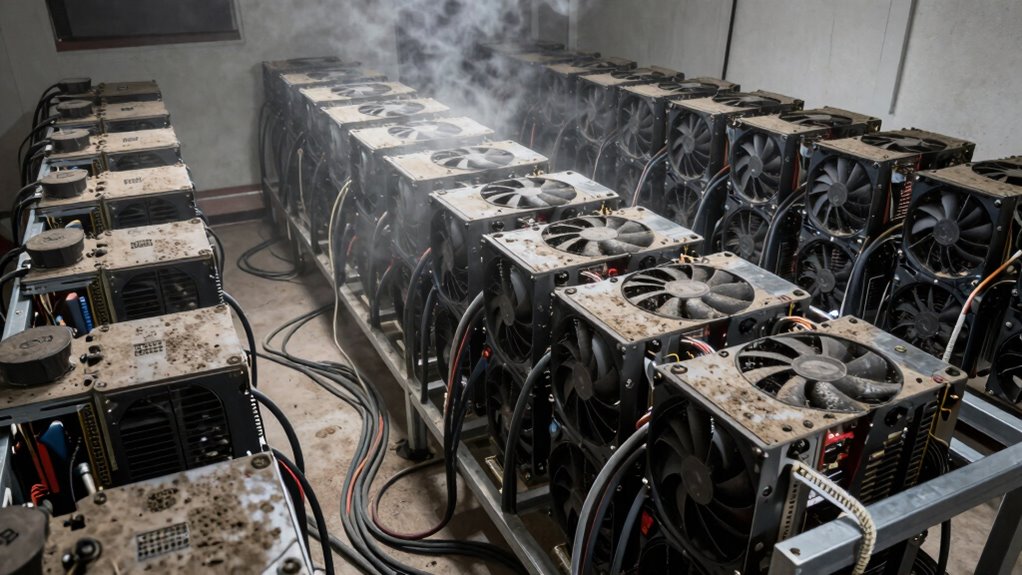
Most GPU mining rigs fail early because of poor airflow, which causes overheating and hardware damage before other issues appear. If you don’t position fans properly, keep components clean, or guarantee good airflow circulation, temperatures can spike quickly. Overheating leads to crashes, artifacts, and hardware failure, cutting your mining profitability short. Taking steps to optimize cooling now will help you prevent these common pitfalls and keep your rig stable and efficient—just keep exploring for more tips.
Key Takeaways
- Inadequate airflow causes GPU overheating, leading to thermal throttling and reduced mining performance.
- Poor airflow management results in dust accumulation, further obstructing cooling efficiency.
- Improper fan placement and unoptimized case layout prevent effective heat dissipation.
- Neglecting regular cleaning and maintenance causes dust buildup, impairing airflow and cooling.
- Insufficient or uneven airflow leads to hotspots, increasing the risk of hardware thermal failure.

Wathai 4 x 120mm GPU Mining Rigs Server Racks Fan with 110V – 240V AC Plug
Ventilation Fan: Designed to quietly ASUS GT/RT- AC5300 , cool Xboxs, CPU/ GPU, Playtations, Rokus, TVs, receivers, mondems,…
As an affiliate, we earn on qualifying purchases.
As an affiliate, we earn on qualifying purchases.
Why Airflow Is Critical for GPU Mining Performance
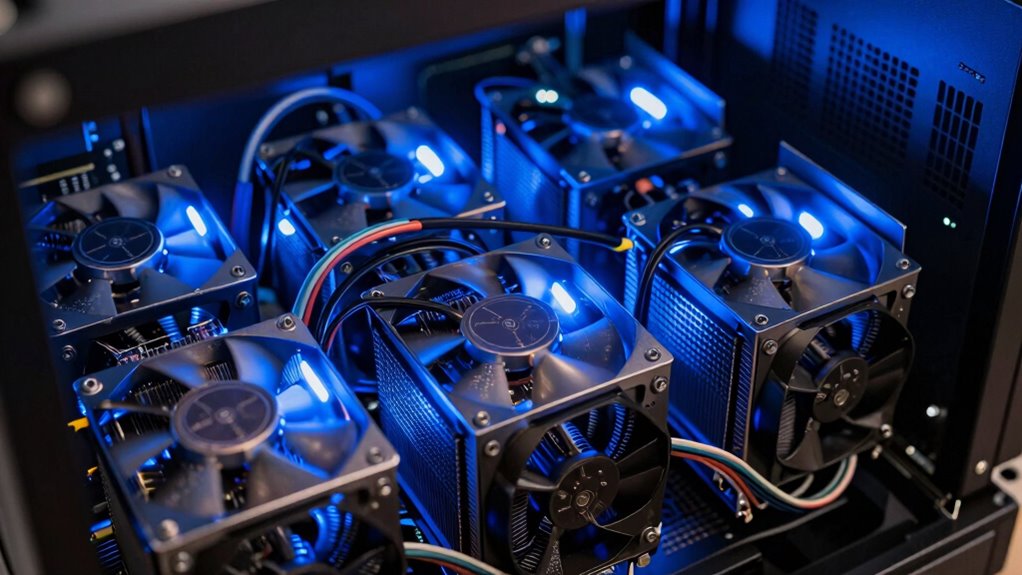
Proper airflow is essential for maintaining ideal GPU mining performance because it directly impacts how effectively heat is removed from each graphics card. When airflow is insufficient, GPUs can overheat, leading to thermal throttling that reduces mining efficiency. If you’re GPU overclocking, proper airflow becomes even more critical, as increased clock speeds generate additional heat. Optimizing airflow ensures that hot air is swiftly expelled and cool air reaches each GPU, preventing temperature spikes. Power supply optimization also plays a role, as a stable, well-ventilated power setup reduces heat buildup and maintains consistent power delivery. Without good airflow, your entire mining setup risks overheating, reducing lifespan and profitability. Proper airflow management is also a key consideration in accessibility features that make mining rigs easier to maintain and operate safely. Investing in proper airflow management supports stable GPU overclocking and maximizes your mining rig’s overall performance, especially in thermal management strategies that help sustain optimal operating temperatures. Additionally, implementing effective ventilation techniques can significantly improve heat dissipation and overall system stability. Ensuring consistent airflow can also help mitigate thermal buildup, which is crucial for sustaining long-term mining operations. Regularly monitoring airflow efficiency can further prevent hotspots that could otherwise damage components over time.

GDSTIME 1238 Fan 4 Pin 12V 120mm x 38mm PWM High Static Pressure Dual Ball
Powerful Airflow: Features high-strength thickened dual-blades which deliver strong airflow from high static pressure ductwork; great for radiators,…
As an affiliate, we earn on qualifying purchases.
As an affiliate, we earn on qualifying purchases.
Designing an Effective Cooling System for Your Rig
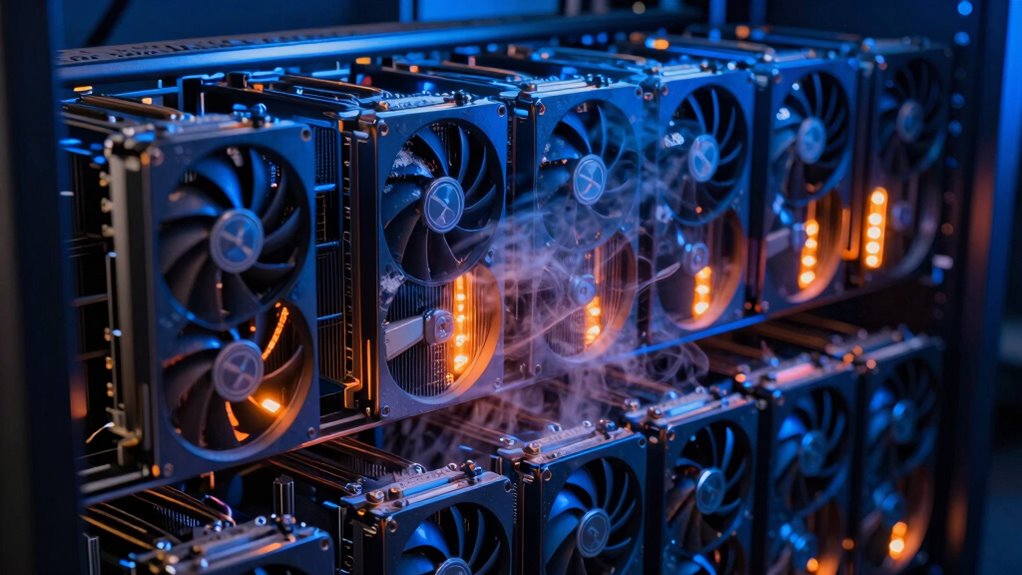
Have you considered how to design a cooling system that effectively keeps your mining rig running at peak performance? Proper airflow guarantees ideal GPU performance and power efficiency, preventing overheating that throttles speeds and wastes energy. To maximize cooling, position fans for direct airflow over heat-generating components and use case layouts that promote circulation. Use the following table to choose suitable cooling components:
| Component | Recommendation |
|---|---|
| Intake Fans | High CFM, quiet operation |
| Exhaust Fans | Strong airflow, consistent speeds |
| Ducting | Directs airflow precisely |
| Thermal Paste | High-quality, applied correctly |
| Fan Placement | Strategically around GPUs |
This setup keeps temperatures low, maintaining GPU performance and ensuring power efficiency. Additionally, understanding water chemistry and airflow dynamics can help optimize your cooling strategy further.
![MoKo 400x300mm DIY PC Case Dust Mesh Filter, [2 Pack] PVC Dustproof Magnetic Dust Filter Cover, PC Mesh Grill with Magnetic Frame Strip Computer Cooler Fan Dust Filter for Computer PC Case, Black](https://m.media-amazon.com/images/I/61aJ1rreFkL._SL500_.jpg)
MoKo 400x300mm DIY PC Case Dust Mesh Filter, [2 Pack] PVC Dustproof Magnetic Dust Filter Cover, PC Mesh Grill with Magnetic Frame Strip Computer Cooler Fan Dust Filter for Computer PC Case, Black
400 x 300mm DIY Filter: This DIY PC case dust mesh filter provides you a wide range of…
As an affiliate, we earn on qualifying purchases.
As an affiliate, we earn on qualifying purchases.
Managing Dust and Airflow Maintenance Best Practices
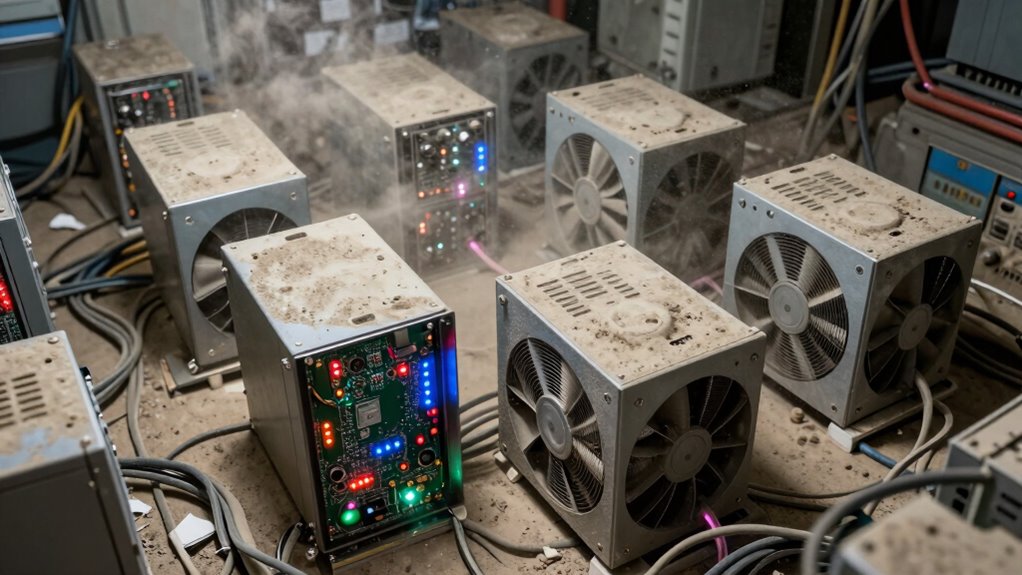
Dust buildup can quickly compromise your mining rig’s airflow, leading to elevated temperatures and reduced performance. Regularly cleaning your fans and filters helps prevent dust from clogging vents, maintaining peak airflow. Use compressed air to blow dust out of fans, heatsinks, and filters—doing this weekly keeps dust levels low. Keep the environment clean and dust-free, especially in dry or dusty areas. Dust accumulation often causes fan noise to increase as fans work harder to cool components, so pay attention to unusual sounds. Consider installing dust filters on intake fans to catch debris before it enters your rig. Consistent maintenance guarantees your GPU rig runs quietly and efficiently, preventing overheating and prolonging hardware lifespan. Staying proactive with dust management is essential for reliable airflow and performance. Proper airflow management is also crucial to prevent overheating and hardware failure.

ARCTIC MX-4 (4 g) – Premium Performance Thermal Paste for All Processors (CPU, GPU – PC, PS4, Xbox), Very high Thermal Conductivity, Long Durability, Safe Application, Non-Conductive, Non-capacitive
CONSISTENT QUALITY: Our thermal paste packaging design has evolved over time, but the formula has remained the same,…
As an affiliate, we earn on qualifying purchases.
As an affiliate, we earn on qualifying purchases.
Monitoring and Troubleshooting GPU Rig Temperatures

To keep your GPU rigs running smoothly, you need reliable temperature monitoring tools. These tools help you quickly identify cooling issues before they cause damage. Staying attentive to temperature readings allows you to troubleshoot effectively and maintain ideal performance. Proper airflow management and understanding contrast ratio can also improve overall cooling efficiency. Additionally, selecting the right smart lock and office gear can help ensure your hardware setup remains secure and accessible. Implementing home soundproofing solutions can also reduce ambient noise, allowing for more accurate monitoring in noisy environments.
Temperature Monitoring Tools
Monitoring GPU temperatures is essential for maintaining ideal performance and preventing overheating issues in your mining rig. Temperature monitoring tools like HWMonitor, MSI Afterburner, or SpeedFan give real-time data, helping you catch thermal spikes early. With this information, you can fine-tune overclocking strategies to maximize performance without risking damage. Proper monitoring also guides power supply optimization, ensuring your PSU provides stable, sufficient power without overloading. Keeping an eye on temps allows you to set threshold alarms, so you’re alerted before temperatures reach dangerous levels. Regularly checking these metrics helps you identify patterns or fluctuations, making it easier to adjust airflow or cooling measures proactively. Overall, these tools are crucial for maintaining efficiency and safeguarding your hardware investment. Additionally, understanding lubricant specs can help ensure that your cooling components and other hardware are compatible with your setup, reducing the risk of thermal-related failures. Being aware of airflow dynamics can further enhance your ability to optimize cooling strategies effectively, especially when considering fan placement and airflow direction for optimal cooling efficiency. For example, understanding how thermal conductivity impacts heat transfer can guide you in selecting the right cooling solutions.
Identifying Cooling Issues
When your GPU temperatures start climbing unexpectedly, it’s a clear sign that something’s wrong with your cooling setup. First, check your cable management—loose or tangled cables can obstruct airflow, causing hot spots. Ensure your power supply cables are properly routed and not blocking fans or vents. A poorly positioned cable can restrict airflow around critical components. Next, verify that your fans are operating correctly and spinning at the right speeds. Use temperature monitoring tools to identify any irregular temperature spikes. If temperatures remain high despite these adjustments, consider cleaning dust buildup or repositioning fans for better airflow. Proper cable management and a reliable power supply are crucial to maintain ideal cooling, preventing overheating and ensuring your GPU rig runs efficiently. Additionally, understanding how airflow dynamics affect cooling efficiency can help you optimize your setup for consistent performance. Being aware of airflow patterns can significantly improve your ability to troubleshoot and enhance cooling effectiveness. Regularly reviewing your hardware configuration can also help identify potential airflow blockages or inefficiencies. Maintaining optimal airflow is essential to prevent hot spots and extend the lifespan of your hardware. Moreover, implementing effective ventilation strategies can further improve overall cooling performance.
Signs Your GPU Rig Is Overheating or Suffering From Poor Airflow
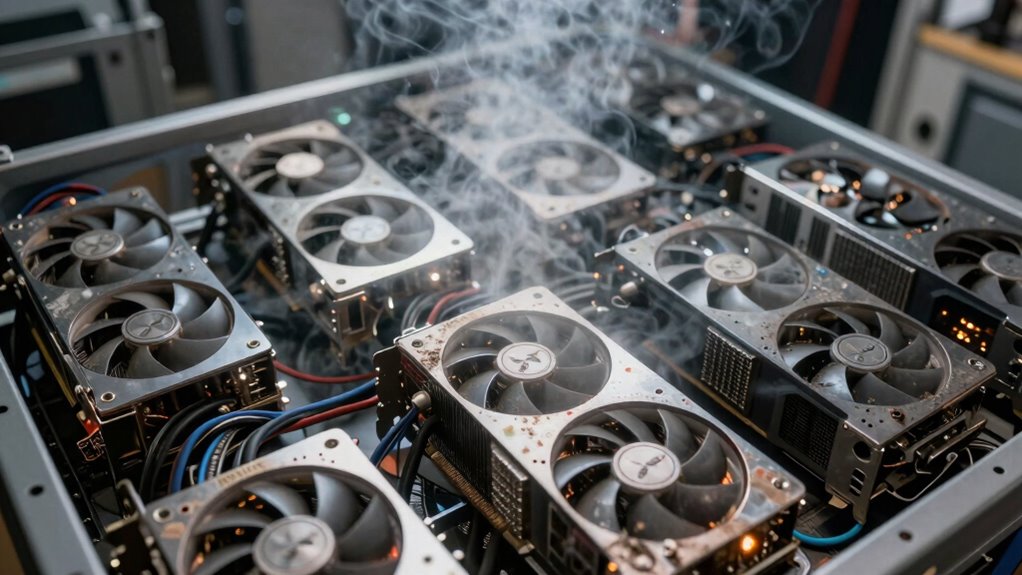
If your GPU rig is overheating or experiencing poor airflow, you’ll likely notice certain warning signs that shouldn’t be ignored. Temperatures will spike beyond normal operating ranges, especially during GPU overclocking, which stresses your hardware more. You might see crashes or artifacts on your screens, indicating thermal issues. Fans will run louder as they try to compensate for inadequate airflow. Additionally, you could observe decreased power supply efficiency; as components heat up, they draw more power, straining your system. Over time, this can lead to hardware throttling or even failure. If you notice these signs, it’s a clear indication that your rig isn’t getting proper airflow and needs immediate attention before more serious damage occurs. Proper landscaping around your setup can also help improve natural airflow and cooling efficiency. Understanding the microplastics in dust that accumulate in your system can further highlight the importance of maintaining a clean environment to prevent airflow blockages. Regularly cleaning your components helps reduce dust buildup, which can significantly impede airflow and cooling performance. Incorporating indoor air quality solutions, such as HEPA filters, can also help minimize dust and contaminants that contribute to airflow issues. Additionally, monitoring ambient temperature can provide early warnings of environmental factors affecting your system’s cooling.
How to Fix Common Airflow Problems
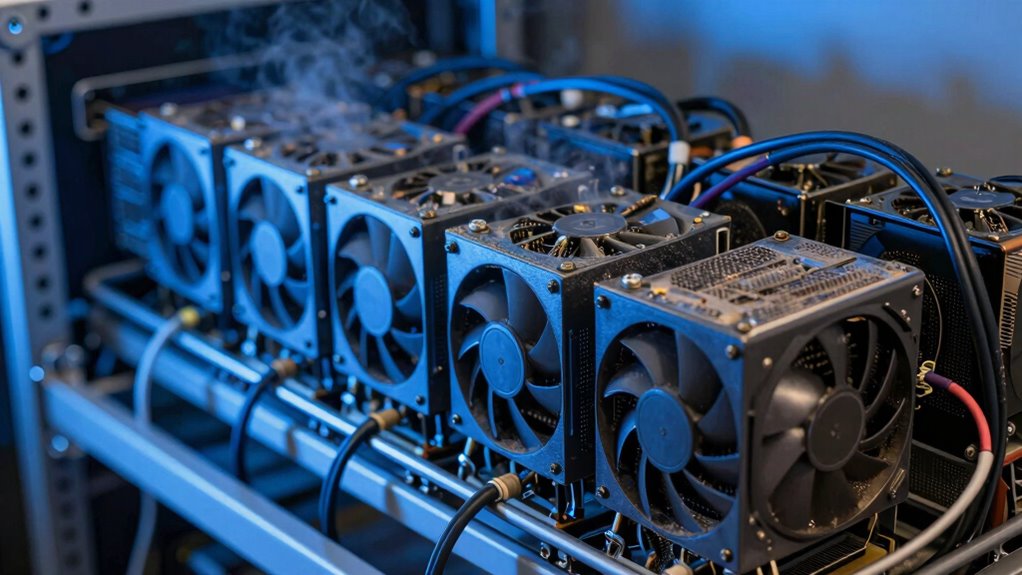
Addressing airflow problems in your GPU mining rig starts with identifying common issues and implementing straightforward fixes. First, improve airflow aesthetics by organizing cables and removing clutter that obstructs airflow pathways. Ensuring fans are clean and free of dust boosts both cooling efficiency and reduces fan noise levels. Adjust fan speeds or replace noisy fans with quieter models to maintain ideal noise levels while enhancing airflow. Consider repositioning fans or adding additional ones to create a balanced intake and exhaust system. Properly sealing any gaps or leaks around the case prevents hot air recirculation. Regularly inspecting and maintaining these elements keeps airflow consistent, helping to prevent overheating and prolonging hardware lifespan. These simple steps can dramatically improve airflow and overall rig performance.
Troubleshooting Airflow Issues Before Hardware Damage Occurs
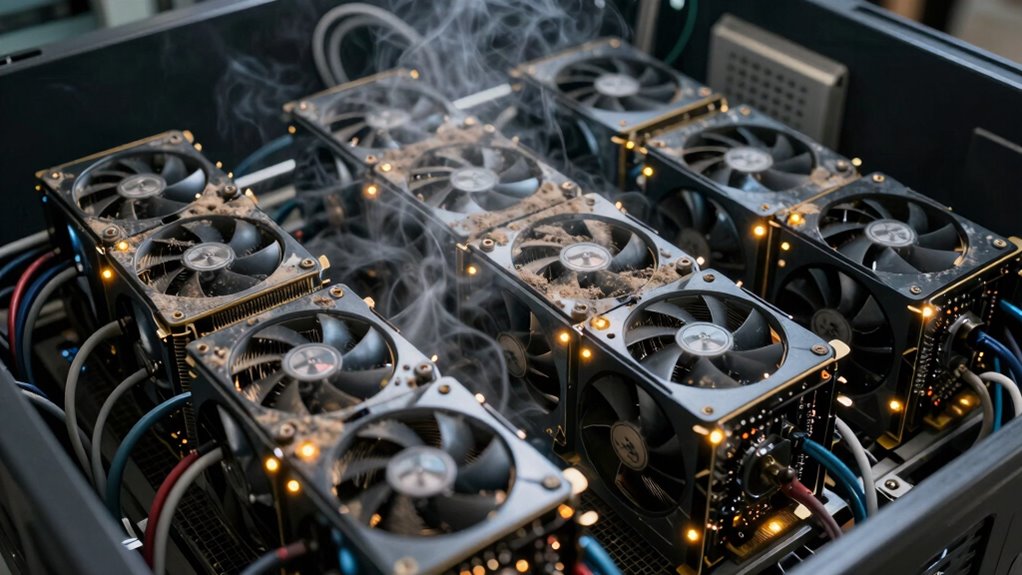
Before hardware damage occurs, it’s essential to proactively troubleshoot airflow issues in your mining rig. Poor airflow can lead to overheating, which increases overclocking risks and can destabilize your system. Check that fans are working correctly and unobstructed, ensuring cool air intake and hot air exhaust are balanced. Monitor your GPU and power supply temperatures closely—rising temps may indicate airflow problems. Insufficient cooling can cause power supply instability, risking shutdowns or damage. Adjust fan speeds if needed, and consider repositioning fans or adding more to improve circulation. Regularly clean dust and debris that block airflow paths. Addressing airflow issues early helps prevent overheating, maintains stable overclocking, and protects your hardware from costly failures.
Frequently Asked Questions
What Are the Best Fans for GPU Mining Rigs?
You should choose high-quality, axial fans designed for GPU mining rigs, like Noctua or Arctic fans, which balance fan noise and power consumption effectively. These fans deliver strong airflow to prevent overheating without creating excessive noise, ensuring your rig stays cool and runs efficiently. Select models with adjustable speeds so you can fine-tune airflow and noise levels, maintaining ideal cooling and minimizing power consumption.
How Does Ambient Temperature Affect Airflow Efficiency?
You’ll find that higher ambient temperatures reduce airflow efficiency because ambient cooling struggles to dissipate heat effectively. When the surrounding air is warm, your rig’s thermal management becomes less effective, causing temperatures to rise and airflow to become less efficient. To combat this, guarantee good ventilation and consider external cooling solutions. Managing ambient temperature is essential for maintaining ideal airflow and preventing overheating, ultimately extending your rig’s lifespan and performance.
Can Airflow Issues Cause GPU Performance Drops?
Yes, airflow issues can cause GPU performance drops. Poor thermal management leads to increased temperatures, which throttle your GPU’s speed to prevent overheating. Dust accumulation blocks airflow paths, worsening cooling efficiency. When airflow is restricted, your GPU struggles to stay cool, resulting in thermal throttling. Regularly cleaning your rig and ensuring proper ventilation help maintain ideal airflow, allowing your GPU to perform at its best without temperature-induced slowdowns.
What Tools Are Best for Measuring Airflow in a Rig?
To measure airflow in your rig effectively, use anemometers or airflow meters, which provide precise airflow measurement for cooling enhancement. An anemometer, especially a digital one, helps you identify airflow discrepancies and optimize fan placement. Additionally, temperature sensors can monitor cooling efficiency. Regular testing ensures proper airflow, preventing overheating and maintaining ideal GPU performance, ultimately extending your rig’s lifespan and stability.
How Often Should I Replace Cooling Components?
You should replace cooling components proactively, roughly every 6 to 12 months, to maximize component lifespan and prevent unexpected failures. Regular cooling maintenance is vital for maintaining ideal airflow and keeping temperatures low. Never wait until you notice performance drops or overheating signs. Staying ahead with timely replacements helps guarantee your rig runs smoothly, avoiding costly downtimes and costly repairs, ultimately extending the lifespan of your entire setup.
Conclusion
Remember, a chain is only as strong as its weakest link, so don’t overlook airflow in your mining rig. Keeping your GPUs cool guarantees they perform at their best and last longer. Regular maintenance, monitoring temps, and addressing airflow issues early can save you costly repairs down the line. Stay proactive, and you’ll avoid disaster—because a well-ventilated rig is a happy, profitable one. Don’t wait until it’s too late; breathe new life into your mining setup today.