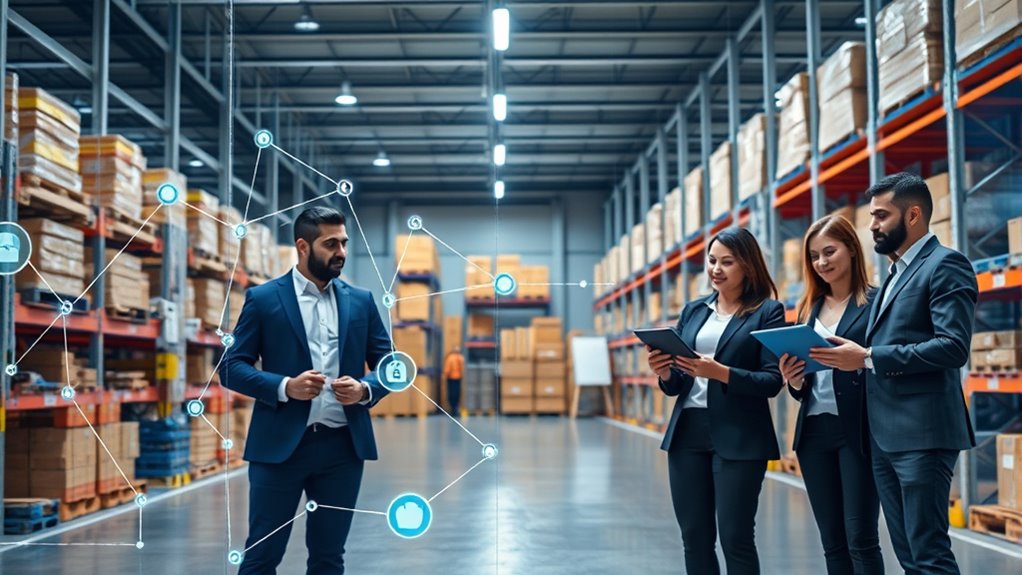

Blockchain enhances your supply chain by providing secure, transparent tracking from origin to delivery. It records every step immutably, allowing you to quickly identify issues and verify product authenticity. Smart contracts automate actions, speeding transactions and reducing disputes. This integration fosters trust among partners and improves overall efficiency. If you keep exploring, you’ll discover how these technologies can transform your supply chain into a more reliable and trustworthy system.
Key Takeaways
- Blockchain provides immutable, real-time tracking of products, enhancing transparency from origin to delivery.
- Smart contracts automate supply chain transactions, reducing delays and increasing trust among stakeholders.
- Detailed traceability captures handling conditions, improving product authenticity and safety verification.
- Secure data sharing among parties fosters accountability, transparency, and collaborative decision-making.
- Integration of blockchain and automation streamlines processes, enhances compliance, and mitigates risks like counterfeiting.

Blockchain technology is transforming supply chains by providing a secure, transparent way to track goods from origin to destination. This innovation guarantees that every step of a product’s journey is recorded immutably, giving all stakeholders confidence in the data’s integrity. One of the key ways blockchain achieves this is through advanced traceability systems that capture detailed information at each point in the supply chain. These systems enable you to see exactly where a product has been, what conditions it faced, and who handled it along the way, reducing the risk of counterfeiting, theft, or contamination. With this level of detailed tracking, you can quickly identify issues or delays, respond more efficiently, and enhance overall transparency. Additionally, integrating tuning options from automotive technology can serve as an analogy for how precise customization and monitoring improve overall performance and reliability, similar to how blockchain enhances supply chain integrity.
Blockchain ensures transparent, immutable tracking of goods, enhancing trust and reducing risks across supply chains.
Smart contracts are another game-changer in this landscape. These self-executing agreements automatically enforce the terms of a contract once predefined conditions are met. Imagine you’re managing a shipment, and a smart contract is programmed to release payment only after the delivery is confirmed through the traceability system. This eliminates the need for manual verification or trusted third parties, speeding up transactions and reducing disputes. Smart contracts not only streamline operations but also bolster trust among partners because the rules are transparent, tamper-proof, and automatically enforced. This reduces reliance on intermediaries, cuts costs, and ensures that everyone adheres to agreed-upon standards without delays.
By integrating smart contracts with traceability systems, you create a seamless, automated process that enhances accountability at every stage. For example, a producer can verify that raw materials meet quality standards before they’re shipped, and a retailer can confirm that the product is authentic and has passed all safety checks before selling it. These systems foster an environment of transparency where data is shared securely across all parties, building trust and reducing the likelihood of fraud or miscommunication. As a result, you get a more resilient supply chain that adapts quickly to disruptions and maintains high standards of integrity.
In essence, blockchain’s ability to provide secure, transparent records combined with smart contracts’ automation capabilities revolutionizes supply chain management. It empowers you to have real-time visibility, improve compliance, and foster stronger relationships with partners. You no longer need to rely solely on paper trails or trust-based systems; instead, you benefit from an immutable, digital ledger that makes your supply chain more efficient, trustworthy, and responsive to today’s demands.

Blockchain Driven Supply Chain Management: A Multi-dimensional Perspective (Management for Professionals)
As an affiliate, we earn on qualifying purchases.
As an affiliate, we earn on qualifying purchases.
Frequently Asked Questions
How Does Blockchain Handle Data Privacy Concerns?
You can protect your data privacy on blockchain by using data encryption, which secures information so only authorized parties can access it. Additionally, access control mechanisms restrict who can view or modify data, ensuring sensitive information stays protected. These features help balance transparency with privacy, allowing you to benefit from blockchain’s transparency without exposing confidential details, therefore addressing your data privacy concerns effectively.
What Are the Costs Associated With Implementing Blockchain Solutions?
You’ll need to take into account the cost analysis of implementing blockchain solutions, which includes initial setup, hardware, and ongoing maintenance expenses. Scalability challenges can drive up costs as the network grows, requiring upgrades and increased processing power. While benefits like transparency and trust are significant, be prepared for these financial and technical investments to ensure a smooth and effective deployment of blockchain technology in your supply chain.
Can Small Businesses Afford Blockchain Technology?
Small businesses can afford blockchain technology, but cost barriers and scalability challenges exist. You might face initial expenses for setup and ongoing costs, but affordable options are emerging. Cloud-based solutions and shared networks reduce costs, making blockchain more accessible. While scalability challenges can impact performance, choosing the right platform helps manage these issues. With careful planning and technology selection, small businesses can leverage blockchain benefits without breaking the bank.
How Does Blockchain Integrate With Existing Supply Chain Systems?
You integrate blockchain with your existing supply chain systems through smart contracts, which automate and enforce agreements seamlessly. Data interoperability guarantees your systems communicate effectively, allowing real-time updates and transparent tracking. By linking blockchain to your current infrastructure, you enhance data accuracy and trust, reducing errors and fraud. This integration streamlines operations, boosts efficiency, and builds confidence among your partners and customers, making your supply chain more resilient and trustworthy.
What Are the Legal Implications of Blockchain Records?
The legal landscape is more complex than traversing a labyrinth, and blockchain records add new twists. You must guarantee legal compliance, as blockchain’s immutable nature makes records unchangeable, influencing contractual and regulatory obligations. It also raises concerns around intellectual property rights, where ownership and usage rights can become murky. You need clear policies to protect these rights and stay within legal boundaries, avoiding costly disputes or penalties.

AI-Powered Contract Management: AI-Powered Contract Management:AI contract management, legal automation, contract lifecycle management, AI legal tech, … compliance monitoring, smart contracts.
As an affiliate, we earn on qualifying purchases.
As an affiliate, we earn on qualifying purchases.
Conclusion
As you embrace blockchain in your supply chain, remember it’s like planting seeds of trust that grow into a sturdy tree of transparency. Each transaction is a drop of water nourishing this tree, ensuring its roots run deep with integrity. Over time, this symbol of resilience and clarity becomes your strongest shield against uncertainty and deception, guiding your journey toward a future where trust is the most valuable currency.

Important Product Supply Chain Traceability System and Practical Cases/Xiamen University Nan Qiang Series No. 7(Chinese Edition)
As an affiliate, we earn on qualifying purchases.
As an affiliate, we earn on qualifying purchases.

As an affiliate, we earn on qualifying purchases.