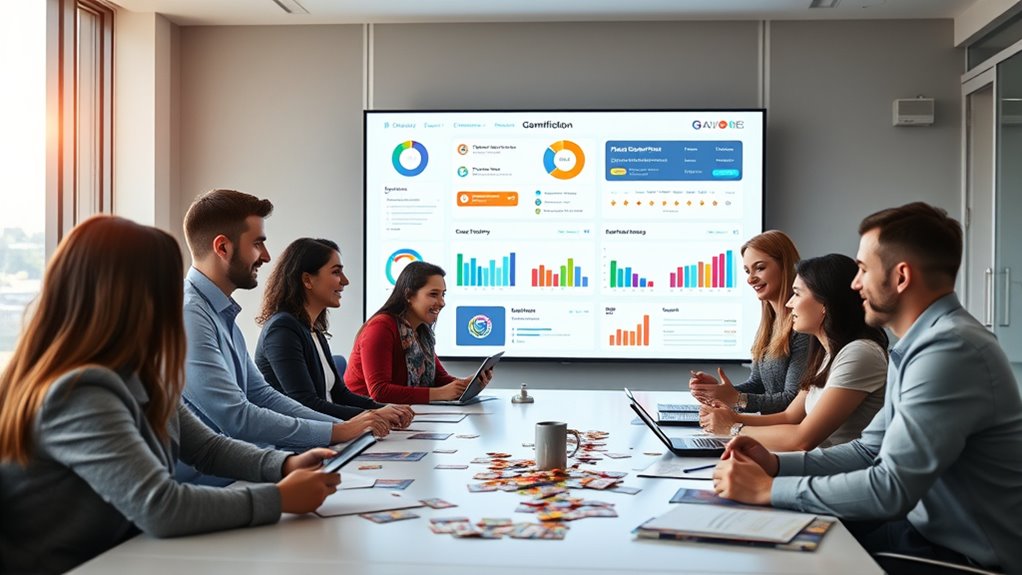

Using gamification for employee development makes training more engaging and interactive, boosting motivation and participation. It turns learning into a fun, competitive experience with badges, leaderboards, and rewards that encourage continuous progress. You’ll gain real-time feedback, helping you identify strengths and areas to improve. This approach also fosters a culture of ongoing growth and skill development. Keep exploring to discover how gamification can transform your workforce and elevate your training efforts.
Key Takeaways
- Gamification increases employee engagement by making training interactive, competitive, and rewarding, leading to better learning outcomes.
- It provides real-time feedback and assessments, enabling precise skill evaluation and personalized development plans.
- Gamification encourages continuous learning through milestones, points, badges, and recognition, fostering ongoing motivation.
- Incorporating technology like email updates and leaderboards enhances engagement and keeps employees informed about progress.
- It creates a dynamic learning environment that builds confidence, promotes skill development, and supports workforce adaptability.

Gamification has become a powerful tool for employee development and training by making learning more engaging and interactive. When you incorporate game elements into your training programs, you immediately boost employee engagement, capturing attention and motivating participation. Instead of traditional, passive learning methods, gamification turns training into a dynamic experience where employees actively participate, compete, and collaborate. This heightened engagement encourages employees to take ownership of their development, fostering a sense of achievement that motivates continual learning.
One of the key advantages of gamification is its ability to enhance skill assessment. Traditional assessments often feel tedious and disconnected from everyday work, but gamified approaches make evaluating skills more intuitive and less intimidating. For instance, you can use interactive quizzes, simulations, or challenges that mimic real job scenarios. As employees complete these activities, you gain instant feedback on their strengths and areas needing improvement. This real-time insight allows you to tailor training programs more precisely, ensuring that each employee receives targeted development opportunities. Plus, the competitive aspects of gamification—like leaderboards or badges—serve as immediate indicators of progress, helping both you and your employees see how skills are evolving over time.
Moreover, gamification encourages continuous learning. Instead of viewing training as a one-time event, employees see it as an ongoing journey filled with milestones and rewards. This approach keeps motivation high and helps embed new skills into daily routines. When employees earn points, *access* levels, or receive recognition, they often feel a sense of accomplishment that reinforces their commitment to growth. This ongoing engagement is essential for building a skilled workforce prepared to adapt to changing business needs.
You also find that integrating tools like Email Marketing Platforms with your training initiatives can further enhance engagement by delivering personalized content and updates, keeping employees informed about new challenges or achievements. Additionally, gamification can break down barriers associated with traditional training methods. Employees who might feel intimidated by formal assessments or classroom settings often respond better to game-based learning, where the focus is on problem-solving and achievement rather than pass/fail tests. By creating a safe environment for experimentation and learning from mistakes, you foster a culture of continuous improvement. As a result, employees become more willing to take on new challenges, increasing their overall skill set and confidence.

Gamification: Playing for Profits
As an affiliate, we earn on qualifying purchases.
As an affiliate, we earn on qualifying purchases.
Frequently Asked Questions
How Do I Measure the ROI of Gamification Initiatives?
To measure the ROI of gamification initiatives, start with a cost-benefit analysis comparing implementation costs to improvements in performance metrics like engagement, productivity, and skill development. Track these metrics before and after gamification to see tangible gains. Additionally, gather feedback from employees to assess motivation and satisfaction. This helps you determine if the benefits outweigh costs, providing a clear picture of your gamification efforts’ effectiveness.
What Are Common Pitfalls When Implementing Gamification?
You should watch out for overuse pitfalls, which can lead to disengagement, and engagement challenges that make employees lose interest. Overloading your system with too many rewards or complex rules can overwhelm users, reducing motivation. To avoid these pitfalls, keep gamification simple, focus on meaningful rewards, and regularly check in with employees to make sure the experience remains engaging. Balancing fun and purpose helps sustain long-term motivation and success.
How Can Gamification Be Personalized for Diverse Employee Roles?
You can personalize gamification by tailoring role-specific strategies that align with each employee’s responsibilities and skills. Use employee engagement techniques like customized challenges, badges, and rewards that resonate with their unique tasks. Incorporate feedback loops to adjust the experience continually. This approach keeps employees motivated, guarantees relevance, and enhances learning outcomes, making the gamification experience more effective and engaging across diverse roles.
What Tools or Platforms Are Best for Corporate Gamification?
You should explore top gamification platforms like Badgeville, Bunchball, and Hoopla, which offer robust features tailored for corporate settings. These employee engagement tools help motivate staff, track progress, and foster healthy competition. Look for platforms that integrate easily with your existing systems, provide customizable game elements, and support real-time analytics. Choosing the right tools will boost participation and improve overall learning and development outcomes for your team.
How Does Gamification Impact Employee Well-Being and Work-Life Balance?
Think of gamification as a well-balanced diet for your work life—it boosts employee engagement and keeps stress levels in check. By adding fun elements and rewards, you create a more positive environment, helping employees feel motivated and less overwhelmed. This approach promotes better work-life balance, reduces burnout, and supports overall well-being, making your team happier and more productive while enjoying their daily tasks.
![Express Schedule Free Employee Scheduling Software [PC/Mac Download]](https://m.media-amazon.com/images/I/41yvuCFIVfS._SL500_.jpg)
Express Schedule Free Employee Scheduling Software [PC/Mac Download]
Simple shift planning via an easy drag & drop interface
As an affiliate, we earn on qualifying purchases.
As an affiliate, we earn on qualifying purchases.
Conclusion
By incorporating gamification into your employee development programs, you make learning engaging and effective. It turns training into a fun challenge, boosting motivation and retention. So, why settle for dull sessions when you can motivate your team with interactive, game-like experiences? Embrace gamification to access your employees’ full potential and create a dynamic workplace. After all, isn’t it time learning felt as rewarding as winning?
Team Leader 1 x 3 Name Tag, Black (3 Pack)
Clear Team Leader Identification – Helps leaders stand out quickly while remaining professional and approachable.
As an affiliate, we earn on qualifying purchases.
As an affiliate, we earn on qualifying purchases.

A Creator's Guide to Transmedia Storytelling: How to Captivate and Engage Audiences Across Multiple Platforms
Used Book in Good Condition
As an affiliate, we earn on qualifying purchases.
As an affiliate, we earn on qualifying purchases.