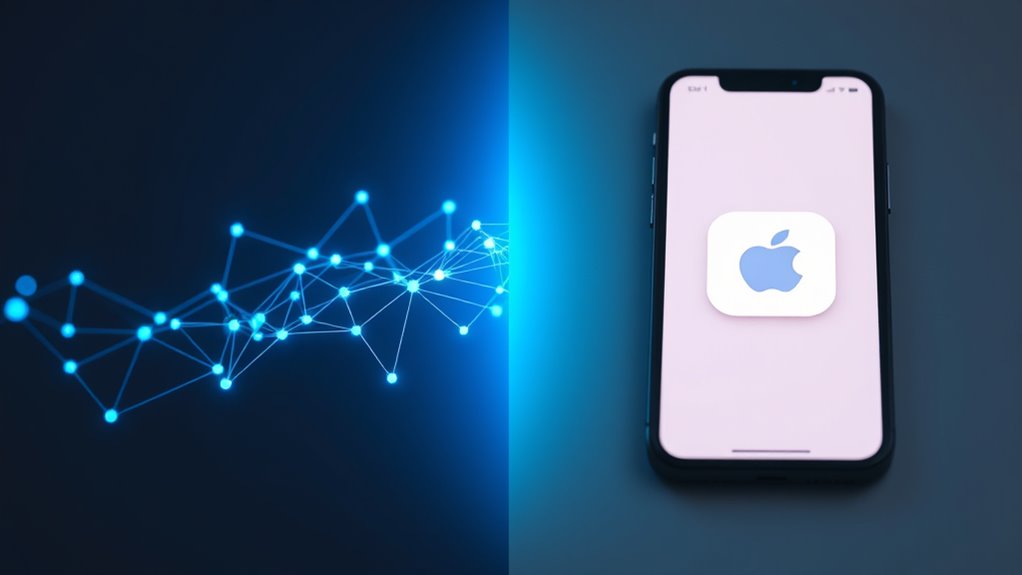

Dapps differ from traditional apps mainly in how they operate and handle data. With Dapps, smart contracts automate processes on a blockchain, offering transparency, enhanced privacy, and a lack of central control, which builds trust. Traditional apps depend on centralized servers, making them easier to update but more vulnerable to breaches and censorship. Understanding these differences helps you see why Dapps focus on decentralization and security, a topic you’ll find more details on if you explore further.

Get hardware and tech essentials delivered free — and shop member deals
- Fast, free delivery on millions of items
- Access to Prime Big Deal Days deals on October 6–7
- Prime Video, Amazon Music and more included
Key Takeaways
- Dapps operate on blockchain smart contracts for transparency and automation, unlike centralized traditional apps.
- They prioritize user data privacy by avoiding centralized data storage, reducing breach risks.
- Dapps are immutable once deployed, offering transparency, whereas traditional apps can be easily updated.
- Traditional apps depend on centralized servers, while Dapps function without a central authority.
- Dapps provide enhanced security and trust through blockchain transparency, contrasting with the opacity of traditional apps.

Deciding between decentralized applications (Dapps) and traditional apps often comes down to understanding their fundamental differences. One of the key distinctions lies in how these apps operate behind the scenes. Dapps leverage smart contract functionality to automate processes and enforce rules without relying on a central authority. These smart contracts are self-executing agreements encoded on blockchain networks, ensuring transparency and reducing the need for intermediaries. When you use a Dapp, you’re interacting with these contracts directly, which means the logic governing the app is open and unchangeable once deployed. This setup offers a level of trust and predictability that traditional apps, with their centralized servers and often opaque code, can’t easily match.
Dapps use smart contracts on blockchain to automate processes without relying on central authorities.
In contrast, traditional apps depend on centralized servers managed by a single organization or entity. This centralization means your user data is stored in a specific location controlled by the app provider. While this setup can simplify data management and allow for faster updates and feature rollouts, it also raises significant concerns about user data privacy. When you use a traditional app, your data is vulnerable to breaches, misuse, or even censorship, since the controlling entity has full access and authority over it. Conversely, Dapps typically prioritize user data privacy because they don’t require you to hand over sensitive information to a central authority. Instead, your data, when used at all, is often stored in a decentralized manner or kept under your control, reducing the risk of large-scale data leaks.
Another aspect to consider is how each app type handles updates and maintenance. Traditional apps can be updated swiftly by their developers, often pushing new features or patches without user intervention. Dapps, however, are more rigid once deployed—smart contracts are immutable, and updating them involves deploying new contracts or complex upgrade mechanisms, which can be cumbersome. This immutability enhances security, but it also means bugs or vulnerabilities in a smart contract can be challenging to fix, unlike the straightforward patching process in traditional apps.
Ultimately, your choice depends on what you prioritize: the transparency, security, and user data privacy of a Dapp, or the ease of updates and centralized control of a traditional app. Understanding how smart contract functionality underpins Dapps and how they handle user data privacy can help you make a more informed decision aligned with your needs and values.
Frequently Asked Questions
How Do Dapps Ensure User Privacy Compared to Traditional Apps?
You can guarantee user privacy with Dapps through decentralized identity systems that give you control over your personal data. Unlike traditional apps, Dapps prioritize user anonymity by not requiring centralized data collection, reducing the risk of breaches. By leveraging blockchain technology, Dapps enable secure, transparent transactions while keeping your identity private. This way, your privacy is protected, and you maintain ownership and control over your information at all times.
What Are the Main Security Risks Associated With Dapps?
Think of dapps as open doors—inviting but risky. You face security threats like smart contract vulnerabilities, where bugs can be exploited, and consensus attack methods, which threaten network integrity. These risks can lead to funds theft or network manipulation. Stay vigilant by auditing code and using trusted platforms, because in the decentralized world, a single flaw can compromise your entire experience.
Can Dapps Operate Offline Like Traditional Apps?
No, dapps generally can’t operate offline like traditional apps. They rely on blockchain networks for data and transactions, which require an internet connection. This design emphasizes user autonomy and transparency but limits offline functionality. While some dapps may cache data temporarily, full offline operation isn’t feasible because blockchain interactions need real-time access to the network. So, if offline access is essential, traditional apps might be the better choice.
How Do Dapps Handle Data Storage Differently From Traditional Apps?
Think of it like an open book—you see everything clearly. Dapps store data on decentralized storage networks and rely on blockchain transparency to keep everything secure and unchangeable. Unlike traditional apps that keep data on centralized servers, your information in a dapp isn’t controlled by a single entity, making it tamper-proof and accessible from anywhere. This setup boosts security and trust, but it also means no offline data access.
Are Dapps More Scalable Than Traditional Applications?
You might find that dapps are less scalable than traditional apps because they face scalability challenges due to blockchain network limitations. Performance limitations, like slower transaction speeds and higher costs, can hinder their ability to handle large user bases or high volumes of data efficiently. While they offer decentralization benefits, these scalability issues mean dapps often struggle to match the performance and scalability of traditional applications.
Conclusion
Understanding the differences between DApps and traditional apps is like comparing a river to a lake—you get the flow and freedom of decentralized systems versus the stability of centralized ones. While DApps offer transparency and tamper-resistance, traditional apps provide familiarity and ease of use. Knowing these key differences helps you choose the right tool for your needs, much like selecting the perfect path through a forest—each has its own unique advantages and challenges.
Fall Picks
fall essentials
As an affiliate, we earn on qualifying purchases.