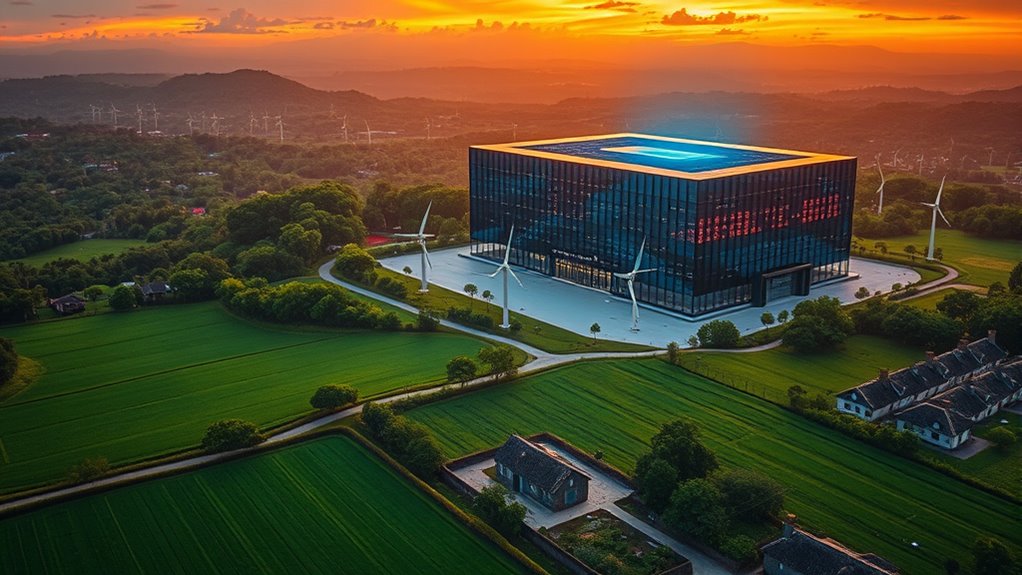

Mexico and Ireland share frustrations over the environmental impacts of AI data centers, especially their heavy water and energy use. Both countries face water scarcity and strain on power grids due to rapid infrastructure growth. Regulations often lag behind, leaving communities vulnerable to shortages and blackouts. Companies are starting to adopt sustainable cooling tech, but challenges remain. If you keep exploring, you’ll discover how these nations are working toward shared solutions to protect resources while supporting tech growth.

Get hardware and tech essentials delivered free — and shop member deals
- Fast, free delivery on millions of items
- Access to Prime Big Deal Days deals on October 6–7
- Prime Video, Amazon Music and more included
Key Takeaways
- Both countries face environmental and social tensions due to water and energy demands of AI data centers.
- Regulatory frameworks lag behind infrastructure growth, causing delays and frustrations in managing resource impacts.
- Local communities in Mexico and Ireland protest data center expansion over water scarcity and power outages.
- Governments are exploring sustainable cooling and energy solutions amid economic pressures and environmental concerns.
- Shared frustration drives calls for coordinated global policies to balance technological growth with resource protection.
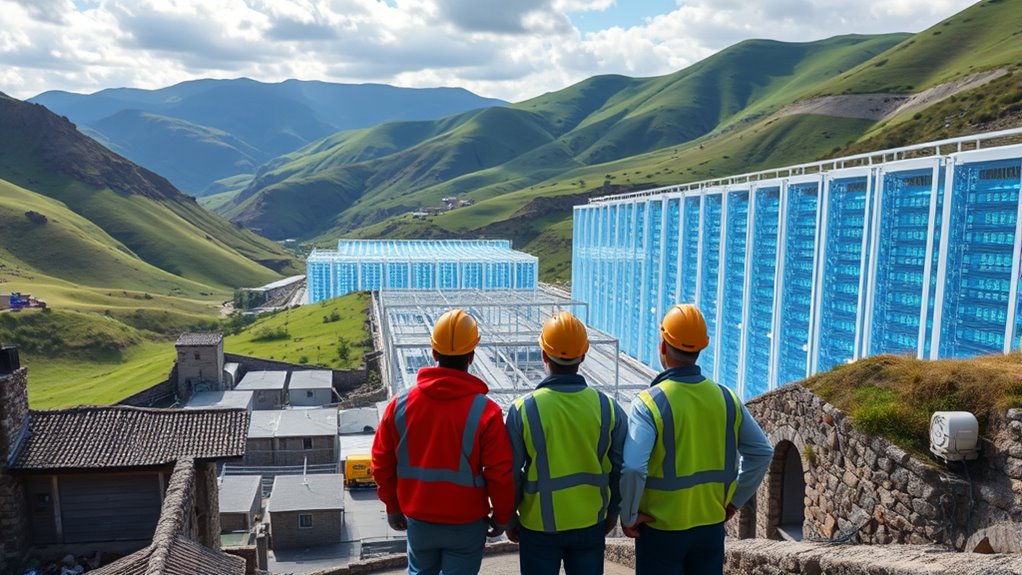
As Mexico and Ireland grapple with the rapid expansion of AI data centers, both countries are discovering they share more than just technological ambitions—they’re united in their frustration over environmental and social consequences. In Mexico, the town of Colón in Querétaro faces mounting protests as data centers threaten its limited water resources. This semi-arid region, already challenged by drought, now sees major tech giants like Google, Microsoft, and AWS investing nearly $10 billion into facilities that rely heavily on water-cooling systems. These cooling methods consume vast amounts of water, raising serious concerns about local water scarcity. Nearby, Google’s data center in Cerrillos, Chile, consumes about 7 billion liters of water annually—enough to sustain 80,000 people—prompting environmental courts to step in. They pushed Google to switch to fan-based, waterless cooling systems, highlighting the urgent need for sustainable solutions. Water consumption has become a critical issue as data center demands grow worldwide, emphasizing the need for innovative cooling technologies. Meanwhile, in Ireland, data centers now account for over 20% of the country’s electricity consumption. This surge in energy demand puts immense pressure on the national grid, leading authorities to impose a moratorium on new data centers in Dublin until 2028. Each hyperscale data center consumes over 100 megawatts—similar to the annual power needs of 400,000 electric vehicles—forcing Ireland to confront the environmental impact of its digital growth. The investments made by tech giants in Irish AI infrastructure surpassed those in the US oil and gas industry in 2023, representing half a percent of the country’s GDP. This rapid expansion showcases the tension between economic growth and the capacity of the energy grid, emphasizing the need for regulation. Across borders, regulatory challenges compound these concerns. Chile, for example, bypassed environmental impact assessments for AI data centers through secret government orders, reducing transparency and community input. The absence of water consumption impact assessments leaves local residents in the dark and fuels mistrust. Different countries approach regulation unevenly, often lagging behind the pace of infrastructure growth. Recognizing this, Chile’s environment ministry has acknowledged the need to develop new rules quantifying water use by data centers, but progress remains slow. Governments are caught between economic incentives and protecting vulnerable communities, many of whom experience blackouts and water shortages as a result of nearby data centers. In response, some companies are trying to ease community concerns. Amazon, for instance, pledged to implement air-cooling systems in Colón to reduce water use. Google has committed to collaborating with environmental experts to find less resource-intensive cooling solutions. While these approaches often increase operational costs, they reflect a growing awareness of the need for sustainable practices. The adoption of waterless cooling technologies exemplifies the ongoing tension between cost efficiency and environmental responsibility. Ultimately, both Mexico and Ireland face the challenge of balancing economic development with protecting their communities and natural resources, revealing a shared frustration that demands urgent, coordinated solutions.
waterless cooling systems for data centers
As an affiliate, we earn on qualifying purchases.
As an affiliate, we earn on qualifying purchases.
Frequently Asked Questions
How Do AI Data Centers Impact Local Economies in Mexico and Ireland?
AI data centers boost local economies by attracting foreign investment, creating jobs, and supporting related industries like logistics and security. They promote digital transformation, helping regions diversify their economies and increase competitiveness. However, you should also consider environmental concerns, such as water and energy use, which can lead to community opposition. Balancing economic benefits with sustainable practices guarantees long-term growth and community well-being.
What Specific Environmental Concerns Are Raised by AI Data Center Development?
AI data centers unleash a storm of environmental concerns that you can’t ignore. They gobble up massive amounts of energy, often from fossil fuels, fueling climate change. Water cooling demands drain local resources, especially in water-stressed areas. Plus, emissions spike, polluting air and water, while regional grids strain under the surge. You’re witnessing a delicate balancing act—technology’s progress threatening the very environment we depend on.
Are There Any Proposed Solutions to Address Community Frustrations?
You can address community frustrations by supporting transparent environmental impact reports and advocating for mandatory assessments of data centers’ ecological footprints. Push for regulations that require energy and water use disclosures, and encourage governments to offer incentives tied to sustainable practices. Participating in public consultations and holding companies accountable guarantees your concerns about environmental sustainability are heard and acted upon, fostering trust and responsible growth in AI data center development.
How Do Government Policies Differ Between Mexico and Ireland Regarding AI Data Centers?
Imagine two engines driving progress—one fueled by laws and the other by sustainability. You’ll see Mexico’s policies focus on building a legal fortress around AI, emphasizing regulation, oversight, and data privacy. Meanwhile, Ireland’s policies prioritize environmental sustainability, demanding energy efficiency and green practices for data centers. Their approaches differ like night and day; Mexico’s legal framework versus Ireland’s environmental mandates shape their unique strategies for AI data center growth.
What Role Do International Organizations Play in Mediating These Disputes?
International organizations mediate AI data center disputes by offering neutral, expert-led resolution services like arbitration and mediation. They provide procedural support, ensuring confidentiality and enforceability across borders. You benefit from their balanced approach, which promotes cooperation, transparency, and ethical standards. These organizations foster dialogue among parties, helping you navigate complex legal and technical issues while maintaining trust and stability in the evolving AI landscape.
energy-efficient cooling technology for servers
As an affiliate, we earn on qualifying purchases.
As an affiliate, we earn on qualifying purchases.
Conclusion
As you watch these nations stand shoulder to shoulder, their shared frustration paints a vivid picture—clouds of concern gathering over sprawling data centers, their hum like a heartbeat echoing across landscapes. You can almost see the tension crackling in the air, a reminder that even in our digital age, the human need for balance and understanding remains essential. Together, they’re forging a path through the storm, seeking solutions beneath the looming shadows of innovation.
sustainable data center cooling solutions
As an affiliate, we earn on qualifying purchases.
As an affiliate, we earn on qualifying purchases.
high capacity water cooling systems for data centers
As an affiliate, we earn on qualifying purchases.
As an affiliate, we earn on qualifying purchases.
Fall Picks
fall essentials
As an affiliate, we earn on qualifying purchases.