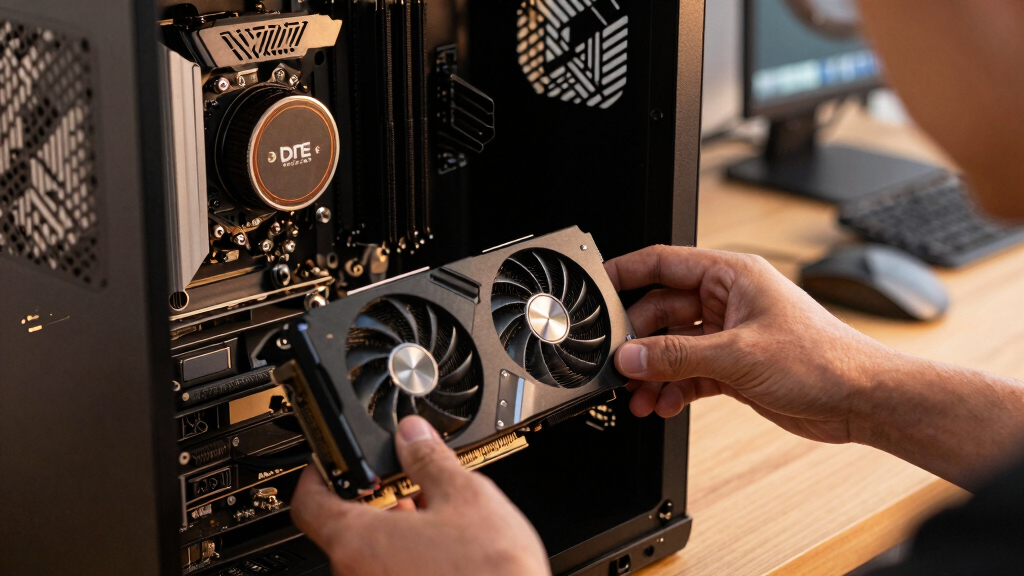

Choosing the best premium Radeon GPU for future-proof builds in 2026 means balancing raw performance, advanced features, and reliability to keep up with evolving gaming and professional demands. The GIGABYTE Radeon RX 9060 XT Gaming OC 16G stands out as a top overall pick for its balanced performance and feature set, while the Sapphire Nitro+ AMD Radeon RX 9070 XT Gaming OC offers excellent overclocking potential for enthusiasts. Another key consideration is the tradeoff between price and future readiness; the most expensive models often include the latest tech but may not be necessary for every user. Keep reading for a detailed comparison to help you identify which GPU best aligns with your needs and budget.

Get hardware and tech essentials delivered free — and shop member deals
- Fast, free delivery on millions of items
- Access to Prime Big Deal Days deals on October 6–7
- Prime Video, Amazon Music and more included
Key Takeaways
- The top-tier models like the Sapphire Nitro+ offer the best performance but come at a higher cost, making them ideal for enthusiasts and professional users.
- The GIGABYTE Radeon RX 9060 XT Gaming OC strikes a balance between price and future-ready features, making it the best overall pick.
- Most premium Radeon GPUs in this lineup feature GDDR6 memory, PCIe 5.0 support, and advanced cooling, which are key for longevity and high performance.
- Pricing varies significantly; investing in the most expensive options provides future-proofing but may not be necessary for casual gamers.
- Design, noise levels, and power consumption are often overlooked but crucial factors in long-term satisfaction with a premium GPU.
| ASRock Radeon RX 7700 XT Challenger 12GB OC Graphics Card |  | Best Entry-Level for Future-Proofing in Entry-Mid Range Builds | Architecture: AMD RDNA 3 | Compute Units: 54 | RT+AI Accelerators: Yes | VIEW LATEST PRICE | See Our Full Breakdown |
| GIGABYTE Radeon RX 9060 XT Gaming OC 16G Graphics Card, PCIe 5.0, 16GB GDDR6 |  | Best High-Performance Future-Proof GPU for Enthusiasts | Graphics Coprocessor: Radeon RX 9060 XT | RAM: 16 GB | GPU Clock Speed: 2700 MHz | VIEW LATEST PRICE | See Our Full Breakdown |
| ASRock Radeon RX 9060 XT Steel Legend 16GB GDDR6 OC Graphics Card |  | Best for 1440p Gaming and Content Creation with Advanced Features | Memory: 16GB GDDR6 | Boost Clock: 3275 MHz | Architecture: AMD RDNA 4 | VIEW LATEST PRICE | See Our Full Breakdown |
| ASRock Radeon RX 9060 XT Challenger 16GB OC Graphics Card |  | Best for 1440p Gaming with Exceptional Boost Clock and Future-Readiness | Graphics Coprocessor: AMD Radeon RX 9060 XT | Graphics Card Ram: 16 GB | GPU Clock Speed: 3290 MHz | VIEW LATEST PRICE | See Our Full Breakdown |
| Gigabyte Radeon RX 9070 XT Gaming OC 16G Graphics Card |  | Best RGB and Feature-Rich for Future-Resistant Builds | Memory: 16 GB GDDR6 | Memory Interface: 256-bit | Interface: PCI-E 5.0 | VIEW LATEST PRICE | See Our Full Breakdown |
| Sapphire Nitro+ AMD Radeon RX 9070 XT Gaming OC Graphics Card with 16GB GDDR6, AMD RDNA 4 |  | Best Overall for Future-Proof High-End Gaming | Memory Size: 16 GB | Memory Interface: 256-bit | GPU Clock Speed: 3060 MHz | VIEW LATEST PRICE | See Our Full Breakdown |
| Sapphire Pulse AMD Radeon RX 9070 XT Gaming 16GB Graphics Card |  | Best for Versatile Gaming with Advanced AI Upscaling | Graphics Coprocessor: AMD Radeon VII | RAM: 16 GB | Video Output Interface: DisplayPort, HDMI | VIEW LATEST PRICE | See Our Full Breakdown |
| Sapphire Pulse AMD Radeon RX 9070 XT Gaming Graphics Card, 16GB GDDR6, 256-bit |  | Best for Multi-Display Gaming and Versatility | Memory Size: 16 GB | Memory Interface: 256-bit | Outputs: 2 x HDMI, 2 x DisplayPort | VIEW LATEST PRICE | See Our Full Breakdown |
| GIGABYTE Radeon RX 9070 XT Gaming OC ICE 16G Graphics Card |  | Best Premium with Future-Ready Cooling and Connectivity | Graphics Coprocessor: RX 9070XT | RAM: 16 GB | GPU Clock Speed: 2520 MHz | VIEW LATEST PRICE | See Our Full Breakdown |
| PowerColor Hellhound AMD Radeon RX 9070 XT 16GB GDDR6 |  | Best for 8K Gaming and Demanding Visuals | Graphics Coprocessor: AMD Radeon RX 9070 XT | Graphics Card RAM: 16 GB | GPU Clock Speed: 2460 MHz | VIEW LATEST PRICE | See Our Full Breakdown |
| ASUS Prime Radeon RX 9070 XT 16GB GDDR6 OC Edition Gaming Graphics Card |  | Best Overall for Future-Proof High-End Gaming | Graphics Coprocessor: AMD RX9070 | RAM: 16 GB | GPU Clock Speed: 3030 MHz | VIEW LATEST PRICE | See Our Full Breakdown |
| ASUS Prime Radeon RX 9060 XT 16GB GDDR6 OC Edition Gaming Graphics Card |  | Best for Silent, Reliable Performance in High-Performance Builds | GPU Model: Radeon RX 9060 XT | Memory: 16 GB GDDR6 | OC Mode Boost Clock: 3330 MHz | VIEW LATEST PRICE | See Our Full Breakdown |
| XFX Mercury AMD Radeon RX 9070XT OC Magnetic Air Edition with RGB, 16GB GDDR6 |  | Best for Eye-Catching Performance with RGB and Triple Fans | Chipset: AMD RX 9070 XT | Memory: 16 GB GDDR6 | Boost Clock: 3100 MHz | VIEW LATEST PRICE | See Our Full Breakdown |
| premium Radeon GPUs for future proof build | Video Output Interface |
|---|---|
| ASRock Radeon RX 7700 XT Chall | — |
| GIGABYTE Radeon RX 9060 XT Gam | DisplayPort, HDMI |
| ASRock Radeon RX 9060 XT Steel | — |
| ASRock Radeon RX 9060 XT Chall | DisplayPort, HDMI |
| Gigabyte Radeon RX 9070 XT Gam | — |
| Sapphire Nitro+ AMD Radeon RX | 2 x HDMI, 2 x DisplayPort |
| Sapphire Pulse AMD Radeon RX 9 | DisplayPort, HDMI |
| Sapphire Pulse AMD Radeon RX 9 | — |
| GIGABYTE Radeon RX 9070 XT Gam | DisplayPort, HDMI |
| PowerColor Hellhound AMD Radeo | 1 x HDMI 2.1, 3 x DisplayPort 2.1 |
| ASUS Prime Radeon RX 9070 XT 1 | DisplayPort 2.1a x 3, HDMI 2.1b |
| ASUS Prime Radeon RX 9060 XT 1 | — |
| XFX Mercury AMD Radeon RX 9070 | — |
More Details on Our Top Picks
ASRock Radeon RX 7700 XT Challenger 12GB OC Graphics Card
The ASRock Radeon RX 7700 XT Challenger stands out for its high boost clock of 2584 MHz, which offers strong gaming performance at 1440p. Compared to larger models like the GIGABYTE RX 9060 XT Gaming OC, it provides a more compact form factor that suits mid-tower builds, though it sacrifices some raw power and VRAM capacity. Its dual-fan cooling and durable build make it reliable for long gaming sessions, yet the need for dual 8-pin power connectors can be a hurdle for some pre-built systems. This card is best suited for gamers who want future-proofing without stepping into premium pricing, especially if their system supports its power requirements. It’s less ideal for those with compact cases or limited PSU capacity.
Pros:- High boost clock speed for smooth, responsive gaming
- Effective dual fan cooling system
- Supports high-resolution displays with multiple outputs
- Durable metal backplate for protection
Cons:- Requires dual 8-pin power connectors, which may not fit all PSUs
- Not compatible with all pre-built or compact cases
Best for: Gamers upgrading a mid-range system seeking reliable future-proofing with high refresh rate performance.
Not ideal for: Small form factor PCs or pre-builts with limited power supply capability.
- Architecture:AMD RDNA 3
- Compute Units:54
- RT+AI Accelerators:Yes
- Boost Clock:2584 MHz
- Memory:12GB GDDR6
- Memory Bus:192-bit
- Cooling:Dual fan with heatpipe
- Display Outputs:3 x DisplayPort 2.1, 1 x HDMI 2.1
- Power Connectors:2 x 8-pin
Our verdict“A solid choice for gamers wanting a future-ready GPU that balances performance and compatibility in mid-tier builds.”
GIGABYTE Radeon RX 9060 XT Gaming OC 16G Graphics Card, PCIe 5.0, 16GB GDDR6
The GIGABYTE RX 9060 XT Gaming OC delivers on high-end performance with 16GB of GDDR6 and PCIe 5.0 support, making it ideal for demanding creative workflows and gaming at 4K resolutions. Its GPU clock speed of 2700 MHz rivals premium cards, and the advanced cooling system ensures stability during extended use. Compared to the ASRock RX 7700 XT Challenger, it offers more memory and faster data transfer capabilities, but it also comes with a larger footprint that may not fit smaller cases. The PCIe 5.0 interface future-proofs your system, yet its premium price may be a barrier for some users. It’s best suited for high-end gaming rigs or workstations aiming for longevity and maximum performance.
Pros:- 16GB GDDR6 memory for intensive applications
- Supports PCIe 5.0 for faster data throughput
- Reliable cooling system for prolonged use
- Excellent for 4K gaming and content creation
Cons:- Large size may not fit in compact cases
- Premium price point could be prohibitive
Best for: Creative professionals or gamers with high-end systems who need maximum future-proofing and performance.
Not ideal for: Budget-conscious builders or those with smaller cases and less robust power supplies.
- Graphics Coprocessor:Radeon RX 9060 XT
- RAM:16 GB
- GPU Clock Speed:2700 MHz
- Video Output Interface:DisplayPort, HDMI
- Memory Type:GDDR6
- Interface:PCI-Express x16
Our verdict“An excellent choice for users building a future-proof, high-performance gaming or creative PC with ample space and budget.”
ASRock Radeon RX 9060 XT Steel Legend 16GB GDDR6 OC Graphics Card
The ASRock RX 9060 XT Steel Legend excels in 1440p gaming and content workflows thanks to its impressive 3275 MHz boost clock and triple fan cooling. It supports PCIe 5.0 and features third-gen ray tracing plus AI acceleration, making it a versatile and future-ready option. Compared to the GIGABYTE RX 9060 XT Gaming OC, it offers a higher boost clock and more refined cooling, although it demands a robust power supply and compatible system. Its premium build, including a metal backplate, boosts durability, but its high power draw and system compatibility requirements limit its suitability for older or smaller builds. This card is best for enthusiasts who want a significant performance upgrade for 1440p or 4K content creation.
Pros:- Exceptional 3275 MHz boost clock for high-end performance
- Supports PCIe 5.0, future-proofing connectivity
- Triple fan cooling and silent operation at low loads
- Supports 8K/120Hz output for high-res displays
Cons:- Requires a compatible, high-capacity PSU
- May not fit in smaller or older cases
Best for: Power users building high-performance 1440p or 4K gaming and creative rigs that support PCIe 5.0.
Not ideal for: Casual gamers or those with budget or system limitations that can’t support high power or PCIe 5.0.
- Memory:16GB GDDR6
- Boost Clock:3275 MHz
- Architecture:AMD RDNA 4
- Ray Tracing:3rd Gen
- AI Acceleration:2nd Gen
- Cooling:Triple Fan, 0dB
Our verdict“Ideal for enthusiasts seeking a high-clock, future-proof GPU for demanding gaming and content creation.”
ASRock Radeon RX 9060 XT Challenger 16GB OC Graphics Card
The ASRock RX 9060 XT Challenger offers a compelling mix of high clock speeds and modern features for 1440p gaming. Its impressive 3290 MHz boost clock makes it one of the fastest in this lineup, comparable to the GIGABYTE RX 9060 XT Gaming OC. The dual fans and PCIe 5.0 support prepare your system for upcoming generations, but its size (249mm) and power requirements (minimum 550W PSU) mean it’s best for spacious cases and robust power supplies. While the high clock speed enhances gaming responsiveness, the relative scarcity of detailed reviews suggests caution before investing. This card suits enthusiasts aiming for maximum performance at 1440p, especially with a focus on AI and future connectivity.
Pros:- Exceptional 3290 MHz boost clock for gaming and AI tasks
- Supports PCIe 5.0 for future expansion
- Dual fan cooling system for thermal stability
- High memory capacity for demanding applications
Cons:- Requires at least a 550W power supply
- Large size limits compatibility with smaller cases
Best for: High-end 1440p gamers and content creators who want a fast, future-proof GPU with solid cooling.
Not ideal for: Small or budget builds that can’t accommodate its size or power needs.
- Graphics Coprocessor:AMD Radeon RX 9060 XT
- Graphics Card Ram:16 GB
- GPU Clock Speed:3290 MHz
- Video Output Interface:DisplayPort, HDMI
- Graphics Ram Type:GDDR6
- PCIe:5.0
Our verdict“A top-tier choice for enthusiasts prioritizing raw speed and future-proof features for 1440p gaming.”
Gigabyte Radeon RX 9070 XT Gaming OC 16G Graphics Card
The Gigabyte RX 9070 XT Gaming OC combines high-speed 16GB GDDR6 memory with a core frequency of 3060 MHz and features like RGB lighting, WINDFORCE cooling, and dual BIOS modes. Its balanced design makes it suitable for users who want aesthetics alongside performance, especially with PCIe 5.0 support that keeps the system ready for upcoming hardware. Compared to the ASRock RX 9060 XT Challenger, it offers more visual customization and dual BIOS, though its size and power requirements could limit compatibility. This card is best for gamers and enthusiasts seeking a visually striking, feature-rich GPU that also delivers future-ready performance.
Pros:- Rich RGB lighting for customizable aesthetics
- High 16GB GDDR6 memory for demanding tasks
- WINDFORCE cooling system for thermal management
- Dual BIOS modes for performance and quiet operation
Cons:- High power consumption may require a robust PSU
- Large size could limit case compatibility
Best for: Gamers and PC builders who value aesthetics and want a durable, feature-packed GPU that can handle future upgrades.
Not ideal for: Minimalists or those with limited case space and power capacity.
- Memory:16 GB GDDR6
- Memory Interface:256-bit
- Interface:PCI-E 5.0
- Core Frequency:3060 MHz
- Display Outputs:2 x DisplayPort, 2 x HDMI
Our verdict“Best suited for users who want a visually appealing GPU with future-proof features and reliable performance.”
Sapphire Nitro+ AMD Radeon RX 9070 XT Gaming OC Graphics Card with 16GB GDDR6, AMD RDNA 4
This model stands out for its substantial 16GB GDDR6 memory and AMD RDNA 4 architecture, making it a top choice for gamers aiming for longevity. Unlike the GIGABYTE RX 9070 XT Gaming OC ICE, it offers a slightly higher clock speed and robust cooling, but at the potential cost of higher power consumption. While it supports 4K resolution and multiple outputs, the price and power demands may be prohibitive for some builds. Its high performance and future-ready features make it ideal for enthusiasts who want cutting-edge gaming that remains relevant for years.
Pros:- 16GB GDDR6 memory supports demanding games and applications
- Supports 4K resolution with multiple display outputs
- Powerful AMD RDNA 4 architecture for longevity
Cons:- High power consumption may require advanced PSU
- Potentially high price point
Best for: High-end gamers and enthusiasts building future-proof systems with demanding graphics needs
Not ideal for: Casual gamers or budget-conscious buyers who prioritize low power consumption and lower cost
- Memory Size:16 GB
- Memory Interface:256-bit
- GPU Clock Speed:3060 MHz
- Video Output Interface:2 x HDMI, 2 x DisplayPort
- Graphics Ram Type:GDDR6
- Display Maximum Resolution:3840 x 2160
Our verdict“This card is best suited for gamers who demand top-tier performance and plan to keep their build long-term.”
Sapphire Pulse AMD Radeon RX 9070 XT Gaming 16GB Graphics Card
This pick makes the most sense for gamers seeking a balance of high performance and features, with 16GB GDDR6 memory and AMD RDNA 4 architecture. Compared with the Sapphire Nitro+, it offers similar core capabilities but may lack some cooling finesse and higher clock speeds, making it more suitable for mid-tier setups. Its support for AI upscaling enhances visual quality, but its large size requires ample space in the case. If you want a capable, feature-rich GPU without the highest price or power demands, this is a compelling choice.
Pros:- 16GB GDDR6 memory handles demanding titles
- Advanced AI upscaling improves visual fidelity
- Supports dual HDMI and DisplayPort outputs
Cons:- Large size may require spacious case
- Lacks the higher clock speeds of premium models
Best for: Mid-range gamers wanting future-proofing with added AI features and good performance
Not ideal for: Small form factor builds or users needing the absolute highest clock speeds for competitive gaming
- Graphics Coprocessor:AMD Radeon VII
- RAM:16 GB
- Video Output Interface:DisplayPort, HDMI
- Graphics RAM Type:GDDR6
- Interface:PCI-Express x16
- Memory Clock Speed:2500 MHz
Our verdict“This GPU offers a solid mix of future-proof technology and features for gamers who want performance without premium price and size.”
Sapphire Pulse AMD Radeon RX 9070 XT Gaming Graphics Card, 16GB GDDR6, 256-bit
This card emphasizes multi-monitor setups, with 16GB GDDR6 and a 256-bit memory interface supporting demanding gaming and creative workflows. Compared with the Sapphire Pulse AMD Radeon RX 9070 XT, it offers similar specs but with a focus on versatility rather than AI features. Its lack of detailed benchmarks and high price may deter some, but for users prioritizing multiple outputs and future-proof memory capacity, it remains a solid choice for high-end gaming and professional use.
Pros:- 16GB GDDR6 memory supports demanding tasks
- Multiple display outputs for versatile setups
- Supports high-performance AMD RDNA 4 architecture
Cons:- Lacks detailed performance benchmarks
- Price and availability not clarified
Best for: Content creators and gamers needing multiple display outputs and large memory for future applications
Not ideal for: Casual users or those with small cases, as size and missing benchmarks may be concerns
- Memory Size:16 GB
- Memory Interface:256-bit
- Outputs:2 x HDMI, 2 x DisplayPort
Our verdict“Ideal for users who require extensive multi-display support and future-proof memory capacity, despite limited benchmark data.”
GIGABYTE Radeon RX 9070 XT Gaming OC ICE 16G Graphics Card
This model makes the most sense for users who want a premium build with advanced cooling, PCIe 5.0 support, and dual BIOS options. Compared to the Sapphire Nitro+ or PowerColor Hellhound, it introduces PCIe 5.0 and DisplayPort 2.1, promising longer relevance for future systems. Its larger size and higher price are tradeoffs, but the customizable RGB and dual BIOS make it a compelling choice for high-end gaming and creative work that demands optimal thermals and connectivity.
Pros:- Supports PCIe 5.0 and DisplayPort 2.1 for future-proof connectivity
- Advanced cooling with WINDFORCE technology
- Dual BIOS for performance or silent operation
Cons:- Large size may limit compatibility with smaller cases
- Higher price point due to premium features
Best for: Prospective builders seeking a future-proof GPU with premium cooling and connectivity features
Not ideal for: Small form factor PCs or budget-conscious buyers who prioritize affordability over premium features
- Graphics Coprocessor:RX 9070XT
- RAM:16 GB
- GPU Clock Speed:2520 MHz
- Video Output Interface:DisplayPort, HDMI
- Graphics RAM Type:GDDR6
- Compatible Devices:Desktop
Our verdict“Best suited for high-end builds where future upgradeability and cooling are priorities over cost and size.”
PowerColor Hellhound AMD Radeon RX 9070 XT 16GB GDDR6
This card excels for users aiming at 8K resolution with 16GB GDDR6 and a robust cooling system, making it a strong choice for high-end gaming and professional workloads. Compared with the GIGABYTE Radeon RX 9070 XT Gaming OC ICE, it offers support for HDMI 2.1 and DisplayPort 2.1, emphasizing maximum resolution capabilities. Its large size and high power requirements are tradeoffs, but for immersive visuals and future-proofing at the highest resolutions, this card stands out.
Pros:- Supports up to 8K resolution for immersive visuals
- High-performance 16GB GDDR6 memory
- Modern HDMI 2.1 and DisplayPort 2.1 outputs
Cons:- Requires minimum 800W power supply
- Large size may pose fitting issues
Best for: Enthusiasts focused on 8K gaming and demanding professional tasks requiring maximum resolution and VRAM
Not ideal for: Builds with limited space or users not needing ultra-high resolution support
- Graphics Coprocessor:AMD Radeon RX 9070 XT
- Graphics Card RAM:16 GB
- GPU Clock Speed:2460 MHz
- Video Output Interface:1 x HDMI 2.1, 3 x DisplayPort 2.1
- Display Maximum Resolution:8K (7680×4320)
Our verdict“This GPU is best for users who want maximum resolution support and VRAM for future-proof professional or gaming setups.”
ASUS Prime Radeon RX 9070 XT 16GB GDDR6 OC Edition Gaming Graphics Card
This ASUS Prime Radeon RX 9070 XT OC Edition stands out as the most balanced choice for gamers aiming to future-proof their builds. Its impressive boost clock of up to 3030 MHz and support for resolutions up to 7680 x 4320 make it capable of handling the most demanding titles and high-resolution workflows. Compared with the XFX Mercury RX 9070XT OC Magnetic Air Edition, it offers slightly higher clock speeds and more robust cooling options, making it better suited for overclockers and sustained performance. However, its larger size and high power draw mean it may not fit smaller cases or those with limited power supply capacity. The dual BIOS and ASUS GPU Guard add durability and flexibility, reinforcing its premium positioning. This card is ideal for enthusiasts who want top-tier performance that remains relevant for years to come, despite a premium price tag.
Pros:- High boost clock of 3030 MHz for demanding gaming and creative workloads
- Supports ultra-high resolutions up to 7680 x 4320
- Advanced cooling with axial-tech fans and dual-ball bearings for longevity
- Dual BIOS and ASUS GPU Guard for enhanced durability
Cons:- Requires a 2.5-slot space, which may not fit in smaller cases
- High power consumption could necessitate a strong power supply
Best for: High-end gamers and enthusiasts seeking maximum future-proofing with high resolutions and overclocking capacity.
Not ideal for: Casual gamers or users with small form factor cases who need a more compact or power-efficient solution.
- Graphics Coprocessor:AMD RX9070
- RAM:16 GB
- GPU Clock Speed:3030 MHz
- Video Output Interface:DisplayPort 2.1a x 3, HDMI 2.1b
- Graphics RAM Type:GDDR6
- Maximum Resolution:7680 x 4320
- Item Dimensions:12.3″L x 5.1″W
Our verdict“This card offers premium performance and durability for users committed to long-term high-end gaming and creative work, provided their case and power supply can accommodate it.”
ASUS Prime Radeon RX 9060 XT 16GB GDDR6 OC Edition Gaming Graphics Card
The ASUS Prime Radeon RX 9060 XT OC Edition offers a compelling mix of high clock speeds—up to 3330 MHz in OC mode—and quiet operation thanks to 0dB technology. Its dual-ball bearing fans ensure longevity, making it a reliable choice for long gaming sessions or professional workloads. Compared with the XFX Mercury RX 9070XT OC Magnetic Air Edition, it emphasizes silence and reliability, making it perfect for quiet setups or office environments. However, its 2.5-slot design demands ample case space, and at higher clocks, it may draw more power, requiring a capable power supply. The dual BIOS adds flexibility for those who want performance or quiet modes, and the Auto-Extreme manufacturing process assures quality. This model suits users who prioritize quiet, dependable high-performance gaming, or workstation tasks, over absolute maximum overclocking headroom.
Pros:- High boost clock speeds up to 3330 MHz in OC mode for fast gaming
- Silent operation with 0dB technology for unobtrusive use
- Reliable dual-ball bearing fans with extended lifespan
- Dual BIOS switch for performance or quiet operation
Cons:- Requires a 2.5-slot space, limiting compatibility in smaller cases
- Higher power consumption at OC settings could demand a robust PSU
Best for: Quiet-focused gamers and professionals who need reliable performance with minimal noise and long-term durability.
Not ideal for: Compact build owners or those seeking the absolute highest overclocking headroom, due to its size and power demands.
- GPU Model:Radeon RX 9060 XT
- Memory:16 GB GDDR6
- OC Mode Boost Clock:3330 MHz
- Default Mode Boost Clock:3310 MHz
- Design:2.5-slot
- Fan Bearings:Dual-ball
Our verdict“This card is ideal for users who want a high-performance Radeon GPU that runs quietly and reliably over years, suitable for both gaming and professional use, if case size isn’t an issue.”
XFX Mercury AMD Radeon RX 9070XT OC Magnetic Air Edition with RGB, 16GB GDDR6
The XFX Mercury AMD Radeon RX 9070XT OC Magnetic Air Edition combines high-performance 16GB GDDR6 memory with an eye-catching RGB design and a triple fan cooling system. Its boost clock of up to 3100 MHz balances power and thermals, making it suitable for demanding gaming and creative tasks. Compared to the ASUS models, it emphasizes aesthetic appeal and robust cooling, which can translate into more stable performance during extended use. However, the triple fan setup and RGB lighting can increase overall size and power consumption, potentially making it less suitable for compact builds or users prioritizing energy efficiency. The magnetic air cooling system offers solid thermal management, but may not match the thermal performance of more advanced cooling solutions in extreme overclocking scenarios. This pick makes sense for users who want a high-performance GPU with a striking look and reliable cooling.
Pros:- High-performance 16GB GDDR6 memory for demanding titles
- Triple fan cooling provides effective thermal management
- RGB lighting customizable for aesthetic personalization
- Boost clock up to 3100 MHz for solid gaming performance
Cons:- Larger size due to triple fan setup may not fit all cases
- Higher power consumption compared to simpler designs
Best for: Gamers and enthusiasts who value visual flair and strong cooling for extended gaming sessions or streaming setups.
Not ideal for: Small or energy-conscious builds where size and power draw are limiting factors, or users who prefer understated aesthetics.
- Chipset:AMD RX 9070 XT
- Memory:16 GB GDDR6
- Boost Clock:3100 MHz
- Cooling:Magnetic Air Triple Fan
- RGB Lighting:Yes
Our verdict“This GPU is perfect for gamers who want both high performance and eye-catching aesthetics, provided their case can handle its size and cooling needs.”
How We Picked
The selection process focused on evaluating each GPU’s performance potential, build quality, feature set, and value proposition. We prioritized models with recent RDNA 4 architecture enhancements, ample VRAM, PCIe 5.0 support, and cooling solutions designed for sustained high loads. Additionally, we considered user reviews and industry reputation to gauge reliability and real-world longevity. The ranking reflects a balance between cutting-edge features and practical value, aiming to identify options that will remain relevant over the next several years while avoiding overpaying for features unlikely to be utilized by average users.Factors to Consider When Choosing Best Premium Radeon GPUs For Future Proof Builds
When choosing a premium Radeon GPU for a future-proof build, several factors should guide your decision. Understanding these considerations helps avoid common pitfalls, such as overspending on unnecessary features or selecting a card that may bottleneck your system. A well-chosen GPU not only delivers top-tier performance today but also remains capable as new games and applications demand more from hardware in the coming years.Performance and Architecture
Focus on the GPU’s underlying architecture, such as RDNA 4, which offers significant efficiency and performance improvements. Look for models with ample VRAM—16GB is becoming standard for future-proofing—because it supports higher resolutions and more demanding textures. Higher clock speeds and robust overclocking features also contribute to longevity, especially for gamers who want to push their systems without immediate upgrades.
Connectivity and Compatibility
Check for PCIe 5.0 support, which ensures compatibility with the latest motherboards and maximizes bandwidth for future upgrades. Multiple display outputs and support for high-refresh-rate monitors are important for immersive gaming and multitasking. Power requirements and connector types should match your system’s capabilities to avoid compatibility issues and ensure stable operation under load.
Cooling and Noise
Premium GPUs often come with advanced cooling solutions, but their noise levels and thermal efficiency can vary. Consider models with larger heatsinks, multiple fans, or liquid cooling options if you plan to overclock or run demanding workloads for extended periods. Quiet operation is also a key factor for a pleasant gaming or work environment, especially in a compact case.
Price and Long-Term Value
While the highest-end models offer cutting-edge features, they also come with a premium price tag. Evaluate whether the added performance justifies the extra cost for your specific needs—gamers targeting 4K gaming or content creators will benefit more than casual users. Also, consider the potential for future software updates and driver support to extend the GPU’s relevance over time.
Brand Reputation and Warranty
Opt for brands with proven reliability and strong customer support, as premium cards are investments that should last several years. Good warranty policies and accessible support channels provide peace of mind, especially if you plan to overclock or push your hardware hard. Also, look for models with positive reviews regarding durability and thermal performance.
Frequently Asked Questions
Will a premium Radeon GPU still be relevant in 2028?
Most premium Radeon GPUs built with the latest RDNA 4 architecture are designed to remain relevant for several years, especially if paired with a balanced system. Features like PCIe 5.0 support, ample VRAM, and advanced cooling help ensure longevity. However, software updates and game development trends could influence performance needs, so staying informed about driver support and upcoming hardware releases is advisable.
Is it worth investing in a high-end GPU if I only play games at 1080p?
For 1080p gaming, a high-end GPU may be overkill unless you aim for ultra-high frame rates or high refresh rate monitors. While it can provide higher performance margins and longer relevance, the cost-to-benefit ratio might favor mid-range cards for this resolution. Consider your specific gaming goals and whether future upgrades might make a premium GPU more justifiable.
How important is VRAM in future-proofing my GPU?
VRAM is vital for future-proofing, especially at higher resolutions like 1440p or 4K. 16GB of VRAM supports newer titles with demanding textures and allows for smoother multitasking with creative applications. Insufficient VRAM can bottleneck performance over time, so investing in a GPU with ample memory helps extend its usefulness.
Should I prioritize cooling solutions over raw performance?
Effective cooling is essential for maintaining performance and longevity, especially in high-end GPUs that generate more heat. Better cooling solutions reduce thermal throttling, noise levels, and component wear. If you’re planning to overclock or run your GPU in a compact case, choosing a model with advanced cooling features becomes even more critical.
Are factory overclocked models worth the extra cost?
Factory overclocked GPUs often provide better performance out of the box, which can be advantageous for future-proofing. They are tested for stability at higher clock speeds, saving you the effort and risk of manual overclocking. However, this premium can significantly increase the price, so weigh whether the performance gains align with your budget and usage patterns.
Conclusion
For buyers seeking the best overall value, the GIGABYTE Radeon RX 9060 XT Gaming OC 16G offers a compelling mix of performance and affordability. Enthusiasts and power users aiming for maximum longevity should consider the Sapphire Nitro+ AMD Radeon RX 9070 XT Gaming OC for its overclocking headroom and advanced cooling. Beginners or those with tight budgets might find the ASRock Radeon RX 7700 XT Challenger 12GB suitable, though it sacrifices some future-proofing features. Ultimately, your choice depends on whether you prioritize raw power, future compatibility, or budget constraints.Fall Picks
fall essentials
As an affiliate, we earn on qualifying purchases.