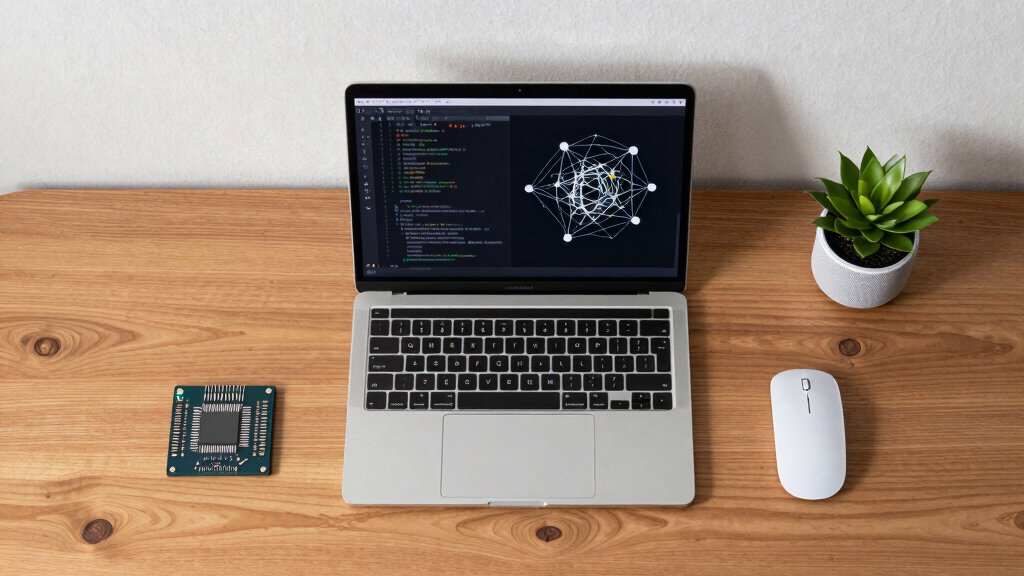

Finding the best AI desktops for local models in 2026 requires balancing raw power, usability, and price. The BossGame M5 AI PC MAX+ stands out as the overall best, thanks to its high-performance specs and large RAM capacity, ideal for demanding AI workloads. The NVIDIA DGX Spark™ offers a supercomputing-level experience, best suited for advanced developers and research. However, buyers often face tough choices between high-powered workstations and more affordable, compact options that still deliver solid performance. Continue reading for a detailed breakdown of each desktop and what makes them suitable for different needs.

Get hardware and tech essentials delivered free with Prime
- Fast, free delivery on millions of items
- Prime Video, Amazon Music and more included
- Member-only deals all year
Key Takeaways
- High-performance GPUs like NVIDIA‘s RTX and A100 series are crucial for accelerating local AI models.
- Memory capacity, especially 128GB+ RAM, significantly impacts the ability to handle large datasets and models.
- Workstation form factors vary from full towers to mini PCs, affecting space and upgrade options.
- Pricing spans from mid-range to premium, with the most powerful options demanding a substantial investment.
- Linux compatibility is common among developer-focused desktops, while Windows tends to favor ease of use for AI beginners.
| BOSGAME M5 AI PC MAX+ 395, 128GB LPDDR5x |  | Best Overall for High-Performance AI and Media Workflows | Processor: AMD Ryzen AI Max+ 395, 16-core, up to 5.1GHz | RAM: 128GB LPDDR5X | Graphics: Radeon 8060S, 2900MHz | VIEW LATEST PRICE | See Our Full Breakdown |
| AMD Ryzen AI Halo – Personal AI Desktop Computer – Windows 11 Pro |  | Best for AI Developers Needing Compact Power | Operating System: Windows 11 Pro | Processor: AMD Ryzen Max+ 395, 16 cores, 3 GHz base, up to 5.1 GHz | Memory: 128 GB DDR5, 8000 MHz | VIEW LATEST PRICE | See Our Full Breakdown |
| AMD Ryzen AI Halo – Personal AI Desktop Computer – Developer Platform – Linux OS |  | Best for Research and Linux-Based AI Development | Operating System: Linux | Processor: AMD Ryzen 395, 16 cores, 3 GHz (max 5.1 GHz) | Memory: 128 GB DDR5 | VIEW LATEST PRICE | See Our Full Breakdown |
| Dell 2026 AI Business Desktop Computer, 32GB DDR5 RAM, 1TB PCIe SSD |  | Best for Business Applications and Data Analysis | Processor: Intel Core Ultra 5 235, 14 cores, up to 5.0GHz | RAM: 32GB DDR5 | Storage: 1TB PCIe SSD | VIEW LATEST PRICE | See Our Full Breakdown |
| NVIDIA DGX Spark™ – Personal AI Desktop Supercomputer |  | Best for Enterprise-Scale AI and Large Model Deployment | Architecture: Grace Blackwell | AI Performance: up to 1 petaFLOP | Memory: 128GB | VIEW LATEST PRICE | See Our Full Breakdown |
| ASUS Ascent GX10 Personal AI Supercomputer |  | Best for Large-Scale AI Development | Processor: NVIDIA GB10 Grace Blackwell Superchip with 20-core Arm CPU | Memory: 128GB LPDDR5x | Storage: 2TB NVMe SSD | VIEW LATEST PRICE | See Our Full Breakdown |
| MINISFORUM MS-S1 MAX Mini AI Workstation PC, AMD Ryzen AI Max+ 395, 128GB RAM, 2TB SSD, Dual M.2, Wi-Fi 7 |  | Best Compact High-Performance AI Workstation | Processor: AMD Ryzen AI Max+ 395 (up to 5.1GHz, 16 cores/32 threads) | GPU: RDNA 3.5 | Memory: 128GB LPDDR5x-8000MT/s | VIEW LATEST PRICE | See Our Full Breakdown |
| NVIDIA DGX Spark™ 2 Pack with Cable Bundle – Personal AI Desktop Supercomputer |  | Best Enterprise-Grade AI Desktop for Large Models | Operating System: NVIDIA DGX OS | Memory: 128GB unified system memory | Storage: 4TB NVMe M.2 SSD with self-encryption | VIEW LATEST PRICE | See Our Full Breakdown |
| ai desktops for local model | Storage | Processor | Memory | Graphics |
|---|---|---|---|---|
| BOSGAME M5 AI PC MAX+ 395 | SSD | AMD Ryzen AI Max+ 395, 16-core, up to 5.1GHz | — | Radeon 8060S, 2900MHz |
| AMD Ryzen AI Halo | 2 TB SSD | AMD Ryzen Max+ 395, 16 cores, 3 GHz base, up to 5.1 GHz | 128 GB DDR5, 8000 MHz | AMD Radeon 8060S with 40 RDNA 3.5 compute units |
| AMD Ryzen AI Halo | 2 TB SSD | AMD Ryzen 395, 16 cores, 3 GHz (max 5.1 GHz) | 128 GB DDR5 | AMD Radeon 8060S with 40 RDNA 3.5 compute units |
| Dell 2026 AI Business Desktop | 1TB PCIe SSD | Intel Core Ultra 5 235, 14 cores, up to 5.0GHz | — | Intel Graphics |
| NVIDIA DGX Spark™ | — | — | 128GB | — |
| ASUS Ascent GX10 Personal AI S | 2TB NVMe SSD | NVIDIA GB10 Grace Blackwell Superchip with 20-core Arm CPU | 128GB LPDDR5x | — |
| MINISFORUM MS-S1 MAX Mini AI W | 2TB SSD, dual M.2 PCIe 4.0 | AMD Ryzen AI Max+ 395 (up to 5.1GHz, 16 cores/32 threads) | 128GB LPDDR5x-8000MT/s | — |
| NVIDIA DGX Spark™ 2 Pack with | 4TB NVMe M.2 SSD with self-encryption | — | 128GB unified system memory | — |
More Details on Our Top Picks
BOSGAME M5 AI PC MAX+ 395, 128GB LPDDR5x
The BOSGAME M5 AI PC MAX+ stands out for its blazing AMD Ryzen AI Max+ 395 processor and massive 128GB LPDDR5X RAM, making it ideal for intensive AI training, 3D rendering, and multi-monitor setups. Unlike the AMD Ryzen AI Halo, which is more compact and developer-focused, this desktop emphasizes raw power and multi-display capabilities, but at the expense of potentially high energy consumption and limited upgrade paths. Its support for four 8K monitors and fast USB4 ports makes it perfect for media professionals needing both performance and connectivity, though its lack of dedicated professional-grade GPU and limited upgrade info could be drawbacks for future-proofing. This model makes the most sense for those needing a versatile, high-performance AI workstation that can also handle demanding creative tasks.Pros:- Powerful AMD Ryzen AI Max+ processor with AI capabilities
- Supports four 8K monitors simultaneously
- 128GB LPDDR5X RAM for heavy multitasking
- Fast USB4 ports and SD card reader for data transfer
Cons:- Limited information on upgradeability or expandability
- Potentially high power consumption (120W)
Best for: AI researchers, media editors, and 3D artists requiring high-end multi-monitor support and intensive computing power
Not ideal for: Casual users or those with limited space, due to its size, power draw, and high cost
- Processor:AMD Ryzen AI Max+ 395, 16-core, up to 5.1GHz
- RAM:128GB LPDDR5X
- Graphics:Radeon 8060S, 2900MHz
- Storage:SSD
- Display Outputs:4x 8K@60Hz (HDMI 2.1, DisplayPort 1.4)
- Ports:2x USB4 Type-C, SD 4.0, HDMI, DisplayPort, Ethernet 2.5G
Our verdict“This pick suits professionals needing maximum performance for media, AI workflows, and multi-monitor setups, accepting higher costs and energy use.”
AMD Ryzen AI Halo – Personal AI Desktop Computer – Windows 11 Pro
The AMD Ryzen AI Halo in Windows 11 Pro offers 128GB DDR5 memory paired with the Ryzen Max+ 395, making it a formidable machine for AI model development and inference—especially suited for those who need a small, professional-grade device. Compared to the Linux-based AMD Ryzen AI Halo, this version emphasizes user-friendly Windows interface and broader software compatibility. Its support for large AI models with up to 200 billion parameters and extensive connectivity (Wi-Fi 7, 10GbE LAN) make it perfect for AI researchers working in tight spaces, but the high hardware specs come with a premium price tag and limited upgrade options. This device makes the most sense for AI professionals needing a compact, enterprise-ready environment that balances power with portability.Pros:- High-performance AMD Ryzen Max+ 395 processor with up to 5.1GHz
- Supports large AI models up to 200 billion parameters
- Extensive connectivity including Wi-Fi 7 and 10GbE LAN
- Compact size fits easily into professional environments
Cons:- Likely expensive due to advanced hardware
- Limited upgradeability and expandability
Best for: AI developers and researchers working in office spaces or labs who need high processing power in a small form factor
Not ideal for: Casual hobbyists or general consumers, as it is primarily designed for professional AI work and comes at a high cost
- Operating System:Windows 11 Pro
- Processor:AMD Ryzen Max+ 395, 16 cores, 3 GHz base, up to 5.1 GHz
- Memory:128 GB DDR5, 8000 MHz
- Storage:2 TB SSD
- Graphics:AMD Radeon 8060S with 40 RDNA 3.5 compute units
- Connectivity:10GbE LAN, Wi-Fi 7, USB-C, HDMI 2.1b
Our verdict“Ideal for AI professionals needing a compact, powerful machine for large models and enterprise tasks, accepting high investment costs.”
AMD Ryzen AI Halo – Personal AI Desktop Computer – Developer Platform – Linux OS
This Linux-based AMD Ryzen AI Halo provides 128GB DDR5 RAM and a powerful Ryzen 395 processor, making it an excellent platform for AI research and custom model training on Linux with AMD ROCm support. Compared to the Windows version, it emphasizes open-source flexibility and full control over development tools, which appeals to researchers and developers. Its support for large AI models up to 200 billion parameters and high-speed connectivity ensures it can handle demanding workloads. However, the device is primarily tailored for developers and researchers, with no included peripherals, and its compact design might limit upgrade options. For those focused on Linux environments and open-source AI stacks, this is a highly capable choice.Pros:- High-performance 128GB DDR5 memory and Ryzen 395 CPU
- Supports large AI models up to 200 billion parameters
- Supports AMD ROCm for GPU-accelerated AI workflows
- Full connectivity including 10GbE LAN and Wi-Fi 7
Cons:- Designed mainly for developers, not plug-and-play for casual users
- No peripherals included and limited upgrade paths
Best for: AI researchers and developers working on Linux, requiring extensive processing and flexible software control
Not ideal for: Casual users or those unfamiliar with Linux, as it requires technical setup and lacks peripherals
- Operating System:Linux
- Processor:AMD Ryzen 395, 16 cores, 3 GHz (max 5.1 GHz)
- Memory:128 GB DDR5
- Storage:2 TB SSD
- Graphics:AMD Radeon 8060S with 40 RDNA 3.5 compute units
- Connectivity:10GbE LAN, Wi-Fi 7, USB-C, HDMI 2.1b
Our verdict“Best suited for Linux-based AI development and research, demanding high processing power and open-source flexibility.”
Dell 2026 AI Business Desktop Computer, 32GB DDR5 RAM, 1TB PCIe SSD
The Dell 2026 AI Business Desktop is tailored for enterprise environments, offering a 14-core Intel Core Ultra 5 processor paired with 32GB DDR5 RAM and a fast 1TB PCIe SSD. Unlike the gaming-focused or highly specialized AI workstations, this model emphasizes stability, security, and multitasking for business-critical applications. Its extensive connectivity, including multiple display outputs and enterprise security features, makes it suitable for data analysis, AI-driven workflows, and office productivity. However, it lacks a dedicated GPU, which limits its use for graphics-intensive tasks or high-end AI training on large models, and its tower form factor may not suit all workspace environments. This desktop is best for professionals who prioritize reliability and integration in a corporate setting.Pros:- High-core count Intel Core Ultra 5 processor with turbo speeds
- Ample 32GB DDR5 RAM for demanding multitasking
- Fast 1TB PCIe SSD for quick data access
- Multiple connectivity options including DisplayPort and HDMI
Cons:- No dedicated graphics card for AI training or gaming
- Tower form factor may be less suitable for small spaces
Best for: Business professionals needing AI-enabled data processing, multitasking, and enterprise security
Not ideal for: Enthusiasts or AI researchers requiring high-end GPU acceleration or gaming performance
- Processor:Intel Core Ultra 5 235, 14 cores, up to 5.0GHz
- RAM:32GB DDR5
- Storage:1TB PCIe SSD
- Graphics:Intel Graphics
- Connectivity:Gigabit Ethernet, Wi-Fi
- Form Factor:Tower
Our verdict“This desktop suits business environments where reliability, security, and multitasking are key, with limited focus on GPU-intensive AI tasks.”
NVIDIA DGX Spark™ – Personal AI Desktop Supercomputer
The NVIDIA DGX Spark™ delivers up to 1 petaFLOP of AI performance with the Grace Blackwell architecture, making it the most powerful in this lineup. Its 128GB unified memory and support for models up to 200 billion parameters at FP4 set it apart from all others, including the AMD Ryzen-based options. Unlike the more general-purpose or developer-focused AMD options, this desktop supercomputer is crafted for enterprise AI deployment, large-scale training, and high-performance inference, but it comes with a significantly higher price tag and is primarily designed for business or research institutions. Its energy efficiency and compact size are impressive, but overkill for individual hobbyists or small teams. This makes it the choice for organizations needing cutting-edge AI performance in a desktop form.Pros:- Unmatched AI performance with up to 1 petaFLOP
- Supports models up to 200 billion parameters at FP4
- Compact, energy-efficient design for enterprise use
- Seamless integration with NVIDIA AI software stack
Cons:- Extremely high cost, likely inaccessible for most users
- Designed for enterprise, overkill for casual or small-scale use
Best for: Large AI teams and enterprises needing substantial compute power for training and deploying the biggest models
Not ideal for: Small startups or individual hobbyists due to cost and complexity
- Architecture:Grace Blackwell
- AI Performance:up to 1 petaFLOP
- Memory:128GB
- Supported Model Size:up to 200 billion parameters at FP4
Our verdict“This desktop supercomputer is intended for large-scale AI operations and enterprise use, accepting a premium price and complexity.”
ASUS Ascent GX10 Personal AI Supercomputer
The ASUS Ascent GX10 stands out as the most powerful option for handling extensive AI workloads, thanks to its NVIDIA GB10 Grace Blackwell Superchip and 128GB of unified memory. Compared with the NVIDIA DGX Spark, it offers significantly higher raw AI performance, making it ideal for research labs and developers working on large models. However, this power comes with a hefty price tag and a size that limits portability. Designed specifically for demanding AI workflows, it isn’t suited for casual or lightweight use. The advanced connectivity options and fast NVMe storage support large datasets and complex models efficiently. Still, its size and cost make it a less practical choice for those needing a portable or budget-friendly solution.
Pros:- Exceptional AI performance supporting large models
- High memory capacity for intensive tasks
- Fast storage and advanced connectivity
Cons:- Very high cost limits accessibility
- Large and heavy, less portable
- Designed solely for specialized AI workloads
Best for: Large research labs, AI developers working on complex models, institutions needing maximum performance
Not ideal for: Small startups or individual hobbyists, due to its high cost and size
- Processor:NVIDIA GB10 Grace Blackwell Superchip with 20-core Arm CPU
- Memory:128GB LPDDR5x
- Storage:2TB NVMe SSD
- Connectivity:Wi-Fi 7, 10GbE, USB-C, HDMI
- Operating System:DGX OS
- AI Performance:Up to 1 PetaFLOP FP4
Our verdict“This desktop is best suited for organizations with demanding AI workloads and ample budget for top-tier hardware.”
MINISFORUM MS-S1 MAX Mini AI Workstation PC, AMD Ryzen AI Max+ 395, 128GB RAM, 2TB SSD, Dual M.2, Wi-Fi 7
The MINISFORUM MS-S1 MAX makes a compelling case for AI professionals needing a compact yet powerful desktop. Its AMD Ryzen AI Max+ 395 CPU and 128GB of LPDDR5x RAM deliver impressive performance for demanding AI and multimedia tasks, comparable in raw power to larger systems like the ASUS GX10 but in a much smaller form factor. Unlike the NVIDIA DGX Spark, which targets enterprise and larger-scale AI, this mini PC offers a more accessible, space-saving solution with extensive expansion options, including dual M.2 slots and PCIe x16 support. The tradeoffs include limited pre-installed software details and potentially higher power consumption due to high-performance components. Its sophisticated cooling system helps maintain stability during intensive workloads, making it ideal for users who need both power and portability.
Pros:- High-speed AMD Ryzen AI Max+ 395 CPU
- Large 128GB RAM supports heavy multitasking
- Extensive expansion options including PCIe and dual M.2 slots
Cons:- Setup may require technical skills
- Potentially high power draw
- Limited info on pre-installed OS or software
Best for: AI developers, multimedia creators, and researchers seeking a small footprint with high performance
Not ideal for: Users requiring plug-and-play simplicity or those with limited technical expertise, due to setup complexity
- Processor:AMD Ryzen AI Max+ 395 (up to 5.1GHz, 16 cores/32 threads)
- GPU:RDNA 3.5
- Memory:128GB LPDDR5x-8000MT/s
- Storage:2TB SSD, dual M.2 PCIe 4.0
- Expansion Slots:Full-length PCIe x16, dual M.2
- Networking:Wi-Fi 7, dual 10GbE LAN
Our verdict“This mini workstation suits tech-savvy users needing a compact yet powerful AI system with flexible upgrade paths.”
NVIDIA DGX Spark™ 2 Pack with Cable Bundle – Personal AI Desktop Supercomputer
The NVIDIA DGX Spark delivers a rare blend of enterprise-level AI performance with a compact desktop footprint. Its NVIDIA GB10 Grace Blackwell Superchip provides up to 1 petaFLOP of FP4 AI processing power, supporting models up to 200 billion parameters—more than enough for cutting-edge research or large-scale AI testing. Compared with the ASUS GX10, the DGX Spark emphasizes efficiency and space-saving design, making it suitable for demanding individual researchers or small teams. However, its complexity and high cost mean it isn’t meant for casual users or small startups without technical support. Its energy efficiency and integrated NVIDIA AI software stack make it a strong contender for those who need top-tier performance in a manageable form factor.
Pros:- Unmatched AI performance with up to 1 petaFLOP
- Supports large models up to 200 billion parameters
- Compact and energy-efficient design
Cons:- High purchase and operational costs
- Requires technical knowledge to operate effectively
- Limited upgradeability or expandability
Best for: AI researchers and small teams requiring high-performance, scalable AI development at a desktop level
Not ideal for: Individual hobbyists or startups with limited technical expertise or budget, due to high cost and complexity
- Operating System:NVIDIA DGX OS
- Memory:128GB unified system memory
- Storage:4TB NVMe M.2 SSD with self-encryption
- Graphics/Chip:NVIDIA GB10 Grace Blackwell Superchip
- Performance:Up to 1 PFLOPS of FP4 AI
- Dimensions:12 x 8 x 6 inches
Our verdict“This desktop is best for advanced AI teams needing enterprise-level performance with a smaller physical footprint.”
How We Picked
I evaluated these desktops based on their processing power, GPU capabilities, memory and storage options, build quality, and expandability. Performance benchmarks relevant to AI workloads, such as GPU acceleration and RAM capacity, played a key role. Usability factors like OS compatibility, ease of setup, and upgrade potential were also considered. Products are ranked to reflect the best overall performance, value, and specific use cases, ensuring each option serves a distinct buyer profile. The goal was to identify desktops that truly excel at running local AI models reliably and efficiently.| ai desktops for local model | Processor | Graphics | Operating System |
|---|---|---|---|
| BOSGAME M5 AI PC MAX+ 395 | AMD Ryzen AI Max+ 395, 16-core, up to 5.1GHz | Radeon 8060S, 2900MHz | — |
| AMD Ryzen AI Halo | AMD Ryzen Max+ 395, 16 cores, 3 GHz base, up to 5.1 GHz | AMD Radeon 8060S with 40 RDNA 3.5 compute units | Windows 11 Pro |
| AMD Ryzen AI Halo | AMD Ryzen 395, 16 cores, 3 GHz (max 5.1 GHz) | AMD Radeon 8060S with 40 RDNA 3.5 compute units | Linux |
| Dell 2026 AI Business Desktop | Intel Core Ultra 5 235, 14 cores, up to 5.0GHz | Intel Graphics | — |
| NVIDIA DGX Spark™ | — | — | — |
| ASUS Ascent GX10 Personal AI S | NVIDIA GB10 Grace Blackwell Superchip with 20-core Arm CPU | — | DGX OS |
| MINISFORUM MS-S1 MAX Mini AI W | AMD Ryzen AI Max+ 395 (up to 5.1GHz, 16 cores/32 threads) | — | — |
| NVIDIA DGX Spark™ 2 Pack with | — | — | NVIDIA DGX OS |
Factors to Consider When Choosing Best Ai Desktops For Local Models
Choosing the right AI desktop for local models involves understanding several key factors. These machines need enough processing power to handle complex models, but also require a balance of cost, expandability, and ease of use. Avoiding common mistakes—such as underestimating GPU needs or ignoring future upgrade paths—can save time and money. This guide highlights the essential considerations to help you make an informed decision tailored to your specific AI workload and budget.GPU Power and Compatibility
The GPU is the heart of any AI desktop for local models. High-end NVIDIA and AMD cards accelerate training and inference, reducing time and improving efficiency. When selecting a GPU, consider compatibility with your chosen frameworks and the model size you plan to run. Cheaper options often skimp on GPU performance, which hampers larger models. Investing in a powerful, compatible GPU is often worth the extra cost for serious AI work.
Memory Capacity and Speed
Large RAM, such as 128GB or more, is essential for handling big datasets and complex models without bottlenecks. Faster memory speeds can also provide marginal gains, especially during data loading and training phases. Buyers should evaluate their workload size and future needs—opting for upgrade options can extend the desktop’s relevance over time, but initial capacity often dictates immediate performance.
Processor and System Balance
A powerful CPU supports overall system responsiveness and data preprocessing. While GPU performance dominates training, a balanced system prevents bottlenecks. Look for recent multi-core processors from AMD or Intel, especially those optimized for AI workloads. Over-investing in CPU without matching GPU performance can limit the desktop’s effectiveness.
Form Factor and Expansion
The size and design of your AI desktop influence placement and upgrade potential. Full towers typically offer more slots for GPUs, RAM, and storage, whereas mini PCs save space but can limit future upgrades. Consider your workspace and whether future expansion is vital. Also, check for features like multiple PCIe slots, M.2 slots, and robust cooling systems to support hardware longevity.
Price and Total Cost of Ownership
While higher-priced desktops often include top-tier hardware, they also come with increased costs for power, cooling, and maintenance. Balancing initial investment against long-term performance and upgradeability is key. Cheaper options may suffice for lighter workloads or learning purposes but can become limiting as your models grow in complexity. Think about your current needs and how they might evolve to avoid overspending or underpowered setups.
Frequently Asked Questions
Can I run large AI models on a mini PC?
Running large AI models on a mini PC is possible but often limited by GPU power and memory capacity. Smaller desktops or mini PCs typically have less room for high-end GPUs or extensive RAM, which can bottleneck training or inference of bigger models. For lighter workloads, such as fine-tuning smaller datasets or running inference, mini PCs can work well. However, for more demanding projects, a full-sized workstation with a high-performance GPU and ample RAM is usually necessary.
Is a Linux-based AI desktop better for development?
Linux-based desktops are favored by many AI developers because of their compatibility with popular frameworks like TensorFlow and PyTorch, and their flexibility for customization. Linux often offers better control over hardware resources and lower system overhead, which can lead to more efficient training. However, Windows-based systems are more user-friendly for beginners and support a wider range of commercial software. Your choice depends on your comfort with Linux and the specific tools you plan to use.
How much RAM do I really need for local AI models?
For most AI development tasks, 64GB of RAM serves as a solid baseline, especially if working with mid-sized models. When handling very large models or large datasets, 128GB or more provides additional headroom, reducing the risk of bottlenecks. Keep in mind that RAM is a long-term investment—future AI projects are likely to demand more memory, so choosing a system with upgrade options can be wise.
Should I prioritize GPU or CPU when buying an AI desktop?
For training and inference of large models, GPU performance generally matters more than CPU capacity. A powerful GPU accelerates computations significantly, which is often the main bottleneck in AI workflows. However, a balanced system with a decent CPU prevents data transfer bottlenecks and supports overall responsiveness. If your budget allows, opt for high-end GPUs paired with a capable CPU to maximize performance.
Is it worth paying extra for enterprise-grade hardware?
Enterprise-grade hardware offers superior reliability, cooling, and expandability—important for long-term projects or continuous workloads. These systems often come with better warranties and support, making them suitable for critical AI tasks. However, they also come at a premium price, which might be unnecessary for hobbyists or small-scale developers. Consider your workload demands and budget before choosing these high-end options.
Conclusion
For general users seeking reliable performance, the BossGame M5 AI PC MAX+ makes an excellent overall choice, balancing power and price. Budget-conscious buyers or beginners will appreciate the MINISFORUM MS-S1 MAX for its compact size and solid specs. Those requiring maximum processing power for research or enterprise projects should consider the NVIDIA DGX Spark™, despite its higher cost. Finally, developers and AI specialists with specific needs might lean toward the AMD Ryzen AI Halo for Linux compatibility or the ASUS Ascent GX10 for a dedicated supercomputer experience. Your ideal pick depends on your workload, budget, and long-term plans.
Columbus Day / Indigenous Peoples' Day Picks
long weekend sales
As an affiliate, we earn on qualifying purchases.