
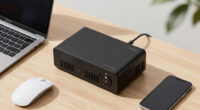
Choosing the right workstation for product marketing can be a game-changer, especially as workflows become more demanding with data analysis, content creation, and multitasking. Among the top options, the Lenovo ThinkStation P3 Tower stands out for its power and advanced security, making it ideal for heavy-duty tasks. The HP Z2 G9 SFF offers a compact design paired with a formidable 20-core processor, perfect for users with limited space but high performance needs. Meanwhile, the Dell Pro Tower Plus balances AI capabilities and multi-monitor support, catering to professionals who require versatile and scalable setups. Each of these choices presents unique tradeoffs—be it price, upgradeability, or portability—so I’ll help clarify which makes sense for different types of product marketers.

Get hardware and tech essentials delivered free with Prime
- Fast, free delivery on millions of items
- Prime Video, Amazon Music and more included
- Member-only deals all year
Complete the kit

Key Takeaways
- High-end workstations like the Lenovo ThinkStation P3 excel at demanding workflows but come with higher costs.
- Compact models such as the HP Z2 G9 are suited for space-constrained environments without sacrificing core performance.
- AI-enabled and multi-display support are critical for content creators and data analysts in marketing roles.
- Upgradeability and connectivity options vary widely, impacting future-proofing and user flexibility.
- Price and portability are often inversely related, requiring careful consideration based on mobility needs.
| Lenovo ThinkStation P3 Tower with Intel Core Ultra 9 285, 64GB DDR5, NVIDIA RTX 2000 |  | Best Overall Powerhouse for Demanding Workflows | Processor: Intel Core Ultra 9 285 vPro | Graphics: NVIDIA RTX 2000 | Memory: 64GB DDR5-5600MT/s | VIEW LATEST PRICE | See Our Full Breakdown |
| HP Z2 G9 SFF Business Workstation Desktop with Intel Core i7-14700K, 64GB DDR5, 2TB SSD, Windows 11 Pro |  | Best Compact Power for Space-Conscious Professionals | Processor: Intel Core i7-14700K (20 cores, up to 5.6 GHz) | RAM: 64GB DDR5 | Storage: 2TB PCIe NVMe SSD | VIEW LATEST PRICE | See Our Full Breakdown |
| Dell Pro Tower Plus Core Ultra 7 265 16GB DDR5 1TB SSD Desktop Computer |  | Best for Multi-Display and AI-Enhanced Workflows | Processor: Intel Core Ultra 7 265, 20-core | RAM: 16GB DDR5 | Storage: 1TB SSD | VIEW LATEST PRICE | See Our Full Breakdown |
| HP Z2 G9 Workstation – Intel Core i7-14700K, 32GB RAM, 512GB SSD, Windows 11 Pro, T1000 8GB Graphics, Tower |  | Best Graphics-Ready for Creative and Technical Work | Processor: Intel Core i7-14700K | RAM: 32GB DDR5 | Storage: 512GB SSD | VIEW LATEST PRICE | See Our Full Breakdown |
| workstations for product marketer | Processor | Storage | Graphics | RAM |
|---|---|---|---|---|
| Lenovo ThinkStation P3 Tower w | Intel Core Ultra 9 285 vPro | 1TB | NVIDIA RTX 2000 | — |
| HP Z2 G9 SFF Business Workstat | Intel Core i7-14700K (20 cores, up to 5.6 GHz) | 2TB PCIe NVMe SSD | Intel UHD Graphics | 64GB DDR5 |
| Dell Pro Tower Plus Core Ultra | Intel Core Ultra 7 265, 20-core | 1TB SSD | Integrated Intel Graphics | 16GB DDR5 |
| HP Z2 G9 Workstation | Intel Core i7-14700K | 512GB SSD | — | 32GB DDR5 |
More Details on Our Top Picks
Lenovo ThinkStation P3 Tower with Intel Core Ultra 9 285, 64GB DDR5, NVIDIA RTX 2000
The Lenovo ThinkStation P3 Tower stands out for its exceptional performance, combining an Intel Core Ultra 9 285 vPro processor with an NVIDIA RTX 2000 graphics card. This makes it ideal for complex simulations, large data files, and creative tasks that demand high GPU and CPU power. Its 64GB DDR5 memory supports intensive multitasking, and multiple connectivity options ensure peripherals and displays are well-supported. Compared to the HP Z2 G9, this machine offers more raw power and security features but at a higher price and with more space requirements. It’s best suited for product marketers working with large datasets, 3D modeling, or content creation that requires serious horsepower. Its main drawbacks include potentially high costs and limited details on upgrade paths, which might matter for long-term scalability.
Pros:- Exceptional CPU and GPU performance for demanding tasks
- Ample 64GB DDR5 RAM for multitasking
- Multiple connectivity options for peripherals and displays
- Enhanced security with ThinkShield and TPM
Cons:- High price point may be prohibitive for some
- Setup delays due to retail packaging
- Limited upgrade detail
Best for: Power users managing large-scale data, simulations, or high-fidelity creative work
Not ideal for: Casual users or those with limited budgets who don’t need top-tier specs
- Processor:Intel Core Ultra 9 285 vPro
- Graphics:NVIDIA RTX 2000
- Memory:64GB DDR5-5600MT/s
- Storage:1TB
- Ports:Various USB-C, USB-A, HDMI, DisplayPort, Ethernet
- Security:ThinkShield, TPM
- Warranty:1 Year On-site, up to 5 years available
Our verdict“Best for power users needing maximum performance and security, despite higher costs.”
HP Z2 G9 SFF Business Workstation Desktop with Intel Core i7-14700K, 64GB DDR5, 2TB SSD, Windows 11 Pro
The HP Z2 G9 SFF offers a compelling mix of performance and size. Its Intel Core i7-14700K with 20 cores provides ample power for multitasking, data analysis, and content editing. The 64GB DDR5 RAM supports heavy workloads, and the generous 2TB SSD ensures fast data access. Its compact form factor makes it suitable for environments where space is limited, but this also means upgrade options are somewhat constrained compared to larger towers. Compared with the Dell Pro Tower Plus, it is less expandable but benefits from a smaller footprint and a pre-installed Windows 11 Pro. This model suits product marketers who need high performance in tight spaces and prioritize straightforward setup. Its downsides include limited upgradeability and the absence of dedicated GPU, which could impact graphics-intensive tasks.
Pros:- Powerful 20-core CPU for multitasking and demanding workflows
- Large 64GB DDR5 RAM supports heavy applications
- Compact size ideal for space-limited environments
- Pre-installed Windows 11 Pro
Cons:- Limited upgrade potential due to size
- No dedicated graphics card included
- Open seal suggests it’s been upgraded before
Best for: Product marketers with limited space needing high performance in a small form factor
Not ideal for: Users requiring extensive upgrade paths or dedicated graphics for complex visual work
- Processor:Intel Core i7-14700K (20 cores, up to 5.6 GHz)
- RAM:64GB DDR5
- Storage:2TB PCIe NVMe SSD
- Graphics:Intel UHD Graphics
- Connectivity:Wi-Fi, Bluetooth, USB-C, USB-A, DisplayPort
- Operating System:Windows 11 Pro
Our verdict“A strong, space-saving workstation suited for high-performance needs in tight spaces, with some tradeoffs on upgradeability.”
Dell Pro Tower Plus Core Ultra 7 265 16GB DDR5 1TB SSD Desktop Computer
The Dell Pro Tower Plus provides a robust platform for product marketers who rely on multiple displays and AI-enhanced productivity. Powered by the Intel Core Ultra 7 265 with 20 cores and AI acceleration, it handles demanding multitasking with ease. Its support for three 4K displays via DisplayPort makes it ideal for expansive dashboards, content creation, or data analysis. The 16GB DDR5 RAM and 1TB SSD deliver fast performance, though the lower RAM compared to other options could limit heavy multitasking if multiple applications are open simultaneously. Compared to the Lenovo ThinkStation, it offers more flexible display support but less raw CPU power. Its main limitations are the absence of built-in WiFi and no HDMI port, which could be inconvenient for some setups. Still, for multi-monitor environments, this is a compelling choice.
Pros:- Supports three 4K displays for expansive workflows
- AI acceleration boosts productivity for data and content tasks
- Easy to upgrade with tool-less access
- Solid connectivity options
Cons:- No HDMI port included
- No built-in WiFi, requires Ethernet or adapter
- Limited RAM for extremely heavy multitasking
Best for: Product marketers managing multiple monitors and integrating AI tools
Not ideal for: Those needing dedicated GPU or maximum upgradeability
- Processor:Intel Core Ultra 7 265, 20-core
- RAM:16GB DDR5
- Storage:1TB SSD
- Graphics:Integrated Intel Graphics
- Display Support:Triple 4K via DisplayPort
- Connectivity:USB-C, USB-A, Ethernet, no WiFi
Our verdict“Ideal for multi-monitor setups and AI-driven workflows, with some tradeoffs on upgradeability and connectivity.”
HP Z2 G9 Workstation – Intel Core i7-14700K, 32GB RAM, 512GB SSD, Windows 11 Pro, T1000 8GB Graphics, Tower
The HP Z2 G9 Workstation combines powerful processing with dedicated graphics, making it well-suited for visual content creation, technical applications, and detailed data analysis. Equipped with a 14th Gen Intel Core i7-14700K and 32GB DDR5 RAM, it handles complex workflows comfortably. Its NVIDIA T1000 8GB graphics card enhances visual fidelity, a plus for rendering, 3D modeling, or video editing. Compared to the Lenovo ThinkStation, it offers a more balanced setup for creative professionals who also need reliable processing power. The main limitations include a smaller 512GB SSD, which might require external storage for larger projects, and limited details on upgradeability. It’s a solid choice for professionals with a focus on graphics and content creation.
Pros:- Powerful 14th Gen CPU with high core count
- Dedicated NVIDIA T1000 graphics for rendering
- 32GB DDR5 RAM supports multitasking
- Reliable security features and Windows 11 Pro
Cons:- Limited SSD capacity at 512GB
- Heavy at nearly 16 pounds
- No explicit upgrade details
Best for: Creative professionals and technical users needing dedicated graphics
Not ideal for: Budget-conscious users or those with large data storage needs without external drives
- Processor:Intel Core i7-14700K
- RAM:32GB DDR5
- Storage:512GB SSD
- Graphics Card:NVIDIA T1000 8GB
- Operating System:Windows 11 Pro
- Connectivity:Ethernet, USB, DisplayPort
Our verdict“A dependable workstation for graphics-intensive tasks, with some tradeoffs on storage capacity and portability.”

How We Picked
Our selection process focused on the core needs of product marketers: robust performance for multitasking, high-quality graphics for visual content, ample memory for large datasets, and connectivity options for multiple monitors and peripherals. We prioritized recent models with the latest processors and memory, ensuring future-proofing. Price points varied to include both premium and value options, and we also considered upgradeability and security features to cater to different professional environments. Each product was evaluated against its ability to balance power, expandability, and value based on typical marketing workflows.
| workstations for product marketer | Processor | Graphics | Connectivity |
|---|---|---|---|
| Lenovo ThinkStation P3 Tower w | Intel Core Ultra 9 285 vPro | NVIDIA RTX 2000 | — |
| HP Z2 G9 SFF Business Workstat | Intel Core i7-14700K (20 cores, up to 5.6 GHz) | Intel UHD Graphics | Wi-Fi, Bluetooth, USB-C, USB-A, DisplayPort |
| Dell Pro Tower Plus Core Ultra | Intel Core Ultra 7 265, 20-core | Integrated Intel Graphics | USB-C, USB-A, Ethernet, no WiFi |
| HP Z2 G9 Workstation | Intel Core i7-14700K | — | Ethernet, USB, DisplayPort |
Factors to Consider When Choosing Best Workstations For Product Marketers
When selecting a workstation for product marketing, key factors include processing power, graphics capabilities, expandability, and connectivity. The ideal setup depends on whether your focus is content creation, data analysis, or multitasking across multiple applications. Budget, space constraints, and future upgrade needs also play crucial roles. Here, I’ll break down the main considerations to help you choose the right machine for your specific workflow.
Performance and Processing Power
Look for recent processors like Intel’s 14th Gen or Core Ultra series, which provide the necessary speed for multitasking and data-heavy tasks. For demanding workflows involving simulations or large datasets, high core counts and fast RAM (like DDR5) are vital. If your tasks are lighter, a mid-range processor can save costs without sacrificing essential performance.
Graphics and Visual Content
Creative marketing often involves visual content, so dedicated GPUs like NVIDIA T1000 or RTX series are beneficial. For less graphics-intensive tasks, integrated graphics may suffice, but they limit rendering and visual editing capabilities. Consider your need for multiple monitor support and high-resolution outputs when evaluating graphics options.
Upgradeability and Connectivity
Future-proofing means checking how easily a workstation can be expanded with additional RAM, storage, or new peripherals. Tool-less upgrades simplify this process. Connectivity options—USB-C, USB-A, HDMI, DisplayPort, Ethernet, and WiFi—are essential for integrating multiple devices and ensuring seamless workflows.
Price and Portability
Premium workstations offer maximum power but often at a higher price and reduced portability. Compact models save space but may limit upgrade options. Decide whether mobility or expandability is more critical for your role, and select accordingly.
Frequently Asked Questions
What should I prioritize when choosing a workstation for product marketing?
Prioritize processing power, graphics capability, and connectivity to handle multitasking, content creation, and data analysis efficiently. Consider future upgrade options and your workspace limitations to make an informed choice that balances power, flexibility, and budget.
Are dedicated graphics cards necessary for product marketers?
Dedicated graphics cards are especially beneficial if your work involves visual design, video editing, or 3D modeling. For general multitasking and data analysis, integrated graphics may suffice, but having a GPU can significantly enhance rendering speed and visual fidelity.
How important is upgradeability in a workstation?
Upgradeability ensures your workstation can adapt to growing needs over time, whether by adding more RAM, storage, or new peripherals. If you plan to keep your system for several years, choosing a model with accessible upgrade options can save money and extend its usefulness.
Is a compact workstation a good choice for product marketers?
Yes, if space is limited or portability is a priority. Compact models like the HP Z2 G9 are designed for tight environments, but they might have fewer upgrade options and reduced performance compared to larger towers. Balance your space constraints with your performance needs.
Which operating system should I choose?
Windows 11 Pro remains the standard for most professional workstations, offering compatibility with a broad range of software, security features, and enterprise management tools. Unless you have specific needs for another OS, Windows remains the most versatile choice for product marketers.
Conclusion
For product marketers who need maximum performance and security, the Lenovo ThinkStation P3 is the best fit, despite its higher price. Those with limited space or budget may find the HP Z2 G9 a practical choice, balancing power in a small form factor. If multi-monitor setups and AI features are your priority, the Dell Pro Tower Plus offers excellent support for expansive workflows. Casual users or those just starting out might prefer more basic systems, but for serious content creation, data analysis, and multitasking, investing in one of these high-performance workstations makes a noticeable difference.
Halloween Picks
halloween
As an affiliate, we earn on qualifying purchases.