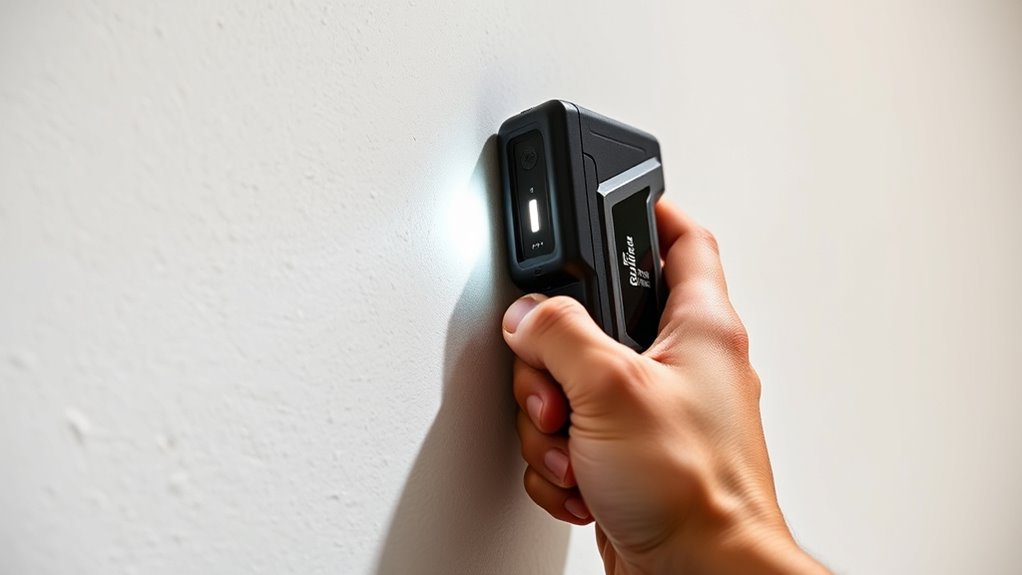

Finding studs behind drywall is a common task for hanging shelves, artwork, or installing fixtures. The right stud finder simplifies this process, but options vary widely in features and accuracy. The DEWALT Stud Finder stands out as the best overall for its reliable detection of wood, metal, and live wires. For budget-conscious shoppers, the Zircon StudSensor Basic offers decent performance at a lower price, while the Franklin Sensors ProSensor M210 excels in multi-sensor design for fast scanning. Keep in mind, the main tradeoffs involve balancing accuracy, ease of use, and price. Continue reading for a detailed breakdown of the top models and how to choose the right one for your needs.

Get hardware and tech essentials delivered free with Prime
- Fast, free delivery on millions of items
- Prime Video, Amazon Music and more included
- Member-only deals all year
Key Takeaways
- Multi-sensor designs like the Franklin ProSensor offer faster detection but come at a higher price point.
- Features like live wire detection significantly reduce the risk of electrical hazards during installation.
- LCD display and audio alerts improve usability for beginners but often add to the cost.
- Deeper scanning capabilities are key for thick drywall or when hiding pipes and wires.
- Value varies; the most expensive models don’t always provide proportionally better accuracy or features.
| DEWALT Stud Finder, 3/4″ Depth, Detects Wood, Metal, and Live Wires |  | Best Overall for Safety and Versatility | Detection depth: 3/4 inch | Batteries: AAA included | Detection capabilities: Wood, metal, live wires | VIEW ON AMAZON | See Our Full Breakdown |
| Franklin Sensors ProSensor M210 13-Sensor Stud Finder with Live Wire Detection |  | Best for High Accuracy and Wide Coverage | Number of Sensors: 13 | Detection Depth: 1.7 inches | Live Wire Detection: Yes | VIEW ON AMAZON | See Our Full Breakdown |
| Stud Finder Wall Scanner High Accuracy Wood & Metal Stud Detector |  | Best for Accurate Center and Multiple Modes | Detection Depth (Standard Mode): 1 inch | Detection Depth (Deep Mode): 1.5 inches | Power Source: Not specified | VIEW ON AMAZON | See Our Full Breakdown |
| Craftsman Stud Finder, 3/4-Inch Depth (CMHT77633) |  | Best for Versatile Surface Compatibility | Depth Range: 3/4 inch | Works on: Wallpaper, fabric, drywall | Detects: Wood and metal studs | VIEW ON AMAZON | See Our Full Breakdown |
| Zircon StudSensor Basic Stud Finder for Wood and Metal Studs |  | Best Budget-Friendly, Easy-to-Use Model | Detection Depth: 3/4 inch | Power: Requires one 9V alkaline battery (not included) | VIEW ON AMAZON | See Our Full Breakdown | |
| Povlen Stud Finder Wall Scanner Detector with Wood Metal AC Wire Detection |  | Best for Versatile Wall Scanning with Multi-Detection Modes | Model: TH570 | Weight: 8.8 ounces | Batteries: 1 9V battery (included) | VIEW ON AMAZON | See Our Full Breakdown |
| Stud Finder Wall Scanner – 5 in 1 Stud Finder Tool with HD LCD Display and Smart Chip |  | Best for Rapid, Accurate Detection with User-Friendly Interface | Detection Modes: Stud scan, deep scan, metal scan | Display: HD LCD with backlight | Sensor: Smart micro-sensor chip | VIEW ON AMAZON | See Our Full Breakdown |
| Franklin Sensors ProSensor M150/X990 9-Sensor Stud Finder with AC Wire Warning |  | Best for Precise, Full-Width Stud Detection Without Calibration | Sensors: 9 | Detection Depth: 1.5 inches | Power: Two AAA batteries (not included) | VIEW ON AMAZON | See Our Full Breakdown |
| Mecurate 5-in-1 Stud Finder Wall Scanner for Studs, Metal & Live AC Wires |  | Best for Multi-Mode Detection with Safety Features | Detection Modes: Standard, Deep, Metal, AC | Display: LCD with graphics | Includes: Battery, pouch, user manual | VIEW ON AMAZON | See Our Full Breakdown |
| Stud Finder Wall Scanner, 5-in-1 Multifunction Stud Locator with LCD Display and Audio Alarm |  | Best for Ergonomic Design and Auto Calibration | Detection Modes: Stud, Metal, AC Wire, Pipe, Joist | Display: HD LCD with backlight | Power: 9V battery included | VIEW ON AMAZON | See Our Full Breakdown |
| Stud Finder Wall Scanner – 5 in 1 Stud Finder Tool with HD LCD Display, Detects Wood, Metal, and Live Wires |  | Best Overall Multi-Function Wall Scanner | Detection Modes: Stud scan, deep scan, metal scan | Display: HD LCD with backlight | Sensor Technology: Smart micro-sensor chip | VIEW ON AMAZON | See Our Full Breakdown |
| Zircon StudSensor A100 Stud Finder with Live Wire Detection |  | Best for Precise Edge Detection and Live Wire Safety | Detection Depth (Standard): 3/4 inch | Detection Depth (DeepScan): 1 1/2 inches | Detection of Live Wires: up to 2 inches | VIEW ON AMAZON | See Our Full Breakdown |
More Details on Our Top Picks
DEWALT Stud Finder, 3/4″ Depth, Detects Wood, Metal, and Live Wires
This DEWALT model stands out for its combination of safety features and ease of use. Its center-find technology and LED arrows make locating studs straightforward, while auto-calibration ensures consistent accuracy. Compared to the Franklin Sensors ProSensor M210, which offers wider detection depth and no calibration, the DEWALT is better suited for quick, safe jobs on standard drywall. However, its limited 3/4 inch detection depth means it can’t handle thicker walls or concrete. Its ability to detect live wires adds a vital safety layer that some competitors lack. This pick makes the most sense for DIYers and professionals needing reliable, safe stud detection within standard wall thicknesses.
Pros:- Easy to locate studs with visual and audible alerts
- Includes safety features like live wire detection
- Compact and simple to store
Cons:- Limited to 3/4 inch detection depth
- Cannot detect objects in concrete or brick
Best for: Homeowners and contractors prioritizing safety and quick detection in typical drywall installations
Not ideal for: Users working on thicker walls, concrete, or needing deeper scans, since it can’t detect beyond 3/4 inch
- Detection depth:3/4 inch
- Batteries:AAA included
- Detection capabilities:Wood, metal, live wires
- Features:Center-find technology, LED arrows, auto-calibration
Our verdict“This model is ideal for those needing a safe, reliable drywall stud finder for standard wall thicknesses and quick jobs.”
Franklin Sensors ProSensor M210 13-Sensor Stud Finder with Live Wire Detection
The Franklin Sensors ProSensor M210 is designed for precision, featuring 13 sensors that detect studs across the full width of the device, unlike the single-sensor models like the Zircon StudSensor Basic. Its ability to scan up to 1.7 inches deep makes it a strong choice for thicker drywall or when deeper stud detection is needed. Unlike the DEWALT or Stud Finder Wall Scanner models, which often require calibration, the M210 offers instant results, saving time on large projects. However, its reliance on AA batteries, which are not included, adds a minor inconvenience. This model is best suited for professional applications or serious DIYers who value accuracy and wider coverage over simplicity.
Pros:- High accuracy with 13 sensors for full-width detection
- Deep scanning up to 1.7 inches
- No calibration needed for quick results
- Includes live wire detection
Cons:- Batteries are not included, adding extra cost
- Designed mainly for drywall and wood/metal studs, limiting versatility
Best for: Experienced DIYers and professionals requiring high accuracy and comprehensive coverage in drywall or wood framing
Not ideal for: Casual users or those working on thin walls where a simple, no-calibration device would suffice
- Number of Sensors:13
- Detection Depth:1.7 inches
- Live Wire Detection:Yes
- Batteries:2 AA (not included)
Our verdict“This pick is perfect for those who need precise, broad coverage stud detection with minimal setup time.”
Stud Finder Wall Scanner High Accuracy Wood & Metal Stud Detector
This wall scanner emphasizes precision in locating the center of wood and metal studs, making it ideal for mounting heavy objects or precise installations. Its multiple scan modes, including standard and deep scans, help adapt to different wall thicknesses, much like the versatile Stud Finder Wall Scanner High Accuracy model. Unlike simpler models like the Zircon StudSensor Basic, it offers smart calibration and LED indicators that guide users clearly. However, it doesn’t specify battery details or detection depth beyond 1.5 inches in deep mode, which could be limiting for very thick walls. Its focus on accuracy makes it suitable for DIYers and professionals aiming for precision rather than speed.
Pros:- Accurate detection of wood and metal studs
- Multiple scan modes for different wall thicknesses
- LED indicators and audio alerts for easy use
- Smart calibration for reliable results
Cons:- No info on battery type or lifespan
- Detection depth details limited for very thick walls
Best for: DIYers and professionals needing precise center detection for mounting tasks
Not ideal for: Casual users or projects involving very thick walls where deeper scans are necessary
- Detection Depth (Standard Mode):1 inch
- Detection Depth (Deep Mode):1.5 inches
- Power Source:Not specified
- Suitable for:Wood and metal studs
- Features:LED indicators, audio alert, intelligent calibration
Our verdict“This model suits those requiring high precision and adjustable scanning for mounting and installation tasks.”
Craftsman Stud Finder, 3/4-Inch Depth (CMHT77633)
The Craftsman Stud Finder is tailored for users working on unconventional surfaces like wallpaper and fabric, as well as drywall. Its detection depth of 3/4 inch is comparable to the DEWALT but offers broader surface compatibility, including textured or covered walls. Its durability—shock-resistant and water-resistant—makes it suitable for tough job sites. Compared to more advanced models like the Franklin Sensors M210, it lacks deep scanning or multiple sensors but excels in simplicity and versatility on a variety of surfaces. It’s a sensible choice for DIYers dealing with decorative or delicate walls but falls short for projects requiring deeper or more detailed detection.
Pros:- Works on various surfaces including wallpaper and fabric
- Accurately detects stud edges of wood and metal
- Durable, shock-resistant, and water-resistant
Cons:- Limited detection depth of only 3/4 inch
- Basic functionality, not suitable for advanced scanning
Best for: Homeowners or handymen working on textured, wallpapered, or fabric-covered walls
Not ideal for: High-precision or deep wall scanning needs, as it only detects up to 3/4 inch
- Depth Range:3/4 inch
- Works on:Wallpaper, fabric, drywall
- Detects:Wood and metal studs
- Body Material:Plastic
- Warranty:Amazon.com Return Policy
Our verdict“This device offers reliable edge detection on diverse surfaces but is best suited for light-duty, surface-level projects.”
Zircon StudSensor Basic Stud Finder for Wood and Metal Studs
The Zircon StudSensor Basic is designed for simplicity and ease of use, making it a good choice for casual DIYers. Its straightforward LED indicators and audible alerts quickly guide users to stud edges behind drywall or plaster. The SpotLite Beam enhances accuracy when marking, which is a handy feature missing in many basic models. Compared with the more advanced Franklin Sensors ProSensor M210, which offers multi-sensor detection, the Zircon is more limited but also more affordable and lightweight, ideal for quick jobs. Its detection depth of 3/4 inch matches other budget options but means it’s unsuitable for thicker walls or deeper framing. It’s best for light, occasional use rather than professional or frequent projects.
Pros:- Simple operation with visual and sound indicators
- Accurately detects stud edges behind drywall
- Built-in SpotLite Beam for precise marking
Cons:- Requires a 9V battery not included
- Limited detection depth of 3/4 inch
- Over-the-stud detection may need repositioning
Best for: Casual DIYers seeking an easy, affordable wall scanner for light projects
Not ideal for: Heavy-duty or professional use, or walls thicker than 3/4 inch
- Detection Depth:3/4 inch
- Power:Requires one 9V alkaline battery (not included)
Our verdict“This model is perfect for users who need an easy and affordable tool for light drywall projects and casual mounting tasks.”
Povlen Stud Finder Wall Scanner Detector with Wood Metal AC Wire Detection
The Povlen Stud Finder stands out for its ability to detect studs, metal, pipes, and live wires in walls, floors, and ceilings, making it a flexible choice for various home projects. Compared to the Franklin Sensors ProSensor M150, this model offers a broader detection scope, but its limited depth (up to 2.36 inches) can be a drawback for thicker walls. The LCD display with audio alerts simplifies operation, especially for those new to wall scanners. However, needing to replace the 9V battery regularly and a possible learning curve mean it’s not the fastest option for frequent use. This pick is ideal for homeowners who value multi-surface detection and durability but are comfortable with some maintenance.
Pros:- Accurately detects studs, metal, pipes, and live wires
- Multiple scanning modes for diverse needs
- Durable, shock-resistant, and dust-resistant design
- LCD display with audio alerts for ease of use
Cons:- Requires 9V battery replacement
- Limited detection depth (up to 2.36 inches)
- May have a learning curve for new users
Best for: DIYers and homeowners seeking a durable, multi-purpose wall scanner for regular use across different surfaces
Not ideal for: Professional contractors needing deeper detection or faster operation, as the limited depth may hinder heavy-duty applications
- Model:TH570
- Weight:8.8 ounces
- Batteries:1 9V battery (included)
- Material:ABS
- Detection Modes:Wood, metal, AC wires, studs
- Display:Backlight LCD
Our verdict“This scanner is well-suited for homeowners who need versatile detection and durability in a wall scanner.”
Stud Finder Wall Scanner – 5 in 1 Stud Finder Tool with HD LCD Display and Smart Chip
The 5-in-1 Stud Finder offers quick, precise detection of studs, metal, and live wires, with a bright HD LCD display making it easy to interpret results. Unlike the Povlen, it features multiple scan modes, including deep scan, which enhances versatility for different wall types. Its smart micro-sensor chip provides high sensitivity, but it requires batteries (not included) and may need calibration on certain wall surfaces. Its rapid detection makes it suitable for DIYers who want reliability without extensive setup, though its performance can vary if not properly calibrated. This device is best for users who prioritize speed and clarity in wall scanning for home projects.
Pros:- Accurate and rapid detection of studs, metal, and wires
- Bright, easy-to-read LCD display with audio alerts
- Multiple scan modes for versatility
- Ideal for DIYers and professionals seeking quick results
Cons:- Requires batteries (not included)
- May need calibration for different wall types
- Limited detection depth for very thick walls
Best for: DIY enthusiasts and homeowners needing quick, accurate wall scans for common drywall tasks
Not ideal for: Professional finish carpenters or renovators working on complex surfaces requiring frequent calibration or deeper scans
- Detection Modes:Stud scan, deep scan, metal scan
- Display:HD LCD with backlight
- Sensor:Smart micro-sensor chip
- Power:Battery (not included)
Our verdict“This scanner makes the most sense for DIYers wanting quick, reliable results with an intuitive interface.”
Franklin Sensors ProSensor M150/X990 9-Sensor Stud Finder with AC Wire Warning
The Franklin Sensors ProSensor M150 leverages nine sensors for high accuracy in identifying studs and live wires, setting it apart from simpler models like the Zircon StudSensor Basic. It provides a full-width display of the stud, which simplifies installation and renovation tasks. While the nine sensors deliver exceptional precision and eliminate the need for calibration, the device relies on two AAA batteries (not included), which can be limiting if rechargeable batteries are preferred. Its deep scan depth of 1.5 inches offers reliable detection, but it may not be suitable for very thick walls or concrete. This model is best for professionals or serious DIYers who need exact placement and full-width mapping of studs.
Pros:- Nine sensors for high accuracy
- Displays full width of studs
- No calibration required
- Includes live wire detection warning
Cons:- Requires two AAA batteries (not included)
- Not compatible with rechargeable batteries
- Limited to 1.5 inches depth
Best for: Professional contractors and advanced DIYers who require precise, calibration-free stud detection and live wire warning
Not ideal for: Occasional homeowners or DIYers who prefer lightweight, simpler models or need deeper wall scans
- Sensors:9
- Detection Depth:1.5 inches
- Power:Two AAA batteries (not included)
- Features:AC wire warning, full stud width display, deep scan
Our verdict“This tool is perfect for those who need pinpoint accuracy and full-width stud detection without calibration hassle.”
Mecurate 5-in-1 Stud Finder Wall Scanner for Studs, Metal & Live AC Wires
The Mecurate 5-in-1 scanner provides versatile detection modes, including standard, deep, metal, and AC detection, making it a flexible choice for drywall projects. Its upgraded sensors improve accuracy over basic models, and the safety alerts for live wires help prevent accidents. Compared with the Povlen, it offers more customizable detection modes but requires calibration before use, which could slow down quick jobs. Its performance is optimized for drywall surfaces, though it may not perform as well on non-drywall materials. This scanner makes the most sense for users who want a multi-mode tool with safety features and included accessories for added convenience.
Pros:- Multi-mode detection for studs, metal, and wires
- Bright LCD with intuitive graphics
- Safety alerts for live wires
- Includes accessories like pouch and manual
Cons:- Requires calibration before use
- Performance may vary on non-drywall surfaces
- Not suitable for concrete or tile
Best for: DIYers and homeowners who need multi-surface detection with safety alerts for drywall and similar surfaces
Not ideal for: Users working on concrete or brick walls where performance may decrease, or those seeking a plug-and-play device without calibration requirements
- Detection Modes:Standard, Deep, Metal, AC
- Display:LCD with graphics
- Includes:Battery, pouch, user manual
Our verdict“This multi-mode scanner is ideal for drywall projects where safety and versatility are priorities.”
Stud Finder Wall Scanner, 5-in-1 Multifunction Stud Locator with LCD Display and Audio Alarm
The Stud Finder Wall Scanner combines five detection modes—studs, metal, AC wires, pipes, and joists—with auto calibration, making it a user-friendly option for various drywall applications. Its ergonomic design and HD LCD with visual and audio cues improve usability, especially for those who prefer straightforward operation. When compared to the Franklin Sensors M150, this model offers a more ergonomic grip and easier auto calibration, but it may have limited detection depth—particularly on very thick walls. Its auto calibration feature reduces setup time, but users need to be mindful of regular battery replacements. This device makes sense for DIYers who value comfort and ease of use in multi-sensing wall scanners.
Pros:- Auto calibration for ease of use
- Multiple detection modes including joists
- Ergonomic grip and HD LCD display
- Visual and audio indicators for clarity
Cons:- Requires 9V battery replacement over time
- Limited detection depth for very thick walls
- Calibration may take some practice
Best for: Homeowners and DIY enthusiasts seeking a comfortable, auto-calibrating wall scanner for multiple drywall tasks
Not ideal for: Pro contractors needing deeper wall scans or faster throughput, as the detection range is somewhat limited
- Detection Modes:Stud, Metal, AC Wire, Pipe, Joist
- Display:HD LCD with backlight
- Power:9V battery included
- Calibration:Auto calibration
Our verdict“This scanner offers a user-friendly experience with auto calibration and ergonomic design for typical drywall applications.”
Stud Finder Wall Scanner – 5 in 1 Stud Finder Tool with HD LCD Display, Detects Wood, Metal, and Live Wires
This 5-in-1 wall scanner stands out for its versatile detection capabilities, combining stud, metal, pipe, and live wire detection in one device, making it a comprehensive choice for a variety of home improvement tasks. Its smart micro-sensor chip and bright HD LCD display with backlighting allow for clear readings, even in dim conditions. Compared to simpler models like the Zircon StudSensor A100, this scanner offers multiple scan modes that adapt to different wall materials, reducing false positives. However, its battery life may be limited with frequent use, and some users find the sensor sensitivity needs fine-tuning, especially on textured or composite walls. This pick makes the most sense for DIYers who want a multifunction tool that reduces the need for multiple devices, but it may be less ideal for those seeking long-lasting battery performance or quick, straightforward scans.
Pros:- Accurately detects studs, pipes, and live electrical wires behind walls
- Bright, backlit LCD display with visual and audio alerts enhances usability in low-light areas
- Multiple scan modes increase detection versatility across different wall materials
Cons:- Battery life may be short with frequent use, requiring regular replacements
- Sensor sensitivity can sometimes need adjustment, which may frustrate beginners
Best for: Homeowners who need a reliable, all-in-one scanner for various wall types and safety checks
Not ideal for: Casual users who prefer a simple, single-function stud finder with minimal setup
- Detection Modes:Stud scan, deep scan, metal scan
- Display:HD LCD with backlight
- Sensor Technology:Smart micro-sensor chip
- Power:Battery with status indicator
Our verdict“This multi-function scanner is best suited for DIYers seeking comprehensive wall detection in a single device, despite some battery and sensitivity tradeoffs.”
Zircon StudSensor A100 Stud Finder with Live Wire Detection
The Zircon StudSensor A100 excels at quickly locating wood and metal stud edges with its straightforward LCD screen, making it ideal for hanging items like shelves or mirrors. Its two scanning modes accommodate different wall thicknesses, providing flexibility for various home projects. Compared to the more advanced Wall Scanner, this device offers a simpler, more focused approach, but its detection depth of only 3/4 inch limits its effectiveness on very thick walls. The calibration process requires careful handling, which might be a hurdle for complete beginners. Its live wire detection up to 2 inches adds a vital safety layer, making it suitable for cautious DIYers. However, frequent battery changes and limited depth for large wall cavities are notable drawbacks.
Pros:- Quickly locates stud edges and detects live electrical wires
- Two scanning modes adapt to different wall thicknesses
- Clear LCD screen with guiding audio tone simplifies operation
Cons:- Requires frequent 9V battery replacements, adding ongoing cost
- Limited detection depth makes it less suitable for very thick walls
- Calibration process can be tricky, especially for inexperienced users
Best for: Home users who need a reliable edge detector for standard walls and live wire safety during hanging projects
Not ideal for: Professionals working on thick, layered walls or requiring deep scanning capabilities
- Detection Depth (Standard):3/4 inch
- Detection Depth (DeepScan):1 1/2 inches
- Detection of Live Wires:up to 2 inches
- Battery:9V alkaline
- Calibration:Hold scanner flat, press and hold Power Button, wait for beep
Our verdict“This device is ideal for homeowners needing quick, accurate edge detection and wire safety in standard walls, with some limitations on depth and battery life.”
How We Picked
To select the best stud finders for drywall, I focused on key criteria including detection accuracy for wood and metal studs, ease of use, build quality, and additional features like live wire detection and display interfaces. We prioritized models that offer reliable performance across typical drywall thicknesses and user-friendly interfaces suitable for both DIYers and professionals. Price was also a factor, aiming to highlight options that deliver good value without compromising essential functionality. The ranking reflects a balance of performance, versatility, and affordability, helping different types of users find the right fit for their projects.Factors to Consider When Choosing Stud Finders For Drywall
Choosing the right stud finder involves understanding several important factors that influence performance and usability. Beyond basic detection, features like depth capacity, display type, and detection modes can make a significant difference in real-world use. Considering these aspects helps avoid common pitfalls such as buying a model that doesn’t detect metal or live wires effectively, or one that’s overly complicated for simple tasks. Let’s explore the key factors to keep in mind.Detection Accuracy and Technology
Accurate detection is essential for avoiding missed studs or false positives. Look for models that use multi-sensor technology or advanced electronic sensors designed to reduce errors. Some finders combine multiple detection modes—such as deep scan, edge detection, and live wire detection—to improve reliability across different drywall types and wall conditions. Cheaper models may struggle with metal pipes or thicker drywall, so investing in higher-quality sensors can save time and frustration.
Depth Capacity
Most drywall stud finders can detect studs up to 1-1.5 inches deep, but this varies. If you’re working with thicker drywall or need to locate pipes and wiring behind walls, opt for models with greater depth capacity. Keep in mind, deeper detection may sometimes compromise accuracy, so check whether the device balances depth with precision. For typical residential drywall, a depth of around ¾ inch usually suffices.
Display and User Interface
A clear, easy-to-understand display helps reduce mistakes, especially for DIY users. LCD screens that show real-time readings or graphical indicators make it easier to pinpoint studs accurately. Some models include audio alarms or LED indicators, which can be beneficial in noisy environments or for quick scanning. Complex interfaces might be overwhelming for beginners, so consider your comfort level with technology when choosing.
Ease of Use and Ergonomics
Lightweight, well-balanced designs with intuitive controls improve the user experience. Features like one-button operation or automatic calibration save time and reduce errors. A device that’s difficult to handle or interpret can lead to inaccuracies or fatigue during longer jobs. Think about whether the model offers visual and audio cues, making it accessible for users of all skill levels.
Price and Value
While high-end models provide more features and better reliability, they come at a higher cost. For occasional DIY tasks, a budget-friendly model may suffice, but frequent users or professionals should consider investing in more precise and durable options. Evaluate whether extra features like live wire detection or multi-sensor arrays justify the price difference based on your project needs. Remember, a more expensive device isn’t always better if your only requirement is basic stud detection.
Frequently Asked Questions
How do I accurately find studs behind drywall?
Properly locating studs involves slowly moving the stud finder across the wall while paying attention to signals or indicators that identify stud edges. For best results, start at a corner or known reference point, then scan horizontally in small increments. When the device signals the center of a stud, mark its edges to determine the exact location. Using models with graphical displays can improve accuracy, especially when combined with tapping or knocking to verify the presence of a stud.
Can I use a stud finder on textured or painted drywall?
Yes, most modern stud finders are designed to work on textured or painted drywall, but surface irregularities can sometimes cause false readings. For better results, move slowly and steadily across the wall, and look for consistent signals. If the surface is highly textured or uneven, consider a model with multi-sensor detection or a deep scan mode to penetrate surface irregularities and improve accuracy.
Are metal stud finders necessary for drywall projects?
It depends on your wall composition. For typical drywall with wooden studs, a standard wood stud finder will suffice. However, if your walls contain metal studs or framing, a metal detector feature becomes vital to avoid missing or misplacing studs. Many models now combine both functions, offering versatility for various wall types, which is especially helpful if you’re unsure of the wall’s construction.
How do I avoid false positives when using a stud finder?
False positives often occur due to electrical wiring, pipes, or surface reflections. To minimize this, calibrate the device properly before use, and move the finder slowly across the wall. Cross-check signals by measuring from known reference points or tapping on the wall to listen for hollow sounds. Using a model with live wire detection also helps identify electrical lines, reducing the risk of mistakes.
Is it worth paying more for a professional-grade stud finder?
Investing in a higher-end, professional-grade model can be beneficial if you frequently work on wall projects or require high accuracy for critical installations. These models usually feature advanced sensors, deeper scanning capabilities, and more reliable detection. However, for occasional DIY use, a mid-range model with core features like multi-sensor detection and live wire alerts often provides the best balance between performance and cost.
Conclusion
For most homeowners and DIY enthusiasts, the DEWALT Stud Finder offers reliable all-around performance and durability, making it the best overall choice. Budget shoppers will appreciate the Zircon StudSensor Basic for its affordability and decent accuracy. Those seeking advanced features and faster scanning might prefer the Franklin Sensors ProSensor M210. If you’re new to wall projects, a model with simple controls and clear displays will reduce frustration. For professional use, investing in a premium, multi-sensor device guarantees higher precision and versatility across various wall conditions.
Halloween Picks
halloween
As an affiliate, we earn on qualifying purchases.