

Choosing the best router for a smart home involves balancing coverage, speed, and security. The TP-Link Archer AX1800 stands out as the best overall due to its reliable performance and ease of setup. For larger homes, the TP-Link Deco X55 Mesh System offers expansive coverage with seamless mesh technology, while the TP-Link BE6500 provides advanced WiFi 7 speeds ideal for high-demand devices. However, buyers often face tradeoffs between price, complexity, and future-proofing. Continue reading for a detailed comparison that helps clarify which router best fits your smart home setup.
Key Takeaways
- Mesh systems like the Deco X55 deliver the broadest coverage, ideal for large or multi-story homes.
- WiFi 6 and WiFi 7 routers significantly improve speed and efficiency, especially with multiple smart devices.
- Security features such as HomeShield or built-in VPN are essential for protecting smart home networks from vulnerabilities.
- Ease of setup and management varies; routers with user-friendly apps save time and frustration for non-technical users.
- Price ranges from budget-friendly to premium, but investing in future-proof hardware can be worthwhile for larger or more demanding smart homes.




More Details on Our Top Picks
TP-Link AX1800 WiFi 6 Router (Archer AX21 V5) – Dual Band Wireless Internet, Gigabit, Easy Mesh, Works with Alexa – A Certified for Humans Device, Free Expert Support
This TP-Link AX1800 offers a compelling balance of speed, device capacity, and setup simplicity, making it ideal for smart home users who want reliable coverage without complexity. Compared with the more advanced NETGEAR Nighthawk BE9300, the AX21 is easier to install and manage, though it may lack the raw speed for heavy gaming or 4K streaming. Its dual-band WiFi 6 technology supports up to 1200 Mbps on 5 GHz, which is sufficient for most smart home devices and streaming needs, with the ability to connect more devices simultaneously thanks to OFDMA. While it doesn’t support the 6 GHz band, its Beamforming and high-gain antennas focus signal strength effectively, providing extensive coverage in typical home layouts. The security features, including WPA3 and support for VPN servers, enhance privacy, and Alexa compatibility adds voice control options. The main tradeoff is that it doesn’t have multi-gig ports or WiFi 7 technology, which limits future-proofing for very high-speed internet plans. Overall, this pick suits users who prioritize ease, security, and broad device support over cutting-edge speeds.
Pros:- Simple setup with TP-Link’s intuitive app and support.
- Reliable dual-band WiFi 6 speeds up to 1200 Mbps on 5 GHz.
- Extensive coverage with Beamforming and four high-gain antennas.
- Supports multiple devices simultaneously thanks to OFDMA technology.
Cons:- Lacks WiFi 6E (6 GHz) band for less interference and higher speeds.
- No multi-gig Ethernet ports or WiFi 7 support, limiting future scalability.
- Performance may be limited in very large or densely obstructed homes.
Best for: Small to medium households seeking a straightforward, secure WiFi 6 router with good coverage and device capacity.
Not ideal for: Power users who need multi-gig wired connections or the latest WiFi 7 speeds for gaming or 8K streaming.
- Connectivity Technology:Ethernet, Wi-Fi
- Data Transfer Rate:1200 Mbps on 5 GHz
- Frequency Band Class:Dual-Band
- Antenna Type:Fixed, 4 high-gain antennas
- Number of Ports:5
- Security Protocol:WPA3
Bottom line: Ideal for users wanting a dependable, easy-to-manage WiFi 6 router with broad coverage for smart homes.
TP-Link Deco X55 AX3000 WiFi 6 Mesh System – Covers up to 6500 Sq.Ft, Replaces Wireless Router and Extender, 3 Gigabit Ports per Unit, Supports Ethernet Backhaul, Deco X55(3-Pack)
This Deco X55 mesh system makes a strong case for smart homes needing seamless, extensive coverage, especially in larger or multi-story residences. Unlike the TP-Link AX1800, the X55 covers up to 6500 sq. ft. and supports up to 150 devices, ideal for many smart home gadgets and streaming setups. Its tri-pack design simplifies expansion, and the support for Ethernet backhaul ensures stable, high-speed connections across multiple nodes. The system employs Wi-Fi 6 with OFDMA and MU-MIMO, enabling multiple devices to operate efficiently without congestion. Its HomeShield security suite adds a layer of privacy protection, and set-up via the Deco app is straightforward. However, compared to the WiFi 7 systems like NETGEAR BE9300, the X55 isn’t as fast or future-proof but offers excellent coverage for users wanting to blanket a large home without dead zones. It’s best suited for households that prioritize wide coverage and device support over top-tier speed.
Pros:- Covers up to 6500 sq. ft. with seamless mesh connectivity.
- Supports up to 150 devices with Wi-Fi 6 and MU-MIMO.
- Easy setup with the Deco app and flexible expansion options.
- Supports Ethernet backhaul for stable wired connections.
Cons:- Limited to WiFi 6, not WiFi 6E or WiFi 7, which are faster and less congested.
- Speed may be insufficient for heavy gaming or high-res streaming in very large homes.
- Performance depends on node placement and home layout.
Best for: Large homes or multi-story residences needing reliable, seamless WiFi coverage for many smart devices.
Not ideal for: Power users requiring ultra-high speeds or low latency for gaming or 4K/8K streaming.
- Coverage:Up to 6500 sq. ft.
- Data Transfer Rate:AX3000 (2402 Mbps + 574 Mbps per unit)
- Number of Ports:3 Gigabit Ethernet
- Security Protocol:WPA3
- Mesh Support:EasyMesh compatible
- Antenna Type:Internal, 3 units
Bottom line: Perfect for large households seeking extensive, reliable smart home WiFi coverage with straightforward management.
TP-Link BE6500 Dual-Band WiFi 7 Router (BE400) – Dual 2.5Gbps Ports, USB 3.0, Covers up to 2,400 sq. ft., 90 Devices, Quad-Core CPU, HomeShield, Private IoT, Free Expert Support
The TP-Link BE6500 harnesses WiFi 7 tech to deliver blazing-fast speeds and advanced features, making it an excellent choice for tech-savvy smart home owners aiming for the latest standards. With speeds up to 5764 Mbps on the 5 GHz band and 688 Mbps on 2.4 GHz, it outperforms WiFi 6 systems like AX55, especially in demanding applications like 4K/8K streaming, gaming, and IoT device management. Its dual 2.5Gbps ports and USB 3.0 enable fast wired connections and device sharing. The system supports multi-link operation (MLO), MU-MIMO, and OFDMA for optimized performance, while its security features, including WPA3 and HomeShield, protect your network. Its coverage of 2400 sq. ft. and support for up to 90 devices make it suitable for medium-sized homes with high-speed needs. The main consideration is that WiFi 7 is still emerging, so compatibility with all devices might be limited initially, and its price is higher. This router is ideal for early adopters seeking maximum speed and future-proofing.
Pros:- Supports WiFi 7 with speeds up to 5764 Mbps on 5 GHz.
- Dual 2.5Gbps Ethernet ports and USB 3.0 for fast wired connections.
- Advanced security with WPA3 and HomeShield suite.
- Covers up to 2400 sq. ft. with support for many devices.
Cons:- WiFi 7 adoption is still early, leading to potential compatibility issues.
- Higher cost compared to WiFi 6/6E systems with similar coverage.
- Limited to a 2400 sq. ft. range, less than some mesh systems.
Best for: Tech enthusiasts and early adopters wanting the latest WiFi 7 speeds for high-demand smart home ecosystems.
Not ideal for: Average users or those on a budget who don’t need the newest WiFi standard or ultra-high speeds.
- Data Transfer Rate:Up to 5764 Mbps on 5 GHz
- Number of Ports:2 x 2.5Gbps Ethernet, USB 3.0
- Coverage:Up to 2400 sq. ft.
- Security Protocol:WPA3
- Wi-Fi Generation:WiFi 7
- Processor:Quad-Core CPU
Bottom line: Best for users who want cutting-edge WiFi 7 technology with speed and security for demanding smart home setups.
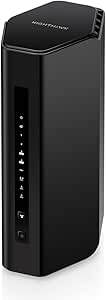
NETGEAR Nighthawk WiFi 7 Router (BE9300) – Router Only, 9.3Gbps Wireless Speed, 2.5 Gigabit Internet Port, Tri-Band for Gaming, Covers 2,500 sq. ft., 100 Devices, VPN – Free Expert Help
This NETGEAR Nighthawk WiFi 7 router offers remarkable speeds up to 9.3 Gbps, making it ideal for gamers and streamers who demand top-tier performance in large homes. Its tri-band setup, including the new 6 GHz band, minimizes interference and maximizes throughput, supporting over 100 devices simultaneously—perfect for a fully connected smart home. The 2.5Gbps WAN port enables multi-gig internet plans, and its coverage of 2500 sq. ft. suits multi-story or expansive spaces. The advanced security features, including VPN support, help protect your network and privacy. Compared to the WiFi 6 AX3000 routers like Archer AX55, the BE9300 is significantly faster and better suited for ultra-high-demand applications. The main tradeoff is the higher price and the fact that it’s a router-only device, requiring a separate modem. This makes it ideal for tech enthusiasts and high-speed users in large homes.
Pros:- Supports WiFi 7 with speeds up to 9.3 Gbps across tri-band network.
- Includes 2.5Gbps WAN port for multi-gig internet plans.
- Covers up to 2500 sq. ft. with high device capacity.
- Advanced security and VPN support for privacy protection.
Cons:- Higher cost compared to WiFi 6 systems with similar coverage.
- Router-only setup requires a separate modem, adding complexity.
- WiFi 7 compatibility is still emerging, potential early issues.
Best for: Gamers, streamers, and large households needing maximum speed, device support, and low latency in a WiFi 7 environment.
Not ideal for: Casual users or small households with modest internet needs, as the investment might outweigh the benefits.
- Data Transfer Rate:Up to 9.3 Gbps
- Number of Ports:1 x 2.5Gbps WAN, 4 x 1Gbps LAN
- Coverage:Up to 2500 sq. ft.
- Security Protocol:WPA3, VPN
- Wi-Fi Generation:WiFi 7
- Device Support:Over 100 devices
Bottom line: Best for high-demand households seeking maximum speed and future-proof WiFi 7 performance for gaming and streaming.
TP-Link Dual-Band AX3000 Wi-Fi 6 Router Archer AX55 | Wireless Gigabit Internet Router for Home | EasyMesh Compatible | VPN Clients & Server | HomeShield, OFDMA, MU-MIMO | USB 3.0 | Secure by Design
The Archer AX55 brings WiFi 6 speeds up to 2976 Mbps and supports multiple security and management features, making it suitable for smart homes with growing device ecosystems. Compared with the WiFi 7 routers, it offers slightly slower speeds but remains highly capable for most residential applications, including streaming, gaming, and IoT device management. Its dual-band setup, with OFDMA and MU-MIMO, handles multiple devices efficiently, and the USB 3.0 port allows sharing of media or printers. The HomeShield security suite and VPN support provide peace of mind for security-conscious users. Its coverage of 2400 sq. ft. and easy setup support a typical smart home environment. The main downside is that it doesn’t support WiFi 7 or WiFi 6E, limiting future upgrades, but for current needs, it offers a good mix of speed, security, and device support.
Pros:- Supports WiFi 6 with speeds up to 2976 Mbps.
- EasyMesh support for multi-router expansion.
- Includes USB 3.0 for device sharing.
- HomeShield security suite and VPN support.
Cons:- Limited to WiFi 6, not WiFi 6E or WiFi 7 for future speed upgrades.
- Coverage can be insufficient for very large or multi-story homes.
- Speed ceiling may impact heavy gaming or 4K streaming in crowded networks.
Best for: Homeowners needing reliable WiFi 6 performance with security features and good device support for smart home growth.
Not ideal for: Tech-savvy early adopters seeking the latest WiFi 7 speeds or ultra-large coverage.
- Data Transfer Rate:Up to 2976 Mbps
- Number of Ports:1 x USB 3.0, 5 ports total
- Coverage:Up to 2400 sq. ft.
- Security Protocol:WPA3
- Wi-Fi Generation:WiFi 6
- Supported Devices:Multiple, with MU-MIMO and OFDMA
Bottom line: Ideal for users wanting a secure, reliable WiFi 6 router with broad device support in typical smart home environments.
ASUS RT-AX1800S Dual Band WiFi 6 Extendable Router, Subscription-Free Network Security, Parental Control, Built-in VPN, AiMesh Compatible, Gaming & Streaming, Smart Home
This ASUS model stands out for its support of WiFi 6, which provides faster speeds and better efficiency across multiple devices, making it ideal for dense smart home environments. Compared with the NETGEAR R6700AX, it offers more advanced security features like subscription-free AiProtection and built-in VPN options, giving it an edge in security-conscious households. The AiMesh compatibility allows for seamless expansion, perfect for those wanting to grow their network without complexity. The tradeoff is that it has only four external antennas, which can limit coverage in very large or multi-story homes. Its 1024-QAM and MU-MIMO support enable reliable, simultaneous connections, especially for streaming and gaming. However, its coverage and throughput may vary based on environmental factors and device density.
Pros:- Supports WiFi 6 with MU-MIMO and OFDMA for efficient device handling
- AiMesh compatible for easy network expansion
- Subscription-free Trend Micro security and built-in VPN
Cons:- Limited to four external antennas, potentially reducing coverage in large homes
- No USB ports for network storage or additional peripherals
- Actual throughput varies with environmental factors
Best for: Tech-savvy homeowners who want a scalable, secure, and high-performance smart home network.
Not ideal for: Small apartments or users with minimal devices, since the advanced features may be overkill and the setup slightly more complex.
- WiFi Standard:WiFi 6 (802.11ax)
- Max Data Rate:1800 Megabits Per Second
- Ports:5 Gigabit ports
- Antenna:External antenna x 4
- Security:AiProtection Classic, VPN
- Coverage:Wide area (variable)
Bottom line: This router is best suited for users who need a secure, expandable WiFi 6 network capable of handling many smart devices with high speed and security.
Cudy AX3000 WiFi 6 Router – 802.11ax Wireless Dual Band Gigabit Internet Router, VPN Compatible, MU-MIMO, WireGuard, Cudy Mesh Compatible WR3000 V2.0
This compact yet powerful router supports WiFi 6 and offers excellent VPN compatibility with WireGuard and OpenVPN, making it suitable for smart homes that prioritize security and multiple device connections. Compared with the ASUS RT-AX1800S, it excels in VPN flexibility, allowing users to upload VPN configs directly and manage device-specific VPN settings, which is ideal for privacy-focused households. Its dual-core 1.2GHz processor and MU-MIMO support ensure smooth performance even with 100+ connected devices, making it perfect for busy smart homes. The main tradeoff is the absence of a USB port, limiting options for network-attached storage or printer sharing. Its design supports seamless mesh expansion, but environmental coverage and throughput will depend on placement and interference.
Pros:- Supports WiFi 6 with 160MHz bandwidth and MU-MIMO for high-speed connections
- Advanced VPN support with WireGuard and OpenVPN, easy config upload
- Mesh compatible for future network expansion
Cons:- No USB ports for storage or peripherals
- Limited coverage in large homes without additional nodes
- Environmental throughput varies depending on placement
Best for: Home users needing robust VPN support, high device density, and flexibility in network security.
Not ideal for: Households requiring USB ports for network storage or peripherals, or those with very large multi-story homes needing extensive coverage.
- WiFi Standard:WiFi 6 (802.11ax)
- Max Data Rate:3000 Megabits Per Second
- Processor:Dual Core 1.2GHz
- Antenna:4 antennas, Fixed
- VPN Compatibility:WireGuard, OpenVPN
- Coverage:Indoor, supports mesh
Bottom line: This router is ideal for tech-savvy households that need secure, high-density WiFi with flexible VPN options and mesh expandability.
NETGEAR WiFi 6 Router 4-Stream (R6700AX) – Router Only, AX1800 Wireless Speed (Up to 1.8 Gbps), Covers up to 1,500 sq. ft., 20 Devices – Free Expert Help, Dual-Band
This NETGEAR AX1800 offers reliable WiFi 6 performance suitable for small to medium smart home setups, providing fast speeds and decent coverage at an affordable price. Compared to the ASUS RT-AX1800S, it focuses on simplicity and cost-effectiveness, lacking advanced security features but providing solid WPA3 security and 4 gigabit ports for wired devices. Its 1,500 sq. ft. coverage makes it ideal for typical households without extensive multi-story needs. The main tradeoff is that it does not support mesh expansion or advanced security, which may be a concern for security-minded users or larger homes. Its straightforward setup and reliable performance make it a strong choice for those with moderate device loads.
Pros:- Supports WiFi 6 with 1800 Mbps max speed
- Easy setup and reliable performance for everyday use
- Four gigabit LAN ports for wired devices
Cons:- Limited coverage for large or multi-story homes
- No advanced security or parental controls
- No mesh expandability
Best for: Average users wanting a secure, straightforward WiFi 6 router for small to medium-sized homes.
Not ideal for: Large multi-story homes or security-conscious users needing advanced features or mesh support.
- WiFi Standard:WiFi 6 (802.11ax)
- Max Data Rate:1800 Megabits Per Second
- Coverage:Up to 1500 sq. ft.
- Ports:4 Gigabit Ethernet
- Security:WPA3
- Antenna:4 fixed antennas
Bottom line: This router is best for budget-conscious users seeking solid WiFi 6 performance in small to medium homes without complex security needs.
TP-Link AC1900 Smart WiFi Router (Archer A8) -High Speed MU-MIMO Wireless Router, Dual Band Router for Wireless Internet, Gigabit, Supports Guest WiFi
This TP-Link Archer A8 offers easy setup and reliable dual-band WiFi with MU-MIMO support, making it suitable for homes with moderate device counts and basic smart home connectivity needs. Compared with the NETGEAR R6700AX, it is slightly less powerful in maximum data speed but benefits from a straightforward setup through the Tether App, appealing to users who prioritize simplicity. Its coverage of around 1200 sq. ft. makes it a good fit for typical homes but may require additional nodes for larger or multi-story spaces. The main tradeoff is the absence of VPN or advanced security features, which makes it less ideal for security-focused households. It supports guest WiFi, making it suitable for households with frequent visitors.
Pros:- Supports MU-MIMO for multiple simultaneous streams
- Easy setup via Tether App
- Supports Guest WiFi for visitors
Cons:- Limited to 1200 sq. ft. coverage without additional nodes
- No VPN or advanced security features
- No USB port for storage or peripheral sharing
Best for: Home users seeking an easy-to-manage, reliable dual-band WiFi router with MU-MIMO for moderate device environments.
Not ideal for: Large or security-sensitive homes needing VPN support or mesh expansion.
- WiFi Standard:WiFi 5 (802.11ac)
- Max Data Rate:1900 Megabits Per Second
- Coverage:Up to 1200 sq. ft.
- Ports:4 Gigabit Ethernet
- Security:WPA2, WPA3
- Antenna:3 fixed antennas
Bottom line: This router is best suited for users who want reliable, simple dual-band WiFi with MU-MIMO in smaller homes or apartments.

How We Picked
I evaluated these routers based on performance, coverage, security features, ease of setup, and compatibility with smart home devices. Priority was given to models that support the latest WiFi standards like WiFi 6 and WiFi 7, ensuring faster speeds and better device handling. I also considered build quality, user interface, and value for money, aiming to identify options suitable for different home sizes and user needs. The ranking reflects a balance between cutting-edge technology, reliability, and user experience, highlighting options that excel in real-world smart home environments.Factors to Consider When Choosing Best Routers For Smart Homes
When choosing a router for a smart home, it’s important to consider several factors that affect performance, security, and ease of use. The right router should not only meet your current needs but also accommodate future device additions. Understanding these key factors will help you avoid common pitfalls such as underestimating coverage needs or sacrificing security for speed.Coverage and Scalability
Smart homes often include multiple devices spread across various rooms, so coverage is critical. Mesh systems like the Deco X55 excel here, providing seamless coverage over large areas. If your home is small, a single high-performance router may suffice. Always consider future expansion: choosing a system that can grow with your smart device ecosystem helps avoid needing a new router later.
WiFi Standard and Speed
WiFi 6 and WiFi 7 are game-changers for smart homes, offering faster speeds and better device management. WiFi 7, as seen in some premium models, provides even higher throughput and lower latency, ideal for bandwidth-heavy smart devices like 4K cameras or smart home hubs. However, these standards often come at a premium, so balancing speed with your actual needs is key.
Security Features
Smart home devices can be vulnerable to hacking, making security features a non-negotiable factor. Look for routers with integrated security solutions like HomeShield or advanced firewalls. Some models even support VPNs, adding an extra layer of privacy. Skipping these features might save money upfront but can expose your network to risks in the long run.
Ease of Setup and Management
For non-technical users, a router with a simple app interface and straightforward setup process is a major plus. Many modern routers offer mobile apps that allow you to manage device priorities, guest networks, and security settings easily. Overly complex systems may require technical knowledge, which can be frustrating and delay your smart home setup.
Price and Future-Proofing
While budget routers can meet basic needs, investing in a higher-end model with WiFi 6/7 and mesh capabilities often pays off over time. Future-proofing ensures your network can handle new smart devices and increased traffic without needing an upgrade soon. Balance your budget with these long-term considerations to get the best value.
Frequently Asked Questions
Do I really need WiFi 6 or WiFi 7 for my smart home?
While many smart home devices work well with WiFi 5, upgrading to WiFi 6 or WiFi 7 can significantly improve performance, especially when multiple devices are streaming, gaming, or transferring large files simultaneously. These standards also offer better security and longer-term compatibility. If your budget allows, choosing a WiFi 6 or WiFi 7 router helps future-proof your network as smart devices become more demanding.
Is a mesh system necessary for a smart home?
Mesh systems are ideal for larger or multi-story homes where single routers can’t provide consistent coverage. They eliminate dead zones and ensure all devices stay connected without interruption. For small apartments, a high-quality single-router setup might suffice, but as your smart device ecosystem grows, a mesh network provides scalability and reliability.
How important are security features in my smart home router?
Security features are critical, given the increasing number of connected devices and potential vulnerabilities. Routers with integrated security tools like Firewalla or HomeShield can protect your network from malware and unauthorized access. Ignoring security can leave your devices and personal data exposed, so prioritize routers with robust security options, especially if you use sensitive or smart security cameras.
Should I prioritize speed or coverage?
For most smart homes, coverage is more important than raw speed, especially if your devices primarily transmit small amounts of data. A router that provides broad, stable coverage ensures all devices stay connected, reducing lag and disconnections. If you have bandwidth-intensive smart devices or high-speed requirements, then speed becomes a more prominent factor, but balanced coverage usually yields a better user experience.
When is it worth investing in a premium router?
Premium routers are worth considering if you have a large home, many smart devices, or require high-speed data transfer for activities like 4K streaming or gaming alongside your smart home setup. They typically offer better security, future compatibility, and more advanced features. For smaller homes or basic needs, mid-range models often provide excellent value without the extra cost.
Conclusion
For most users, the TP-Link Archer AX1800 offers a reliable, feature-rich experience and makes an excellent choice as the best overall router. Those with larger homes or extensive smart device networks should consider the TP-Link Deco X55 Mesh System for its expansive coverage. If you prioritize speed and future-proofing, the TP-Link BE6500 WiFi 7 Router stands out as a premium pick. Beginners and less tech-savvy users will find the ASUS RT-AX1800S or NETGEAR R6700AX easier to set up and manage. Finally, for users focused on security and scalability, models with advanced features like VPN support and mesh compatibility will serve best.