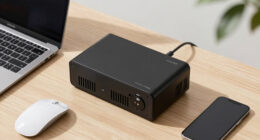
Choosing the best NAS for photo and video backups requires balancing performance, capacity, and ease of use. The UGREEN NAS DH4300 Plus stands out as the best overall for its high capacity and user-friendly features, while the Synology DS423 offers robust expandability for growing media libraries. For those on a budget or seeking simplicity, options like the BUFFALO LinkStation 220 provide reliable storage with included drives. The main tradeoffs involve capacity versus ease of setup, and raw performance versus affordability. Keep reading to explore these options in detail and find the right fit for your digital archive.
Key Takeaways
- High-capacity NAS units like the UGREEN DH4300 Plus excel for large photo and video libraries but can be more complex to set up.
- Diskless models such as Synology DS423 offer better flexibility to upgrade drives over time, ideal for future-proofing.
- Integrated features like 4K HDMI output or AI photo albums add convenience but often come with increased costs or complexity.
- Portable NAS options like PocketCloud are perfect for outdoor shoots or on-the-go backups but have lower capacities.
- Ease of use varies widely; beginner-friendly models tend to have simplified interfaces but may sacrifice expandability or performance.




More Details on Our Top Picks
UGREEN NAS DH4300 Plus 4-Bay Desktop NASync, Support Capacity 128TB (Diskless), Remote Access, AI Photo Album, Beginner Friendly, 8GB LPDDR4X RAM, 2.5GbE, 4K HDMI, Network Attached Storage (Diskless)
This UGREEN NAS stands out for its user-friendly setup and robust features tailored for home media and large data collections. Compared to the Synology DS423, it offers a more approachable interface and built-in AI photo management, making it ideal for users switching from external drives or cloud services. Its strengths include a powerful processor, 8GB RAM, and support for 4K HDMI output, ensuring smooth media playback and multitasking. However, it lacks support for virtual machines, and its wired Ethernet-only connection may limit flexibility in some setups. The large capacity potential and automatic backups make it a compelling choice for those seeking long-term private storage without recurring cloud fees. The device’s beginner-friendly design makes it suitable for tech novices, but advanced users needing virtual machine support might prefer alternatives like the Synology DS423.
Pros:- Intuitive setup with comprehensive user manual and video guides
- Supports 4K HDMI output for media consumption
- Large capacity with support for RAID configurations
Cons:- Wired Ethernet only; no Wi-Fi support
- Supports Docker but not virtual machines, limiting some advanced use cases
Best for: Home users needing large, easy-to-manage storage with media output and AI photo features.
Not ideal for: Tech-savvy professionals requiring virtual machine support or Wi-Fi connectivity for flexible placement.
- Capacity:128TB (diskless)
- RAM:8GB LPDDR4X
- Network:2.5GbE
- Video Output:4K HDMI
- Processor:High-performance
- Support:Docker, no VM support
Bottom line: This NAS makes the most sense for users prioritizing ease of use, media features, and large capacity for home-based photo and video backups.
SSK 4TB Personal Cloud Network Attached Storage Support Wireless Remote Access, Home Office NAS Storage with 4T Hard Drive Included for Phone, Tablet, Laptop Auto-Backup, Wired Ethernet Only,No WiFi
This 4TB NAS is a practical choice for users seeking simple, reliable private cloud storage with remote access. Unlike the more advanced Synology DS423, it comes with a pre-installed 4TB drive and supports easy remote management via PC and mobile devices, making it suitable for personal backups. Its support for Samba and DLNA allows seamless local device sharing, and the auto-sleep feature helps reduce power consumption. The device’s primary drawback is its limited capacity and basic Ethernet-only connectivity, which might not suffice for larger media libraries or more flexible network setups. Its simple interface and included drive make it ideal for beginners or those with modest storage needs, but power users needing extensive capacity or Wi-Fi support should look elsewhere.
Pros:- Pre-installed 4TB drive for quick setup
- Remote access and management from multiple devices
- Supports local sharing via Samba and DLNA
Cons:- Limited to 4TB total capacity, not scalable
- Wired Ethernet only; no Wi-Fi support
- Basic management interface with limited advanced features
Best for: Individuals or small families needing straightforward, off-the-shelf backup and remote access with minimal setup.
Not ideal for: Power users or content creators with large media files and a need for Wi-Fi connectivity or expandable storage.
- Capacity:4TB
- Connectivity:Ethernet, USB
- Support:Remote access, DLNA, Samba
- Form Factor:External 3.5-inch drive
- Speed:Up to 30MB/s
- Power:Auto-sleep feature
Bottom line: This NAS is perfect for users who want a simple, affordable way to back up data and access it remotely on a small scale.
iDiskk 1TB Family & Personal NAS Photo Storage – Auto Backup Photos/Videos for iPhone, iPad, PC, Mac, Android, Real-Time Sync, for Shared & Personal Digital Storage
The iDiskk 1TB NAS excels in cross-platform compatibility, making it ideal for users who want automatic, real-time backup of photos and videos from multiple devices like iPhones, Android phones, and computers. Unlike the larger-capacity options, its focus is on quick, wireless auto backup and sharing, perfect for families and casual users. Its encryption features and easy app management provide security and convenience, but the limited 1TB capacity and USB 3.0 interface may restrict large media libraries or faster transfer needs. Its compact size and broad device support make it a strong choice for those seeking simple, real-time digital storage without complex setup.
Pros:- Automatic, real-time photo and video backup from multiple devices
- Supports iPhone, Android, PC, Mac for seamless data sync
- Encryption for secure data transmission
Cons:- Limited to 1TB storage capacity
- USB 3.0, which may be slower than newer interfaces
- No internal expansion or large media library support
Best for: Families or individuals needing automatic, cross-platform photo/video backup with easy sharing.
Not ideal for: Professional content creators with large media files or users requiring high-speed data transfer and expandable storage.
- Capacity:1TB
- Connectivity:USB 3.0, Wi-Fi
- Support:iPhone, Android, PC, Mac
- Encryption:SSL + Private
- Size:Compact portable
- Backup:Real-time
Bottom line: This NAS makes sense for families prioritizing automatic device backups and easy sharing over large storage capacity.
Synology 2-Bay DiskStation DS223j (Diskless)
The Synology DS223j offers a solid entry point into private cloud storage with reliable data protection and multi-platform access. Its two bays support various RAID configurations, making it suitable for small-scale photo and video backups. Compared to the DS423, it’s more affordable and energy-efficient, with the Synology DiskStation Manager providing a user-friendly interface and extensive app ecosystem. Its main limitations include a smaller capacity and lack of included drives, which could mean additional costs. It’s ideal for users who need a dependable, easy-to-manage private cloud but do not require extensive storage or advanced surveillance features. For those with larger media libraries or seeking more bays, the DS423 might be a better fit.
Pros:- Affordable entry into private cloud storage
- Intuitive DSM interface with app support
- Supports multiple RAID configurations for data safety
Cons:- Only 2 bays, limiting total capacity
- No included drives, adding to initial cost
- Limited to small media libraries without expansion options
Best for: Home users seeking affordable, reliable backup with easy management and moderate capacity.
Not ideal for: Content creators with large media collections or users needing high-capacity storage or surveillance features.
- Bays:2
- Support:RAID, multi-platform
- Warranty:2 years
- Form Factor:Diskless
- Customer Ratings:4.4/5
- Size:Compact
Bottom line: This NAS is best for budget-conscious users wanting dependable backup and easy access for personal data.
Synology 4-Bay DiskStation DS423 (Diskless)
The DS423 provides a versatile platform for extensive photo and video backups, with four bays supporting large drives and advanced data protection features, including snapshots for malware protection. Its robust hardware and Synology DSM offer a rich app ecosystem, including surveillance tools for home security. Compared with the DS223, it supports more drives and offers higher scalability, making it suitable for users with larger media libraries or small business needs. Its main drawback is the higher price and initial setup complexity for beginners. For users requiring a scalable, multi-purpose NAS with strong backup, sharing, and surveillance capabilities, this model offers a comprehensive solution.
Pros:- Supports four drives for large media libraries
- Snapshot and malware protection features
- Rich app ecosystem including surveillance tools
Cons:- Higher cost compared to smaller NAS
- More complex setup process for beginners
- Requires additional drives for maximum capacity
Best for: Enthusiasts or small businesses needing large storage, advanced data protection, and surveillance functionalities.
Not ideal for: Very budget-sensitive users or those with minimal storage needs and no interest in surveillance or multi-drive setups.
- Bays:4
- Support:Snapshots, malware protection
- Support:Surveillance, multi-platform
- Warranty:2 years
- Form Factor:Diskless
- Customer Ratings:4.6/5
Bottom line: This NAS is ideal for users who want high capacity, data security, and surveillance in a single, scalable package.
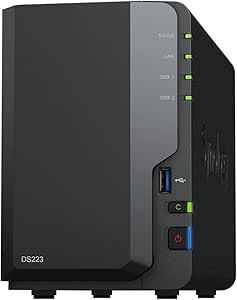
Synology 2-Bay NAS DS223 (Diskless)
This entry-level NAS stands out for its robust software ecosystem and multi-platform access, making it ideal for those who want a flexible, expandable backup solution. Compared with the DS423, the DS223’s two bays are sufficient for most personal and small business needs, but it doesn’t support hot-swapping or RAID 5, which can limit expansion. Its DSM operating system offers extensive features like private cloud, media servers, and third-party app support, though the setup is more complex than plug-and-play options like the BUFFALO LinkStation. The main tradeoff is the learning curve — while it’s powerful, users unfamiliar with networking may need help. This NAS makes the most sense for users comfortable with network configurations who want a future-proof, customizable system without the expense of higher-capacity models.
Pros:- Extensive app ecosystem via Synology DSM for customization
- Supports multi-platform sharing and private cloud creation
- Two Gigabit Ethernet ports for flexible network setup
- 2-year warranty included
Cons:- Setup and configuration require networking knowledge
- Limited expansion options compared to higher-end models
Best for: Tech-savvy users seeking a flexible, expandable NAS with advanced features.
Not ideal for: Novice users or those preferring simple, out-of-the-box solutions without setup complexity.
- Number of Bays:2
- Supported RAID:RAID 0, 1
- Network Ports:2 x Gigabit Ethernet
- Supported OS:Linux-based DSM
- Warranty:2 years
- Compatible Devices:Desktops, Laptops, Mobile Devices
Bottom line: Ideal for users who want a customizable, powerful NAS but are comfortable with a learning curve.
BUFFALO LinkStation SoHo 220 2-Bay Personal Cloud NAS 4TB (2x2TB) with Hard Drives Included
This model offers straightforward setup and sharing, making it suitable for users who want a simple, plug-and-play NAS. Compared with the Synology DS223, the BUFFALO LinkStation is less feature-rich but excels in ease of use, with a more familiar Windows-like interface and less configuration needed. Its RAID 1 provides reliable backup, but lacks advanced options like multi-user permissions or extensive app support, which limits flexibility for tech-savvy users. The primary tradeoff is the limited management capabilities — you get a basic device that just works, but without the customization and advanced features of more complex systems. This pick makes the most sense for those requiring a simple, reliable backup device for home or small office without a steep learning curve.
Pros:- Simple setup with immediate use out of the box
- Includes pre-installed hard drives for quick deployment
- RAID 1 for data redundancy
- User-friendly interface for non-technical users
Cons:- Limited management and customization options
- Lacks advanced features like multi-user permissions or third-party apps
Best for: Home users or small office owners seeking an easy-to-operate, reliable backup NAS with included drives.
Not ideal for: Power users or those needing advanced media server capabilities or extensive app integrations.
- Supported RAID:RAID 1
- Hard Drive Capacity:4TB (2x2TB included)
- Network Connectivity:Ethernet
- Warranty:3 years
- Supported Devices:Windows, macOS
- Form Factor:Desktop
Bottom line: Best suited for users who want a hassle-free, reliable storage device with minimal setup effort.
UGREEN NAS DXP2800 2-Bay Desktop All-Round Ideal for Content Creators and Enthusiasts, Intel N100 Quad-core CPU, 8GB DDR5 RAM, 2.5GbE, 2X M.2 NVMe Slots, 4K HDMI, Network Attached Storage (Diskless)
This NAS is a powerhouse designed for content creators and enthusiasts, offering the latest hardware like an Intel N100 quad-core CPU and 8GB DDR5 RAM, enabling smooth multi-tasking and fast data transfer. Unlike the Synology DS423 or DS223, it emphasizes raw performance and expandability, with dual M.2 NVMe slots for cache or additional storage, and 4K HDMI output for direct media use. It’s perfect for users who want to run virtual machines, Plex, or other demanding apps, but it has a steeper learning curve and requires more technical setup than consumer models like the UGREEN DXP2800. Its main tradeoff is complexity — while it offers high speed and flexibility, setup and maintenance are more involved. This makes it best for advanced users who want a high-performance, all-in-one content hub.
Pros:- Powerful Intel N100 quad-core CPU
- Supports multiple virtual machines and Docker containers
- Dual M.2 NVMe slots for caching or additional storage
- 4K HDMI output for direct media streaming
Cons:- Requires technical knowledge for setup and management
- Higher cost and complexity compared to basic NASs
Best for: Content creators and tech-savvy users needing high-speed, versatile NAS with expansion options.
Not ideal for: Beginners or users seeking simple, out-of-the-box solutions without advanced configuration.
- Processor:Intel N100 Quad-core
- RAM:8GB DDR5
- Network Port:2.5GbE
- Drive Bays:2
- Supported Apps:Virtualization, Plex, Docker
- Form Factor:Desktop
Bottom line: Ideal for users who need high performance, expandability, and media capabilities at the cost of ease of use.
PocketCloud Portable NAS, M.2 NVMe & SD Card Slots, Up to 8TB Capacity (Diskless), One-Click Backup, Wi-Fi 6 Support, LCD Display & App Control, Dual 3200mAh Batteries for Outdoor Backup
The PocketCloud Portable NAS redefines outdoor backup with its compact, rugged design, quick setup, and versatile backup methods. Compared with the UGREEN NAS DXP2800, it sacrifices some raw power for portability, but excels in outdoor environments thanks to dual 3200mAh batteries, Wi-Fi 6, and an LCD display for real-time status. It supports M.2 NVMe SSDs and SD cards, making it ideal for photographers and vloggers who need quick offloading in the field. Its built-in encryption and app-based management provide security and seamless control, while the durable alloy enclosure withstands outdoor conditions. The main tradeoff is storage capacity — as diskless, you must purchase drives separately, and performance may be slightly limited compared to larger desktop NASs. This pick makes the most sense for mobile professionals needing reliable, fast, and secure outdoor backup.
Pros:- Supports up to 8TB with SSDs and SD cards
- Wi-Fi 6 support for fast wireless transfers
- Dual 3200mAh replaceable batteries for hours of outdoor use
- LCD display for real-time status updates
Cons:- Diskless, requiring separate purchase of drives
- Performance dependent on SSD or SD card speed
Best for: Photographers, vloggers, and outdoor professionals needing portable, fast backup solutions.
Not ideal for: Users requiring large storage capacity or high-performance desktop NAS features.
- Maximum Capacity:8TB
- Connectivity:Wi-Fi 6, USB, Ethernet (Dock) support
- Battery Life:6 hours continuous
- Form Factor:Portable
- Supported Storage:M.2 NVMe, SD cards
- Security:AES encryption
Bottom line: Perfect for mobile professionals needing quick, secure, and reliable outdoor backup in a portable form.

How We Picked
I evaluated these NAS options based on a combination of key factors that matter for photo and video backups. Performance metrics such as read/write speeds and multi-user handling were critical, as media files can be large and demand fast access. Storage capacity was a primary consideration, especially models that support high total TBs or easy expansion. Usability and setup complexity also played a role, with preference for models offering intuitive interfaces or helpful apps. Value was assessed by balancing features against price, ensuring that each pick provides a meaningful benefit relative to its cost. Finally, build quality and future-proofing, such as support for M.2 SSDs or RAID configurations, influenced the rankings to serve different user needs effectively.Factors to Consider When Choosing Best NAS For Photo And Video Backups
When selecting a NAS for photo and video backups, it’s important to consider several key factors. Capacity determines how much media you can store now and in the future, so think about your current needs and growth potential. Performance, especially transfer speeds, ensures quick access and editing of large files, which is vital for creative workflows. Ease of setup and user interface can save time and frustration, particularly if you’re new to NAS devices. Additional features like HDMI output or AI tagging can add convenience but should align with your specific use case and budget. Lastly, consider expandability options and drive compatibility to ensure your investment remains useful over time.Capacity and Scalability
For photo and video backups, storage capacity is often the top priority. Larger NAS units with multiple bays allow for higher total storage and RAID configurations for redundancy. If you anticipate significant growth in your media library, choose a model that supports easy drive upgrades or expansion units. Avoid overly limited capacities if you work with high-resolution footage or large photo collections, as running out of space can disrupt your workflow. Keep future needs in mind to prevent frequent replacements or complex migrations down the line.
Performance and Speed
Speed matters when working with large files, especially if you’re editing directly from the NAS. Look for models supporting 2.5GbE or higher network connections, like 10GbE if your setup allows, to reduce bottlenecks. SSD cache support and M.2 slots can significantly boost transfer rates. Lower-end models might suffice for simple backups, but for seamless editing and quick retrieval, prioritize performance features that match your media volume and editing habits.
Ease of Use and Setup
Beginners should focus on models with straightforward setup processes and user-friendly interfaces. Many NAS brands offer mobile apps or web-based dashboards that simplify management. More advanced users might prefer detailed control over RAID settings and network configurations. Beware of overly complex systems if you’re new to NAS, as they can lead to frustration or misconfiguration. A balance between simplicity and customization is often the best approach for most media creators.
Additional Features and Future-Proofing
Features like 4K HDMI output, AI photo tagging, or integrated media servers can enhance your experience but often come at a premium or added complexity. Consider whether these extras align with your specific needs, such as streaming directly to a TV or automatic photo organization. Support for external SSDs, M.2 drives, and multiple network ports can also extend the life of your NAS, accommodating new workflows or higher speeds as your needs evolve.
Value and Long-Term Investment
Balancing cost and features is vital. Cheaper models might seem appealing initially but could lack reliability or future expandability. Investing in a slightly more expensive NAS with better hardware, support, and upgrade options often results in better long-term value. Don’t forget to factor in drive costs—some models include drives, while others require separate purchases. A well-chosen NAS can protect your priceless media for years to come.
Frequently Asked Questions
Is a diskless NAS a good choice for photo and video backups?
Yes, a diskless NAS offers the flexibility to choose your own drives, which can be beneficial if you want specific capacities or brands. It allows for future upgrades and can be more cost-effective initially, as you’re not paying for pre-installed drives. However, it requires more technical knowledge to set up and configure drives properly. For users comfortable with hardware, a diskless model provides customization and scalability that ready-to-go options might lack.
Should I prioritize faster network ports or larger storage capacity?
Both are important, but the choice depends on your workflow. If you regularly edit high-res videos directly from your NAS, faster network ports like 10GbE will significantly improve your experience. Conversely, if your primary need is storing large media libraries for archival, larger capacity drives or arrays will be more critical. Ideally, find a balance where your network speed can handle your data transfer needs without bottlenecking large storage space.
Are hybrid NAS devices with HDMI output worth it for photographers?
Hybrid NAS models with HDMI output can be very convenient for photographers who want to display or review their images directly on a monitor or TV. They often include media server features and may support real-time editing or playback. However, these devices tend to be more expensive and may offer more features than necessary if your main goal is simple backup. Consider whether the added multimedia capabilities justify the extra cost for your specific use case.
How important is it to have M.2 slots or SSD cache support?
Having M.2 slots or SSD cache support can significantly boost NAS performance, especially when working with large media files or multiple users. SSD caches reduce latency and improve read/write speeds, making editing and browsing faster. If your workflow involves high-resolution video editing or frequent access to large files, investing in a NAS with these features can be worthwhile. For basic backups, these may be less critical, but they add a layer of future-proofing for demanding tasks.
Is it better to buy an all-in-one NAS with included drives or a diskless version?
Choosing between an all-in-one NAS with drives included and a diskless model depends on your budget and technical comfort. Pre-filled units are easier to set up and ready to use immediately, ideal for those who want straightforward storage. Diskless models tend to be more flexible and cost-effective upfront, allowing you to select drives based on capacity and speed preferences. Keep in mind that drives can be a significant ongoing expense, so evaluate the total cost of ownership over time.
Conclusion
For general use and maximum flexibility, the UGREEN NAS DH4300 Plus offers a compelling balance of capacity and ease of use, making it ideal for most serious photographers and videographers. If you’re seeking a budget-friendly option that still delivers reliable backups, the BUFFALO LinkStation 220 provides excellent value with included drives. Advanced users or those with demanding workflows should consider the Synology DS423 for future expandability and performance. Beginners will benefit from models with simpler interfaces, while professionals may prioritize high-speed connectivity and media features. Tailor your choice to your current needs and future growth plans for the best long-term investment.