
Choosing the best router for gigabit internet can be challenging with so many options claiming high speeds and advanced features. The NETGEAR Nighthawk WiFi 7 Router (BE9300) stands out for delivering exceptional speed and coverage, ideal for demanding households. Meanwhile, the TP-Link AXE5400 Archer AXE75 offers cutting-edge WiFi 6E technology, perfect for future-proofing your setup. A key tradeoff in this segment is balancing maximum speed capabilities with ease of use and investment level. Continue reading to see how these options compare and which one best fits your specific needs.
Key Takeaways
- The fastest routers, like the NETGEAR Nighthawk WiFi 7, deliver top speeds but often come at a higher price and complexity.
- WiFi 6E routers provide access to new 6GHz bands, offering less congestion but might be overkill for smaller or less demanding homes.
- Dual-band routers like the TP-Link Archer A8 still handle gigabit speeds effectively for most typical household uses.
- Many routers now include multi-gig ports (2.5G or 10G) as standard, a must-have for future-proofing high-speed internet setups.
- Ease of setup and security features vary significantly; premium options often include more robust management tools.




More Details on Our Top Picks
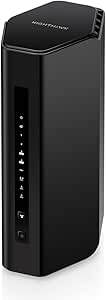
NETGEAR Nighthawk WiFi 7 Router (BE9300) – Router Only, 9.3Gbps Wireless Speed, 2.5 Gigabit Internet Port, Tri-Band for Gaming, Covers 2,500 sq. ft., 100 Devices, VPN – Free Expert Help
This router stands out for its support of the latest WiFi 7 standard, delivering speeds up to 9.3 Gbps, making it ideal for demanding activities like 4K/8K streaming and high-end gaming. Compared to the TP-Link Archer AXE75, it offers faster wireless throughput and broader device capacity, thanks to tri-band support and 320 MHz channels. Its dedicated 6 GHz band reduces interference, providing smoother performance across multiple devices. The downside involves a higher price point and the need for a separate modem, which could be a drawback for budget-conscious buyers or those seeking an all-in-one solution. Its coverage of 2,500 sq. ft. and support for 100 devices make it suitable for large homes. The built-in security and VPN features add further value for privacy-focused users.
Pros:- Supports WiFi 7 with speeds up to 9.3 Gbps
- Tri-band with dedicated 6 GHz for minimal interference
- Covers up to 2,500 sq. ft. with support for 100 devices
- Includes robust security and VPN features
Cons:- Requires a separate modem, adding to overall cost
- Higher price compared to WiFi 6 options
- Larger physical footprint may be less sleek for small spaces
Best for: Gamers and streamers who demand the fastest speeds and reliable device handling in large homes
Not ideal for: Users seeking an all-in-one router-modem combo or those on a tight budget
- Wireless Speed:9.3Gbps
- Port Count:4
- Coverage Area:2500 sq. ft.
- Device Support:100 devices
- Security:WPA3, VPN
- Antenna Count:4
Bottom line: This router is perfect for tech-savvy users needing top-tier speeds and coverage for large homes with many devices.
TP-Link AC1900 Smart WiFi Router (Archer A8) -High Speed MU-MIMO Wireless Router, Dual Band Router for Wireless Internet, Gigabit, Supports Guest WiFi
This model makes the list for its straightforward setup via the Tether app, making it ideal for users who want reliable gigabit speeds without complexity. It supports dual-band WiFi with speeds up to 1300 Mbps on the 5 GHz band and 600 Mbps on 2.4 GHz, which is sufficient for HD streaming and moderate gaming. Compared to the TP-Link Archer AX21, it offers better speed stability for gigabit plans but lacks the latest WiFi 6 or 6E features. Its coverage of up to 1,200 sq. ft. is suitable for smaller homes or apartments. The 4 Gigabit LAN ports support wired devices, and parental controls add value for families. The cons include limited range and no WiFi 6 support, which might impact future-proofing.
Pros:- Easy setup with the Tether app
- Gigabit LAN ports for wired connections
- Supports guest WiFi and parental controls
- Reliable dual-band speeds for typical gigabit internet plans
Cons:- Limited coverage area (up to 1,200 sq. ft.)
- No WiFi 6 or 6E support for future compatibility
- Performance may decline in larger or obstacle-heavy environments
Best for: Small to medium households seeking reliable gigabit WiFi with simple setup
Not ideal for: Heavy streamers or gamers with large homes or multiple high-demand devices
- Wireless Speed:1300 Mbps (5GHz)
- Port Count:4
- Coverage Area:1200 sq. ft.
- WiFi Bands:Dual-Band
- Security Protocol:WPA2
- Support:Guest WiFi, Parental Controls
Bottom line: This router suits small households needing dependable gigabit WiFi with easy management, but isn’t ideal for large or high-demand setups.
TP-Link AC1200 Gigabit WiFi Router (Archer A6) – Dual Band MU-MIMO Wireless Internet Router, 4 x Antennas, OneMesh and AP Mode, Long Range Coverage
This router makes the list for its affordability combined with impressive coverage, supporting up to 1,200 sq. ft. and multiple devices. It offers dual-band WiFi with speeds up to 900 Mbps on 5 GHz and 300 Mbps on 2.4 GHz, enough for HD streaming and light gaming. Compared to the TP-Link Archer AX55, it provides less speed but more coverage and simplicity, making it a good choice for budget-conscious users. The 4 external antennas and Beamforming technology help extend WiFi reach into larger or obstacle-filled spaces. It supports MU-MIMO and OneMesh, allowing expansion and seamless coverage. The cons include its lack of WiFi 6 support and lower overall speed capacity, limiting future-proofing for very high-speed plans.
Pros:- Affordable with extended coverage (up to 1,200 sq. ft.)
- Supports MU-MIMO and OneMesh for scalability
- Multiple antennas for better range
- Easy to set up with app management
Cons:- Limited to WiFi 5 speeds (up to 900 Mbps)
- No WiFi 6 support for future compatibility
- Lower speed capacity may bottleneck gigabit plans in heavy use
Best for: Budget-conscious users needing good range and gigabit speeds in medium-sized homes
Not ideal for: Power users or households with many high-bandwidth devices or large coverage needs
- Wireless Speed:900 Mbps (5GHz)
- Port Count:4
- Coverage Area:1200 sq. ft.
- WiFi Bands:Dual-Band
- Technology:MU-MIMO, OneMesh
- Security:WPA2
Bottom line: Ideal for budget buyers requiring solid gigabit performance and coverage in medium homes, but not for future-proof or high-demand environments.
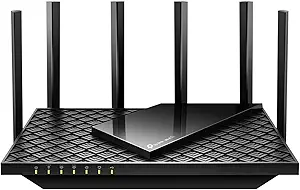
TP-Link AXE5400 Tri-Band WiFi 6E Router (Archer AXE75), 2025 PCMag Editors’ Choice, Gigabit Internet for Gaming & Streaming, New 6GHz Band, 160MHz, OneMesh, Quad-Core CPU, VPN & WPA3 Security
This router earns its spot as the best for future-proof gigabit internet, boasting WiFi 6E with the new 6 GHz band, delivering speeds up to 5400 Mbps across three bands. Its support for 160 MHz channels and OFDMA technology makes it excellent for high-bandwidth activities like gaming, streaming, and multiple device connections. Compared to the Archer AXE75, it offers similar high speeds but adds support for the latest WiFi 6E standard and WPA3 security, providing enhanced privacy and security. The 4 high-gain antennas and quad-core CPU optimize range and processing power, though the price is higher. Its support for VPN, OneMesh, and extensive security features appeal to tech-savvy users wanting long-term performance and security.
Pros:- Supports WiFi 6E with speeds up to 5400 Mbps
- New 6 GHz band reduces interference and latency
- Supports OFDMA, 160 MHz channels for maximum throughput
- Includes WPA3 security and VPN support
Cons:- Higher price point compared to WiFi 6 models
- Limited to tri-band WiFi, not dual-band
- Complex setup might be overwhelming for average users
Best for: Gamers, streamers, and tech enthusiasts seeking the latest WiFi 6E speeds and security in a future-proof setup
Not ideal for: Casual users or those with smaller homes who don’t need WiFi 6E features
- Wireless Speed:5400 Mbps
- Port Count:5
- Coverage Area:Excellent for whole home
- WiFi Bands:Tri-Band (6GHz, 5GHz, 2.4GHz)
- Security:WPA3, VPN
- CPU:Quad-Core
Bottom line: This router is perfect for users wanting the latest WiFi 6E technology for gaming and streaming with robust security features.
TP-Link Dual-Band AX3000 Wi-Fi 6 Router Archer AX55
This router stands out for its robust Wi-Fi 6 speeds, with 2402 Mbps on 5 GHz and 574 Mbps on 2.4 GHz, making it a top pick for demanding gigabit internet plans. Compared to the TP-Link AX1800, the AX55 offers higher maximum throughput and more advanced features like OFDMA and MU-MIMO, which improve multitasking and reduce latency. Its expanded coverage with four external antennas and Beamforming ensures reliable Wi-Fi throughout larger homes, while the security suite with HomeShield adds peace of mind. However, the “Smart Connect” feature can be problematic, especially on mobile devices, often causing devices to bounce between bands or stick to the less optimal one, which may frustrate users relying on seamless handoffs. Additionally, some might find the setup process slightly complex if not familiar with advanced configurations. Overall, this model is ideal for users who want high performance and advanced security without sacrificing coverage, but those seeking plug-and-play simplicity might prefer a more streamlined option.
Pros:- High Wi-Fi 6 speeds for demanding online activities
- Extended coverage with four high-gain antennas and Beamforming
- Supports advanced security with TP-Link HomeShield
Cons:- “Smart Connect” feature can cause devices to bounce between bands, reducing reliability
- Setup can be complicated for users unfamiliar with network configurations
- Some older devices may not fully benefit from Wi-Fi 6 capabilities
Best for: Home users with gigabit internet seeking maximum speed, coverage, and security features.
Not ideal for: Users who prefer simple, hassle-free setup or have older devices that struggle with Wi-Fi 6 features.
- Maximum Data Transfer Rate:2976 Megabits per second
- Frequency Band Class:Dual-Band
- Antenna Count:4
- Security Protocols:WPA3, WPA2-PSK
- Wireless Compatibility:802.11ax, 802.11ac
- Control Method:App Control
Bottom line: This router is best suited for tech-savvy users who need fast, reliable Wi-Fi coverage and security for gigabit plans, but not for those seeking simplicity.
TP-Link AX1800 WiFi 6 Router (Archer AX21 V5)
The AX1800 offers solid Wi-Fi 6 speeds with a total of 1.8 Gbps, splitting 1200 Mbps on 5 GHz and 574 Mbps on 2.4 GHz, making it a capable choice for gigabit internet when budget matters. Compared to the AX5400 Archer AX73, it provides less maximum throughput but still supports essential Wi-Fi 6 features like OFDMA and MU-MIMO, which help handle multiple devices more efficiently. Its dual high-gain antennas and Beamforming technology give reliable coverage for small to medium homes, and the easy setup via the TP-Link Tether app simplifies installation for most users. However, it lacks the higher speeds and advanced features of premium models like the AX73, making it less suitable for users with many high-bandwidth devices or larger homes. It makes the most sense for users who want gigabit speed at an affordable price and are okay with slightly limited range and features.
Pros:- Affordable price for Wi-Fi 6 performance
- Supports OFDMA and MU-MIMO for efficient multi-device use
- Simple setup through the TP-Link Tether app
Cons:- Maximum throughput lower than higher-end Wi-Fi 6 routers
- Limited coverage for larger homes
- No 6 GHz band support
Best for: Budget-conscious households with gigabit internet needing reliable coverage without complex setup.
Not ideal for: Power users with large homes or many simultaneous high-bandwidth devices who require maximum throughput and advanced features.
- Maximum Data Transfer Rate:1200 Megabits per second (5 GHz)
- Frequency Band Class:Dual-Band
- Antenna Count:2
- Security Protocols:WPA3, WPA2
- Wireless Compatibility:802.11ax, 802.11ac
- Control Method:App (Tether)
Bottom line: This router offers good gigabit Wi-Fi 6 performance for budget-minded users, but may fall short in large or high-demand environments.
TP-Link AX5400 WiFi 6 Router (Archer AX73)
The AX5400 Archer AX73 is designed to deliver ultra-fast Wi-Fi speeds up to 4.8 Gbps using the 5 GHz band with 4T4R and HE160 technologies, making it ideal for seamless 8K streaming, gaming, and multiple device use in larger homes. Compared with the AX3000 AX55, the AX73 provides higher maximum throughput and more advanced antenna technology for better range and stability. Its MU-MIMO and OFDMA support reduce congestion, ensuring stable connections across many devices. The high-power FEM, six antennas, and Beamforming focus signal strength to maintain coverage even in challenging environments. The main tradeoff is that this model is more expensive and physically larger, which could be a concern for limited spaces. It’s best for users seeking top-tier gigabit performance with extended range, especially in bigger or multi-story residences.
Pros:- Extremely high speeds up to 4.8 Gbps
- Long-range coverage with 6 high-gain antennas and Beamforming
- Supports MU-MIMO and OFDMA for multiple simultaneous devices
Cons:- Higher cost and larger physical size
- Overkill for small apartments or basic gigabit needs
- Complex setup for less experienced users
Best for: Power users who need maximum speed and extensive coverage for streaming and gaming in large or multi-story homes.
Not ideal for: Users with small spaces or tight budgets who don’t need the highest throughput or range.
- Maximum Data Transfer Rate:4.8 Gbps
- Frequency Band Class:Dual-Band
- Antenna Count:6
- Security Protocols:WPA3, WPA2
- Wireless Compatibility:802.11ax, 802.11ac
- Control Method:App
Bottom line: This router is best for high-demand households needing maximum gigabit speeds and coverage, but it’s less suitable for small or budget setups.
GL.iNet GL-MT6000 (Flint 2) WiFi 6 Gaming Router
The GL.iNet Flint 2 offers impressive Wi-Fi 6 speeds up to 6 Gbps, with dual 2.5G Ethernet ports ideal for fiber optic connections, making it a strong choice for gamers and VPN users seeking low latency and high throughput. Its support for OpenVPN and Wireguard VPN protocols with speeds up to 900 Mbps and 880 Mbps respectively provides a significant advantage for privacy-conscious users. Compared to traditional consumer routers like the AX5400 AX73, the Flint 2 emphasizes VPN performance and customization, accommodating advanced users who want more control over their network. Its long-range capabilities and ability to connect numerous devices make it suitable for large households or small businesses. The main tradeoff is that its setup and management require some technical expertise, and its focus on VPN features might overcomplicate simple home use. It’s best for gamers, VPN users, and tech enthusiasts who prioritize security and speed.
Pros:- Supports Wi-Fi 6 speeds up to 6 Gbps
- Dual 2.5G Ethernet ports for fiber connections
- High VPN speeds with OpenVPN and Wireguard support
Cons:- Requires technical knowledge for setup and management
- Overly complex for basic home use
- Higher price point compared to standard routers
Best for: Gamers and privacy-focused users needing high-speed VPN, custom configurations, and fiber-ready Ethernet ports.
Not ideal for: Average home users seeking plug-and-play simplicity or basic gigabit Wi-Fi without advanced VPN features.
- Maximum Data Transfer Rate:6 Gbps
- Ethernet Ports:2x 2.5G
- Frequency Band Class:Dual-Band
- Security Protocols:OpenVPN, Wireguard
- Wireless Compatibility:802.11ax
- Control Method:Web Interface, App
Bottom line: This router excels for gamers and VPN users who need fast, customizable, and secure internet, but it’s not suited for casual or less tech-savvy users.
How We Picked
To determine the best routers for gigabit internet, I evaluated each model based on maximum wireless throughput, port configurations supporting multi-gig internet plans, ease of setup, security features, and overall build quality. Performance benchmarks and real-world speed capabilities guided the rankings, ensuring the devices can truly handle gigabit speeds consistently. Additional factors like coverage area, user-friendliness, and future-proofing through WiFi 6 or 6E technology also played a role. Products were prioritized if they offered a clear advantage for high-speed home networks, balancing value with advanced features to serve different user needs.Factors to Consider When Choosing Best Routers For Gigabit Internet
When selecting a router for gigabit internet, it’s essential to consider several factors that influence performance, coverage, and future readiness. Investing in the right features can prevent bottlenecks and ensure your network can handle demanding tasks like 4K streaming, gaming, or smart home connectivity. A careful balance of speed, range, security, and usability will help you avoid common pitfalls like overpaying for unnecessary tech or choosing a device that cannot sustain gigabit speeds under load.Speed and Wireless Standards
Look for routers supporting WiFi 6 or WiFi 6E, as these standards are designed to handle gigabit speeds more efficiently and with greater capacity. Even if your current plan is gigabit, future internet upgrades may require higher throughput. Devices with multi-gig ports (2.5G, 5G, or 10G) are crucial for wired connections, especially if you have a fiber connection or plan to upgrade. Avoid routers with only older WiFi standards, as they may bottleneck your network and limit performance under heavy loads.
Coverage Area and Antenna Design
Assess your home’s layout to match the router’s coverage range. Larger spaces or multi-story homes benefit from routers with multiple high-gain antennas or mesh-compatible designs. While more antennas can improve coverage, they can also complicate setup; balance your needs based on your space. Remember, a router that only covers a small area may require extenders or mesh systems to truly support gigabit speeds throughout your home.
Security and Management Features
Security is vital, especially with high-speed plans that enable more connected devices. Look for routers with WPA3 encryption, automatic firmware updates, and robust parental controls. User-friendly management apps and web interfaces help simplify setup and troubleshooting, which is crucial if you’re not a tech expert. Higher-end models often include advanced security features like VPN support and intrusion detection, providing peace of mind for sensitive data.
Price and Future-Proofing
While premium routers cost more, they typically offer better performance, security, and longevity. Consider your current needs versus future demands—investing a bit more now can save money later on upgrades. However, avoid overspending on features you won’t use. For most users, a balanced approach with WiFi 6 or 6E support delivers a good mix of speed and value without unnecessary complexity or cost.
Ease of Setup and User Experience
A router’s setup process can dramatically affect your experience. Devices with straightforward apps, clear instructions, and automated configuration streamline the process. Security features like guest networks and parental controls should be easy to activate and manage. If you prefer a plug-and-play experience, consider models known for user-friendly interfaces, even if they lack some advanced features found in more complex devices.
Frequently Asked Questions
Can all gigabit internet plans be fully utilized with a standard router?
Not necessarily. To maximize gigabit internet speeds, your router must support multi-gig ports and WiFi standards like WiFi 6 or 6E. Older routers or those with only WiFi 5 may limit your network’s potential, causing bottlenecks. Even with a gigabit plan, other network components, like Ethernet cables and switches, need to support high speeds. Upgrading to a router designed for gigabit speeds ensures you get the most out of your internet plan.
Is WiFi 6E worth it for a home with multiple users and devices?
WiFi 6E introduces the 6GHz band, which provides less congestion and higher throughput for multiple devices simultaneously. For households with many users streaming, gaming, or working at once, WiFi 6E can significantly improve performance. However, to benefit fully, your devices must also support WiFi 6E. If your current devices only support WiFi 5 or WiFi 6, the advantages of 6E might be limited until you upgrade your gadgets.
Should I focus more on coverage or maximum speed when choosing a router?
It depends on your home’s size and layout. If you have a large or multi-story home, coverage becomes a priority to prevent dead zones. In smaller spaces, maximizing speed may be more beneficial for a few high-demand devices. Combining a router with mesh extenders or multiple access points can help you achieve both broad coverage and high speeds. Balancing these factors based on your specific environment will ensure a smoother, faster network experience.
Are multi-gig ports necessary if I already have gigabit internet?
Multi-gig ports are highly recommended for wired connections, especially if you plan to upgrade to faster internet in the future or have devices like NAS storage that benefit from higher transfer speeds. They also help reduce network bottlenecks when multiple wired devices are in use. While not essential for basic internet browsing, including multi-gig ports makes your setup more versatile and future-proof.
How important is security in choosing a gigabit router?
Security is a critical aspect, especially with high-speed internet enabling more connected devices and sensitive data transfer. Features like WPA3 encryption, automatic firmware updates, and built-in firewalls help protect your network from threats. Higher-end routers often include VPN support and advanced threat detection, providing a safer environment for your family or business. Investing in a secure router helps safeguard your network without sacrificing performance.
Conclusion
For most households seeking reliable gigabit speeds, the NETGEAR Nighthawk WiFi 7 Router offers overall excellence with blazing fast speeds and extensive coverage—ideal for tech-savvy users and gamers. If budget is a concern, the TP-Link Archer A6 provides solid performance at a lower price point, perfect for smaller homes or less demanding users. For those looking to future-proof their setup, the TP-Link AXE5400 Archer AXE75 with WiFi 6E support makes sense, especially for households with many devices. New users or less tech-savvy buyers will find the TP-Link Archer AX21 straightforward and reliable, while power users or professionals needing ultra-fast wired connections should consider models with multi-gig ports like the GL.iNet Flint 2. Your choice should align with your specific speed needs, coverage space, and budget to get the best experience.