Finding the best routers with parental controls and VPN features can be challenging, as many models offer these capabilities but vary significantly in performance, usability, and security. The ASUS RT-BE86U stands out for its robust gaming-oriented features and strong VPN support, making it ideal for tech-savvy families. Meanwhile, the Synology RT6600ax offers advanced security and flexible parental controls for those prioritizing privacy. The main tradeoffs involve balancing ease of setup, speed, and security—more feature-rich models may be complex for beginners, while simpler options might lack advanced protections. Continue reading for a detailed breakdown of the best choices in this category to help you find the perfect fit.

Get hardware and tech essentials delivered free — and shop member deals
- Fast, free delivery on millions of items
- Access to Prime Big Deal Days deals on October 6–7
- Prime Video, Amazon Music and more included
Key Takeaways
- High-performance routers like ASUS RT-BE86U excel in speed and VPN support, but may be complex for novice users.
- Security-focused models like Synology RT6600ax provide strong parental controls and privacy features, often at a higher price point.
- Wi-Fi 6E and Wi-Fi 7 routers deliver faster speeds and future-proofing, yet are typically more expensive and may have limited parent control options initially.
- Ease of setup and user interface vary widely—models with dedicated apps tend to simplify management of parental controls and VPNs.
- Tradeoffs often involve balancing advanced features with simplicity; budget options may lack robust parental controls or VPN support.
| ASUS RT-BE58U WiFi 7 Router – Dual-WAN, 3.6 Gbps, Mesh + VPN Compatible |  | Best Overall for Advanced Home Networks | Frequency Band: Dual-Band | Wireless Compatibility: 802.11.be | Maximum Data Transfer Rate: 3600 Mbps | VIEW LATEST PRICE | See Our Full Breakdown |
| ASUS RT-BE86U WiFi 7 Gaming Router, 10G WAN, 6.8 Gbps, Mesh VPN Compatible |  | Best for High-Performance Gaming and Streaming | Wi-Fi Standard: Wi-Fi 7 (802.11be) | Maximum Wireless Speed: 6800 Mbps | Wired Ports: 1x 10G WAN/LAN | VIEW LATEST PRICE | See Our Full Breakdown |
| ASUS RT-AX1800S Dual Band WiFi 6 Extendable Router |  | Best for Budget-Conscious Smart Homes | WiFi Standard: WiFi 6 (802.11ax) | Antenna: External x 4 | Processor: Dual-core | VIEW LATEST PRICE | See Our Full Breakdown |
| Synology RT6600ax Tri-Band Wi-Fi 6 Router with 2.5Gbps Ethernet and Security Features |  | Best for Secure, High-Speed Small Office/Home Use | Frequency Band: Tri-Band | Wireless Compatibility: 802.11a/b/g/n/ac/ax | Maximum Wireless Speed: 6.6 Gbps | VIEW LATEST PRICE | See Our Full Breakdown |
| TP-Link AXE5400 Tri-Band WiFi 6E Router (Archer AXE75) |  | Best for Future-Ready Connectivity with WiFi 6E | WiFi Speed: up to 5400 Mbps | Bands: Tri-Band (6 GHz, 5 GHz, 2.4 GHz) | Processor: 1.0 GHz dual-core | VIEW LATEST PRICE | See Our Full Breakdown |
| TP-Link Dual-Band AX3000 Wi-Fi 6 Wireless Gigabit Internet Router for Home |  | Best Overall for Balanced Performance and Security | Wi-Fi Speed: AX3000 (2402 Mbps on 5 GHz, 574 Mbps on 2.4 GHz) | Frequency Bands: Dual-Band | Antennas: 4 high-gain external antennas | VIEW LATEST PRICE | See Our Full Breakdown |
| TP-Link BE6500 Dual-Band WiFi 7 Router (BE400) |  | Best for Future-Proof High-Speed Home Networks | Technology: Wi-Fi 7 | Bands: Dual-Band | Max Bandwidth: 6.5 Gbps | VIEW LATEST PRICE | See Our Full Breakdown |
| GL.iNet GL-BE3600 Slate 7 Wi-Fi 7 Travel Router Touchscreen 2.5G |  | Best for Secure Travel and Custom Networking | Wi-Fi Standard: Wi-Fi 7 | Wireless Speed: 688Mbps (2.4G)+2882Mbps (5G) | Ethernet Ports: 2.5G (1x WAN, 1x LAN) | VIEW LATEST PRICE | See Our Full Breakdown |
| Synology WRX560 Dual-Band Wi-Fi 6 Router with 2.5Gbps Ethernet |  | Best for Secure Mesh-Ready Large Homes | Wi-Fi Standard: Wi-Fi 6 | Frequency: Dual-band, 5.9 GHz | Ethernet Speed: 2.5 Gbps | VIEW LATEST PRICE | See Our Full Breakdown |
| GL.iNet GL-BE6500 Flint 3e Wi-Fi 7 Router with VPN for Home and Gaming |  | Best for High-Speed Gaming and Parental Controls | Wi-Fi Standard: Wi-Fi 7 | Max Speed: 6.5 Gbps | Coverage: Up to 2,500 sq ft | VIEW LATEST PRICE | See Our Full Breakdown |
| ASUS RT-AX5400 Dual Band WiFi 6 Router |  | Best Overall for Balanced Performance and Security | WiFi Standard: WiFi 6 | Coverage: Extendable via AiMesh | Security: Lifetime internet security | VIEW LATEST PRICE | See Our Full Breakdown |
| ASUS RT-BE82U WiFi 7 Router – Dual-Band, 6.5 Gbps, Mesh + VPN Compatible |  | Best for High-Speed, Future-Ready Networks | WiFi Standard: WiFi 7 (802.11be) | Speed: 6500 Mbps | Bands: Dual-Band | VIEW LATEST PRICE | See Our Full Breakdown |
| Cudy AX1500 Gigabit Mesh Wi-Fi 6 Router, 4X GbE, OFDMA, VPN, WR1500 | 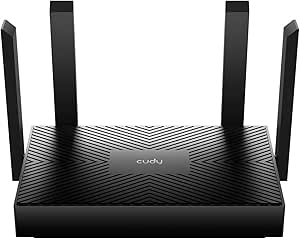 | Best for Budget-Conscious Small Homes with VPN Needs | Wi-Fi Standard: Wi-Fi 6 | Speed: 1201 Mbps (5 GHz) + 300 Mbps (2.4 GHz) | Ethernet Ports: 4 (1x WAN + 3x LAN) | VIEW LATEST PRICE | See Our Full Breakdown |
| routers with parental controls and VPN | Coverage |
|---|---|
| ASUS RT-BE58U WiFi 7 Router | — |
| ASUS RT-BE86U WiFi 7 Gaming Ro | Up to 2750 sq. ft. |
| ASUS RT-AX1800S Dual Band WiFi | Moderate |
| Synology RT6600ax Tri-Band Wi- | — |
| TP-Link AXE5400 Tri-Band WiFi | — |
| TP-Link Dual-Band AX3000 Wi-Fi | — |
| TP-Link BE6500 Dual-Band WiFi | up to 2,400 sq. ft. |
| GL.iNet GL-BE3600 Slate 7 Wi-F | Indoor, up to 120+ devices |
| Synology WRX560 Dual-Band Wi-F | — |
| GL.iNet GL-BE6500 Flint 3e Wi- | Up to 2,500 sq ft |
| ASUS RT-AX5400 Dual Band WiFi | Extendable via AiMesh |
| ASUS RT-BE82U WiFi 7 Router | — |
| Cudy AX1500 Gigabit Mesh Wi-Fi | 1100 sq ft |
More Details on Our Top Picks
ASUS RT-BE58U WiFi 7 Router – Dual-WAN, 3.6 Gbps, Mesh + VPN Compatible
The ASUS RT-BE58U stands out for offering WiFi 7 speeds up to 3600 Mbps, making it ideal for households with multiple demanding devices. Its support for mesh networking, VPN, and AiProtection Pro provides a comprehensive security and connectivity solution. Compared with the ASUS RT-BE86U, this model is more suitable for general use rather than high-end gaming, as it lacks the ultra-fast 10G WAN port. The setup process can be complex, especially for users unfamiliar with advanced networking, but its feature set justifies the learning curve for tech-savvy households. It’s best suited for users who want future-proofing and robust parental controls without needing the extreme gaming features. The main tradeoff is that its extensive capabilities might be overkill for basic internet needs.
Pros:- Supports WiFi 7 with speeds up to 3600 Mbps for fast, reliable connections
- Versatile WAN options including multi-link and USB tethering
- Enhanced security with AiProtection Pro and parental controls
Cons:- Setup process may be intimidating for non-technical users
- Premium features might be unnecessary for basic browsing or streaming
Best for: Tech-savvy families seeking a future-proof, secure, and versatile WiFi 7 network
Not ideal for: Casual users or those preferring a plug-and-play setup with minimal configuration
- Frequency Band:Dual-Band
- Wireless Compatibility:802.11.be
- Maximum Data Transfer Rate:3600 Mbps
- LAN Ports:5
- Number of Antennas:4
- Security Protocols:WPA/WPA2/WPA3-Personal, WPA/WPA2-Enterprise, Firewall, VPN, AiProtection
- Operating System:Linux-based
- Control Method:App
- Wi-Fi Generation:Wi-Fi 7
Our verdict“This router makes the most sense for users who need a powerful, secure network with future-proof features and are comfortable with complex setup processes.”
ASUS RT-BE86U WiFi 7 Gaming Router, 10G WAN, 6.8 Gbps, Mesh VPN Compatible
The ASUS RT-BE86U pushes speeds up to 6800 Mbps, making it ideal for gamers and streamers who require ultra-low latency and maximum throughput. Its 20G wired throughput and 10G WAN port support the most demanding internet plans, surpassing the ASUS RT-BE58U in raw performance. While it excels in speed, its complex setup and premium price tag make it less suited for casual users. Its space-saving upright design is perfect for dedicated gaming setups or high-performance home offices. This router is best for households with serious gaming or heavy streaming needs and a tech-savvy setup environment. The main tradeoff is that it may be overkill for standard browsing or light usage.
Pros:- Blazing wireless speeds up to 6800 Mbps for gaming and streaming
- Extensive wired connectivity with 20G throughput support
- Mesh network support for large homes and multiple devices
- Advanced security with lifetime AiProtection Pro
Cons:- Setup complexity may deter non-technical users
- High price point could be prohibitive for average households
Best for: Hardcore gamers and streaming enthusiasts needing maximum speed and low latency
Not ideal for: Users with basic internet needs who prefer simple setup and lower cost
- Wi-Fi Standard:Wi-Fi 7 (802.11be)
- Maximum Wireless Speed:6800 Mbps
- Wired Ports:1x 10G WAN/LAN
- Total Wired Throughput:20G
- CPU:Quad-core 2.6 GHz 64-bit
- RAM:1 GB
- Coverage:Up to 2750 sq. ft.
Our verdict“This router is best suited for high-demand homes where maximum performance and low latency are critical, and users are comfortable with advanced setup.”
ASUS RT-AX1800S Dual Band WiFi 6 Extendable Router
The ASUS RT-AX1800S provides solid WiFi 6 performance at a more accessible price point, supporting MU-MIMO and OFDMA for efficient device handling. Its four external antennas and dual-core processor enable good coverage and speed, especially for smaller households or smart home setups. Compared to the Synology RT6600ax, it offers easier setup and a lower price but with less advanced security features and fewer customization options. Its VPN and parental controls are adequate for typical families, though it lacks some of the enterprise-level security features of higher-end models. It’s ideal for users seeking a balance between performance and affordability, especially in homes with moderate device counts.
Pros:- Supports WiFi 6 for faster, more efficient connections
- Four external antennas for better coverage
- Supports MU-MIMO and OFDMA technologies
Cons:- Setup might be less intuitive for non-tech users
- Limited advanced security features compared to higher-tier routers
Best for: Budget-conscious families wanting reliable WiFi 6 with parental controls
Not ideal for: Heavy users or large households needing extensive coverage and advanced security
- WiFi Standard:WiFi 6 (802.11ax)
- Antenna:External x 4
- Processor:Dual-core
- Ports:1 Gigabit WAN, 4 Gigabit LAN
- Security:AiProtection Classic, VPN
- Coverage:Moderate
Our verdict“This router makes sense for families seeking reliable WiFi 6 performance without the high cost or complexity of premium options.”
Synology RT6600ax Tri-Band Wi-Fi 6 Router with 2.5Gbps Ethernet and Security Features
The Synology RT6600ax offers tri-band Wi-Fi 6 with up to 6.6 Gbps throughput, making it ideal for homes or small offices with high data demands. Its support for multiple VLANs, parental controls, and threat prevention positions it as a security-focused choice, especially for users who prioritize data privacy. Compared with the ASUS RT-BE58U, it provides a more comprehensive security suite, but setup can be more complex, and its 1 GB RAM might limit multitasking. The 2.5Gbps Ethernet port ensures fast wired connectivity, suitable for high-speed internet plans. It’s best for users who want a secure, robust network with advanced management features in a professional or home office environment.
Pros:- High-speed tri-band Wi-Fi 6 with up to 6.6 Gbps throughput
- Supports multiple VLANs, parental controls, and threat prevention
- Fast 2.5Gbps Ethernet port for high-speed wired connections
Cons:- Setup complexity may challenge non-technical users
- Limited RAM might restrict multitasking and advanced configurations
Best for: Small businesses or families needing enterprise-grade security and high-speed connectivity
Not ideal for: Casual users seeking simple, plug-and-play routers with basic features
- Frequency Band:Tri-Band
- Wireless Compatibility:802.11a/b/g/n/ac/ax
- Maximum Wireless Speed:6.6 Gbps
- Ethernet Ports:5, with 2.5Gbps port
- RAM:1 GB
- Security Protocols:WPA/WPA2/WPA3, VLAN, Threat Prevention
Our verdict“This router is best for users who need a highly secure, high-performance network with enterprise features, and are comfortable with configuration complexity.”
TP-Link AXE5400 Tri-Band WiFi 6E Router (Archer AXE75)
The TP-Link AXE5400 Archer AXE75 brings the latest in WiFi technology with speeds up to 5400 Mbps on three bands, including the new 6 GHz band for ultra-low latency and minimal congestion. Its support for EasyMesh allows extending coverage seamlessly, making it suitable for larger homes or smart setups. Compared with the ASUS RT-AX1800S, it offers faster speeds and newer WiFi 6E support, but setup can be more involved for non-technical users. VPN and security features, including TP-Link HomeShield, provide good protection, though some advanced features may require subscription. This model makes the most sense for users wanting cutting-edge speed, future-proofing, and extended coverage in a smart home environment.
Pros:- Supports WiFi 6E with speeds up to 5400 Mbps and 6 GHz band
- Tri-Band design reduces congestion and increases device capacity
- Supports EasyMesh for seamless coverage expansion
- Includes VPN support and security features
Cons:- Setup may be challenging for users unfamiliar with mesh systems
- Requires a compatible modem and may need configuration for best performance
Best for: Tech enthusiasts and smart home users looking for the latest WiFi 6E technology
Not ideal for: Users with basic internet needs or those who prefer simpler, plug-and-play devices
- WiFi Speed:up to 5400 Mbps
- Bands:Tri-Band (6 GHz, 5 GHz, 2.4 GHz)
- Processor:1.0 GHz dual-core
- Memory:512 MB
- Features:EasyMesh, VPN, HomeShield
Our verdict“This router is perfect for early adopters seeking the latest WiFi 6E innovations and extensive coverage, provided they’re comfortable with setup complexity.”
TP-Link Dual-Band AX3000 Wi-Fi 6 Wireless Gigabit Internet Router for Home
This router stands out for delivering reliable Wi-Fi 6 speeds up to 2402 Mbps on 5 GHz, making it suitable for streaming, gaming, and multiple connected devices. Compared to the Synology WRX560, it offers easier setup and broader device compatibility, though it lacks the advanced mesh integration of the latter. Its TP-Link HomeShield security suite provides robust protection, but the advanced features may be overwhelming for users unfamiliar with networking. The high-gain antennas and Beamforming extend coverage effectively, making it a strong choice for typical home environments.
Pros:- Fast Wi-Fi speeds suitable for streaming and gaming
- Extended coverage with high-gain antennas and Beamforming
- Supports multiple devices simultaneously with OFDMA
- Voice control compatibility with Alexa
Cons:- Requires a modem for most internet services
- Advanced features may be complex for non-technical users
Best for: Families seeking a balanced router with strong security and easy voice control integration
Not ideal for: Tech enthusiasts wanting the latest Wi-Fi 7 tech or mesh system expansion
- Wi-Fi Speed:AX3000 (2402 Mbps on 5 GHz, 574 Mbps on 2.4 GHz)
- Frequency Bands:Dual-Band
- Antennas:4 high-gain external antennas
- Technology:Wi-Fi 6 (802.11ax), compatible with 802.11ac/b/g/n
- Security:TP-Link HomeShield, Guest Mode, Internet Security
- Voice Control:Alexa compatible
Our verdict“This model is ideal for users who need reliable Wi-Fi 6 performance combined with strong security features and voice control at a reasonable price.”
TP-Link BE6500 Dual-Band WiFi 7 Router (BE400)
The TP-Link BE6500 leverages Wi-Fi 7 technology to offer blazing speeds up to 5764 Mbps on 5 GHz, making it suitable for demanding gaming, 4K streaming, and smart home setups. Unlike the GL.iNet GL-BE3600 Slate, it provides simpler management via the Tether app, but it does not support mesh networking or integrate with systems like Deco. Its security features, including WPA3 and HomeShield, provide peace of mind, and its wide coverage supports large homes. However, it requires a separate modem, and the advanced features might be intimidating for non-technical users.
Pros:- Supports the latest Wi-Fi 7 technology for high-speed, reliable connections
- Easy setup and management via the Tether app
- Strong security features including WPA3 and HomeShield
- Wide coverage suitable for large homes and multiple devices
Cons:- Not compatible with mesh WiFi systems like Deco
- Requires a separate modem for internet connection
- Advanced features may be complex for non-technical users
Best for: Power users with large homes looking for the latest Wi-Fi 7 performance and simplified management
Not ideal for: Casual users needing a simple setup or those with existing mesh systems
- Technology:Wi-Fi 7
- Bands:Dual-Band
- Max Bandwidth:6.5 Gbps
- Wi-Fi Speed:up to 5764 Mbps on 5GHz, 688 Mbps on 2.4GHz
- Coverage:up to 2,400 sq. ft.
- Ports:1x 2.5 Gbps WAN/LAN, 1x 2.5 Gbps LAN, 3x 1 Gbps LAN
Our verdict“This router makes the most sense for tech-savvy homeowners aiming for future-proof connectivity with minimal hassle.”
GL.iNet GL-BE3600 Slate 7 Wi-Fi 7 Travel Router Touchscreen 2.5G
The GL.iNet SLATE 7 offers Wi-Fi 7 speeds up to 2882 Mbps on 5 GHz, with a user-friendly touchscreen that simplifies setup and real-time monitoring. Its OpenWrt firmware unlocks extensive customization, making it ideal for tech-savvy travelers or small offices needing tailored network solutions. Unlike the TP-Link AX3000, it supports VPN client and server functions directly, providing a secure browsing environment on the go. However, setup can be complex for those unfamiliar with advanced networking, and its indoor-only design limits coverage.
Pros:- Supports Wi-Fi 7 with high-speed dual-band connectivity
- Touchscreen interface for quick setup and management
- OpenWrt firmware enables extensive customization
- Supports VPN client and server functions for secure browsing
Cons:- Complex setup may challenge non-technical users
- Requires active VPN subscription for full VPN benefits
- Indoor use only, coverage varies
Best for: Tech-savvy travelers or remote workers needing secure, customizable internet access while on the move
Not ideal for: Casual users or those seeking plug-and-play solutions without technical complexity
- Wi-Fi Standard:Wi-Fi 7
- Wireless Speed:688Mbps (2.4G)+2882Mbps (5G)
- Ethernet Ports:2.5G (1x WAN, 1x LAN)
- Control Method:Touchscreen, App Control
- Operating System:OpenWrt 23.05
- Coverage:Indoor, up to 120+ devices
Our verdict“This pick is best for tech-savvy users who want a portable, highly customizable router with VPN on the go.”
Synology WRX560 Dual-Band Wi-Fi 6 Router with 2.5Gbps Ethernet
The Synology WRX560 combines Wi-Fi 6 with advanced security features like Threat Prevention and VLAN segmentation, offering fast wireless and wired transfers up to 2.5 Gbps. Its support for mesh system integration makes it suitable for expansive homes needing seamless coverage, standing out from the TP-Link AX3000 with its more sophisticated security options. Setup is straightforward via the DS router app, though some users might find the setup of advanced features complex. It’s a fitting choice for users who want robust security combined with flexible coverage options.
Pros:- Fast wireless and wired transfer speeds
- Enhanced security with Threat Prevention and WPA3
- Supports mesh system integration for whole-home coverage
- User-friendly setup via DS router app
Cons:- Requires compatible mesh system for extended coverage
- Advanced features may be complex for non-technical users
Best for: Large households seeking secure, expandable Wi-Fi 6 coverage with high transfer speeds
Not ideal for: Small apartments or users without existing mesh systems wanting simple plug-and-play
- Wi-Fi Standard:Wi-Fi 6
- Frequency:Dual-band, 5.9 GHz
- Ethernet Speed:2.5 Gbps
- Security:Threat Prevention, VLAN, WPA3
- Parental Controls:Yes
- Mesh Compatibility:Yes
Our verdict“Ideal for large, security-conscious households wanting to expand coverage with mesh compatibility and high speeds.”
GL.iNet GL-BE6500 Flint 3e Wi-Fi 7 Router with VPN for Home and Gaming
The GL.iNet FLINT 3e offers Wi-Fi 7 speeds up to 6.5 Gbps, supporting extensive device connections with stable coverage for large homes or gaming setups. Its built-in VPN, parental controls, and ad filtering make it a robust choice for families wanting secure, manageable internet. Compared with the TP-Link AX3000, it provides more advanced VPN options and a touchscreen for easy control, but its setup can be daunting for less technical users. Its support for over 100 devices makes it ideal for busy households or small offices requiring high performance and security.
Pros:- High-speed Wi-Fi 7 with up to 6.5 Gbps
- Supports numerous devices with stable connections
- Built-in VPN, parental controls, and ad filtering
- Touchscreen for quick setup and management
Cons:- Complex setup for non-technical users
- Speeds may vary depending on external factors
- Premium features might require additional configuration
Best for: Families or gamers needing a high-speed, secure connection with parental controls and VPN integration
Not ideal for: Users seeking a simple, plug-and-play router without technical setup or VPN features
- Wi-Fi Standard:Wi-Fi 7
- Max Speed:6.5 Gbps
- Coverage:Up to 2,500 sq ft
- Device Capacity:Over 100 devices
- VPN Support:OpenVPN & Wireguard
- Parental Controls:Yes, supports Bark
Our verdict“This router is best for households demanding high-speed internet with advanced security and device management features.”
ASUS RT-AX5400 Dual Band WiFi 6 Router
This router stands out for its support of WiFi 6, offering faster wireless speeds that benefit gaming and streaming setups, especially when compared to older WiFi 5 models. Its inclusion of lifetime internet security and advanced parental controls makes it a strong contender for families prioritizing safety. While it lacks detailed specifications and user ratings, its AiMesh compatibility allows for seamless coverage expansion, making it suitable for medium-sized homes. The main tradeoff is that it doesn’t feature the latest WiFi 7 technology, which could limit future-proofing. Compared with the ASUS RT-BE82U, it offers more security features but may not match the speed of WiFi 7 options.
Pros:- Supports WiFi 6 for faster wireless speeds
- Includes lifetime internet security for ongoing protection
- Compatible with AiMesh to extend coverage easily
- Advanced parental controls and built-in VPN
Cons:- Limited detailed technical specifications available
- No current customer ratings or reviews to gauge real-world performance
Best for: Families seeking reliable WiFi 6 with robust security and parental controls for daily online activities.
Not ideal for: Tech enthusiasts wanting cutting-edge WiFi 7 speeds or those with very large homes needing extensive mesh coverage.
- WiFi Standard:WiFi 6
- Coverage:Extendable via AiMesh
- Security:Lifetime internet security
- Parental Controls:Yes
- Built-in VPN:Yes
- Weight:2.7 lbs
Our verdict“This router is best suited for families wanting a secure, stable WiFi 6 network with easy coverage expansion.”
ASUS RT-BE82U WiFi 7 Router – Dual-Band, 6.5 Gbps, Mesh + VPN Compatible
The ASUS RT-BE82U makes a compelling case for users who want the latest WiFi 7 technology, boasting speeds up to 6.5 Gbps that far surpass the WiFi 6 options like the ASUS RT-AX5400. Its five 2.5GbE ports support high-performance wired connections, ideal for gaming or media centers, while the extendable AiMesh network offers seamless whole-home coverage. However, this model’s setup can be complex for non-technical users, and its premium price tag might be a barrier for budget-conscious buyers. Compared to the Cudy AX1500, it provides significantly higher speeds and more sophisticated security, but at a cost that may not be justified for smaller households or less tech-savvy users.
Pros:- Ultrafast WiFi 7 speeds for demanding activities
- Multiple 2.5GbE ports optimize wired connections
- Extendable mesh network for whole-home coverage
- Enhanced security with AiProtection Pro
Cons:- Setup complexity may challenge non-technical users
- Higher price point may not suit budget-conscious buyers
Best for: Power users and tech enthusiasts seeking cutting-edge WiFi 7 performance with comprehensive security and mesh coverage.
Not ideal for: Average consumers or those on a tight budget who prefer simple plug-and-play setups without the complexity of WiFi 7 features.
- WiFi Standard:WiFi 7 (802.11be)
- Speed:6500 Mbps
- Bands:Dual-Band
- Ports:Five 2.5GbE
- Security:AiProtection Pro
- Weight:Unknown (not specified)
Our verdict“This router is tailored for those who want the latest WiFi technology paired with high-speed wired connectivity and strong security, despite its setup complexity.”
Cudy AX1500 Gigabit Mesh Wi-Fi 6 Router, 4X GbE, OFDMA, VPN, WR1500
The Cudy AX1500 provides solid WiFi 6 performance, supporting speeds of up to 1,501 Mbps, making it a good choice for small to medium homes where streaming and gaming are common but high-end speeds are unnecessary. Its OFDMA technology improves multi-device efficiency, similar to more expensive models like the ASUS RT-AX5400, yet it’s more affordable. The built-in VPN client enhances security, though it doesn’t specify advanced parental controls or security features beyond WPA3, unlike the ASUS RT-BE82U. Its coverage of around 1100 sq ft suits smaller homes but might fall short for larger spaces. Compared to the ASUS RT-BE82U, it’s a more budget-friendly option with decent performance but fewer advanced security options.
Pros:- Fast WiFi 6 speeds suitable for streaming and gaming
- Supports multiple devices efficiently with OFDMA
- Includes four Gigabit Ethernet ports for wired setup
- Supports whole-home coverage with mesh expansion
Cons:- Limited coverage area for larger homes
- Requires additional Cudy Mesh units for full coverage
- Lacks detailed advanced security features beyond WPA3
Best for: Small household users who want reliable WiFi 6 with VPN support and budget-friendly pricing.
Not ideal for: Large homes or users needing extensive coverage or advanced parental controls beyond basic VPN and WPA3 security.
- Wi-Fi Standard:Wi-Fi 6
- Speed:1201 Mbps (5 GHz) + 300 Mbps (2.4 GHz)
- Ethernet Ports:4 (1x WAN + 3x LAN)
- Coverage:1100 sq ft
- VPN:WireGuard VPN client
- Dimensions:9.45 x 9.06 x 2.36 inches
Our verdict“This router balances performance and affordability, ideal for small homes seeking basic, secure WiFi with VPN support.”

How We Picked
The products in this roundup were evaluated based on performance, security, ease of use, and feature set specifically related to parental controls and VPN support. We prioritized models that offer reliable security features, straightforward management interfaces, and compatibility with popular VPN services. Devices were ranked by a combination of speed, security robustness, user-friendliness, and value for money. Our goal was to identify routers that not only perform well technically but also provide an intuitive experience for families seeking both internet safety and privacy protections.Factors to Consider When Choosing Best Routers With Parental Controls And VPN
Choosing the best router with parental controls and VPN requires considering several key factors beyond raw speed. Understanding your specific needs, technical comfort, and budget can help narrow the options to those that offer real value and effective security.Performance and Speed
Look for routers supporting the latest Wi-Fi standards like Wi-Fi 6 or Wi-Fi 6E, as these deliver faster speeds and better device handling. While higher speeds are beneficial for streaming and gaming, they are less critical if your main goal is parental controls and security. Consider your internet plan’s speed and whether the router’s capacity exceeds your current needs, as overspending on speed can be unnecessary for many households.
Security and Parental Controls
Prioritize routers with dedicated parental controls that allow content filtering, usage scheduling, and monitoring. Robust security features, such as built-in firewalls and automatic updates, safeguard your network from external threats. Compatibility with reputable VPN providers is also essential, so verify that the router supports the VPN protocols you prefer and offers easy setup options.
Ease of Use and Management
A user-friendly interface and companion app can make managing parental controls and VPN settings much simpler, especially for non-technical users. Look for routers with clear menus, step-by-step setup guides, and remote management options. Avoid overly complex models if you want quick control without a steep learning curve.
Future-Proofing and Compatibility
Investing in Wi-Fi 6E or Wi-Fi 7 routers may provide longer-term value, as these standards become more widespread. Check that your devices are compatible, and consider how well the router handles multiple connected devices. Future updates and ongoing support are also vital for maintaining security and feature access over time.
Price and Value
Premium models with advanced parental controls and VPN support often come at a higher cost, but they also tend to offer better security and performance. Balance your budget against the features you need most. Budget options may lack comprehensive controls or have limited VPN support, so evaluate if the tradeoffs align with your priorities.
Frequently Asked Questions
Can I set different parental controls for individual devices?
Yes, many modern routers allow you to assign parental controls on a per-device basis. This feature helps tailor restrictions based on age, usage time, or content filtering requirements. Check the router’s management app or web interface to ensure it supports device-specific settings, which provides more granular control over your household’s internet access.
How easy is it to set up a VPN on these routers?
Setup difficulty varies widely. Some routers offer one-click VPN configuration through their app or web interface, making it accessible even for beginners. Others may require manual configuration, which can be more complex and might involve entering server addresses and credentials. Devices with integrated VPN support and clear instructions tend to provide a smoother experience.
Do these routers support multiple VPN protocols?
Most advanced routers support common VPN protocols like OpenVPN and IPSec, with some also supporting WireGuard. Compatibility with your preferred VPN service is important; verify that the router firmware allows easy setup and management of these protocols. Support for multiple protocols can enhance flexibility and security, especially if you need to switch VPN providers later.
Will a more expensive router provide better parental controls and VPN features?
Generally, higher-priced models tend to offer more sophisticated parental controls and VPN integration, along with better overall security. However, some budget models also include decent features, so assess whether the additional cost aligns with your specific needs. Be wary of overly complex or feature-heavy routers if your primary goal is straightforward parental controls and VPN support.
Are mesh systems or traditional routers better for families with kids?
Mesh systems can provide more consistent coverage across multiple rooms and are easier to manage for large homes, making them a good choice for families. Many mesh systems also include parental controls and VPN support, but their features may be less extensive than traditional routers designed for power users. Consider your home size, technical comfort, and the level of control you need when choosing between these options.
Conclusion
For families seeking the best overall experience, the ASUS RT-BE86U offers a strong balance of speed, security, and user-friendly controls. Budget-conscious users aiming for solid parental controls paired with VPN support might find the TP-Link Archer AXE75 to be a good value. Tech enthusiasts or security-focused households should consider the Synology RT6600ax for its advanced privacy features. Beginners or less tech-savvy users will benefit from routers with straightforward setup, like certain ASUS or TP-Link models. Ultimately, your choice should align with your specific performance needs, security priorities, and comfort with technology.
Fall Picks
fall essentials
As an affiliate, we earn on qualifying purchases.