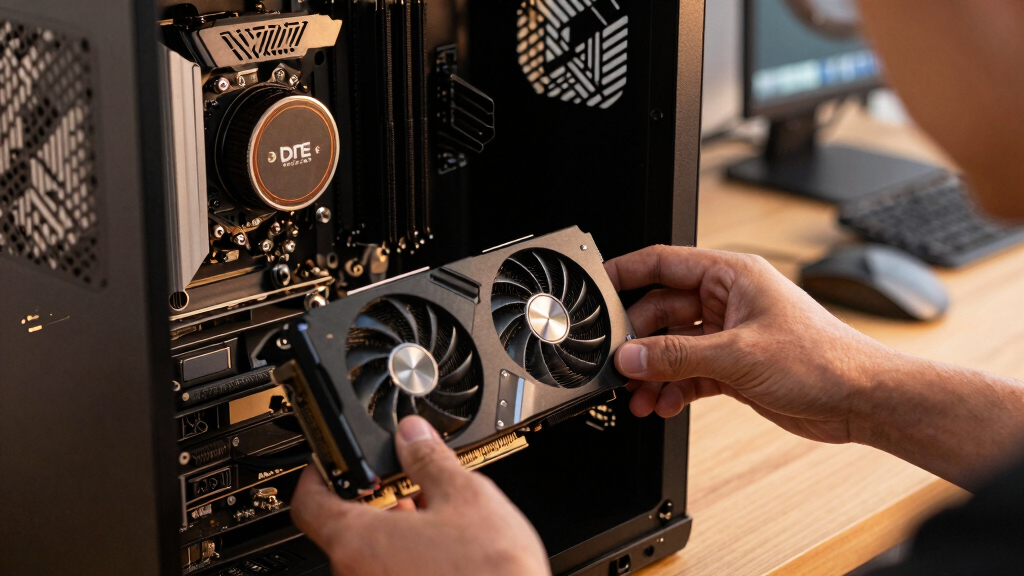

Choosing the best premium Radeon GPU for a future-proof build requires balancing raw performance, build quality, and future compatibility. The AMD Radeon RX 9070 XT stands out as the overall leader, offering cutting-edge features and high VRAM capacity, making it an excellent choice for demanding workloads. For those prioritizing raw power, the MSI Radeon RX 6950 XT delivers top-tier gaming performance, while the ASRock RX 9070 XT adds advanced features like PCIe 5.0 support. The main tradeoffs involve cost versus longevity, with higher-end models demanding a bigger investment but promising a longer lifespan. Continue reading for an in-depth comparison to help you make an informed choice.
Key Takeaways
- The top-tier models like the RX 9070 XT lead in future-proofing with PCIe 5.0 support and large VRAM buffers.
- Build quality and cooling solutions vary significantly, impacting longevity and noise levels.
- Most premium Radeon GPUs now emphasize higher bandwidth and power efficiency for future compatibility.
- Price differences among these options reflect not just performance but also features like advanced connectivity and aesthetics.
- Choosing a GPU with a robust feature set now can extend its relevance for upcoming software and games in 2026.


More Details on Our Top Picks
MSI Gaming Radeon RX 6750 XT 192-bit 12GB GDDR6 Boost Clock 2600MHz Dual Torx 3.0 Fans OC Graphics Card (RX 6750 XT MECH 2X 12G V1)
This MSI RX 6750 XT stands out as a balanced high-end GPU that combines ample VRAM, robust clock speeds, and advanced upscaling technologies like FidelityFX Super Resolution, making it highly suitable for future-proof builds. Compared with the RX 6950 XT, it offers a more efficient power profile while still delivering excellent 4K gaming performance, though it trades some raw horsepower for better thermals and lower noise. Its 12GB GDDR6 on a 192-bit interface ensures enough headroom for upcoming titles, but it’s not ideal for users seeking the absolute highest frame rates at ultra settings in the latest AAA games. This card is perfect for gamers who want excellent longevity without the premium price of the RX 6950 XT, especially given its solid balance of features and performance.
Pros:- Strong core clock speed up to 2600 MHz boosts gaming performance
- 12GB GDDR6 ensures future-proofing for upcoming titles
- Advanced upscaling tech like FidelityFX Super Resolution enhances visuals
Cons:- Limited to 192-bit memory interface, slightly restricting bandwidth compared to higher-end models
- Does not match the raw horsepower of the RX 6950 XT in ultra settings
Best for: Gamers building high-performance, future-ready gaming rigs aiming for 1440p or 4K with room for upcoming titles.
Not ideal for: Enthusiasts seeking maximum raw power in 4K ultra settings and willing to pay a premium for absolute peak performance.
- Core Clock:Up to 2600 MHz
- Video Memory:12GB GDDR6
- Memory Interface:192-bit
- Video Output:DP x 3, HDMI 2.1
- Video Processor:AMD Radeon RX 6750 XT
- Compatibility:Desktop PCIe x16
Bottom line: This card makes the most sense for gamers seeking a well-rounded, future-proof GPU with excellent performance-to-price ratio.
LINKUP PCIE 5.0 Riser Cable | for Vertical GPU Mount | ITX Single Reverse | Graphics Card GPU Ready | Usable with PCIe 4.0 & RX9070/ RTX5090 | 40cm
This PCIe 5.0 riser cable excels in enabling flexible GPU placement for compact and high-airflow builds, especially in ITX or custom water-cooled setups. Its full backward compatibility with PCIe 4.0, validated on popular motherboards, makes it a reliable choice for next-gen GPUs like RTX 5090 or RX 9070. Compared to the 30cm variant, it offers slightly more length, giving builders greater installation freedom, but it requires careful measurement to ensure proper fit, especially in tight cases. The multilayer shielding and tuned impedance promise minimal signal degradation, essential for maintaining high FPS and stability. This cable is ideal for enthusiasts who want to showcase their GPU with a clean, elevated aesthetic and optimal airflow, though installation complexity might be a barrier for beginners.
Pros:- Supports PCIe 5.0 x16 with full 128GB/s bandwidth
- Validated with high-end motherboards and next-gen cards
- Tuned impedance and multilayer shielding reduce signal loss
Cons:- Requires precise measurement for case fit, not ideal for absolute beginners
- Slightly more costly than standard PCIe cables due to advanced shielding
Best for: Advanced PC builders and modders aiming for optimal airflow and clean cable management in small or custom cases.
Not ideal for: Casual or first-time builders who prefer straightforward, plug-and-play GPU setups without detailed measurements.
- Length:40cm (44.5cm total)
- Compatibility:PCIe 4.0/5.0, RX9070, RTX5090
- Bandwidth:128GB/s
- Shielding:Multilayer
- Performance:Tuned impedance
- Connector Type:PCIe x16
Bottom line: This riser cable is perfect for enthusiasts seeking maximum flexibility and aesthetics in compact or custom builds.
MSI Gaming GeForce GTX 1650 128-Bit HDMI/DP/DVI 4GB GDDR6 OC Graphics Card (GTX 1650 D6 Ventus XS OC)
The GTX 1650 D6 Ventus XS OC offers a cost-effective upgrade that extends the lifespan of entry-level systems, with 4GB GDDR6 providing enough headroom for light gaming and multimedia tasks. While it cannot match the raw power of higher-tier AMD or NVIDIA cards, it improves upon older GTX 1650 models with faster memory and modern features like HDCP support and DirectX 12, making it suitable for casual gamers or HTPC setups. Compared with the RX 6400, it provides slightly better performance in some titles due to its faster memory clock, but it’s not ideal for users aiming for high-fidelity 4K gaming or future AAA titles at high settings. This makes it a practical choice for those wanting a future-proofed, low-cost upgrade for modest gaming or media use.
Pros:- Faster 12 Gbps GDDR6 memory enhances performance over older models
- Supports DirectX 12 and HDCP for modern multimedia
- Compact and energy-efficient for small builds
Cons:- Limited to 4GB VRAM, restricting future AAA game performance
- Not designed for high fps or ultra settings in new titles
Best for: Budget-conscious users looking to upgrade legacy systems with a reliable, entry-level GPU that supports recent APIs.
Not ideal for: High-end gamers or future-proofers aiming for 4K ultra settings and extended longevity in demanding titles.
- Memory Speed:12 Gbps
- Video Memory:4GB GDDR6
- Interface:128-bit
- Max Resolution:7680×4320
- Outputs:HDMI, DisplayPort, DVI
- Compatibility:PCIe 4.0
Bottom line: This card provides a modest, affordable upgrade for casual gamers and multimedia enthusiasts planning for the future.
LINKUP PCIE 5.0 Riser Cable | for Vertical GPU Mount | ITX Single Reverse | Graphics Card GPU Ready | Usable with PCIe 4.0 & RX9070/ RTX5090 | 30cm
This PCIe 5.0 riser cable is designed for precise placement and aesthetic customization in small form-factor builds, particularly for vertical GPU mounts in ITX or compact cases. Its 30cm length offers flexibility for tight spaces, and its full backward compatibility with PCIe 4.0 ensures wide compatibility. Although it’s similar to the 40cm version, its shorter length makes it ideal for most standard ITX setups without excess slack, but it requires meticulous measurement to prevent fit issues. Its shielding and impedance tuning support high-stability signals, essential for maintaining performance in overclocked or high-FPS systems. This cable is perfect for enthusiasts prioritizing style and airflow, though it needs a careful installer to avoid fitting problems.
Pros:- Supports PCIe 5.0 x16 with full 128GB/s bandwidth
- Validated with high-end motherboards and next-gen GPUs
- Compact length suitable for tight spaces
Cons:- Requires precise measurement for case fit, not beginner-friendly
- Limited length may restrict some custom configurations
Best for: Aesthetic-focused builders and modders installing GPUs in small or custom cases where space is limited.
Not ideal for: Beginners or users with larger cases where longer cables are preferable for flexibility.
- Length:30cm (34.5cm total)
- Compatibility:PCIe 4.0/5.0, RX9070, RTX5090
- Bandwidth:128GB/s
- Shielding:Multilayer
- Performance:Tuned impedance
- Connector Type:PCIe x16
Bottom line: This riser cable is ideal for advanced builders seeking clean aesthetics and space efficiency in small builds.
MSI Gaming Radeon RX 6950 XT 256-bit 16GB GDDR6 DP/HDMI Triple Torx 4.0 Fans FreeSync DirectX 12 VR Ready RGB Graphics Card (RX 6950 XT Gaming X Trio 16G)
This MSI RX 6950 XT is a top-tier powerhouse that offers 16GB of GDDR6 on a 256-bit bus, supporting the latest APIs, high resolutions, and VR with ease. Its triple-fan cooling system ensures thermal stability during prolonged demanding sessions, making it a prime choice for future-proofing. Compared with the RX 6750 XT, it provides significantly higher bandwidth and more VRAM, but at a higher price and power draw—making it less ideal for budget-conscious builds. This card is best suited for gamers who want the best possible longevity and performance in 4K at high settings, though it may be overkill for casual or 1080p gamers. Its RGB and premium cooling emphasize aesthetics and durability, making it a true flagship in future-proof gaming setups.
Pros:- 16GB GDDR6 on a 256-bit interface for future-proofing
- Triple-fan cooling for optimal thermal performance
- Supports DirectX 12, VR, and AMD FidelityFX
Cons:- Higher power consumption and cost compared to mid-range options
- Larger physical size may not fit in all cases
Best for: High-end gamers and enthusiasts targeting maximum longevity and performance at 4K with room for future AAA titles.
Not ideal for: Budget builders or those prioritizing power efficiency and lower costs over absolute top-end performance.
- Video Memory:16GB GDDR6
- Memory Interface:256-bit
- Core Clock:Not specified
- Outputs:DP x 3, HDMI x 1
- Support:DirectX 12, VR
- Cooling:Triple Torx Fans
Bottom line: This GPU is the best choice for gamers who demand the highest performance and future longevity, regardless of price.
MSI Gaming Radeon RX 6400 64-bit 4GB GDDR6 DP/HDMI PCIe 4 Torx Single Fan FreeSync DirectX 12 VR Ready ITX OC Graphics Card (RX 6400 AERO ITX 4G)
This RX 6400 offers a compelling choice for those prioritizing future-proofing small form factor builds. Compared with the RX 6600 XT, it sacrifices raw performance for a smaller size, lower power consumption, and quieter operation. While it’s limited to 4GB of VRAM, its PCIe 4.0 support and DirectX 12 VR readiness make it capable of handling upcoming titles at lower resolutions, ideal for compact home theater or mini-ITX setups. Tradeoffs include reduced gaming power and limited memory capacity, which could hinder performance in future AAA titles or high-res gaming. This makes it best suited for entry-level, space-constrained future-proof builds where size and power efficiency matter more than top-tier performance.
Pros:- Ultra-compact ITX design fits small cases easily
- Low power draw at 160W TDP enhances efficiency
- Supports PCIe 4.0 for current and future compatibility
- Quiet operation with single fan cooling
Cons:- Limited to 4GB VRAM, restricting future game performance
- Significantly lower gaming power compared to 6600 XT or 6750 XT
- No hardware ray tracing support at this price point
Best for: Small form factor PC builders seeking a compact, energy-efficient GPU that can handle upcoming games at 1080p with modest settings.
Not ideal for: Enthusiasts planning high-resolution, high-refresh-rate gaming or VR at ultra settings, due to its limited VRAM and lower performance ceiling.
- Graphics Coprocessor:AMD Radeon RX 6400
- Video RAM:4GB GDDR6
- Memory Interface:64-bit
- Boost Clock:Not specified (OC model)
- Power Consumption:160W TDP
- Supported Interfaces:PCIe 4.0
Bottom line: Ideal for space-conscious users wanting a future-ready, low-power GPU for casual gaming and multimedia.
msi Gaming AMD Radeon RX 6600 XT 128-bit 8GB GDDR6 DP/HDMI Dual Torx Fans FreeSync DirectX 12 VR Ready OC Graphics Card (RX 6600 XT MECH 2X 8G OC)
This RX 6600 XT stands out as the best overall choice for future-proofing mid-range gaming systems. Compared to the RX 6400, it provides a significantly higher performance ceiling with 8GB VRAM, robust boost clocks of 1845 MHz, and support for the latest DirectX 12 features, making it more capable for upcoming AAA titles at 1080p and 1440p resolutions. Its dual Torx fans and improved cooling deliver reliable thermal performance, supporting sustained high frame rates. The tradeoff involves a higher power draw at 160W and a slightly larger size, but these are acceptable for most mid-tower builds. This makes it perfect for users aiming for a balanced, future-ready gaming platform that can handle evolving game demands without bottlenecks.
Pros:- Supports latest DirectX 12 and ray tracing features
- 8GB VRAM ensures longevity with future games
- Effective dual-fan cooling maintains low temperatures
- Excellent performance at 1080p and 1440p
Cons:- Higher power consumption at 160W TDP
- Larger size may limit compatibility in small cases
- More expensive than entry-level models
Best for: Mid-range gamers wanting high fidelity, VR, and future-proofing at 1080p or 1440p resolutions.
Not ideal for: Budget or ultra-compact builders who need a low-cost, space-saving solution, since it’s larger and more power-hungry than entry-level options.
- Graphics Coprocessor:AMD Radeon RX 6600 XT
- Video RAM:8GB GDDR6
- Memory Interface:128-bit
- Boost Clock:1845 MHz
- Power Consumption:160W TDP
- Supported Interfaces:PCIe 4.0
Bottom line: Best suited for gamers seeking a versatile, future-proof GPU capable of handling upcoming AAA titles at high settings.
MSI Radeon RX 6600 XT MECH 2X 8G OC Gaming Graphics Card – 8GB GDDR6, 2602MHz, PCI Express 4, 128-bit, 3X DP v 1.4, HDMI 2.1 (Supports 4K & 8K)
This RX 6600 XT MECH 2X makes a strong case for premium 4K & 8K gaming, offering a high boost clock of 2602 MHz and robust cooling with triple TORX fans. Compared to the RX 6600 Armor, it emphasizes higher clock speeds and enhanced thermal performance, making it more capable for demanding future resolutions. While its 8GB VRAM is adequate for most 4K gaming, it may face limitations in future titles with increasing memory demands. Its feature set includes HDMI 2.1 and DisplayPort 1.4 support, ensuring compatibility with high-resolution displays. The tradeoff involves a heavier card with a slight premium price, but it’s well worth it for high-res enthusiasts. This GPU is ideal for users aiming for a long-term, high-resolution gaming setup that can handle future AAA releases at 4K and beyond.
Pros:- High boost clock of 2602 MHz for performance headroom
- HDMI 2.1 and DisplayPort 1.4 for high-res displays
- Triple TORX fans for excellent thermal management
- Supports 4K & 8K gaming with high fidelity
Cons:- Heavier and slightly larger than non-premium models
- Higher cost due to premium cooling and higher clock speeds
- 8GB VRAM could limit future memory-intensive titles
Best for: High-resolution gamers seeking a durable, future-proof GPU capable of 4K and 8K gaming with high frame rates.
Not ideal for: Budget-conscious buyers or small form factor cases, as this is a larger, more power-demanding card with a premium price tag.
- Graphics Coprocessor:AMD Radeon RX 6600 XT
- Video RAM:8GB GDDR6
- Memory Interface:128-bit
- Boost Clock:2602 MHz
- Power Consumption:not specified
- Supported Interfaces:PCIe 4.0
Bottom line: Best for users aiming for a durable, high-performance GPU capable of future 4K and 8K gaming at high settings.
MSI Gaming AMD Radeon RX 6600 8GB GDDR6 128-bit HDMI/DP 2491 MHz Boost Clock FreeSync DirectX 12 VR Ready Graphics Card (RX 6600 Armor 8G V1)
The RX 6600 offers a solid entry point into future-proof gaming, with a boost clock of 2491 MHz and 8GB VRAM. Compared with the RX 6600 XT, it sacrifices some raw performance but remains capable of handling upcoming titles at 1080p with decent settings. Its support for PCIe 4.0 and DirectX 12 ensures compatibility with future software, while its relatively modest size makes it suitable for compact cases. The main tradeoff involves lower gaming headroom and reduced future performance margin compared to the XT models, but it still provides a reliable upgrade path at a lower cost. This card is best suited for entry-level gamers or budget-conscious users wanting to extend their system’s longevity without sacrificing much future compatibility.
Pros:- Supports PCIe 4.0 and DirectX 12 for future compatibility
- Affordable price point for entry-level future proofing
- Good thermal performance with dual fans
- Capable of handling upcoming AAA titles at 1080p
Cons:- Lower performance than RX 6600 XT or 6750 XT
- Limited VRAM might hinder future game performance
- Less headroom for high settings or high refresh rates
Best for: Budget-conscious gamers looking for a future-proof upgrade for 1080p gaming and multimedia at an affordable price.
Not ideal for: High-end gamers or those targeting 1440p/4K gaming, due to its lower performance ceiling and VRAM.
- Graphics Coprocessor:AMD Radeon RX 6600
- Video RAM:8GB GDDR6
- Memory Interface:128-bit
- Boost Clock:2491 MHz
- Power Consumption:not specified
- Supported Interfaces:PCIe 4.0
Bottom line: Best for budget-conscious users seeking a reliable, future-ready GPU for 1080p gaming and multimedia.
MSI Radeon RX 6600 XT MECH 2X 8G OC Gaming Graphics Card – 8GB GDDR6, 2602MHz, PCI Express 4, 128-bit, 3X DP v 1.4, HDMI 2.1 (Supports 4K & 8K)
This RX 6600 XT MECH 2X is designed to deliver long-term 4K & 8K gaming capabilities, with a high boost clock of 2602 MHz and triple TORX fans for optimal thermal performance. Compared to the RX 6600 Armor, it emphasizes higher clock speeds and cooling, making it more suitable for future high-resolution gaming. Its 8GB VRAM and HDMI 2.1 support ensure compatibility with upcoming high-res displays and VR devices, though it may encounter limitations as games evolve to demand more VRAM. The tradeoff is a slightly heavier and more expensive card, but it offers a real advantage for those aiming at future high-res gaming without sacrificing performance. This makes it ideal for power users seeking longevity in their high-resolution gaming setups.
Pros:- 2602 MHz boost clock for high performance
- Supports HDMI 2.1 and DisplayPort 1.4 for high-res connectivity
- Triple TORX fans for effective cooling
- Optimized for future high-resolution gaming
Cons:- Larger, heavier design may limit case compatibility
- Higher price point compared to standard models
- Limited VRAM for future memory-intensive titles
Best for: Enthusiasts aiming for a durable, high-performance GPU capable of future 4K/8K gaming at high frame rates.
Not ideal for: Budget buyers or small cases, due to its size and premium cooling features.
- Graphics Coprocessor:AMD Radeon RX 6600 XT
- Video RAM:8GB GDDR6
- Memory Interface:128-bit
- Boost Clock:2602 MHz
- Supported Interfaces:PCIe 4.0
- Features:HDMI 2.1, DisplayPort 1.4
Bottom line: Best for users seeking a future-proof high-res gaming GPU capable of handling 4K & 8K titles with high fidelity.
ASRock AMD Radeon RX 9070 XT Steel Legend Dark 16GB GDDR6 256-bit, 2970MHz Boost, PCIe 5.0, 3xDP2.1+HDMI2.1, Triple-Fan, Metal Backplate, RGB Sync, DirectX12 Ultimate, RDNA4, 2×8-Pin
This AMD Radeon RX 9070 XT stands out for delivering elite performance with a 2970 MHz boost clock, making it ideal for 8K gaming, VR, and demanding content creation. Compared with the RX 6750 XT, it offers significantly higher speeds and PCIe 5.0 support, ensuring better future compatibility, though it involves a larger, more demanding build and higher power consumption. Its triple-fan cooling and reinforced metal backplate provide excellent thermals and durability, but the size might restrict smaller cases and require robust power supply support. The RGB sync adds aesthetic flexibility, appealing to builders wanting a cohesive look. Best suited for high-end enthusiasts seeking longevity and maximum performance in demanding applications.
Pros:- Supports PCIe 5.0, ensuring compatibility with upcoming motherboards and CPUs
- High boost clock of 2970 MHz for superior rendering speeds
- Triple-fan cooling system for stable thermals under load
- Robust metal backplate for enhanced durability
Cons:- Size may be incompatible with small or mid-tower cases
- Higher power requirements and cost compared to lower-tier GPUs
- Large form factor could complicate airflow in compact builds
Best for: Advanced gamers and professional creators investing in high-resolution workflows and future-ready systems.
Not ideal for: Budget-conscious builders or those with limited case space, due to its size and premium price point.
- Graphics Coprocessor:AMD Radeon RX 9070 XT
- Memory:16 GB GDDR6
- Boost Clock:2970 MHz
- Memory Interface:256-bit
- Video Output Interface:3x DisplayPort 2.1a, HDMI 2.1b
- Item Dimensions L x W:11.73″ x 5.16″
- Warranty:3 Years
Bottom line: This GPU makes the most sense for high-end users aiming for maximum longevity and performance in demanding applications.
MSI Gaming GeForce GTX 1650 128-Bit HDMI/DP/DVI 4GB GDRR6 HDCP Support DirectX 12 VR Ready OC Graphics Card (GTX 1650 D6 Ventus XS OC)
This MSI GTX 1650 offers a solid performance upgrade over basic GPUs, with a boost clock of 1430 MHz, suitable for gamers with limited case space or budget constraints. Unlike the RX 6750 XT, it’s optimized for 1080p gaming and less demanding tasks, but it lacks the raw power and PCIe 5.0 support necessary for future-proofing in high-end builds. Its compact form factor and single-fan design make it compatible with small cases, but this limits thermal headroom, especially during extended gaming sessions. The support for DirectX 12 and VR makes it a versatile choice for entry-level enthusiasts, though it won’t handle future AAA titles at ultra settings. Best for budget-conscious users who want a GPU that can hold its own for a few years before upgrade.
Pros:- Compact size fits in small or slim cases
- Boost clock of 1430 MHz for decent gaming performance
- Supports DirectX 12 and VR applications
- Energy-efficient design with lower power requirements
Cons:- Limited to 4GB VRAM, restricting high-resolution or future titles
- Lacks PCIe 5.0 support, reducing longevity in future platforms
- Lower overall performance compared to higher-tier GPUs
Best for: Casual gamers or small-form-factor builders seeking a modest but future-compatible upgrade.
Not ideal for: High-end gamers or content creators aiming for 4K or VR-intensive workloads, due to its lower performance ceiling.
- Graphics Processor:NVIDIA GeForce GTX 1650
- Memory:4 GB GDDR6
- Boost Clock:1430 MHz
- Memory Interface:128-bit
- Output Interfaces:DisplayPort, HDMI
- Item Dimensions L x W:9.5″ x 6.2″
- Warranty:3 Years
Bottom line: This card is best suited for entry-level gamers who want a compact, upgradeable GPU for 1080p gaming with some future viability.
ASRock AMD Radeon RX 9070 XT Steel Legend Dark 16GB GDDR6 256-bit, 2970MHz Boost, PCIe 5.0, 3xDP2.1+HDMI2.1, Triple-Fan, Metal Backplate, RGB Sync, DirectX12 Ultimate, RDNA4, 2×8-Pin
This AMD Radeon RX 9070 XT stands out for delivering elite performance with a 2970 MHz boost clock, making it ideal for 8K gaming, VR, and demanding content creation. Compared with the RX 6750 XT, it offers significantly higher speeds and PCIe 5.0 support, ensuring better future compatibility, though it involves a larger, more demanding build and higher power consumption. Its triple-fan cooling and reinforced metal backplate provide excellent thermals and durability, but the size might restrict smaller cases and require robust power supply support. The RGB sync adds aesthetic flexibility, appealing to builders wanting a cohesive look. Best suited for high-end enthusiasts seeking longevity and maximum performance in demanding applications.
Pros:- Supports PCIe 5.0, ensuring compatibility with upcoming motherboards and CPUs
- High boost clock of 2970 MHz for superior rendering speeds
- Triple-fan cooling system for stable thermals under load
- Robust metal backplate for enhanced durability
Cons:- Size may be incompatible with small or mid-tower cases
- Higher power requirements and cost compared to lower-tier GPUs
- Large form factor could complicate airflow in compact builds
Best for: Advanced gamers and professional creators investing in high-resolution workflows and future-ready systems.
Not ideal for: Budget-conscious builders or those with limited case space, due to its size and premium price point.
- Graphics Coprocessor:AMD Radeon RX 9070 XT
- Memory:16 GB GDDR6
- Boost Clock:2970 MHz
- Memory Interface:256-bit
- Video Output Interface:3x DisplayPort 2.1a, HDMI 2.1b
- Item Dimensions L x W:11.73″ x 5.16″
- Warranty:3 Years
Bottom line: This GPU makes the most sense for high-end users aiming for maximum longevity and performance in demanding applications.
How We Picked
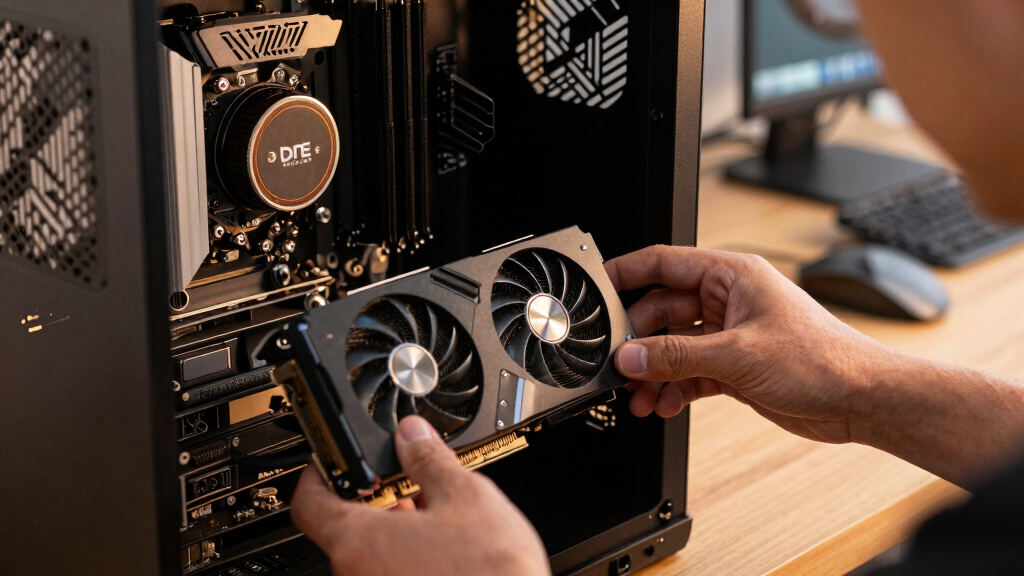
The selection process focused on performance benchmarks, feature sets, build quality, and future compatibility. We prioritized models with the latest technology like PCIe 5.0, high VRAM capacity, and advanced cooling solutions, which are key for longevity. Cost-to-performance ratios were also considered to ensure value for buyers willing to invest in future-proofing. Our rankings reflect which models are most likely to stay relevant for upcoming titles and workloads, balancing raw capability with practical considerations like usability and reliability.Factors to Consider When Choosing Best Premium Radeon GPUs For Future Proof Builds
When choosing a premium Radeon GPU for future-proof builds, several factors come into play. Beyond raw performance, consider compatibility with your existing system, future technology support, and the overall build quality. The right choice depends on your specific needs—whether gaming, creative work, or a mix of both—and your budget. Investing in features like PCIe 5.0, ample VRAM, and efficient cooling can extend the lifespan of your GPU, but these often come with higher costs. Understanding these tradeoffs can help you select a model that balances current needs with future demands.Performance and Future Compatibility
Prioritize GPUs that support the latest standards like PCIe 5.0, which ensures compatibility with upcoming motherboards and CPUs. Higher VRAM capacities, such as 16GB or more, are essential for future-proofing, especially for high-resolution gaming and creative workloads. Benchmark performance remains a crucial factor, but ensure the GPU can handle the software and games you anticipate running in the next few years. Models with advanced features like ray tracing and AI acceleration also add longevity by supporting future rendering technologies.
Build Quality and Cooling
A premium GPU’s longevity depends heavily on its cooling system and overall build quality. Look for models with triple-fan configurations or high-quality heatsinks that can sustain high loads without thermal throttling. Quiet operation is also worth considering, especially if you prefer a silent PC. Robust construction with metallic backplates and high-grade materials can prevent damage over time and support overclocking, further future-proofing your investment.
Power Requirements and Efficiency
High-end GPUs often demand significant power supplies, so check your system’s capacity before investing. Energy efficiency has improved, but premium cards still draw more wattage, which translates into higher electricity costs and potential thermal challenges. Choosing a model with a good power delivery system can enhance stability and overclocking potential. Remember, a PSU upgrade might be necessary to support the most demanding cards, adding to the overall cost.
Connectivity and Aesthetics
Future-proofing also involves considering the connectivity options—multiple DisplayPort 2.1 and HDMI 2.1 ports ensure compatibility with new monitors and VR setups. Aesthetics, including RGB lighting and sleek designs, can enhance your build’s appearance, but they often come at a premium and may increase noise levels. Think about how the GPU fits within your overall system theme and whether extra features like customizable lighting are worth the added expense.
Price and Value Considerations
Premium GPUs come with a wide price range, often reflecting the latest tech and features. While investing more generally translates into better future-proofing, it’s vital to evaluate whether the added cost aligns with your use case. For most users, a high-end but slightly less expensive model can deliver excellent longevity without overspending. Conversely, enthusiasts seeking maximum longevity and performance might find value in the highest-tier options, accepting the premium price for extended relevance.
Frequently Asked Questions
Will a PCIe 4.0 GPU still be relevant in 2026?
While PCIe 4.0 GPUs remain capable today, PCIe 5.0 support is becoming standard in premium models, promising higher bandwidth and better future compatibility. Upgrading to PCIe 5.0 now ensures your build will be more adaptable to upcoming hardware and software innovations, extending the relevance of your GPU. If your current motherboard only supports PCIe 4.0, upgrading later might be necessary to fully utilize PCIe 5.0 features in the future.
Is VRAM size more important than raw performance for future-proofing?
In many cases, VRAM size can be a more decisive factor for future-proofing, especially for high-resolution gaming, 3D rendering, or video editing. A GPU with 16GB or more VRAM can handle future software updates and larger textures more effectively. However, this should be balanced with raw performance; a high-performance GPU with insufficient VRAM might struggle with demanding workloads. The ideal approach combines both high VRAM and strong performance metrics.
Should I prioritize cooling solutions or aesthetics when choosing a premium GPU?
Cooling solutions directly impact the longevity and stability of your GPU, especially under sustained loads typical of future workloads. A well-designed cooling system prevents thermal throttling and reduces noise, which can be critical for long-term use. Aesthetics, while appealing, are secondary and should not compromise cooling performance. For a truly future-proof build, prioritize models with robust cooling and build quality, then choose aesthetics based on your personal taste.
How important is brand reputation when selecting a future-proof Radeon GPU?
Brand reputation can influence the reliability, warranty service, and support you’ll receive over the lifespan of your GPU. Established brands like MSI and ASRock often offer superior cooling, build quality, and customer service, which are vital for long-term use. However, some lesser-known brands may provide competitive features at lower prices. Ultimately, balancing brand reputation with specific product features and reviews will give you the best chance of a durable, future-proof investment.
Can I upgrade my GPU later to extend my build’s lifespan?
Upgrading the GPU later is possible but depends heavily on your existing hardware’s compatibility. Choosing a motherboard with PCIe 5.0 support and a sufficiently powerful power supply will facilitate future upgrades. However, bottlenecks from other components like CPU or RAM can limit overall performance, so consider building a balanced system. Investing in the latest standards now can simplify future upgrades, making your build more adaptable to upcoming hardware.
Conclusion
If you want the best overall future-proof Radeon GPU, the ASRock RX 9070 XT offers cutting-edge features and high VRAM for demanding workloads. For those on a tighter budget but still seeking longevity, the MSI RX 6950 XT delivers top-tier performance without the highest price. Beginners or users with less demanding needs should consider more modest options like the MSI RX 6600 XT, which balances cost and future relevance. Enthusiasts seeking maximum longevity should focus on models supporting PCIe 5.0 and with ample VRAM, while casual gamers might prioritize cooling and aesthetics. Ultimately, your choice should align with your specific performance needs, upgrade plans, and budget constraints to maximize your build’s lifespan in 2026 and beyond.