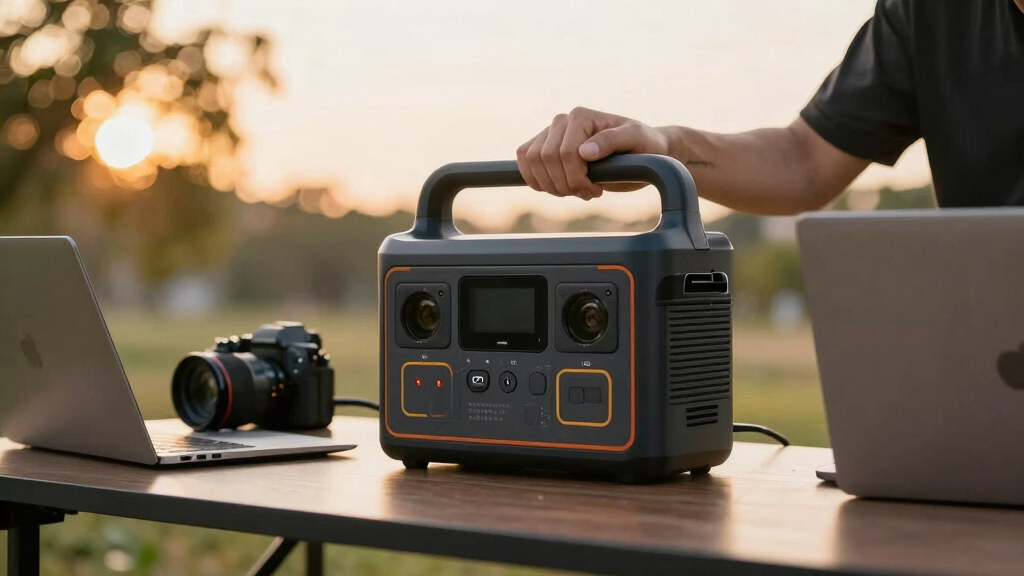

When choosing a portable power station as a creator, reliability and versatility are key. The Jackery HomePower 3600 Plus stands out for massive capacity and home backup capabilities, making it ideal for on-location shoots or emergency use. The OUPES Mega 1 offers a powerful, expandable solution perfect for long outdoor sessions, while the Jackery Explorer 300 provides a compact, lightweight option for smaller trips. Overall, creators face tough decisions balancing capacity, portability, and price. Keep reading for a detailed breakdown to find your best fit.
Key Takeaways
- Top picks combine high capacity with portability for outdoor and on-location use.
- Expandable batteries are valuable for long shoots or off-grid living, but often come with higher costs.
- Lightweight models excel for quick trips, but typically sacrifice power for size.
- Inverter quality and output options are critical for powering sensitive equipment safely.
- Price varies widely; investing more can provide better durability and more features for professional needs.


More Details on Our Top Picks
Jackery HomePower 3600 Plus Portable Power Station and Extra Battery with 2x 200W, 3600W AC Output, 7168Wh LFP Solar Generator, Expandable up to 21kWh, Essential Home Backup for Home Use, Emergencies
This model stands out for its immense capacity and high output power—ideal for keeping a household running during extended outages. Compared with the smaller Jackery Explorer models, it can power multiple heavy appliances simultaneously and expand up to 21kWh, making it a true home backup solution. Its impressive 6000 cycle lifespan and 10-year durability mean it can serve reliably for years. The key tradeoff is its weight—over 77 pounds—and size, which makes portability less practical for on-the-go needs. However, the modular design and multiple charging options, including solar and hybrid AC+DC, make it versatile for emergency preparedness or even off-grid living. The plug-and-play setup simplifies installation, suited for homeowners seeking a powerful, maintenance-free backup system.
Pros:- Extremely high capacity expandable to 21kWh
- Supports heavy appliances with 3600W output (7200W in parallel)
- Long lifespan with 6,000 cycles and 10-year durability
- Multiple charging options including solar and hybrid AC+DC
Cons:- Heavy and bulky, less suitable for frequent mobility
- Expensive compared to smaller portable units
Best for: Homeowners seeking a scalable, reliable backup system for emergencies or prolonged power outages.
Not ideal for: Frequent travelers or creators needing portable, lightweight power sources for daily use or outdoor shoots.
- Wattage:3600 watts
- Capacity:7168Wh expandable to 21kWh
- Weight:77.2 pounds
- Recharge Time:2 hours hybrid AC+DC
- Output Voltage:120V & 240V in parallel
- Lifespan:6,000 cycles
Bottom line: Best suited for creators or homeowners prioritizing long-term, reliable backup power over portability.
DARAN Portable Power Station 600W(1200W Surge) – 288Wh Solar Generator LiFePO4 Battery with AC DC Outlets, 8.3LB Portable Charging Station for Camping, RV, Home, Emergency (Solar Optional)
This pick makes the most sense for outdoor enthusiasts who want reliable power without the bulk—at just over 8 pounds, it’s incredibly portable. Compared to the larger Jackery Explorer 300, it offers a slightly lower capacity but excels in portability and quick recharging, taking only 2 hours to reach 80% via AC. Its LiFePO4 chemistry ensures safety and longevity, with over 3,500 cycles. The 600W continuous output (1200W surge) can handle laptops, small appliances, and even some power tools, but it’s not designed for high-wattage devices. Its compact size and safety features, including a rubber cover over the 12V port, make it ideal for camping, RV trips, or emergency kits. However, it’s less suitable for powering larger appliances or extended home backup needs, where the Jackery HomePower or OUPES models would be better.
Pros:- Lightweight at just 8.3 pounds for portable use
- Fast recharge to 80% in 2 hours
- Safe LiFePO4 chemistry with 3,500+ cycles
- Multiple ports including AC, USB-C, and DC
Cons:- Limited capacity at 288Wh, not for heavy appliances
- No included solar panel, additional investment needed for solar charging
- Cannot run high-wattage devices like large heaters
Best for: Outdoor adventurers and campers needing a lightweight, fast-charging power solution for small devices.
Not ideal for: Users needing to run high-wattage appliances or power a household during long outages.
- Capacity:288Wh
- Wattage:600W continuous
- Weight:8.3 pounds
- Charge Time:2 hours to 80%
- Battery Type:LiFePO4
- Ports:AC, USB-C, DC
Bottom line: Ideal for creators or outdoor lovers who prioritize portability and quick recharging over high capacity.
Jackery Portable Power Station Explorer 300, 292Wh Backup LiFePO4 Battery, Solar Generator for Outdoors Camping Travel Hunting Blackout (Solar Panel Optional)
This model makes a compelling choice for outdoor creators who need reliable, portable power with fast recharging. It weighs only 7.1 pounds and offers a 293Wh LiFePO4 battery, which is more efficient and longer-lasting than older lithium-ion models. The Explorer 300 supports multiple device types, including laptops, cameras, and small appliances, with two AC outlets and USB-C PD60W for fast charging. Its quick 2-hour recharge (up to 80%) via wall or car outlet makes it highly convenient for on-the-move shooting or camping. Compared to the larger OUPES, it’s more portable but less expandable. Its safety features and rugged design make it suitable for outdoor environments, though it’s less capable for heavy-duty or long-term home backup scenarios. For creators who need a lightweight, reliable, and quick-charging power source, this is a top contender.
Pros:- Lightweight at 7.1 pounds and highly portable
- Fast recharge in 2 hours to 80%
- Supports multiple device types with dual AC and USB-C ports
- Long-lasting LiFePO4 battery with over 3,000 cycles
Cons:- Limited capacity at 293Wh, not for high-wattage appliances
- No built-in solar panel included, optional purchase needed
- Less expandable than larger systems like OUPES
Best for: Outdoor creators and travelers needing a lightweight, fast-charging power supply for multiple devices.
Not ideal for: Those requiring high-capacity or heavy-duty backup power for home or large appliances.
- Capacity:293Wh
- Wattage:300W (1200W surge)
- Weight:7.1 pounds
- Recharge Time:2 hours to 80%
- Battery Type:LiFePO4
- Outlets:2 AC, USB-C PD60W, USB-A
Bottom line: Best suited for outdoor creators needing a compact, fast-charging power solution for small equipment and devices.
OUPES Mega 1 Portable Power Station 2000W (Surge 4500W), 1024Wh LiFePO4 Battery Solar Generator, Expandable to 5kWh, UPS, for Home Backup Power, Camping & Road Trips (Solar Panel Optional)
This pick excels for professional and demanding outdoor or backup scenarios, with a massive 1024Wh LiFePO4 battery and 2000W continuous power—ample for powering sensitive electronics, medical devices, or high-demand tools. Compared with the smaller Jackery Explorer 300, it offers more capacity, faster recharge (as quick as 36 minutes to 80%), and the ability to expand to a full 5kWh system by adding extra batteries—ideal for long-term off-grid use. Its UPS feature ensures critical equipment stays protected during outages, and its Bluetooth app control adds convenience for remote monitoring. The tradeoff is its size and weight—over 27 pounds—and higher cost, but for professionals or serious creators who need reliable, scalable power with fast recharge, this is a top-tier solution.
Pros:- Large capacity expandable to 5kWh
- Fast recharge in as little as 36 minutes
- Supports critical equipment with UPS functionality
- Bluetooth app for remote control and monitoring
Cons:- Heavy (over 27 pounds) and less portable
- Higher price point for advanced features
- Requires additional batteries for full expansion
Best for: Professionals or creators requiring high, expandable power for sensitive or high-demand equipment in off-grid or emergency situations.
Not ideal for: Users needing lightweight, portable power for casual outdoor activities or daily on-the-go use.
- Capacity:1024Wh, expandable to 5kWh
- Wattage:2000W continuous
- Surge Power:4500W
- Recharge Time:36 minutes to 80%
- Battery Type:LiFePO4
- Ports:AC, USB-C, USB-A, DC
Bottom line: Ideal for professional creators or emergency preparedness that demand high, reliable, and expandable power capacity.
VTOMAN Jump 600X Portable Power Station 600W, 299Wh Solar Generator LiFePO4 Battery Power Station with Jump Start for Car, 1200W AC Outlet, PD 60W USB-C, 3x Regulated 12V/10A DC for Camping, RV Travel
This model combines a portable power station with a car jump starter, making it a versatile choice for outdoor creators and drivers alike. It’s lightweight at just under 10 pounds, and its 299Wh LiFePO4 battery supports a 600W continuous power output, enough for laptops, cameras, and small appliances. The standout feature is its built-in jump starter port, which can be a lifesaver during roadside emergencies—eliminating the need for separate devices. It charges quickly, reaching 80% in about 2.7 hours, and supports pass-through charging while in use. Its multiple outputs, including USB-C PD60W and regulated 12V DC, make it flexible for outdoor shoots or camping. The main tradeoff is its capacity—less suited for long-term or high-wattage power needs, but perfect for emergency roadside or light outdoor use.
Pros:- Dual function as power station and jump starter
- Lightweight at under 10 pounds
- Fast charging to 80% in under 3 hours
- Multiple outputs including PD60W USB-C and regulated 12V DC
Cons:- Limited capacity at 299Wh, not for high-wattage or long-duration use
- Jump starter sold separately, not integrated
- Cannot power high-demand appliances like space heaters
Best for: Travelers, outdoor creators, and drivers who need a compact power source combined with emergency jump-start capabilities.
Not ideal for: Those needing to power large appliances or sustain extended off-grid operations without additional batteries.
- Capacity:299Wh
- Wattage:600W
- Surge Power:1200W
- Charge Time:2.7 hours to 80%
- Battery Type:LiFePO4
- Ports:AC, USB-C PD60W, 12V DC
Bottom line: Perfect for outdoor creators and travelers seeking a compact, multi-function device with emergency jump-start capabilities.
AFERIY 3840Wh Portable Power Station,120V AC Outlets x 5,2.5H Fast Charge,3600W(Peak 7200W),LiFePO4 Battery Power Station,Solar Generator for Home,Outdoor Camping,Power Outage,Camping,RV,Emergencies
This option stands out for its impressive 3840Wh capacity, expandable up to 11.5kWh, making it ideal for prolonged outdoor stays or home backup scenarios. Compared with the DABBSSON 2048Wh station, it offers nearly double the runtime and a robust 3600W continuous output, which can power larger appliances or multiple devices simultaneously. The inclusion of LiFePO4 cells ensures longevity and safety, plus its UPS <10ms transfer makes it a reliable power source during outages. The tradeoff is its weight—over 80 pounds—and higher price, which may be less suitable for quick, lightweight setups. Its app control and 15 ports provide unparalleled versatility for serious creators needing reliable off-grid power. This pick makes the most sense for those who need extended runtime, high wattage, and expandable capacity without frequent recharges.
Pros:- Large 3840Wh capacity with expandable options
- Fast recharge in as little as 1.5 hours via multiple methods
- Seamless UPS transfer under 10ms for critical devices
- App control and extensive port selection
Cons:- Heavy at over 80 pounds, less portable
- Higher price point that may be prohibitive for casual users
- Size may require dedicated storage space
Best for: creators or professionals requiring long-lasting, expandable power support for home backup or extended outdoor projects
Not ideal for: lightweight travelers or users needing a portable, lightweight station for quick, short trips
- Capacity:3840Wh
- Expandable Capacity:up to 11.5kWh
- Output Power:3600W continuous
- Charging Time:as fast as 1.5 hours
- Number of Outlets:15 ports
- Weight:80.46 lb
Bottom line: This device is ideal for creators seeking a high-capacity, flexible, and reliable power station for home or off-grid use.
HOWEASY Portable Power Station,120W(240W Peak) Solar Generator,88Wh Lithium Battery Power with 110V AC Outlet/DC/USB/LED Light for Outdoor Camping Trip Hunting Emergency(Solar Panel Optional)
This compact, lightweight unit excels for casual creators or those new to portable power, offering 88Wh of capacity and 120W output. Compared with the DABBSSON 2048Wh station, it’s much smaller and easier to handle but provides significantly less runtime, suitable for phones, small gadgets, or short emergencies. Its multiple ports, including USB-C and QC 3.0, support fast charging for multiple devices simultaneously. The built-in LED light adds emergency utility, and its three recharging options—AC, solar, and car—offer flexibility. However, it’s not designed for powering larger appliances or long-duration use, making it less suitable for intensive creator setups. The simple interface and portability make it perfect for beginners or light outdoor activities where weight and size matter most.
Pros:- Very lightweight at just 2.3 pounds
- Multiple recharging options including solar (not included)
- Built-in LED light for emergency use
- Supports simultaneous device charging
Cons:- Limited 88Wh capacity, short runtime
- Not suitable for powering larger devices or appliances
- Relatively low wattage for serious creators
Best for: beginners, casual content creators, or outdoor enthusiasts needing lightweight, quick-charge support for small devices
Not ideal for: users who need to power high-wattage equipment or require extended off-grid operation
- Capacity:88Wh
- Output Power:120W
- Weight:2.3 lbs
- Charging Methods:AC, solar, car
- Ports:8
- Built-in Light:Yes
Bottom line: This station is best for light, portable power needs with minimal weight and simple operation for beginners.
EnginStar Portable Power Station 300W 296Wh Battery Bank with 110V Pure Sine Wave AC Outlet for Outdoors Camping Hunting and Emergency, 80000mAh Backup Battery Power Supply for CPAP
This compact 296Wh unit is well-suited for creators who need to power sensitive electronics like cameras, laptops, or CPAP devices during outdoor shoots or emergencies. Compared to larger stations like the DABBSSON or ABOK models, it’s smaller and lighter at just 6.5 pounds, making it highly portable. Its pure sine wave AC outlet ensures safe operation of delicate equipment, a key advantage over generic power banks. The built-in multiple ports support diverse device charging, and its quick recharging ability in around 1.3 hours adds convenience. The main tradeoff is its limited capacity—best for shorter outings or power-critical devices rather than extended use. It’s ideal for creators who prioritize portability and device safety over high wattage or capacity.
Pros:- Lightweight at 6.5 pounds for portability
- Pure sine wave AC outlet for sensitive electronics
- Multiple ports including USB-C and USB-A
- Fast recharge time (~1.3 hours)
Cons:- Limited 296Wh capacity restricts runtime
- Not suitable for high-power or long-duration needs
- Only 2 AC outlets
Best for: creators or professionals needing portable, safe power for sensitive gear or medical devices during outdoor work or emergencies
Not ideal for: users needing to power large appliances or require long, continuous operation
- Capacity:296Wh
- Output Power:300W
- Weight:6.5 lbs
- Recharging Time:about 1.3 hours
- Ports:Multiple including USB-C
- Pure Sine Wave:Yes
Bottom line: This station is perfect for creators needing portable, safe power for delicate devices in outdoor or emergency scenarios.
DABBSSON 2048Wh Portable Power Station, Safe Semi-Solid LiFePO4, 3300W Power Boost, 2200W AC Output 6, 41lb,Compact & Lightweight, 1.3X Runtime, 2000L Solar Generator for Camping/Home/RV
This model offers a solid 2048Wh capacity with a 3300W power boost, making it a strong option for heavy-duty needs like running refrigerators, power tools, or multiple devices for extended periods. Compared with the ABOK Ark2000, it’s slightly smaller in capacity but provides a high surge capacity, suitable for demanding appliances. Its semi-solid LiFePO4 cells ensure safety, long cycle life, and durability, while its lightweight (41 pounds) and compact design improve portability. The ultra-fast recharge in 1.3 hours and multiple charging options, including solar, make it versatile for camping, emergencies, and off-grid living. The downside is its size—still weighty for some users—and cost, which can be significant for casual users. It’s best for creators who need reliable, long-term power with high surge capacity.
Pros:- Large 2048Wh capacity with fast recharge
- High surge capacity up to 3300W
- Safe semi-solid LiFePO4 battery with long cycle life
- Multiple outlets support heavy loads
Cons:- Relatively heavy at 41 pounds
- Higher cost compared to smaller stations
- Size may be less convenient for frequent portability
Best for: creators or professionals requiring a durable, high-capacity, long-lasting power station for off-grid or heavy-duty applications
Not ideal for: occasional users or those needing ultra-lightweight portable power
- Capacity:2048Wh
- Peak Power:3300W
- Continuous Power:2200W
- Recharge Time:1.3 hours
- Weight:41 lbs
- Outlets:6
Bottom line: This station is designed for creators needing dependable, long-lasting power for demanding or extended off-grid projects.
EnginStar Portable Power Station 300W 296Wh Battery Bank with 110V Pure Sine Wave AC Outlet for Outdoors Camping Hunting and Emergency, 80000mAh Backup Battery Power Supply for CPAP
This small 296Wh station offers reliable power for sensitive electronics like cameras, laptops, or medical devices such as CPAPs. Compared with larger models like the ABOK Ark2000, it’s much more portable and lightweight, ideal for quick trips or backup power for essential devices. Its pure sine wave AC output ensures safe operation, and the multiple ports support various gadgets. The fast recharge in approximately 1.3 hours adds to its convenience. The main limitation is its capacity—best suited for short durations or low-power needs—so it’s less appropriate for extended use or high-wattage appliances. It’s perfect for creators who prioritize portability and device safety in a compact design.
Pros:- Lightweight at 6.5 pounds for portability
- Pure sine wave AC for safe operation of sensitive electronics
- Multiple ports including USB-C and USB-A
- Quick recharge (~1.3 hours)
Cons:- Limited 296Wh capacity, short runtime
- Not suitable for high power or long use
- Only 2 AC outlets
Best for: creators or professionals needing portable, safe power for sensitive gear or medical devices during outdoor shoots or emergencies
Not ideal for: users needing to run high-wattage equipment or for long-duration off-grid work
- Capacity:296Wh
- Output Power:300W
- Weight:6.5 lbs
- Recharging Time:about 1.3 hours
- Ports:Multiple including USB-C
- Pure Sine Wave:Yes
Bottom line: This device is best for portable, safe power delivery to sensitive electronics during short outdoor or emergency scenarios.
ALLWEI Portable Power Station 300W (Peak 600W) Upgraded, 256Wh LiFePO4 Battery Bank Solar-Generator with 6 Output Ports, Backup Power Supply for Camping Travel Blackout Home Use (Solar Panel Optional)
This ALLWEI 300W portable power station stands out for its reliable 256Wh capacity, capable of powering essential devices like laptops, mini fridges, and CPAP machines without risking damage, thanks to its pure sine wave output. Compared with the Jackery Explorer 300, it offers similar capacity but with the added benefit of LiFePO4 chemistry, which ensures nearly a decade of cycles and safer, longer-lasting performance. While the Jackery excels in brand recognition and slightly lighter weight, the ALLWEI’s multiple recharging options—including solar with an MPPT controller—make it a strong choice for off-grid adventures or home emergencies. The main tradeoff is its lower wattage peak (600W), which limits running larger appliances, and its slightly heavier weight at 6.4 lbs. This model makes the most sense for users who prioritize long-term durability and versatile recharging options for small to medium devices, especially in emergency or outdoor scenarios.
Pros:- Long cycle life with LiFePO4 chemistry, nearly a decade of use
- Multiple recharging methods including solar with MPPT for off-grid use
- Safe, pure sine wave output protects sensitive devices
- Compact and lightweight at 6.4 lbs
Cons:- Limited to 300W continuous power, restricting larger appliances
- Relatively low capacity at 256Wh for extended use
Best for: Creators who need a dependable, long-lasting power source for outdoor shoots, small appliances, or backup during outages
Not ideal for: Those seeking to power larger equipment or requiring higher surge capacity, as the 600W peak can be limiting
- Capacity:256Wh
- Peak Power:600W
- Continuous Power:300W
- Weight:6.4 lbs
- Recharging Options:AC, car, solar
- Battery Type:LiFePO4
- Output Ports:AC, USB-C, USB-A, DC5521, car
- Charge Time (AC):3.5-4 hours
- Warranty:5 years
Bottom line: This pick is ideal for creators who need a durable, versatile power station for small devices and emergency backup in outdoor or home settings.
How We Picked
Selection was based on a combination of performance, usability, build quality, and value. Priority was given to models with high-capacity batteries, reliable outputs, and ease of use in real-world scenarios. We also considered versatility—such as expandability and multiple charging options—and how well each unit balances weight and portability. Products were ranked to reflect their suitability for different types of creators, from casual outdoor shooters to professionals needing robust power solutions. The goal was to highlight options that offer real-world practicality alongside innovative features.
Factors to Consider When Choosing Best Portable Power Stations For Creators
Choosing the right portable power station depends on understanding key factors that affect performance, usability, and longevity. Beyond just capacity, creators should consider how easy it is to transport, how many devices it can power simultaneously, and whether it can expand for longer shoots. Balancing features with price is essential, especially to avoid overpaying for capabilities that won’t be used. The following sections explore the main factors to keep in mind when selecting a power station tailored to creative workflows.
Capacity and Runtime
Capacity, measured in watt-hours (Wh), determines how long your devices can run. For creators filming outdoors or on long shoots, higher capacity means fewer recharges or power outages. However, larger batteries tend to be heavier and more expensive. Consider your typical energy needs: a small camera setup might only need a few hundred Wh, while a drone or multiple devices could require 2000 Wh or more. Always match capacity with your actual power consumption to avoid unnecessary bulk or cost.
Port Selection and Power Outputs
Different devices require specific types of outlets—AC, USB-C, USB-A, or DC. Look for models with enough ports to support your gear simultaneously, especially if you’re running multiple cameras, lights, or chargers. The quality of the inverter also matters; clean sine wave outputs protect sensitive electronics. For creators with high-demand equipment, a power station with higher wattage and multiple AC outlets can prevent bottlenecks and ensure smooth operation.
Portability and Weight
Portability is often a tradeoff with capacity. Smaller, lighter units are easier to carry on hikes or quick shoots but may lack the necessary runtime or power. Larger models tend to be bulkier and heavier, making them less convenient for frequent transport. Consider your typical shooting environment—if you’re often on foot or in remote locations, prioritize lightweight options with sufficient capacity. For stationary or vehicle-based shoots, heavier, higher-capacity units may be more appropriate.
Expandability and Additional Features
Many high-end models offer expandable batteries or solar compatibility, which can be game-changers for long-term off-grid projects. This flexibility allows you to extend runtime without carrying extra units. Additional features like fast charging, app control, or UPS modes can improve workflow efficiency and reliability. However, these extras often come with a higher price tag and increased complexity—balance your need for future-proofing with your current budget and technical comfort.
Price and Durability
Budget models can be tempting, but they often compromise on build quality, battery longevity, or output stability. Investing in a more durable, well-built unit may cost more upfront but can save money over time through fewer repairs and replacements. Consider warranties and brand reputation as indicators of reliability. For frequent or professional use, spending more on a robust power station can mean fewer disruptions during critical moments, whereas casual users might opt for more affordable, lightweight options.
Frequently Asked Questions
How long can a portable power station run my camera gear?
The runtime depends on your total power draw and the capacity of the station. For example, a 200Wh unit powering a typical camera that consumes about 20W could run approximately 10 hours. Larger units with 1000Wh or more can extend that to multiple days, especially if you optimize your power usage or include solar charging. Always check the wattage of your devices and match them with the station’s output to estimate accurate runtimes.
Can I use a portable power station for charging my laptop and smartphone simultaneously?
Yes, most modern stations feature multiple USB ports and AC outlets, allowing you to charge several devices at once. Pay attention to the total wattage capacity to ensure all devices can be powered without overloading the system. For sensitive electronics like laptops, choose units with pure sine wave inverters to prevent potential damage. This flexibility makes portable stations highly practical for creators with diverse gear.
Is solar charging worth it for my portable power station?
Solar charging can significantly extend your operational time when off-grid, especially during long outdoor shoots or extended trips. It reduces reliance on grid power and can lower ongoing costs. However, the effectiveness depends on sunlight availability and the station’s solar input capacity. For occasional outdoor use, portable solar panels are a convenient addition, but for regular or professional use, investing in a station with built-in solar compatibility makes the most sense.
How durable are these power stations for outdoor use?
Durability varies among models, with many built to withstand outdoor conditions like dust, rain, and shocks. Look for units with rugged casings, IP ratings, or enhanced shock absorption if you’ll be working in rough environments. Material quality and manufacturer reputation are good indicators of durability. For frequent outdoor use, prioritize models specifically designed for rugged environments, even if they cost a bit more.
When should I consider a larger capacity or expandable power station?
If you run multiple devices for extended periods or plan to shoot in remote locations for days, a larger or expandable power station becomes valuable. These options provide longer runtimes and flexibility, reducing the need to carry multiple units. However, they tend to be heavier and more expensive. Evaluate your typical power needs and mobility requirements carefully before opting for a high-capacity or expandable model.
Conclusion
The best overall choice for creators seeking a versatile, reliable option is the Jackery HomePower 3600 Plus, thanks to its massive capacity and expandability. For budget-conscious users or light outdoor work, the Jackery Explorer 300 offers impressive portability with decent power. The OUPES Mega 1 stands out for long-term outdoor projects, especially with its expandability. Beginners or casual creators will appreciate compact, easy-to-use models like the HOWEASY Portable Power Station, while professionals needing robust, high-capacity power will find the AFERIY or ABOK Ark2000 more fitting. Tailor your choice to your typical shooting environment, device needs, and budget to find the perfect match.