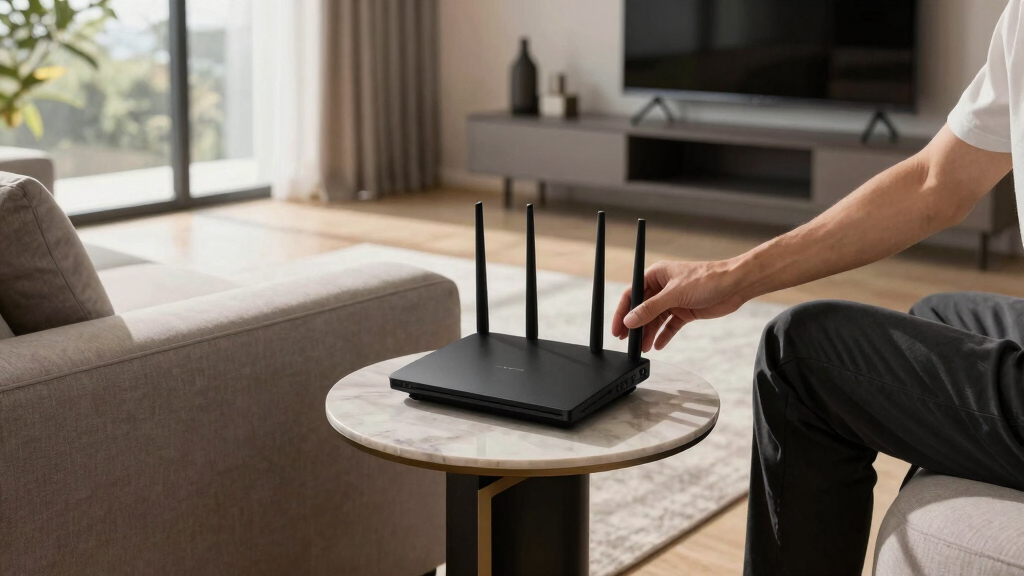

Finding a high-end router under $500 means balancing advanced features with affordability. The best overall pick, the TP-Link Archer BE9700, excels with its tri-band WiFi 7 technology and extensive coverage. Standout options like the NETGEAR Nighthawk C7000 offer excellent modem-router combos for cable plans, while the TP-Link AX3000 Archer AX55 provides robust WiFi 6 performance for most homes. The main tradeoffs in this category involve choosing between raw speed, coverage, and ease of setup. Continue reading to see how each model stacks up and which one fits your specific needs.
Key Takeaways
- The top routers balance high-speed WiFi 6 or WiFi 7 tech with broad coverage capabilities.
- Tri-band models tend to offer better performance for multiple device environments, but often come at a higher price point within this budget.
- Most high-end routers under 500 include integrated security features like VPN support and HomeShield, but the quality varies.
- Modem-router combos can save space and simplify setup, but they may limit upgrade options or compatibility with future plans.
- User-friendly features like easyMesh support and intuitive app controls are common in the best picks, making advanced tech accessible.


More Details on Our Top Picks
TP-Link AC1200 Gigabit WiFi Router (Archer A6) – Dual Band MU-MIMO Wireless Internet Router, 4 x Antennas, OneMesh and AP Mode, Long Range Coverage
This model stands out for its straightforward setup and broad coverage, making it a solid choice for those new to mesh Wi-Fi or needing a reliable router for medium-sized homes. Compared with the TP-Link AX3000 AX55, it offers lower maximum speeds but at a significantly lower price point, which benefits budget-focused buyers. Its four external antennas with Beamforming technology focus signals to extend range, though it lacks the advanced features found in higher-end Wi-Fi 6 or Wi-Fi 7 routers. The inclusion of WPA3 security enhances cybersecurity, but it does not support the latest Wi-Fi standards like Wi-Fi 6 or 7, limiting future-proofing. This pick makes the most sense for users who prioritize stable coverage and ease of use over cutting-edge speeds, especially in smaller or less congested environments.
Pros:- Easy to set up with the Tether app
- Broad coverage with four external antennas
- Supports MU-MIMO and OneMesh for seamless whole-home Wi-Fi
Cons:- Limited maximum speed compared to Wi-Fi 6/7 routers
- No advanced features like OFDMA or tri-band support
- Lacks the latest Wi-Fi security protocols beyond WPA3
Best for: Small to medium households needing dependable Wi-Fi without the latest tech features
Not ideal for: Gamers or tech enthusiasts who want the fastest possible speeds or future-proofing with Wi-Fi 6/7
- Frequency Band:Dual-Band
- Data Transfer Rate:1167 Mbps
- Number of Ports:4 Gigabit LAN
- Antenna Type:External, 4 antennas
- Security Protocol:WPA3
- Control Method:App (TP-Link Tether)
Bottom line: Ideal for users seeking reliable, straightforward dual-band Wi-Fi coverage on a budget.
TP-Link Dual-Band BE3600 Wi-Fi 7 Router Archer BE230 | 4-Stream | 2×2.5G + 3×1G Ports, USB 3.0, 2.0 GHz Quad Core, 4 Antennas | VPN, EasyMesh, HomeShield, MLO, Private IOT | Free Expert Support
This router shines for its Wi-Fi 7 capabilities, offering blazing-fast speeds up to 3.6 Gbps and multi-gig ports, making it suitable for advanced smart homes and gaming setups. Compared to the TP-Link AX3000 AX55, it provides higher high-speed throughput and support for the latest Wi-Fi 7 features like Multi-Link Operation and MU-MIMO, ideal for heavy multitasking. Its four antennas with Beamforming focus signals effectively across large areas, though its price and complexity may overwhelm casual users. The inclusion of VPN support and HomeShield security ensures network safety for smart devices and IoT, but its advanced features come with a higher learning curve and cost. This router makes sense for tech-savvy users who want cutting-edge Wi-Fi 7 performance and multi-gig ports for future-proofing.
Pros:- Supports Wi-Fi 7 with high throughput and low latency
- Includes two 2.5Gbps ports for multi-gig wired connections
- Advanced security features via HomeShield and VPN support
Cons:- Higher price point relative to Wi-Fi 6 routers
- Complex setup and management for non-technical users
- Overkill for basic internet needs
Best for: Power users with smart homes, gaming, and need for multi-Gigabit wired connections
Not ideal for: Average households or users seeking simple, plug-and-play Wi-Fi solutions at lower prices
- Wi-Fi Generation:Wi-Fi 7
- Max Speed:Up to 3.6 Gbps
- Ports:1 x 10Gbps, 1 x 2.5Gbps, 3 x 1Gbps
- Antenna:4 internal antennas
- Security:HomeShield, VPN
- Coverage:Up to 2600 sq ft
Bottom line: Excellent for tech enthusiasts who want the latest Wi-Fi 7 technology with multi-gig ports and robust security.
TP-Link Tri-Band BE9700 WiFi 7 Router (Archer BE600) – 10G Port, 2.5G Port, 3× 2.5G LAN, 320MHz Channel, Covers up to 2,600 sq. ft., 120 Devices, VPN, HomeShield Security
This model excels in providing extensive coverage and support for numerous devices, thanks to its tri-band Wi-Fi 7 technology and multiple high-speed ports, making it suitable for large households or small offices. When compared to the TP-Link AX3000 AX55, it offers much higher throughput and coverage, ideal for streaming 8K content and intensive gaming. The 10G and 2.5G ports ensure ultra-fast wired connections, while its six antennas with Beamforming enhance signal strength across large areas. The inclusion of advanced security with VPN and HomeShield adds a layer of protection for all connected smart devices. However, its price and complexity may be overkill for typical users with fewer devices or smaller homes. This router is best for those who need high capacity, large coverage, and future-proof Wi-Fi 7 features.
Pros:- Massive coverage up to 2600 sq ft
- Supports Wi-Fi 7 with multi-gigabit speeds
- Multiple high-speed ports including 10G and 2.5G
Cons:- Premium price and complexity
- Overkill for small or low-demand environments
- Requires some network configuration knowledge
Best for: Large households and small offices needing high device capacity and multi-gig wired connections
Not ideal for: Small apartments or users with basic internet needs looking for simple Wi-Fi solutions
- Wi-Fi Generation:Wi-Fi 7
- Max Speed:Up to 5.76 Gbps
- Ports:1 x 10Gbps, 1 x 2.5Gbps, 3 x 2.5Gbps LAN
- Antenna:6 internal antennas
- Coverage:Up to 2600 sq ft
- Security:HomeShield, VPN
Bottom line: Perfect for large homes or offices that require high capacity, extensive coverage, and future-proof Wi-Fi 7 technology.
TP-Link Dual-Band AX3000 Wi-Fi 6 Router Archer AX55 | Wireless Gigabit Internet Router for Home | EasyMesh Compatible | VPN Clients & Server | HomeShield, OFDMA, MU-MIMO | USB 3.0 | Secure by Design
This router offers a balanced mix of speed, security, and ease of use, making it suitable for users upgrading from Wi-Fi 5 or seeking reliable Wi-Fi 6 performance. Compared to the NETGEAR R6700AX, it provides faster speeds and support for OFDMA and MU-MIMO, improving efficiency for multiple devices simultaneously. Its dual-band setup with four antennas ensures solid coverage for small to medium homes, and the inclusion of WPA3 security enhances cybersecurity. The USB 3.0 port allows for shared storage or printers. However, it does not support Wi-Fi 7, limiting future capacity and speed potential, and its coverage might be insufficient for larger homes. This model is ideal for users needing dependable Wi-Fi 6 with security features and simple setup.
Pros:- Supports Wi-Fi 6 with OFDMA and MU-MIMO
- Includes WPA3 security and HomeShield protection
- USB 3.0 port for network storage or printers
Cons:- Limited to Wi-Fi 6, not Wi-Fi 7
- Coverage may be insufficient for very large homes
- No multi-gig ports for wired connections
Best for: Home users upgrading from Wi-Fi 5 wanting solid Wi-Fi 6 performance with security features
Not ideal for: Large homes or future-proofing with Wi-Fi 7 features
- Wi-Fi Generation:Wi-Fi 6
- Max Speed:2976 Mbps
- Number of Ports:4 Gigabit Ethernet, 1 USB 3.0
- Antenna Type:Internal, 4 antennas
- Security Protocol:WPA3
- Coverage:Up to 1500 sq ft
Bottom line: Great for users seeking reliable Wi-Fi 6 performance with enhanced security in small to medium homes.
NETGEAR WiFi 6 Router 4-Stream (R6700AX) – Router Only, AX1800 Wireless Speed (Up to 1.8 Gbps), Covers up to 1,500 sq. ft., 20 Devices – Free Expert Help, Dual-Band
This router provides reliable Wi-Fi 6 connectivity at an attractive price, suitable for small to medium homes with moderate device usage. Compared with the TP-Link Archer AX55, it offers similar Wi-Fi 6 speeds but with fewer advanced features like OFDMA or MU-MIMO, making it more straightforward but less efficient under load. Its coverage of up to 1500 sq ft is adequate for apartments or smaller houses, supporting around 20 devices simultaneously. The setup is simple, and it includes NETGEAR Armor security, providing decent protection for everyday use, though it doesn’t support Wi-Fi 7 or multi-gig ports. This makes it a good choice for budget-conscious users who need solid Wi-Fi 6 without extra complexity.
Pros:- Affordable Wi-Fi 6 performance
- Supports up to 20 devices simultaneously
- Includes NETGEAR Armor security
Cons:- Limited advanced features like OFDMA or MU-MIMO
- No multi-gig ports
- Coverage may be insufficient for larger homes
Best for: Smaller households or apartments needing dependable Wi-Fi 6 with device support
Not ideal for: Large homes or users seeking future-proof Wi-Fi 7 technology
- Wi-Fi Generation:Wi-Fi 6
- Max Speed:Up to 1.8 Gbps
- Number of Ports:4 Gigabit Ethernet
- Antenna Type:Internal, 4 antennas
- Coverage:Up to 1500 sq ft
- Security:NETGEAR Armor
Bottom line: A solid budget option for small homes or apartments needing reliable Wi-Fi 6 with security.
NETGEAR Nighthawk Cable Modem and WiFi 5 Router Combo (C7000) – Compatible with Major Cable Providers incl. Xfinity & Cox – Cable Plans up to 800Mbps – AC1900 (Up to 1.9Gbps) – DOCSIS 3.0 (Renewed)
This combo stands out for its seamless integration of cable modem and WiFi router, making it ideal for users who want a straightforward setup without separate devices. Compared to the TP-Link Archer AX21, it offers reliable performance with up to 1800 sq ft coverage and supports up to 30 devices, but being DOCSIS 3.0 limits future-proofing against the faster DOCSIS 3.1 standard. Its 24×8 channel bonding ensures solid speeds for typical streaming and gaming needs. The main tradeoff is that it does not support WiFi 6, which newer devices increasingly utilize, but for those on a budget or seeking simplicity, this remains a dependable choice.
Pros:- Integrated cable modem eliminates the need for separate equipment
- Supports up to 30 devices with solid coverage
- Easy setup using the app
Cons:- Limited to DOCSIS 3.0, less future-proof against higher-speed plans
- WiFi 5 technology may lag behind newer WiFi 6 devices
Best for: Cable subscribers looking for a reliable, all-in-one modem-router solution under 500.
Not ideal for: Tech enthusiasts wanting WiFi 6 or future-proofing, as this model is limited to WiFi 5 and DOCSIS 3.0.
- Cable Compatibility:Xfinity, Cox, others up to 800Mbps
- WiFi Standard:WiFi 5 (802.11ac)
- Coverage:1800 sq ft
- Max Devices:30
- Channel Bonding:24×8
- Processor:1.6GHz
Bottom line: Ideal for cable users seeking a straightforward, reliable combo at a budget-friendly price.
TP-Link AX1800 WiFi 6 Router (Archer AX21 V5) – Dual Band Wireless Internet, Gigabit, Easy Mesh, Works with Alexa – A Certified for Humans Device, Free Expert Support
This router excels for those new to WiFi 6, offering faster speeds and broader device support than the Netgear combo. Compared to the NETGEAR C7000, it provides WiFi 6 technology, capable of handling more devices simultaneously with OFDMA, and features easy mesh support, making it perfect for expanding coverage. Its setup via the TP-Link app is straightforward, and speeds over 360 Mbps on a typical 1Gbps plan ensure smooth streaming and gaming. The main tradeoff is that it doesn’t include a built-in modem, so users need a separate device. For users wanting a future-ready WiFi upgrade without breaking the bank, this makes a lot of sense.
Pros:- Supports WiFi 6 with higher speeds and more device capacity
- Easy setup with the TP-Link Tether app
- Supports mesh for broader coverage
Cons:- No modem included, requiring a separate device
- Speeds vary based on device and environment
Best for: Home users wanting an easy, WiFi 6 upgrade with mesh support and simple setup.
Not ideal for: Subscribers who prefer integrated modem-router combos or need multi-gig wired ports; this is strictly a router.
- WiFi Standard:WiFi 6 (802.11ax)
- Speed:Up to 1.8 Gbps
- Coverage:Up to 2400 sq ft
- Ethernet Ports:4x Gigabit
- Mesh Support:Yes
- Processor:Quad-Core
Bottom line: Perfect for beginners seeking a straightforward WiFi 6 upgrade with future-proof features.
TP-Link BE6500 Dual-Band WiFi 7 Router (BE400) – Dual 2.5Gbps Ports, USB 3.0, Covers up to 2,400 sq. ft., 90 Devices, Quad-Core CPU, HomeShield, Private IoT, Free Expert Support
This WiFi 7 router is designed for tech-savvy users who want cutting-edge performance, with multi-link operation and multi-RU technology providing ultra-fast speeds and low latency. Compared with the Archer AX21, it supports the latest WiFi 7 standard, offering speeds up to 5.7 Gbps and coverage of up to 2400 sq ft for numerous devices. Its dual 2.5Gbps ports and USB 3.0 make it suitable for high-bandwidth wired connections and network sharing. The main tradeoff is the higher price and complexity, which might be unnecessary for casual users. For those looking to future-proof with the latest WiFi tech, this router is a solid investment.
Pros:- Supports WiFi 7, offering top-tier speeds and low latency
- Dual 2.5Gbps ports and USB 3.0 for wired and storage needs
- Covers up to 2400 sq ft for many devices
Cons:- Higher cost compared to WiFi 6 options
- Advanced features may be overkill for typical home use
Best for: Power users and early adopters seeking WiFi 7 performance for large homes and many devices.
Not ideal for: Budget-conscious buyers or those who don’t need WiFi 7’s advanced features, as it is among the most expensive in this roundup.
- WiFi Standard:WiFi 7 (802.11be)
- Speed:Up to 5.7 Gbps
- Coverage:Up to 2400 sq ft
- Ports:2x 2.5Gbps, USB 3.0
- Device Support:90+
- Processor:Quad-Core
Bottom line: Best suited for tech enthusiasts aiming to future-proof with WiFi 7 capabilities.
NETGEAR Nighthawk Modem Router Combo (CAX30) DOCSIS 3.1 Cable Modem and WiFi 6 Router – AX2700 2.7 Gbps – Compatible with Xfinity, Spectrum, Cox, and More – Gigabit Wireless Internet
This combo is ideal for users who need a high-speed cable modem and WiFi 6 router in one device, providing excellent coverage of 2000 sq ft and supporting many devices. Compared with the NETGEAR C7000, it supports DOCSIS 3.1, which is more future-proof and capable of higher speeds, making it suitable for gigabit plans. Its 4x gigabit Ethernet ports and WPS support enable versatile wired and wireless connections. The main tradeoff is that it’s bulkier and slightly more expensive, but the convenience of a single device for cable and WiFi makes it a strong value for upgrading existing plans without investing in separate units.
Pros:- Supports DOCSIS 3.1 for higher future speeds
- Supports WiFi 6 for more devices and better performance
- Includes four Ethernet ports for wired connections
Cons:- Larger size may be less discreet
- Requires cable service, not suitable for fiber plans
Best for: Cable users wanting a combined modem-router with WiFi 6 support for faster, more reliable internet.
Not ideal for: People on fiber or with plans exceeding gigabit speeds, as this model is optimized for cable plans up to 1Gbps.
- Cable Compatibility:Xfinity, Spectrum, Cox, up to 1Gbps
- WiFi Standard:WiFi 6 (802.11ax)
- Coverage:2000 sq ft
- Ethernet Ports:4x Gigabit
- Support:DOCSIS 3.1
- Max Speed:2.7 Gbps
Bottom line: Excellent for cable subscribers looking to upgrade to WiFi 6 with a combined modem-router solution.
NETGEAR Nighthawk 5-Stream AX5 WiFi 6 Router (RAX43) AX4200 Wireless Speed (Up to 4.2 Gbps) | 2,000 sq. ft. Coverage (Renewed)
This renewed router offers impressive WiFi 6 speeds and coverage, supporting up to 2000 sq ft and many devices, making it suitable for gaming and streaming. Compared to the Archer AX21, it provides a higher maximum speed of 4.2 Gbps and supports multiple streams, which translates to smoother performance with fewer slowdowns. Its 3 antennas and advanced features ensure reliable connections, but being renewed introduces some uncertainty regarding longevity. For those wanting a high-performance WiFi 6 router at a lower cost, this model delivers excellent value despite the renewal status.
Pros:- Supports WiFi 6 with high speeds
- Supports multiple devices with strong coverage
- Affordable renewed option
Cons:- Renewed status may impact long-term reliability
- No integrated modem, needs separate device
Best for: Home users needing reliable WiFi 6 performance with broad coverage and budget considerations.
Not ideal for: Those seeking brand-new equipment or the latest WiFi 7 features, as this is a renewed product.
- WiFi Standard:WiFi 6 (802.11ax)
- Speed:Up to 4.2 Gbps
- Coverage:2000 sq ft
- Antenna:3 external antennas
- Device Support:Multiple
- Renewed:Yes
Bottom line: Great for budget-conscious users wanting solid WiFi 6 performance with broad coverage.

How We Picked
Our selection process focused on performance, build quality, and feature set, with an emphasis on devices that deliver high-end capabilities without exceeding the $500 limit. We prioritized routers supporting WiFi 6 or WiFi 7 standards, as these ensure future-proof speeds and connectivity. Ease of setup, security features, and coverage area also played a significant role, especially for users with larger homes or small offices. We compared real-world capabilities based on specifications, user reviews, and expert analyses to rank these models, ensuring each offers a clear advantage for different types of users.
Factors to Consider When Choosing Best High End Routers Under 500
Choosing the right high-end router under 500 requires evaluating several key factors. Beyond raw speed, consider coverage area, device capacity, security features, and ease of use. It’s also important to think about future-proofing, such as support for the latest WiFi standards, and whether features like mesh compatibility or modem integration matter for your setup. Understanding these factors helps prevent overspending on unnecessary features or opting for a model that underperforms in critical areas.
Performance and WiFi Standards
Speed is vital, but supporting WiFi 6 or WiFi 7 is equally important for long-term performance. WiFi 6 offers significant improvements over previous standards, especially in crowded environments, while WiFi 7 promises even higher throughput and lower latency. Avoid models that only support older standards if you want a device that remains relevant and capable of handling future devices and applications.
Coverage and Device Capacity
Assess your home’s size and the number of connected devices. Routers with multiple antennas and tri-band technology typically provide broader coverage and better handling of multiple devices simultaneously. If you have a large property or many smart devices, prioritize models explicitly designed for high capacity, but be aware that more extensive coverage can come with a higher price or complexity.
Security and Management Features
Built-in security features like VPN support, automatic updates, and parental controls are increasingly standard. Some routers include dedicated security services like HomeShield, which can enhance privacy and threat protection. Ease of management via mobile apps also adds convenience, particularly for those less comfortable with network setups. Evaluate these features to find a device that simplifies security without extra costs or complexity.
Future-Proofing and Compatibility
Look for routers supporting the latest standards and technologies, such as WiFi 6/7, MU-MIMO, and mesh compatibility. These ensure your network remains fast and reliable as new devices are added. Consider whether you want a standalone router or a modem-router combo, especially if you plan to upgrade your internet plan or switch providers later. Being future-proof can save money and hassle down the line.
Frequently Asked Questions
Is it better to buy a WiFi 6 or WiFi 7 router under 500?
WiFi 6 routers are more widely available and offer excellent performance for most homes, supporting multiple devices with high speeds. WiFi 7, still relatively new, promises even faster speeds and lower latency but may be limited in options under 500 and might not be fully supported by all devices yet. For now, a WiFi 6 router generally provides the best value and compatibility, with WiFi 7 being a future investment if your devices support it.
Should I prioritize router speed or coverage?
Both are important, but the right mix depends on your space and device needs. If you have a large home, coverage becomes more critical, so look for models with multiple antennas and tri-band support. If your space is smaller but you have many devices, prioritize speed and capacity. Balancing these factors ensures a stable, fast connection across your entire environment.
Are modem-router combos worth considering under 500?
Yes, modem-router combos can simplify setup and save space, especially if you have a compatible cable plan. However, they can limit your upgrade options and may be less flexible if you want to switch providers or upgrade your modem later. If you prefer convenience and your internet service supports it, a combo device could be a smart choice, but check compatibility and future upgrade paths carefully.
What security features should I look for in a high-end router?
Look for routers with integrated security services like VPN support, automatic firmware updates, and parental controls. Some models include dedicated security platforms like HomeShield, offering real-time threat detection and device monitoring. Prioritizing security features helps protect your network from cyber threats and unauthorized access, especially as more smart devices connect to your home network.
Is it worth paying extra for mesh support in a router under 500?
Mesh support enhances coverage by allowing multiple compatible nodes to work together seamlessly, which is especially useful in larger or multi-story homes. If you already have or plan to expand your network with mesh nodes, choosing a router with mesh compatibility can be worthwhile. However, if your space is small or you prefer a simple setup, a powerful standalone router might suffice, avoiding the additional cost and complexity.
Conclusion
For general homes seeking the best overall performance, the TP-Link Archer BE9700 stands out thanks to its tri-band WiFi 7 support and expansive coverage. Budget-conscious buyers who want solid WiFi 6 performance may find the TP-Link AX3000 Archer AX55 offers excellent value. Those with advanced needs or larger spaces might prefer the TP-Link BE6500 with its dual 2.5Gbps ports and robust security. Beginners or users with simple setups should consider models with easy app controls and straightforward features, like the TP-Link AX1800 Archer AX21. Ultimately, your choice depends on your specific network size, device load, and future upgrade plans.